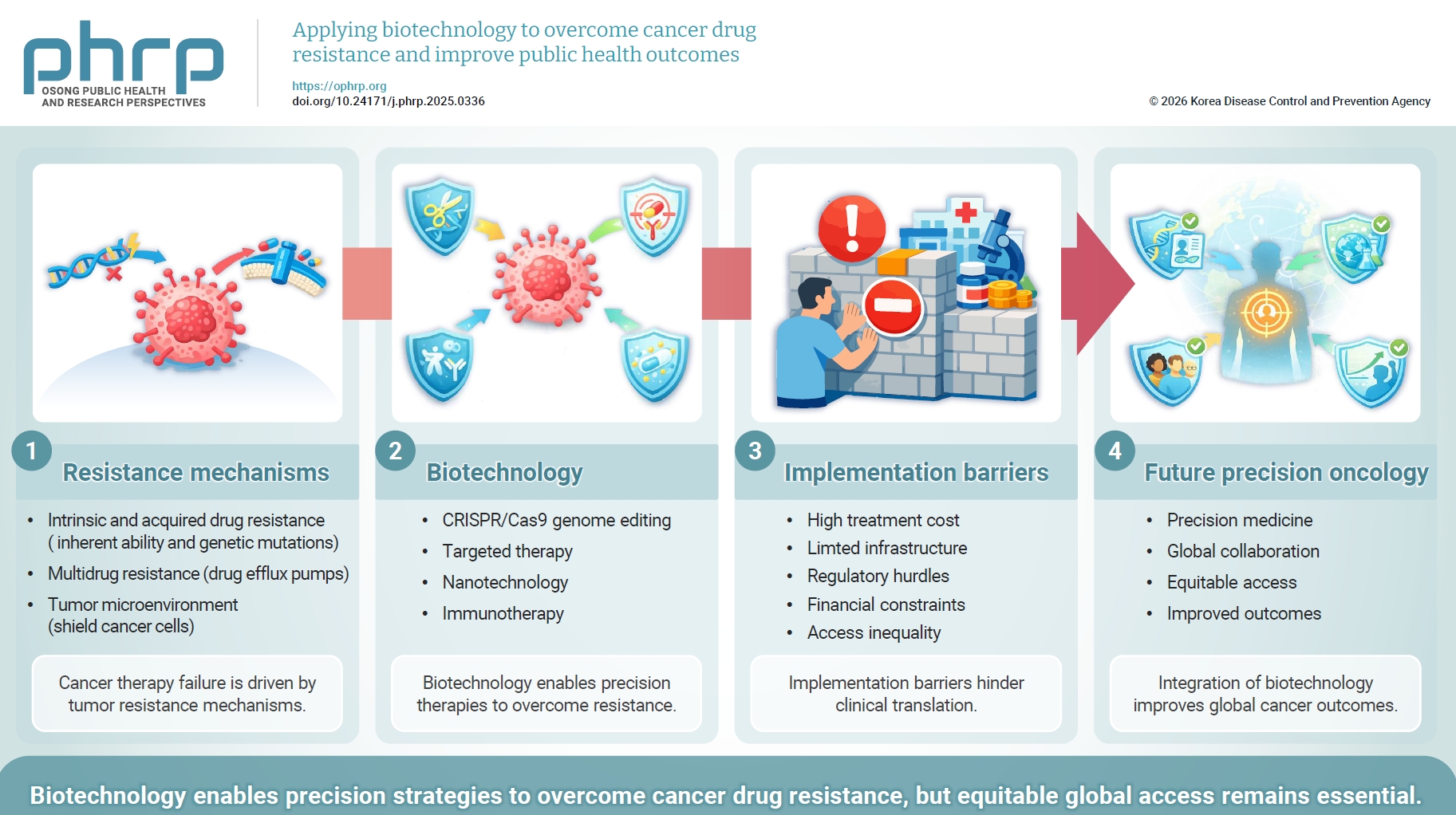
This review examines how biotechnology advances (CRISPR/Cas9, next-generation targeted therapies, nanotechnology-based drug delivery, and immunotherapies) can be applied to address cancer drug resistance worldwide. It also considers the economic burden of resistance, inequities in access to biotechnology solutions, and ethical concerns surrounding rapid innovation, particularly in low-resource settings. A narrative review synthesized evidence from basic science studies, clinical trials, translational research, and policy analyses. Evidence was prioritized for 2015–2025 publications. The synthesis highlights resistance biology and evaluates how precision medicine, biomarker-guided treatment, and high-throughput drug screening can inform individualized regimens and rational combinations. Breakthroughs in gene editing, targeted inhibitors, nanocarriers, and immune engineering can counter key resistance mechanisms, including resistance-conferring mutations, altered drug transport, immune evasion, and tumor microenvironment–mediated protection. Despite progress, implementation barriers remain substantial: high drug and development costs, limited molecular diagnostics and manufacturing capacity, and regulatory and governance challenges that can delay adoption and widen disparities, particularly in low- and middle-income countries. Integrating biotechnology innovations within precision medicine frameworks may improve treatment selection and patient outcomes. Maximizing public health impact requires affordability and financing strategies, robust ethical oversight, timely regulatory pathways, and coordinated global collaboration to ensure access to effective therapies across health systems worldwide.
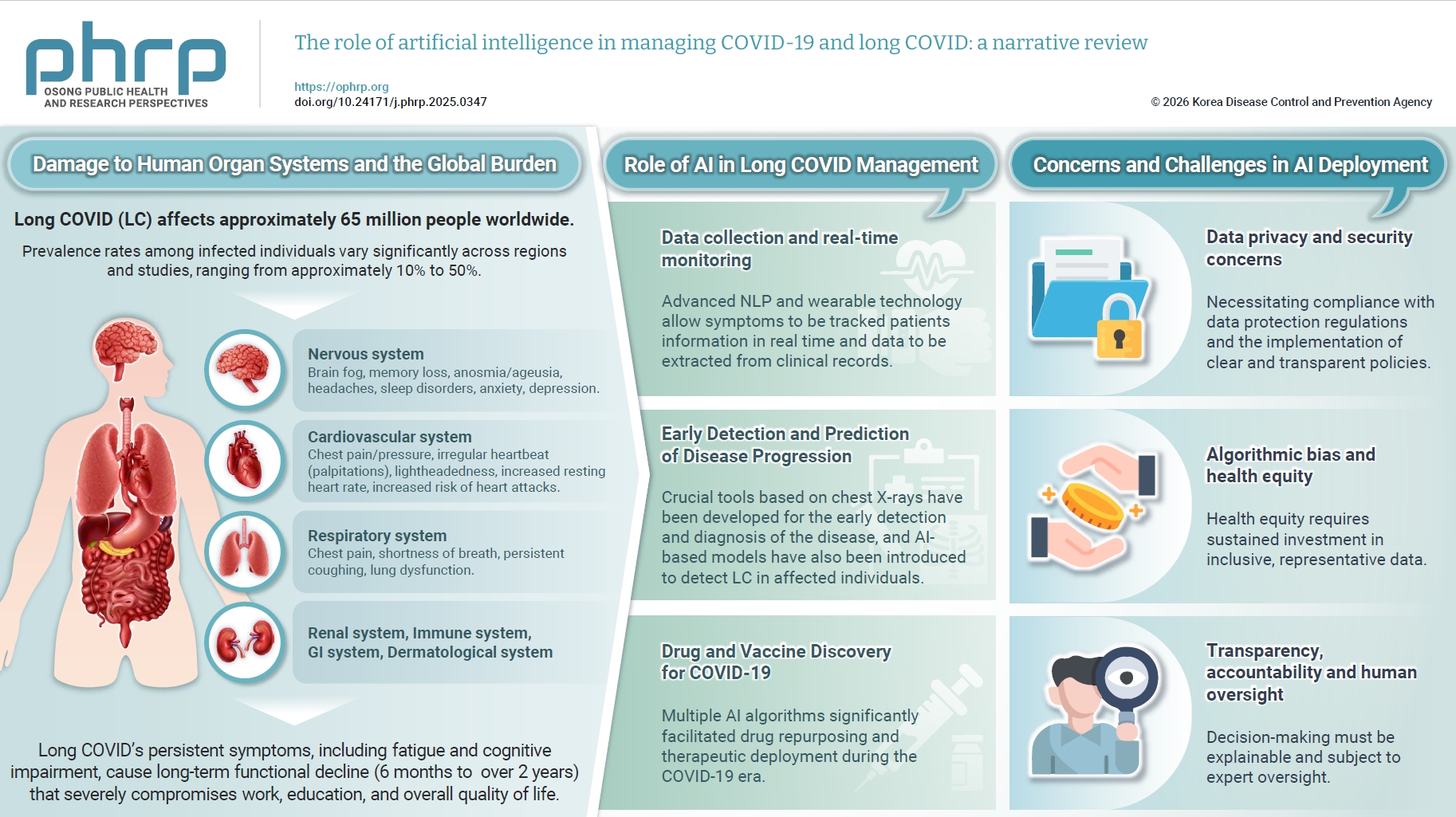
The coronavirus disease 2019 (COVID-19) pandemic had an unprecedented global impact, resulting in both positive and negative consequences. The virus not only affected millions of lives worldwide but also caused long-term harm to multiple organ systems in many survivors, thereby substantially impairing quality of life. This persistent condition is now referred to as long COVID (LC). The aim of this study is to raise awareness of LC-related organ system impacts and to highlight the key role of artificial intelligence (AI) in mitigating these effects. The present research conducts a narrative review focusing on LC-related impacts. In this context, unstructured searches were conducted to identify a total of 69 relevant studies indexed in Embase, PubMed, Web of Science, or Scopus, each of which was reviewed by at least 2 experts with sufficient domain knowledge in health sciences. Based on the authors’ perspectives and insights, the review narratively examines damage to human organ systems attributable to LC and explores the role of AI in addressing LC-related challenges. Significant ethical, practical, and societal concerns arising from the extensive use of AI, particularly major issues such as data privacy and algorithmic bias, are also discussed. LC has caused lasting impacts on human organ systems, while AI is offering substantial potential for LC-related care.
Objectives This study evaluated the effectiveness of government epidemic control policies centered on diagnostic testing and examined their impact on the in vitro diagnostics (IVD) industry. It also analyzed the complex interplay among policy interventions, epidemic dynamics, and the IVD industry’s value chain to identify key leverage points for managing future public health crises. Methods: A system dynamics (SD) model calibrated using national data from the Republic of Korea simulated the interactions between epidemic progression and the IVD value chain. We conducted a scenario analysis encompassing 6 policy interventions: research and development (R&D) investment, public–private collaboration, regulatory easing, diagnostic test performance, testing intensity, and social distancing. Results: Policies promoting investment, public–private collaboration, and regulatory easing accelerated the market entry of diagnostics, thereby reducing infections and deaths. However, these interventions were associated with lower overall industry revenue, attributable to increased market competition and a reduced patient population. A critical trade-off was noted: although regulatory speed is advantageous, using low-sensitivity diagnostics substantially worsened public health outcomes. Aggressive testing strategies and stringent social distancing were also confirmed to be effective in reducing both infections and mortality. Conclusion: This study provides a strategic framework for understanding interactions between pandemic control policies and the IVD industry. Sustained pre-crisis investment in R&D, public–private networks, and public health infrastructure is essential for effective pandemic preparedness. During a crisis, policymakers must carefully manage the critical trade-off between regulatory speed and diagnostic quality to ensure that rapid responses do not compromise public health outcomes.
Objectives This study aimed to examine the temporal dynamics of dengue cases in Malaysia from 2022 to 2024 using seasonal-trend decomposition and time-series modeling. Methods: Weekly dengue case counts from the national registry were analyzed across all states using seasonal-trend decomposition using LOESS (STL) to separate trend, seasonal, and irregular components. Autoregressive integrated moving average (ARIMA) and seasonal ARIMA (SARIMA) models were fitted to validate temporal structures, with model selection based on the Akaike information criterion (AIC), corrected AIC, and Bayesian information criterion. Diagnostic checks, including residual analysis and Ljung-Box testing, were performed to ensure model adequacy. Results: Dengue incidence showed marked heterogeneity across states. STL decomposition indicated that long-term trends contributed more strongly to case dynamics than seasonality in most states, although seasonal influences were significant in the states of Kedah and Kelantan. Seasonal peak timing varied between states, highlighting differences in epidemic cycles. ARIMA and SARIMA modeling confirmed that no single temporal structure could adequately represent all states; while some series were well fitted by simple ARIMA models, others required seasonal adjustments. Residual diagnostics demonstrated that the selected models were statistically adequate. Conclusion: Dengue dynamics in Malaysia are shaped by both trend and seasonal components, with considerable variation across states. Combining STL decomposition with ARIMA/SARIMA modeling strengthens the evidence base for state-specific forecasting and proactive vector control. Tailoring surveillance systems and interventions to local temporal patterns
Da Seul Kim, Soon-Young Seo, Dong Hwi Kim, Yeon Hee Woo, Deborah Lee, Se Jeong Yang, Junyoung Kim, Eunkyung Shin, Byungsun Jung, Eunmi Lee, Min Jung Lee, Young-Joon Park
Osong Public Health Res Perspect 2026;17(1):61-71. Published online February 10, 2026
Objectives In May 2025, clusters of salmonellosis were identified in 7 cities in the Republic of Korea, all associated with consumption of identical bakery products. This investigation aimed to characterize the outbreak, identify potential contributing factors, and inform strategies for preventing similar multi-facility foodborne outbreaks. Methods: A case series study was conducted among individuals who consumed Manufacturer H’s Product I and Product II on May 15–16, 2025 at 7 facilities (n= 1,235). Clinical specimens from symptomatic individuals, retained food samples, and environmental samples were collected and tested. Food-exposure histories were assessed, and active case finding was implemented across all supplied facilities. Traceback investigations were conducted at the manufacturer, distributor, and egg farms. Human and food isolates underwent pulsed-field gel electrophoresis (PFGE) and whole-genome sequencing (WGS). Results: A total of 323 cases met the outbreak case definition (attack rate, 26.2%), of which 48 were laboratory-confirmed. Salmonella Enteritidis was isolated from both clinical specimens and retained bakery products. PFGE patterns were indistinguishable between human and food isolates, and WGS demonstrated high genetic relatedness. These findings confirmed a common-source outbreak linked to the implicated bakery products. Conclusion: This outbreak underscores the value of integrating epidemiological investigation, active case finding, and molecular typing to identify common food vehicles in outbreaks involving widely distributed manufactured foods. Coordinated collaboration between public health and food safety authorities is essential for the effective detection, response, and prevention of multi-facility foodborne outbreaks.
Citations
Citations to this article as recorded by
Salmonella Enteritidis Outbreak at a Remote Mining Camp, Omnogovi Province, Mongolia, March 2025 Ariungerel Dashtseren, Seonghui Cho, Chiara Achangwa, Yeongseon Ko, Bryan Inho Kim, Sukhyun Ryu, Joon Sup Yeom Journal of Food Protection.2026; 89(11): 100923. CrossRef
Objectives Smartphone overdependence (SOD) and anxiety are major concerns in adolescent mental health; however, few studies have examined their bidirectional relationship. This study aimed to examine reciprocal associations between SOD and anxiety among adolescents. Methods: A secondary analysis was conducted with data from 50,975 adolescents in the 19th Korea Youth Risk Behavior Survey. SOD was measured using the SOD scale, and anxiety was assessed using the generalized anxiety disorder 7-item scale. Multivariable logistic regression analyses were conducted to examine reciprocal associations, adjusting for sociodemographic factors, perceived stress, loneliness, and depressive symptoms. Results: Moderate to severe anxiety was found in 12.6% of participants, and 3.3% were classified as being at high risk for SOD. In adjusted models, the model with anxiety as the outcome demonstrated higher predictive performance (concordance rate, 86.5%) than the model with SOD as the outcome (77.3%). Adolescents at high risk for SOD had higher odds of reporting anxiety, and those with severe anxiety had higher odds of being classified as at high risk for SOD. Stress, loneliness, and smartphone use time were also identified as significant predictors. Conclusion: SOD and anxiety were strongly associated with each other among adolescents. Integrated approaches addressing both digital behavior and mental health may help inform strategies to reduce psychological distress. Public health strategies may benefit from considering both aspects when screening for problematic smartphone use and anxiety.
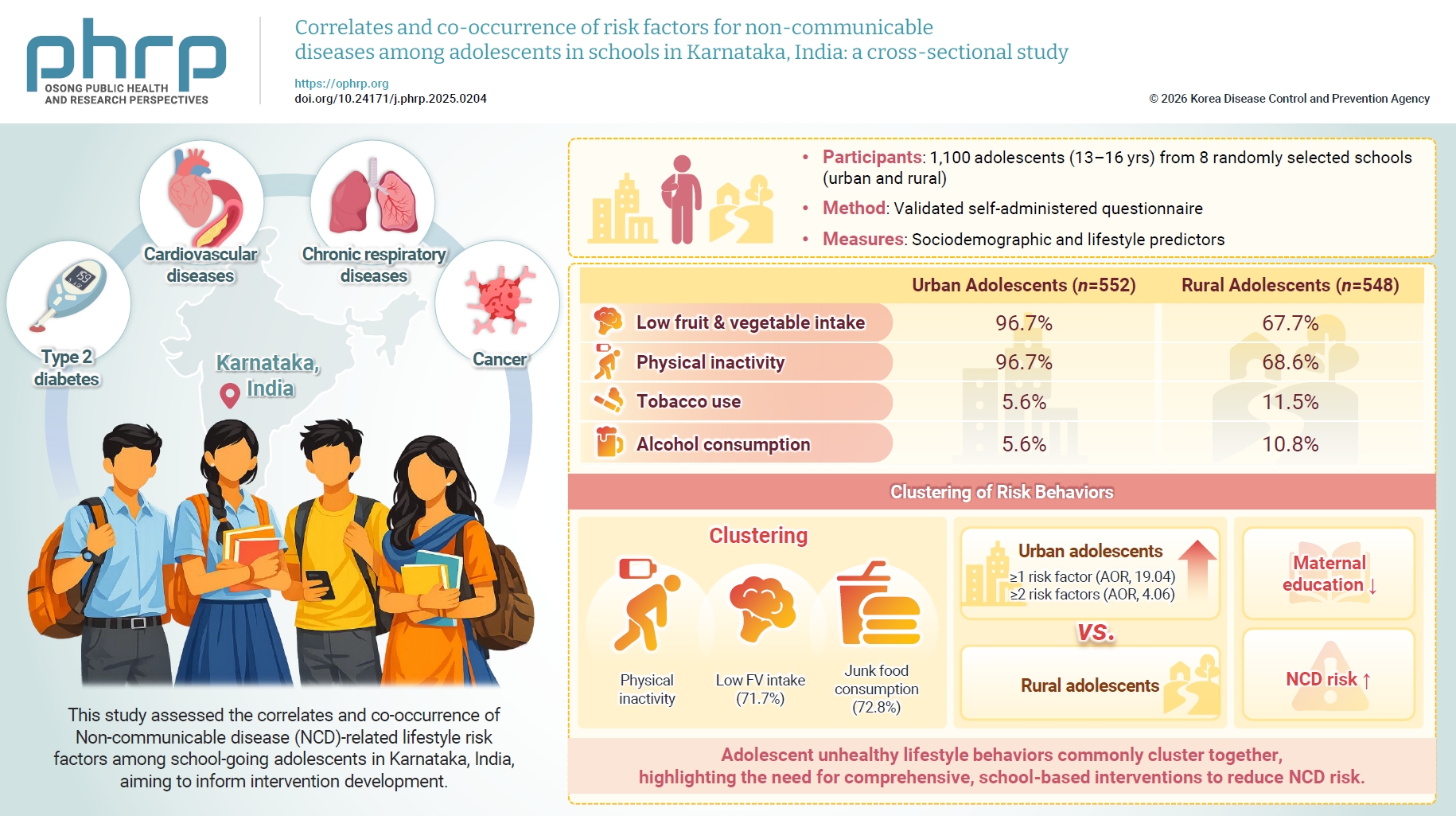
Objectives Non-communicable disease (NCD) risk among adolescents represents a growing concern due to modifiable, lifestyle-related behavioral risk factors. Early identification and control of these factors are essential for prevention. This study assessed the correlates and cooccurrence of NCD-related lifestyle risk factors among school-going adolescents in Karnataka, India, aiming to inform intervention development. Methods: Screening was conducted among 1,100 school adolescents aged 13–16 years from 8 randomly selected urban and rural schools in Karnataka. Data were collected using a validated self-administered questionnaire covering sociodemographic characteristics and social cognitive theory predictors of lifestyle practices. Descriptive statistics, chi-square tests, and logistic regression were employed. Results: Of the 1,100 adolescents surveyed, 552 and 548 were from urban and rural areas, respectively. Both groups reported high rates of insufficient fruit and vegetable (FV) intake (96.7% and 67.7%, respectively), inadequate physical activity (96.7% and 68.6%), tobacco use (5.6% and 11.5%), and alcohol consumption (5.6% and 10.8%). On logistic regression, urban adolescents were significantly more likely than rural peers to exhibit multiple behavioral risk factors, with 19-fold higher odds of having ≥1 factor (adjusted odds ratio [AOR], 19.04; p< 0.001) and 4-fold higher odds of having ≥2 (AOR, 4.06; p < 0.001). Parental (particularly maternal) education was associated with NCD risk (AOR, 1.82; p= 0.001). Physical inactivity significantly co-occurred with low FV intake (71.7%) and junk food consumption (72.8%). Conclusion: Unhealthy lifestyle behaviors among adolescents displayed significant cooccurrence, underscoring the critical need for comprehensive, theory-based school interventions to address multiple interconnected risk factors and mitigate the burden of NCDs.





 First
 Prev


