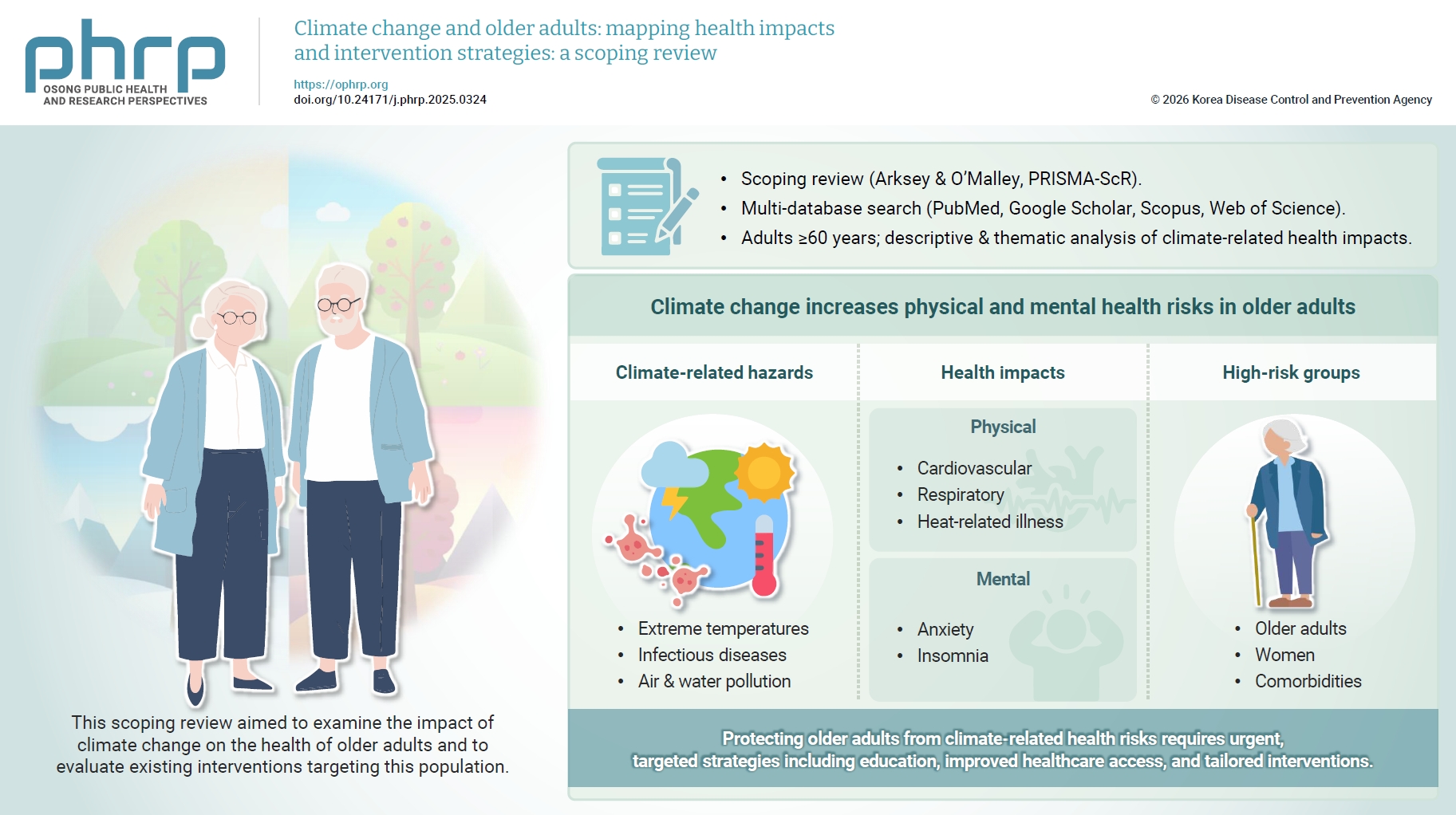
Objectives This scoping review aimed to examine the impact of climate change on the health of older adults and to evaluate existing interventions targeting this population. Methods: The review followed Arksey and O’Malley’s framework and the PRISMA-ScR guidelines. A comprehensive search was conducted across PubMed, Google Scholar, Scopus, and Web of Science. Eligible studies included those focusing on adults aged 60 years and older that examined the physical and mental health impacts of climate change across any geographic setting or level of care. Descriptive and thematic analyses were performed to identify key findings and knowledge gaps. Results: Climate change adversely affects the physical and mental health of older adults through increased exposure to infectious diseases, extreme temperatures, and poor air and water quality. Older adults are particularly vulnerable to heat-related illnesses, cardiovascular events, and respiratory conditions, with women and individuals with comorbidities at higher risk. Climate change is also associated with increased anxiety, insomnia, and other mental health concerns in this population. Social support and targeted interventions—such as community awareness programs and subsidized cooling costs—are associated with reduced risk. Community-based initiatives have demonstrated potential in reducing mortality and enhancing resilience among older adults during extreme weather events. Conclusion: Healthcare professionals should be educated about climate-related health outcomes affecting older adults. Protecting this vulnerable population requires urgent, inclusive, and targeted strategies, including education, improved healthcare access, and tailored interventions.
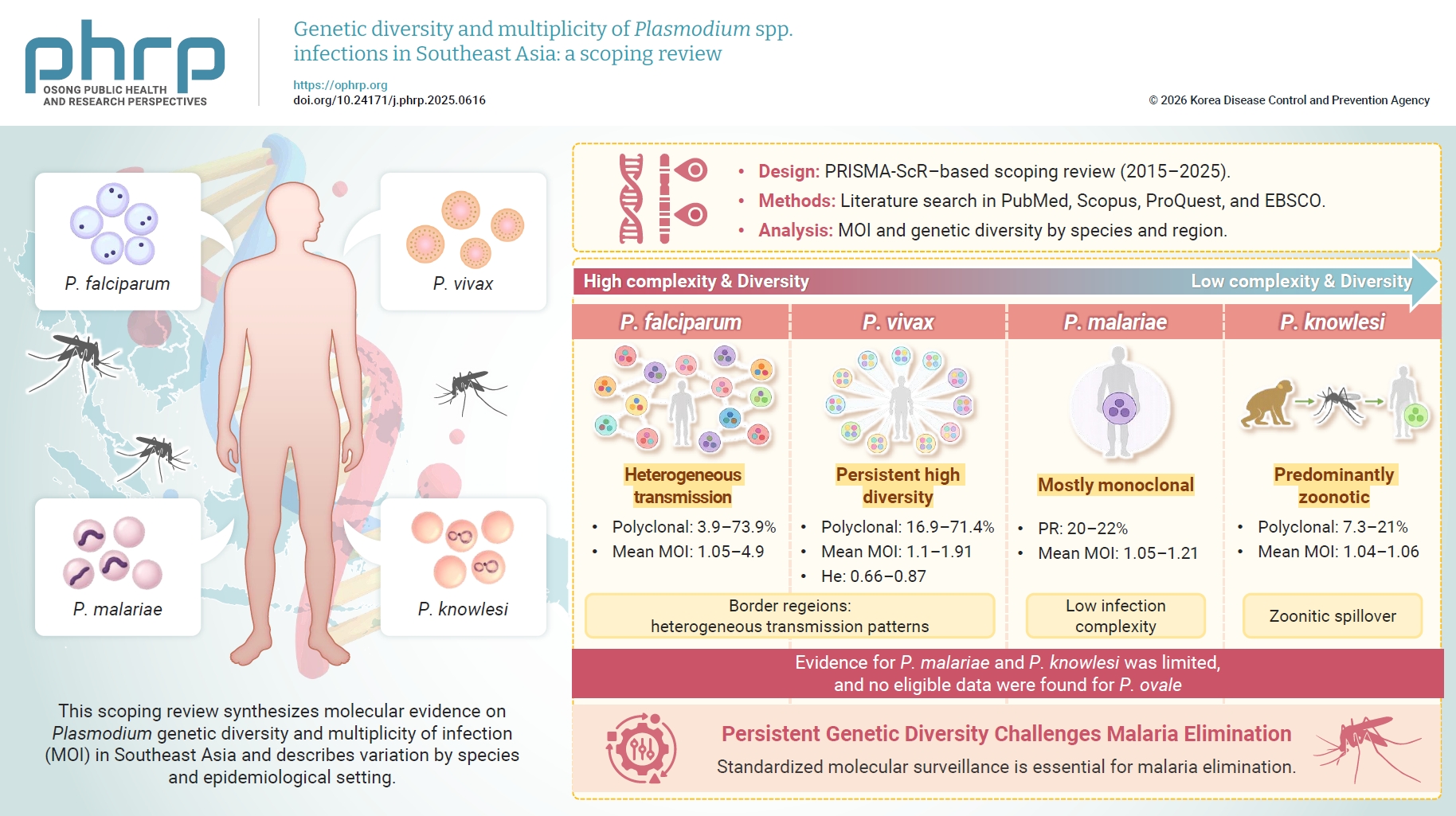
Objectives This scoping review synthesizes molecular evidence on Plasmodium genetic diversity and multiplicity of infection (MOI) in Southeast Asia and describes variation by species and epidemiological setting. Methods: Following Preferred Reporting Items for Systematic Reviews and Meta-Analyses Extension for Scoping Reviews guidelines, we searched PubMed, Scopus, ProQuest, and EBSCO for English language, open-access observational studies published between January 1, 2015 until October 11, 2025. Included studies involved laboratory-confirmed human malaria and reported MOI and genetic diversity data derived from appropriate molecular genotyping methods. Findings were summarized by species, geography, markers, and clinical categories. Results: Sixteen studies were included, comprising 1,609 genotyped Plasmodium falciparum infections, 1,526 Plasmodium vivax infections, 37 Plasmodium malariae infections, and 188 human Plasmodium knowlesi infections. P. falciparum exhibited marked heterogeneity, with polyclonal infection rates ranging from 3.9% to 73.9% and mean MOI ranging from 1.05 to 4.9. P. vivax consistently showed high diversity, with polyclonal infection rates ranging from 16.9% to 71.4% and mean MOI ranging from 1.1 to 1.91, alongside expected heterozygosity values of 0.66–0.87. P. malariae displayed low MOI, whereas P. knowlesi showed polyclonal infection rates ranging from 7.3% to 21% and mean MOI ranging from 1.04 to 1.06. No data were available for Plasmodium ovale. Conclusion: P. falciparum and P. vivax remain genetically diverse across Southeast Asia, with heterogeneous transmission patterns, particularly in border regions. Limited data on P. malariae, human P. knowlesi, and P. ovale highlight the need for standardized molecular surveillance to support targeted elimination efforts.
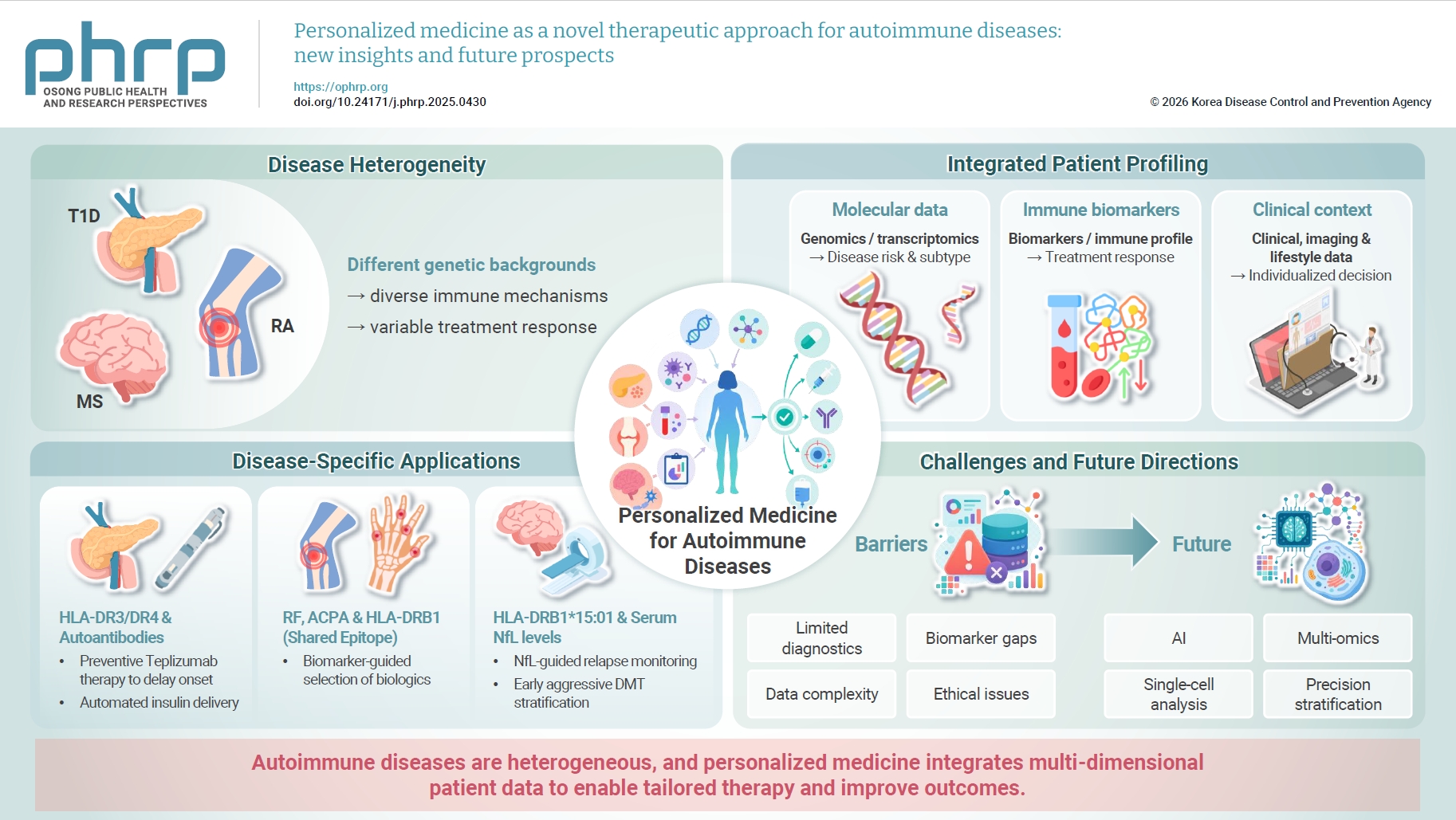
Autoimmune diseases are caused by dysfunction of the immune system, leading to inappropriate attacks on healthy tissues. Because patients have diverse genetic predispositions and heterogeneous responses to therapy, personalized medicine (PM) offers an opportunity to improve treatment effectiveness. PM uses diagnostic assessments to tailor treatment through individualized medical interventions. PM may improve therapeutic precision beyond traditional trial-and-error approaches, reduce adverse consequences, and improve outcomes by integrating genomic and transcriptomic data. PM considers genetic and molecular landscapes, immunologic factors, epigenetic influences, and environmental exposures to assess treatment response. However, challenges remain related to diagnostic access, the slow pace of biomarker identification, technological limitations, sustained patient engagement, data management, and computational requirements. Nevertheless, continued efforts to improve understanding of disease pathophysiology, gene expression, and immune regulation—together with the application of novel technologies and machine learning—may advance PM-based therapies. Additional opportunities include drug–target modeling and exploratory singlecell–based approaches to clarify patient-specific therapeutic mechanisms. This review briefly introduces the potential of PM for type 1 diabetes, rheumatoid arthritis, and multiple sclerosis.
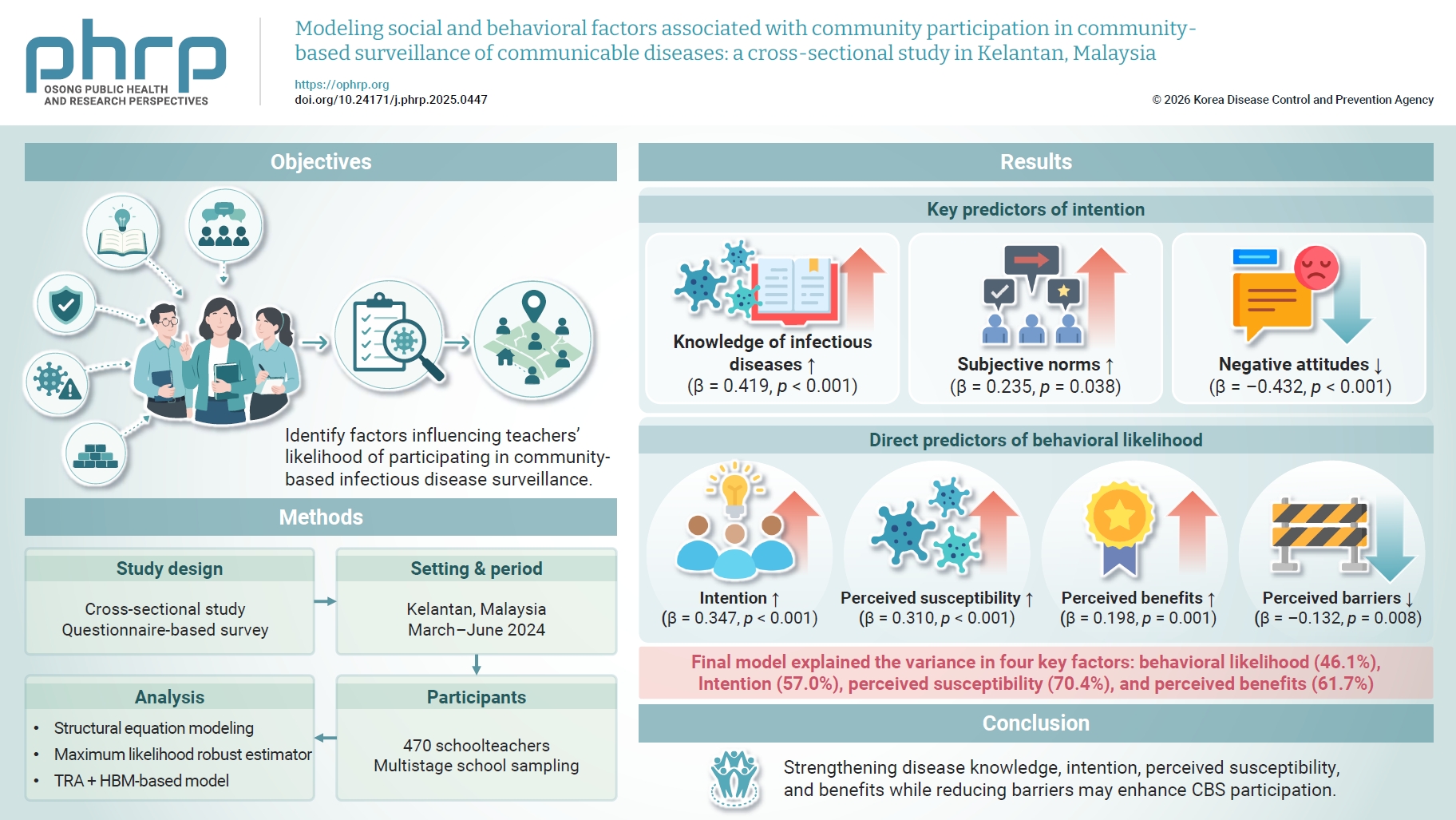
Objectives This study examined the social and behavioral factors influencing community leaders’ participation in community-based surveillance (CBS) of infectious diseases. We hypothesized that knowledge, attitudes, and perceptions significantly predict the behavioral likelihood of engaging in CBS activities. Methods: A cross-sectional study was conducted among 470 schoolteachers in Kelantan, Malaysia, from March to June 2024. Participants were selected using multistage sampling, with random selection of schools followed by convenience sampling of teachers. Data were collected using the validated KAP-CBS-ID questionnaire, which was based on the Theory of Reasoned Action and Health Belief Model. Structural equation modeling was used to analyze relationships among the study variables with the maximum likelihood robust estimator. Results: The final model demonstrated good fit (comparative fit index, 0.921; standardized root mean square residual, 0.071; root mean square error of approximation, 0.040 [90% confidence interval, 0.036–0.044]). Ten significant path relationships were identified, explaining 46.1% of the variance in behavioral likelihood. Knowledge of infectious diseases (β=0.419, p<0.001), subjective norms (β=0.235, p=0.038), and negative attitudes (β=–0.432, p<0.001) significantly influenced intention. Behavioral likelihood was directly predicted by intention (β =0.347, p<0.001), perceived susceptibility (β=0.310, p<0.001), perceived benefits (β=0.198, p=0.001), and perceived barriers (β=–0.132, p=0.008). Self-efficacy showed significant indirect effects through perceived benefits (β=0.785, p<0.001) and perceived susceptibility (β=0.765, p<0.001). Conclusion: Knowledge and psychosocial factors significantly inf luence community engagement in CBS of infectious diseases. Public health interventions should address these interconnected determinants to strengthen early disease detection and reporting systems.
Objectives Scrub typhus, an acute disease caused by Orientia tsutsugamushi and transmitted by larval chigger mites, is a representative autumn febrile illness in the Republic of Korea. We examined epidemiological characteristics underlying spatial heterogeneity in Busan Metropolitan City to inform region-specific prevention and control policies. Methods: We analyzed 1,645 confirmed and suspected scrub typhus cases reported in Busan from 2019 to 2023. Crude incidence rates and age-standardized incidence rates (ASIRs) per 100,000 population were calculated using the 2021 mid-year population. The chi-square test assessed associations between disease occurrence and exposure activities within the preceding 30 days. Correlation analyses examined the relationships of ASIR with environmental indicators, including per capita urban forest area, and epidemiological indicators, including prior infectious disease education. Results: The overall mean ASIR in Busan was 8.35 per 100,000 population, below the national average. However, incidence was higher in peri-urban districts, including Gijang-gun (26.12/100,000) and Gangseo-gu (15.02/100,000), than in central urban districts such as Junggu (2.20/100,000). Higher incidence was observed among women and older adults (≥60 years). ASIR correlated strongly with per capita urban forest area (r=0.92; 95% confidence interval, 0.79–0.97; p<0.001). Regional differences were significant for agriculture/forestry, gardening, and general outdoor activities (p<0.001). Districts with higher incidence also displayed higher rates of infectious disease education, although this may reflect reverse causation. Conclusion: In Busan, scrub typhus incidence was concentrated in peri-urban districts. These findings support region-specific prevention strategies, evaluation of infectious disease education, enhanced mite surveillance, and practical protective measures during fieldwork.
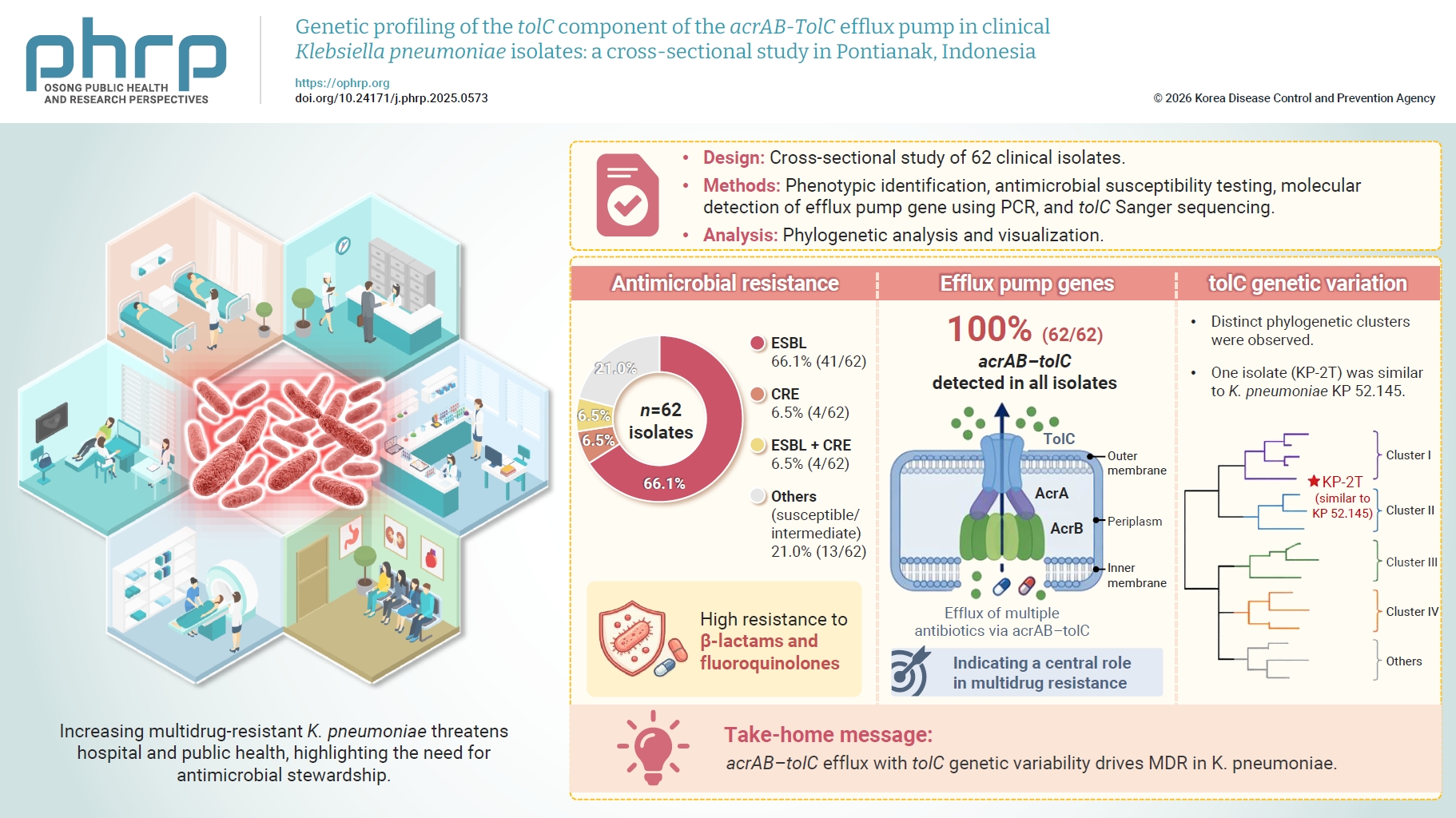
Objectives Klebsiella pneumoniae is a leading cause of hospital-acquired infections. Its increasing prevalence poses substantial challenges to both hospital and public health systems due to the emergence of multidrug-resistant strains. Understanding the epidemiology of K. pneumoniae and its antimicrobial resistance characteristics may support antimicrobial stewardship and infection control programs. A cross-sectional study was conducted from June to November 2025. Methods: A total of 62 isolates underwent phenotypic identification and antimicrobial susceptibility testing using the BD Phoenix system (Becton Dickinson), followed by molecular detection of K. pneumoniae and efflux pump genes. Sanger sequencing was performed on isolates positive for the tolC gene. Results: Among the isolates, 66.1% were classified as extended-spectrum β-lactamase (ESBL) producers, 6.5% as carbapenem-resistant Enterobacterales (CRE), and 6.5% as both ESBL and CRE producers. Most clinical isolates were resistant to ampicillin, cefazolin, ceftazidime, ceftriaxone, ciprofloxacin, and cefepime. The acrAB and tolC genes were detected in all 62 isolates. One isolate showed a genetic profile similar to that of the K. pneumoniae KP 52.145 strain. Conclusion: This study demonstrated a high prevalence of antibiotic resistance among K. pneumoniae isolates and confirmed the presence of efflux pump genes, including tolC, with observable genetic variability. Further investigation of tolC gene evolution is essential, as these genes play critical roles in antibiotic resistance mechanisms.
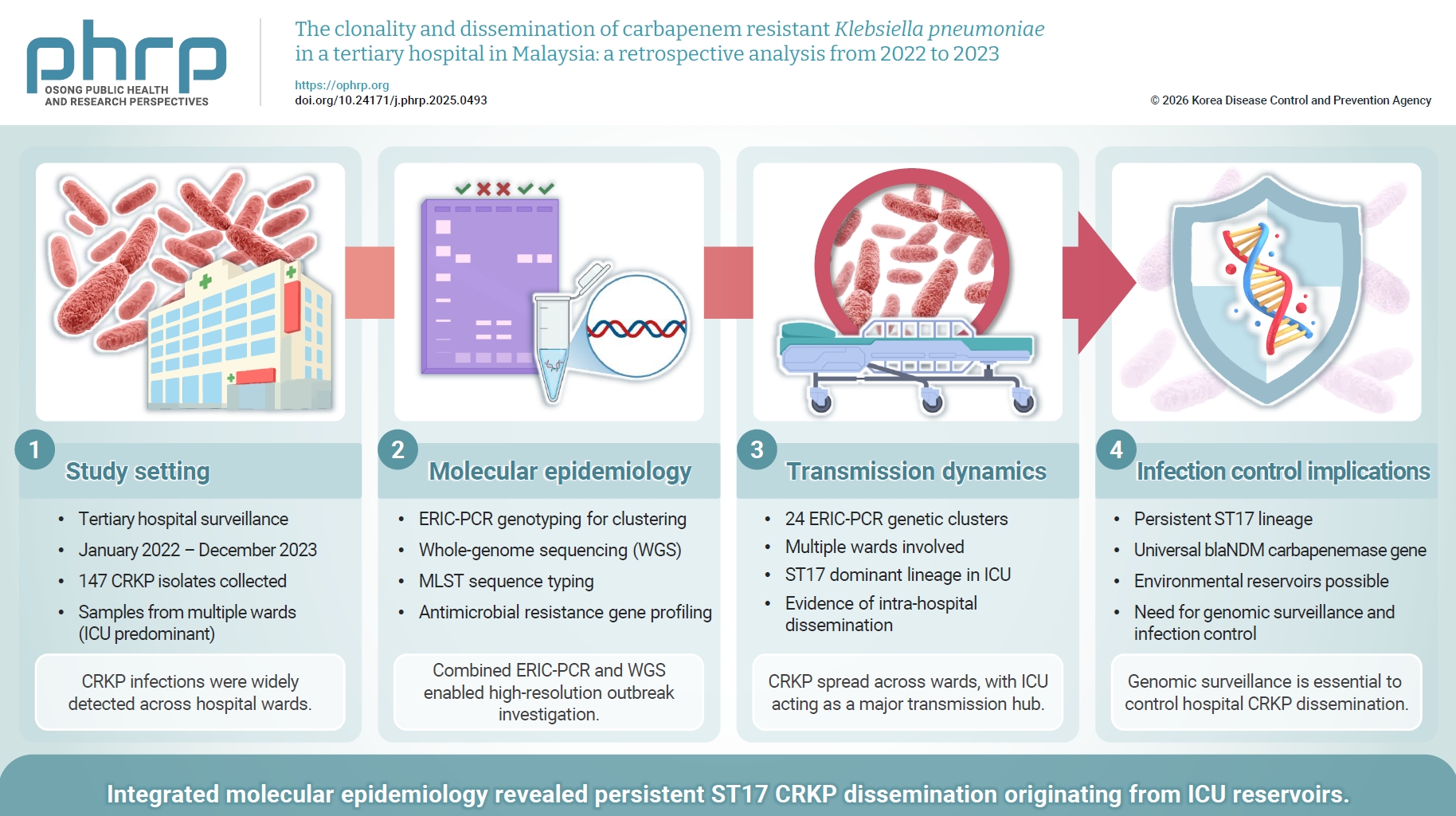
Objectives Cases of nosocomial carbapenem-resistant Klebsiella pneumoniae (CRKP) have been increasing steadily since the 1990s. In this study, we sought to assess CRKP clonal diversity and patterns of dissemination at Hospital Canselor Tuanku Muhriz (HCTM), a tertiary university hospital located in Kuala Lumpur, Malaysia. Methods: From January 2022 to December 2023, all CRKP isolates from HCTM were included in the investigation. Associated patient demographic data and clinical histories were retrieved from hospital records. Antibiotic susceptibility data for the collected isolates were obtained from the HCTM diagnostic laboratory. Molecular typing was performed using enterobacterial repetitive intergenic consensus polymerase chain reaction (ERIC-PCR) to identify genetic clusters. Based on ERIC-PCR clustering results and epidemiological investigations, selected CRKP isolates were subjected to whole-genome sequencing (WGS) to validate clonal relatedness, identify antimicrobial resistance genes, and establish phylogenomic relationships. Results: During the study period, a total of 147 CRKP isolates were recovered from various wards across HCTM. All isolates exhibited resistance to imipenem, meropenem, or ertapenem, with 124 isolates confirmed as carbapenemase producers. ERIC-PCR identified 24 genetic clusters disseminated across 23 wards within HCTM. Twelve CRKP isolates were selected for WGS based on integrated epidemiological investigation and ERIC-PCR genotyping; sequence typing revealed ST17 as the dominant circulating CRKP lineage in the intensive care unit, ward 6E, and possibly across the hospital. The carbapenemase gene bla_NDM was detected in all WGS-analyzed CRKP isolates. Conclusion: Integrating epidemiological investigation, phenotypic testing, molecular typing, and WGS is essential to understand resistance dynamics, map transmission, and guide hospital infection prevention strategies.
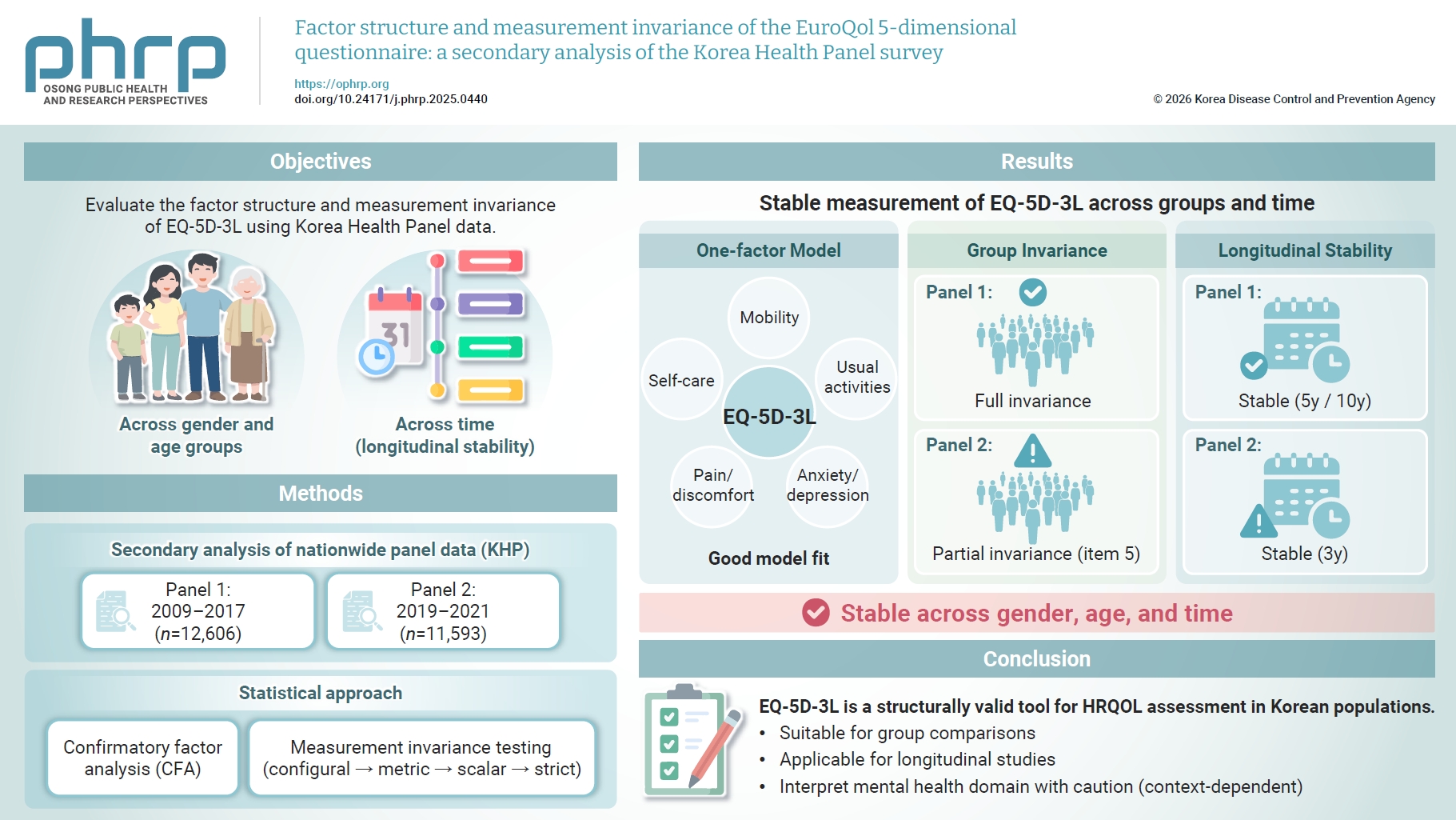
Objectives This study evaluated the EuroQol 5-dimensional questionnaire, 3-level version (EQ5D-3L), using Korea Health Panel (KHP) data by examining its factor structure, measurement invariance across gender and age groups, and longitudinal measurement invariance. Methods: Panel 1 data from the second survey year (2009), when the EQ-5D-3L was first introduced in the KHP, through the 12th year (2017) were analyzed, along with panel 2 data from 2019 to 2021. Confirmatory factor analysis and measurement invariance tests by gender and age groups were conducted within each period. Longitudinal measurement invariance was also evaluated for each period. Results: A 1-factor model demonstrated good fit for the EQ-5D-3L. In panel 1, full measurement invariance across gender and age groups was supported. In panel 2, partial invariance was achieved after relaxing constraints on item 5. Longitudinal measurement invariance was supported over 5- and 10-year intervals in panel 1 and over a 3-year interval in panel 2, indicating temporal stability of the measurement model. Conclusion: The EQ-5D-3L used in the KHP panel 1 and panel 2 datasets demonstrates a stable 1-factor structure and acceptable measurement invariance across key subgroups and over time. These findings support the use of the EQ-5D-3L as an appropriate instrument for assessing health-related quality of life among Korean adults and for longitudinal analyses within large-scale panel surveys.




 First
 Prev


