Risk of COVID-19 transmission on long-haul flights: During the COVID-19 pandemic Jiyun Park, Gye jeong Yeom, Poowin Bunyavejchewin PLOS ONE.2024; 19(8): e0309044. CrossRef
Objectives This study investigated whether weight was managed appropriately in pregnant women with gestational diabetes mellitus (GDM) and examined the association between insufficient gestational weight gain (GWG) and adverse pregnancy outcomes.
Methods The study included 235 pregnant women with GDM from the Korean Pregnancy Outcome Study. GWG from the second to the third trimester (kg/wk) and total GWG (kg) were classified as insufficient, appropriate, or excessive according to the 2009 Institute of Medicine guidelines. Adverse pregnancy outcomes included maternal (hypertensive disorders of pregnancy, preterm birth, cesarean delivery, and delivery complications) and infant (low birth weight, high birth weight, neonatal intensive care unit admission, and congenital anomalies) outcomes.
Results The proportion of pregnant women with GDM who had insufficient GWG from the second to the third trimester was 52.3%, and that of participants with total insufficient GWG was 48.1%. There were no significant associations between insufficient GWG from the second to the third trimester and adverse pregnancy outcomes. Participants with total insufficient GWG had a significantly lower risk of preterm birth (odds ratio [OR], 0.17; 95% confidence interval [CI], 0.05–0.60) and high birth weight (OR, 0.23; 95% CI, 0.07–0.80).
Conclusion Our findings suggest the importance of appropriate weight management and the need for GWG guidelines for pregnant women with GDM.
Citations
Citations to this article as recorded by
Impact of gestational weight gain on adverse pregnancy outcomes in women with gestational diabetes: a retrospective cohort study Amin Moradi, Mehdi Norouzi, Ehsan Mosa Farkhani BMC Pediatrics.2026;[Epub] CrossRef
Risk factors and prediction model for low-birth-weight infants born to women with gestational diabetes mellitus Yu-qing Pan, Xin-xin Huang, Xiu-min Jiang Frontiers in Public Health.2024;[Epub] CrossRef
Objectives Real-time polymerase chain reaction is currently used as a confirmatory test for coronavirus disease 2019 (COVID-19). The test results are interpreted as positive, negative, or inconclusive, and are used only for a qualitative classification of patients. However, the test results can be quantitated using threshold count (Ct) values to determine the amount of virus present in the sample. Therefore, this study investigated the diagnostic usefulness of Ct results through various quantitative analyzes, along with an analysis of clinical and epidemiological characteristics.
Methods Clinical and epidemiological data from 4,642 COVID-19 patients in April 2021 were analyzed, including the Ct values of the RNA-dependent RNA polymerase (RdRp), envelope (E), and nucleocapsid (N) genes. Clinical and epidemiological data (sex, age, underlying diseases, and early symptoms) were collected through a structured questionnaire. A correlation analysis was used to examine the relationships between variables.
Results All 3 genes showed statistically significant relationships with symptoms and severity levels. The Ct values of the RdRp gene decreased as the severity of the patients increased. Moreover, statistical significance was observed for the presence of underlying diseases and dyspnea.
Conclusion Ct values were found to be related to patients’ clinical and epidemiological characteristics. In particular, since these factors are closely related to symptoms and severity, Ct values can be used as primary data for predicting patients’ disease prognosis despite the limitations of this method. Conducting follow-up studies to validate this approach might enable using the data from this study to establish policies for preventing COVID-19 infection and spread.
Citations
Citations to this article as recorded by
Age, sex and seasonal differences in COVID-19 viral load: a Lebanese cross-sectional study Elie Charro, Karolina Jaalouk, Fatima Kourani, Youmna Mrad, Fadi Fakih, Chadi Fakih BMC Infectious Diseases.2025;[Epub] CrossRef
Objectives It is crucial to establish the characteristics of coronavirus disease 2019 (COVID-19) outbreaks at army training centers to develop preventive measures. Therefore, this study aimed to determine the COVID-19 transmission patterns and risk factors in a sequence of outbreaks at an army training center from June to August 2021.
Methods This study included 1,324 trainees at an army training center where outbreaks occurred from June to August 2021. The outbreak was qualitatively analyzed according to the period, attack rate, demographic characteristics, vaccination history, and living areas. An aerodynamic experiment was performed to evaluate aerosol transmission in living areas.
Results Three outbreaks occurred at the army training center from June to August 2021. The first, second, and third outbreaks lasted for 32, 17, and 24 days, and the attack rates were 12.8%, 18.1%, and 8.9%, respectively. Confirmed cases were distributed in all age groups. Recruits and the unvaccinated were at higher risk for COVID-19. The aerodynamic experiment verified the possibility of aerosol transmission within the same living area.
Conclusion COVID-19 transmission at army training centers should be minimized through quarantine and post-admission testing during the latency period as part of integrated measures that include facility ventilation, vaccination, indoor mask-wearing, and social distancing.
Citations
Citations to this article as recorded by
Socioecological Model-based Factors Influencing Respiratory Infection Prevention Behaviors among Soldiers in an Army Training Center Eunbin Jeong, Sookyung Hyun Journal of Korean Public Health Nursing.2024; 38(2): 176. CrossRef
COVID-19 outbreak in a religious village community in Republic of Korea and risk factors for transmission Jiae Shim, Eunju Lee, Eunyoung Kim, Yeonhwa Choi, Giseok Kang, Bryan Inho Kim Osong Public Health and Research Perspectives.2023; 14(2): 110. CrossRef
Epidemiological Characteristics of a COVID-19 Outbreak in a Psychiatric Hospital in Chung-buk Se-Hyuk Jang, Young-Joon Park, Ji-Joo Lee, Woo-Jin Jung Healthcare.2023; 11(16): 2332. CrossRef
Objectives Menstrual hygiene management (MHM) in developing countries is linked to human rights, social justice, and the education and empowerment of young girls. The objective of this study was to assess menstrual hygiene practices and their determinants among adolescent girls, including school dropouts, and the effects of pad distribution programs in urban resettlement areas of Delhi, India.
Methods A cross-sectional study was conducted from March 2019 to February 2020 in urban resettlement colonies and 2 villages of Delhi among 1,130 adolescent girls aged 10 to 19 years, who were interviewed face to face.
Results In total, 954 participants (84.4%) used only disposable sanitary pads, 150 (13.3%) used both sanitary pads and cloths, and 26 (2.3%) used only cloths (n=1,130). Most school-going girls utilized the scheme for pad distribution, but only two-thirds of the girls who were out of school utilized the scheme. In the adjusted analysis, girls with lower educational status, those who had dropped out of school, and those from the Muslim religious community were more likely to use cloths for MHM.
Conclusion More than 4 out of 5 adolescent girls in Delhi in low-income neighborhoods preferred sanitary pads for MHM. The government free pad scheme reached near-universal utilization among school-going girls (97%), but the subsidized pad scheme for girls who did not attend school was insufficiently utilized (75%).
Citations
Citations to this article as recorded by
Advancements in Health Promotion within Schools: A Scoping Review and Bibliometric Analysis (2018–2023) Anujyoti Sonowal, Alaka Omprakash Chandak, Manesh Muraleedharan Journal of Indian Association for Child and Adoles.2026; 22(2): 106. CrossRef
Menstruation physiology knowledge and hygiene practices among adolescent girls from rural and urban backgrounds: a comparative study Indu Khare, Ruchi Kalra International Journal of Reproduction, Contracepti.2026; 15(3): 891. CrossRef
Challenges in menstrual health service delivery to girls and young women in Mumbai slums: provider perspectives Paramita Majumdar, Shireen J. Jejeebhoy, Aparajita Chattopadhyay Culture, Health & Sexuality.2026; : 1. CrossRef
Shifting Preferences: Assessing Women’s Behavioral Intentions to Adopt Menstrual Cups Melisa Rudolph Menezes, Swathi K S, Pallavi Upadhyaya, Brayal D Souza Trends in Psychology.2026;[Epub] CrossRef
Menstrual hygiene practices and WASH practices among women residing in an urban slum in Delhi: a community-based study Sahdev Santra, Nitin Panwar, Sahil Dhama, Abin K. Rajan, Parth Singhal, Anita Verma International Journal Of Community Medicine And Pu.2026; 13(9): 4984. CrossRef
The combined role of education and wealth in menstrual health: Evidence from Bangladesh Mohammad Hridoy Patwary, Md Tazvir Amin, Sumaiya Nusrat, Md Mahabubur Rahman, Alison Parker PLOS One.2026; 21(10): e0346457. CrossRef
Menstrual Hygiene in Adolescent Girls: Findings from a Survey in the Urban Government Schools, Visakhapatnam, India Vandana Valluri, Saivaishnavi Attili, Phani Krishna Chamarty, Tejaswi Prabhanjana, Murali Santosh Preventive Medicine: Research & Reviews.2025; 2(1): 20. CrossRef
Understanding of menstruation among school going adolescent girls in Delhi: a cross-sectional study Divya P. Wangoo, Srishti Yadav, Sahil Goyal, Priya Kataria, Chandrika Agarwal International Journal Of Community Medicine And Pu.2025;[Epub] CrossRef
Menstrual hygiene practices among rural adolescent girls in a north Karnataka village: a cross-sectional study Rachel Sushmita Daniel, Pooja Todalabagi International Journal Of Community Medicine And Pu.2025; 12(2): 857. CrossRef
Period poverty: Menstrual information, product selection, and disposal among urban female nursing students in Bangladesh Md Nahid Uz Zaman, Risa Takashima, Akira Sai, Taro Yamauchi Health & Place.2025; 93: 103467. CrossRef
Menstrual hygiene practices, determinants, and association with reproductive tract infection in India: a large repeated cross-sectional analysis (2015–2021) Mrunali Zode, Baani Sodhi, Saurav Basu Journal of Biosocial Science.2025; 57(3): 385. CrossRef
“I know your problems; take your bag and go home”: a qualitative study using the social-ecological model to understand drivers of suboptimal school and social participation among secondary schoolgirls in Northwest Tanzania Yovitha Sedekia, Saidi Kapiga, Onike Mcharo, John Luwayi, Siwema Keya Sasi, Clare Tanton, Belen Torondel, Jennifer Rubli, Giulia Greco, Philip Ayieko, Elialilia Okello BMC Public Health.2025;[Epub] CrossRef
Assessment of Menstrual Hygiene Practices and Their Determinants Among Adolescent Girls in Urban Slums of India: A Community-Based Cross-Sectional Study Shubhanshu Gupta, Anshika Agarwal, Amita Sharma, Puneet Agrawal Cureus.2025;[Epub] CrossRef
Beyond the Bin: A critical review and strategic framework for sustainable menstrual waste management in India Hema Sudhakar Social Sciences & Humanities Open.2025; 12: 102226. CrossRef
Age-based patterns of menstrual hygiene practices among domestic workers in Kolkata: a correspondence analysis Suparna Ghosh, Baidyanath Pal, Amit Kumar Kisku Discover Public Health.2025;[Epub] CrossRef
Factors Associated with Exclusive Use of Hygienic Methods during Menstruation among Adolescent Girls (15–19 Years) in Urban India: Evidence from NFHS-5 Doli Roy, Nuruzzaman Kasemi, Manik Halder, Malasree Majumder Heliyon.2024; 10(8): e29731. CrossRef
Enhancement of Health-related Quality of Life among School-going Adolescent Girls with Improvement in Menstrual Hygiene Knowledge and Practices Akanksha Goyal, Sunita Agarwal Archives of Medicine and Health Sciences.2024; 12(1): 73. CrossRef
Menstrual practice needs among college going women in Coimbatore district, India: an analytical cross-sectional study Vijayakumar Ramya, Mohan Kumar, Jeevithan Shanmugam, N. Seetharaman, Sushmitha Mahanshetty, Srihari Dhandapani, P. Aparnavi, Thavansree Durairaj, Ramesh Rathinamoorthy Discover Public Health.2024;[Epub] CrossRef
Determination of menstrual hygiene management and genital hygiene behaviors of students: A university example from Turkey Aytül Hadımlı, Ayşenur Akan, Güzin Kardeş, Buket Akkurt, Birsen Karaca Saydam Revista da Escola de Enfermagem da USP.2024;[Epub] CrossRef
Menstrual Hygiene Problems and Challenges Faced by Adolescent Females in Rural Areas: A Narrative Review Vijiya Kashyap, Sonali G Choudhari Cureus.2023;[Epub] CrossRef
Perceived difficulties in maintaining menstrual hygiene practices among indigenous adolescents during seasonal water scarcity periods in Bandarban hill district of Bangladesh: A cross-sectional study Imdadul Haque Talukdar, M.A. Rifat, Plabon Sarkar, Nobonita Saha, Mesfin Kassaye Tessma, Md. Ibrahim Miah International Journal of Hygiene and Environmental.2023; 254: 114268. CrossRef
Menstrual hygiene practices among adolescent women in rural India: a cross-sectional study Aditya Singh, Mahashweta Chakrabarty, Shivani Singh, Rakesh Chandra, Sourav Chowdhury, Anshika Singh BMC Public Health.2022;[Epub] CrossRef
Objectives This study investigated preventive behaviors toward coronavirus disease 2019 (COVID-19) and related factors in a Kurdish Iranian sample.
Methods This online survey was conducted among the population aged 18 and above in Kermanshah Province, in western Iran, in April 2020. Samples were invited and recruited through social media. Data were collected using a questionnaire consisting of 4 sections (questions on demographic variables, risk perception, risk communication, and COVID-19 preventive behaviors) and analyzed using Stata ver. 8.
Results The Pearson correlation test showed that risk communication was significantly correlated with COVID-19 preventive behaviors (r=0.320, p<0.01). In the final model, where the explanatory power increased with the entry of the risk communication variable, the variables explained a total of 14% of variance in COVID-19 preventive behaviors. Sex (β=−0.482), risk perception (β=0.047), and risk communication (β=0.662) were significant determinants.
Conclusion Risk communication and risk perception related to COVID-19, as well as being a woman, were determinants of COVID-19 preventive behaviors.
Citations
Citations to this article as recorded by
A study protocol for co-designing risk communication strategies for hepatitis C virus (HCV) testing among priority populations in Johannesburg district, Gauteng, South Africa Nyeleti P. Chauke, Tivani Mashamba-Thompson, Kuhlula Maluleke Discover Public Health.2026;[Epub] CrossRef
Predisposing factors of using cosmetics in Iranian female students: application of prototype willingness model Shandiz Moslehi, Asghar Tavan, Sajjad Narimani, Fatemeh Ahmadi, Masoomeh Kazemzadeh, Nadia Sedri Frontiers in Psychology.2024;[Epub] CrossRef
Utilizing social media for community risk communication in megacities: analysing the impact of WeChat group information interaction and perception on communication satisfaction during the COVID-19 pandemic in Shanghai Yasai Chen, Yiru Chen, Shan Yu, Shuni Yu BMC Public Health.2024;[Epub] CrossRef
The strongest predictors of compliance with health protocols among marketers and guilds based on the transtheoretical model Shandiz Moslehi, Asghar Tavan, Sajjad Narimani, Fardin shahbazzadeh, Nadia Sedri, Sama Sabahi BMC Public Health.2024;[Epub] CrossRef
Adaptive measures to deal with the next pandemic caused by climate change in at-risk groups Laleh Hassani, Reihaneh Taheri Kondar, Sajjad Narimani, Amin Ghanbarnejad BMC Psychiatry.2024;[Epub] CrossRef
Understanding Australian Government Risk Communication Early in the COVID-19 Pandemic: Sociodemographics, Risk Attitudes and Media Consumption Yiyun Shou, Louise M. Farrer, Amelia Gulliver, Eryn Newman, Philip J. Batterham, Michael Smithson Journal of Health Communication.2023; 28(4): 254. CrossRef
Risk perception and avoidance of preventive behavior on the COVID‐19 among cancer patients Mehdi Khezeli, Asghar Tavan, Sajjad Narimani, Vahideh Hoseini, Elham Zare Hosseinzadeh, Parisa Motamedi Health Science Reports.2023;[Epub] CrossRef
The Role of Risk Communication in Shaping Health-Protective Behavior Amid the COVID-19 Pandemic in Thailand Suphunnika Termmee, Bing Wang Social Sciences.2023; 12(10): 551. CrossRef
Objectives This study aimed to test the effect of photodynamic therapy (PDT) on the inhibition and removal of biofilms containing multidrug-resistant Acinetobacter baumannii.
Methods Using multidrug-resistant A. baumannii strains, an antibiotic susceptibility test was performed using the Gram-negative identification card of the Vitek 2 system (bioMérieux Inc., France), as well as an analysis of resistance genes, the effects of treatment with a light-emitting diode (LED) array using Radachlorin (RADA-PHARMA Co., Ltd., Russia), and transmission and scanning electron microscopy to confirm the biofilm-inhibitory effect of PDT.
Results The antibiotic susceptibility test revealed multiple resistance to the antibiotics imipenem and meropenem in the carbapenem class. A class-D–type β-lactamase was found, and OXA-23 and OXA-51 were found in 100% of 15 A. baumannii strains. After PDT using Radachlorin, morphological observations revealed an abnormal structure due to the loss of the cell membrane and extensive morphological changes, including low intracellular visibility and small vacuoles attached to the cell membrane.
Conclusion PDT involving a combination of LED and Radachlorin significantly eliminated the biofilm of multidrug-resistant A. baumannii. Observations made using electron microscopy showed that PDT combining LED and Radachlorin was effective. Additional studies on the effective elimination of biofilms containing multidrug-resistant bacteria are necessary, and we hope that a treatment method superior to sterilization with antibiotics will be developed in the future.
Citations
Citations to this article as recorded by
A Dual‐Locking G‐Quadruplex DNA Targeting Strategy Based on a Tumor‐Accumulating Porphyrin‐Ruthenium(II) Conjugate for Type I Photodynamic Therapy Qiong Wu, Wan‐Wan Hong, Jia‐Hui Shi, Ren‐Shan Deng, Wan‐Qi Chen, Chan‐Ling Yuan, Wen‐Jie Mei Aggregate.2026;[Epub] CrossRef
Infective Endocarditis, Antibiotic Resistance and Dentistry: Clinical and Medico-Legal Aspects Fabio Massimo Sciarra, Giovanni Caivano, Emanuele Di Vita, Mario Palermiti, Pietro Messina, Enzo Maria Cumbo, Luigi Caradonna, Salvatore Nigliaccio, Davide Alessio Fontana, Antonio Scardina, Giuseppe Alessandro Scardina Oral.2026; 6(1): 20. CrossRef
Effectiveness of photodynamic therapy against Escherichia coli: Influence of light dose fractionation in the presence of porphyrins, methylene blue and zinc phthalocyanine disulfonate Robert Bajgar, Lucie Valkova, Marketa Kolarikova, Katerina Barton Tomankova, Renata Vecerova, Milan Kolar, Hana Kolarova Journal of Photochemistry and Photobiology B: Biol.2026; 278: 113426. CrossRef
Acinetobacter baumannii
: Mechanisms of antibiotic resistance, quorum sensing regulation, and current therapeutic strategies
Jamil Allen G. Fortaleza, Kevin Smith P. Cabuhat, Christian Joseph N. Ong, Ferdinand A. Mortel, Grace D. Bacalzo, Jose Jurel M. Nuevo Virulence.2026;[Epub] CrossRef
Porphyrin and photodynamic therapy as tools against Acinetobacter baumannii Isabela Dadda dos Reis, Marcelle Oliveira Garcia, Suelen Lopes Lussanrriaga, Kamila Furtado da Cunha, Bernardo Almeida Iglesias, Daniela Fernandes Ramos Antonie van Leeuwenhoek.2026;[Epub] CrossRef
Photophysical properties of Radachlorin photosensitizer in solutions of different pH, viscosity and polarity A.V. Belashov, A.A. Zhikhoreva, I.A. Gorbunova, M.E. Sasin, Sh.S. Shayakhmedov, I.V. Semenova Spectrochimica Acta Part A: Molecular and Biomolec.2024; 305: 123480. CrossRef
Applications of Antimicrobial Photodynamic Therapy in Aquaculture: Effect on Fish Pathogenic Bacteria Edith Dube, Grace Emily Okuthe Fishes.2024; 9(3): 99. CrossRef
Understanding the biofilm development of Acinetobacter baumannii and novel strategies to combat infection Naji Naseef Pathoor, Akshaya Viswanathan, Gulshan Wadhwa, Pitchaipillai Sankar Ganesh APMIS.2024; 132(5): 317. CrossRef
PDT-Induced Variations of Radachlorin Fluorescence Lifetime in Living Cells In Vitro Andrey V. Belashov, Anna A. Zhikhoreva, Anna V. Salova, Tatiana N. Belyaeva, Ilia K. Litvinov, Elena S. Kornilova, Irina V. Semenova Photonics.2023; 10(11): 1262. CrossRef
Objectives Caring for adolescents with developmental disabilities (DD) is stressful and challenging, and mothers usually provide care for these children in Korea. This study aimed to identify factors influencing quality of life (QoL) in mothers of adolescents with DD.
Methods A predictive design was used. Data were collected from a web-based survey administered to a convenience sample of 154 mothers of adolescents with DD from October to November 2020. Data were analyzed using the t-test, analysis of variance, Pearson correlation coefficients, and multiple regression.
Results Perceived health, depression, and family strength were significantly correlated with QoL. Multiple regression showed that family strength, perceived health, depression, and monthly household income influenced the participants’ QoL, and these factors accounted for 69.2% of variance in QoL. Family strength was the factor most strongly affecting QoL (β=0.39).
Conclusion The study results indicate that health professionals and policy-makers need to pay attention to the overall QoL and physical and psychological health of mothers of adolescents with DD. Since our findings raise the importance of family strength in the QoL of this population, programs to improve family strength need to be implemented and strengthened. Interventions to improve perceived health and decrease depression should be applied, and knowledge on adolescent characteristics and changes should be delivered to caregivers when providing education and consultations. The findings will be helpful for developing educational and counseling programs for this population.
Citations
Citations to this article as recorded by
Quality of Life of and Its Predictors Among Caregivers of Children With Developmental Disorders Saman Waqar, Hayaa Ali, Eeman Ali, Asim Niaz, Rukhsana Roshan Journal of Autism and Developmental Disorders.2026;[Epub] CrossRef
Relationship Between Depressive Symptoms and Quality of Life in Family Caregivers of Dependent Children: A Systematic Review with Meta-Analysis Francisco Segura-Galán, Catalina López-Martínez, Belen Gutiérrez-Sánchez, Rafael del-Pino-Casado Healthcare.2026; 14(17): 2765. CrossRef
Quality of Life and Associated Factors Among Primary Caregivers of People Living with Mental Illness in Ethiopia: A Cross-Sectional Study Abinet Zewudie, Gari Hunduma, Mandaras Tariku, Dawud Wedaje, Hamdi Fekredin Zakaria, Abdi Temesgen, Dawit Abdi, Hirko Assefa, Rudwan Yasin Health Services Insights.2025;[Epub] CrossRef
Investigation on quality of life of parents of children with cerebral palsy and its influencing factors: A cross-sectional study Ling Wan, Lin Jiang, Sha Chen, Minghui Yin, Qiong He Medicine.2025; 104(44): e45441. CrossRef
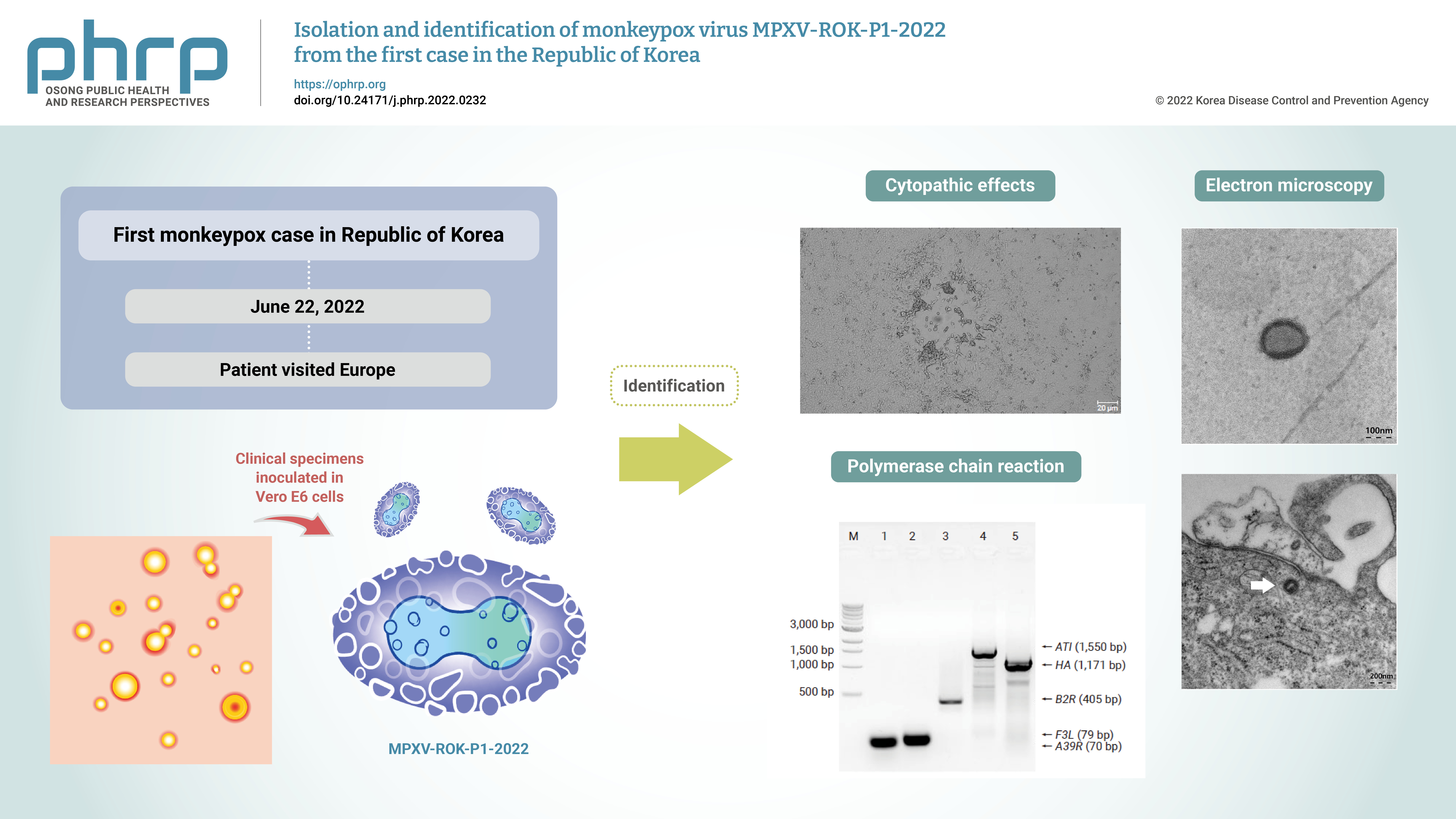
Objectives Monkeypox outbreaks in nonendemic countries have been reported since early May 2022. The first case of monkeypox in the Republic of Korea was confirmed in a patient who traveled to Europe in June 2022, and an attempt was made to isolate and identify the monkeypox virus (MPXV) from the patient’s specimens.
Methods Clinical specimens from the patient were inoculated in Vero E6 cells. The isolated virus was identified as MPXV by the observation of cytopathic effects on Vero E6 cells, transmission electron microscopy, conventional polymerase chain reaction
(PCR), and sequencing of PCR products.
Results Cytopathic effects were observed in Vero E6 cells that were inoculated with skin lesion swab eluates. After multiple passages from the primary culture, orthopoxvirus morphology was observed using transmission electron microscopy. In addition, both MPXV-specific (F3L and ATI) and orthopoxvirus-specific genes (A39R, B2R, and HA) were confirmed by conventional PCR and Sanger sequencing.
Conclusion These results indicate the successful isolation and identification of MPXV from the first patient in the Republic of Korea. The isolated virus was named MPXV-ROK-P1-2022.
Citations
Citations to this article as recorded by
MPXV: Update on Morphological and Morphogenesis Aspects Through Transmission and Scanning Electron Microscopies and 3D Reconstruction Debora Ferreira Barreto‐Vieira, Milene Dias Miranda, Marcos Alexandre Nunes da Silva, Andressa Santos de Almeida, Ana Luisa Teixeira de Almeida, Derick Mendes Bandeira, Vivian Neuza S. Ferreira, Alice Santos Rosa, Wendell Girard‐Dias, Bráulio Soares Archa Journal of Medical Virology.2025;[Epub] CrossRef
Ultrasensitive one-pot detection of monkeypox virus with RPA and CRISPR in a sucrose-aided multiphase aqueous system Yue Wang, Yixin Tang, Yukang Chen, Guangxi Yu, Xue Zhang, Lihong Yang, Chenjie Zhao, Pei Wang, Song Gao, Frederick S. B. Kibenge, Ruijie Deng, Wei Chen, Shuang Yang Microbiology Spectrum.2024;[Epub] CrossRef
Molecular Methods for Diagnosis of Monkeypox: A Mini-review Rodrigo Michelini de Oliveira Thomasi, Thais da Silva Correa, Dalise Silva do Carmo, Déborah Fernandes Rodrigues, Luiz Vinicius da Silva Correa, Sandra Rodrigues Xavier, Líria Souza Silva, Jonatas Oliveira da Silva, Michelli dos Santos, Alessandra da Silv Current Molecular Medicine.2024; 24(10): 1208. CrossRef
Factors Predicting the Intention to Engage in Self-Protective Behavior against Monkeypox Infection among Thai People Awirut Singkun, Wichan Phibarn, Wichaporn Intharachuti, Arunothai Derramon, Thitika Kimise Journal of Health Research.2024;[Epub] CrossRef
Epidemiological, Clinical, and Virological Investigation of the First Four Cases of Monkeypox in Cartagena during the 2022 Outbreak Steev Loyola, Mashiel Fernández-Ruiz, Doris Gómez-Camargo Pathogens.2023; 12(2): 159. CrossRef
원숭이두창바이러스의 분리 배양과 전장유전체 정보 분석 민지 이, 진원 김, 치환 최, 화철 신, 명민 최, 상은 이, 화중 이, 윤석 정 Public Health Weekly Report.2023; 16(15): 464. CrossRef
Overview of Diagnostic Methods, Disease Prevalence and Transmission of Mpox (Formerly Monkeypox) in Humans and Animal Reservoirs Ravendra P. Chauhan, Ronen Fogel, Janice Limson Microorganisms.2023; 11(5): 1186. CrossRef
How to cope with suspected mpox patients in the outpatient clinic Nam Joong Kim, Sun Huh Journal of the Korean Medical Association.2023; 66(5): 325. CrossRef
An Updated Review on Monkeypox Viral Disease: Emphasis on Genomic Diversity Ali Rabaan, Nada Alasiri, Mohammed Aljeldah, Abeer Alshukairiis, Zainab AlMusa, Wadha Alfouzan, Abdulmonem Abuzaid, Aref Alamri, Hani Al-Afghani, Nadira Al-baghli, Nawal Alqahtani, Nadia Al-baghli, Mashahed Almoutawa, Maha Mahmoud Alawi, Mohammed Alabdull Biomedicines.2023; 11(7): 1832. CrossRef
Monkeypox (Mpox) virus isolation and ultrastructural characterisation from a Brazilian human sample case Milene Dias Miranda, Gabriela Cardoso Caldas, Vivian Neuza Ferreira, Ortrud Monika Barth, Aline de Paula Dias da Silva, Mayara Secco Torres Silva, Beatriz Grinsztejn, Valdiléa Gonçalves Veloso, Thiago Moreno Souza, Edson Elias da Silva, Debora Ferreira Ba Memórias do Instituto Oswaldo Cruz.2023;[Epub] CrossRef
Isolation and Characterization of Monkeypox Virus from the First Case of Monkeypox — Chongqing Municipality, China, 2022 Baoying Huang, Hua Zhao, Jingdong Song, Li Zhao, Yao Deng, Wen Wang, Roujian Lu, Wenling Wang, Jiao Ren, Fei Ye, Houwen Tian, Guizhen Wu, Hua Ling, Wenjie Tan China CDC Weekly.2022; 4(46): 1019. CrossRef



 First
 Prev


