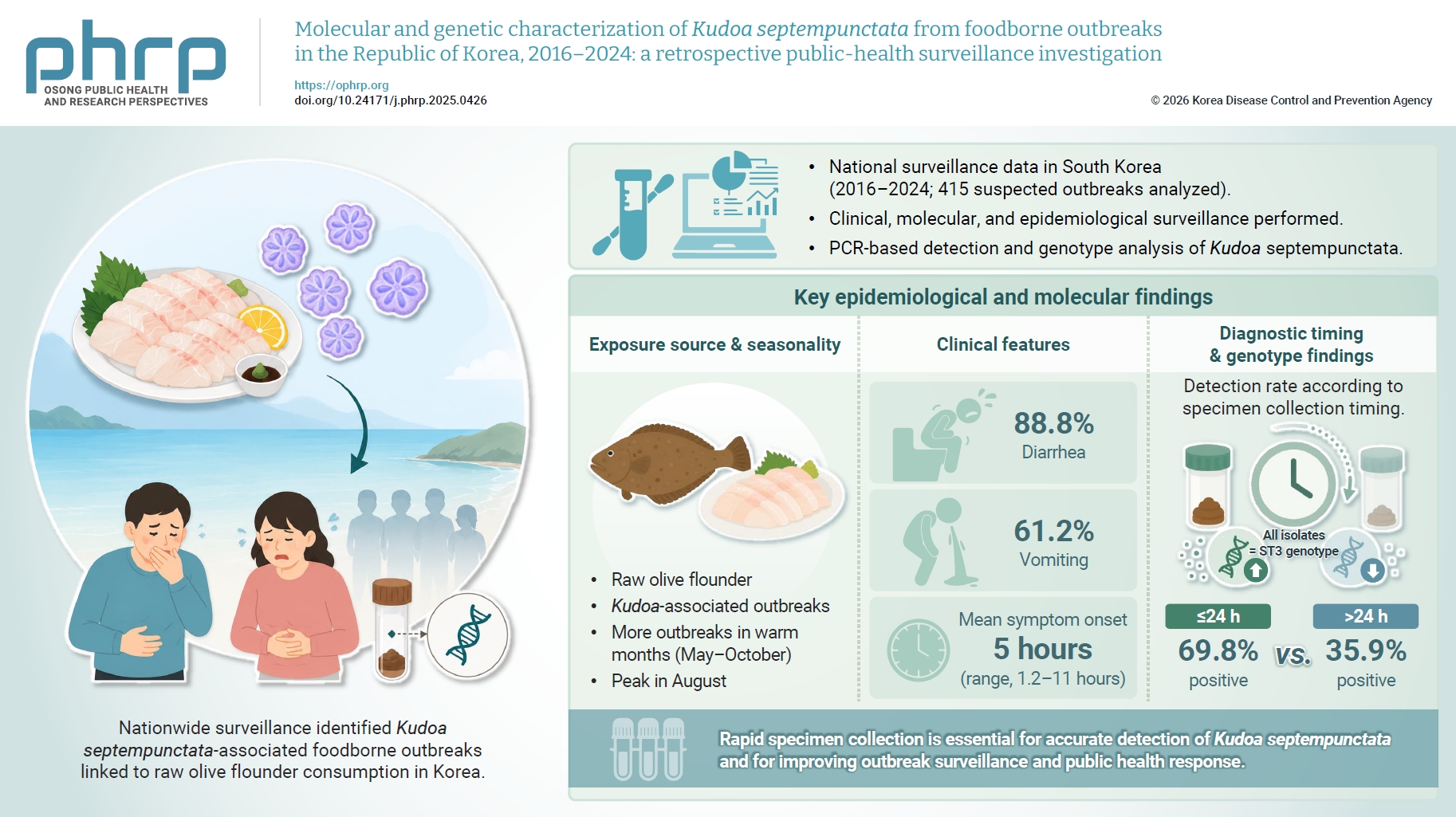
Objectives Kudoa septempunctata is a marine myxosporean parasite implicated in seafood-borne acute gastroenteritis, predominantly associated with the consumption of raw olive flounder. This study aimed to characterize the molecular and genetic features of K. septempunctata-associated with foodborne outbreaks in the Republic of Korea from 2016 to 2024. Methods: We reviewed 415 suspected foodborne outbreaks reported through national surveillance between 2016 and 2024. Among these, 37 outbreaks with complete clinical, epidemiological, and laboratory data from 2020 to 2024—including K. septempunctata testing and genotyping—were analyzed in detail. Results: Diarrhea (88.8%) and vomiting (61.2%) were the most common symptoms. The detection rate of K. septempunctata was significantly higher in specimens collected ≤24 hours after raw fish consumption (69.8%) than in those collected > 24 hours after consumption (35.9%). Outbreak occurrence was higher during warmer months (May–October) than during other periods, although this difference was not statistically significant. All sequences obtained from patient specimens belonged to sequence type 3 (ST3) of K. septempunctata. Conclusion: Since 2020, the proportion of reported outbreaks associated with Kudoa has increased, indicating its continued public health relevance. The timing of specimen collection is a key determinant of K. septempunctata detection, as diagnostic yield declines significantly when specimens are collected more than 24 hours after exposure. These findings highlight the need for standardized rapid investigation protocols and an integrated surveillance system linking clinical data with seafood supply-chain information.


 First
 Prev


