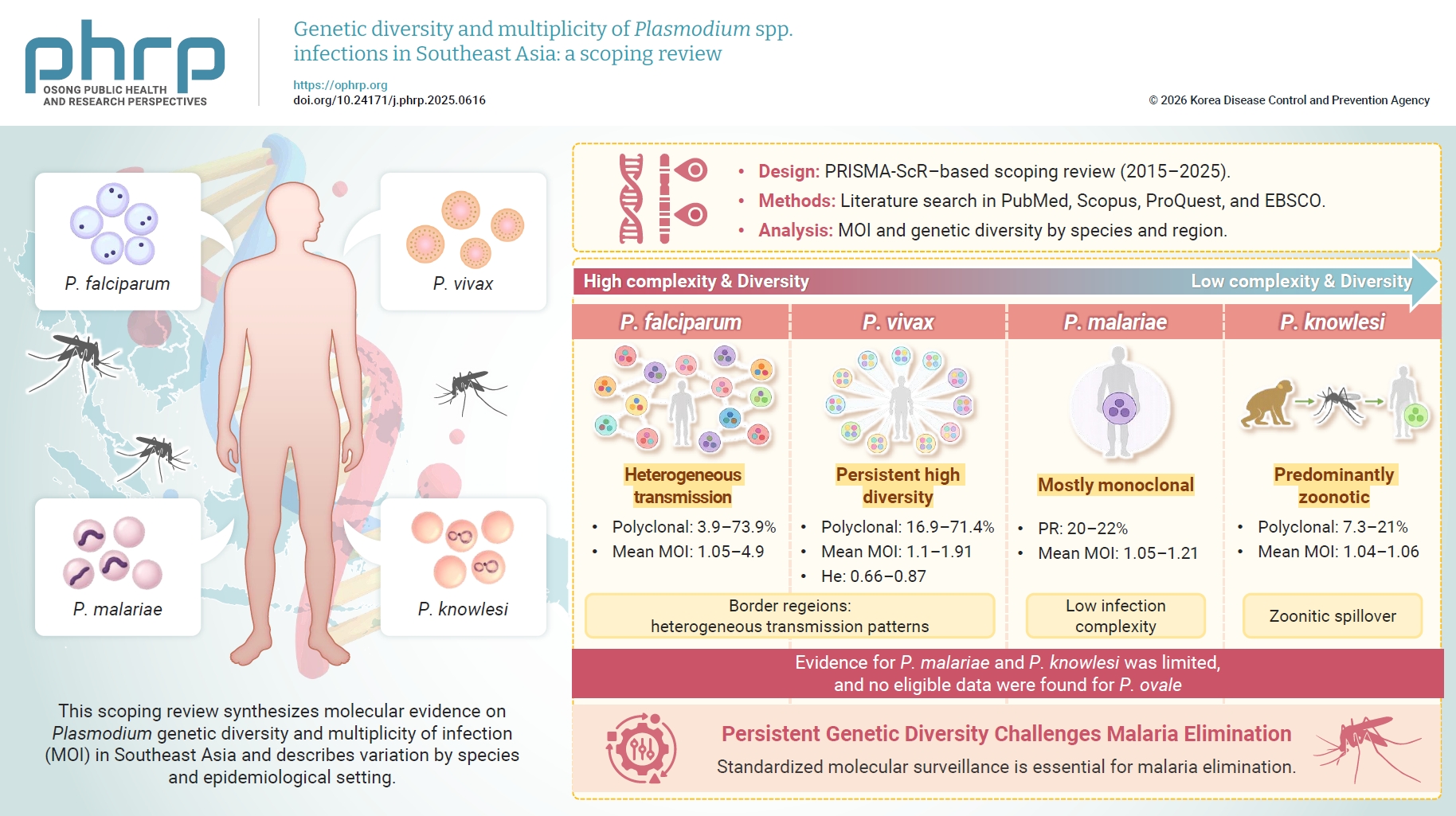
Objectives This scoping review synthesizes molecular evidence on Plasmodium genetic diversity and multiplicity of infection (MOI) in Southeast Asia and describes variation by species and epidemiological setting. Methods: Following Preferred Reporting Items for Systematic Reviews and Meta-Analyses Extension for Scoping Reviews guidelines, we searched PubMed, Scopus, ProQuest, and EBSCO for English language, open-access observational studies published between January 1, 2015 until October 11, 2025. Included studies involved laboratory-confirmed human malaria and reported MOI and genetic diversity data derived from appropriate molecular genotyping methods. Findings were summarized by species, geography, markers, and clinical categories. Results: Sixteen studies were included, comprising 1,609 genotyped Plasmodium falciparum infections, 1,526 Plasmodium vivax infections, 37 Plasmodium malariae infections, and 188 human Plasmodium knowlesi infections. P. falciparum exhibited marked heterogeneity, with polyclonal infection rates ranging from 3.9% to 73.9% and mean MOI ranging from 1.05 to 4.9. P. vivax consistently showed high diversity, with polyclonal infection rates ranging from 16.9% to 71.4% and mean MOI ranging from 1.1 to 1.91, alongside expected heterozygosity values of 0.66–0.87. P. malariae displayed low MOI, whereas P. knowlesi showed polyclonal infection rates ranging from 7.3% to 21% and mean MOI ranging from 1.04 to 1.06. No data were available for Plasmodium ovale. Conclusion: P. falciparum and P. vivax remain genetically diverse across Southeast Asia, with heterogeneous transmission patterns, particularly in border regions. Limited data on P. malariae, human P. knowlesi, and P. ovale highlight the need for standardized molecular surveillance to support targeted elimination efforts.


 First
 Prev


