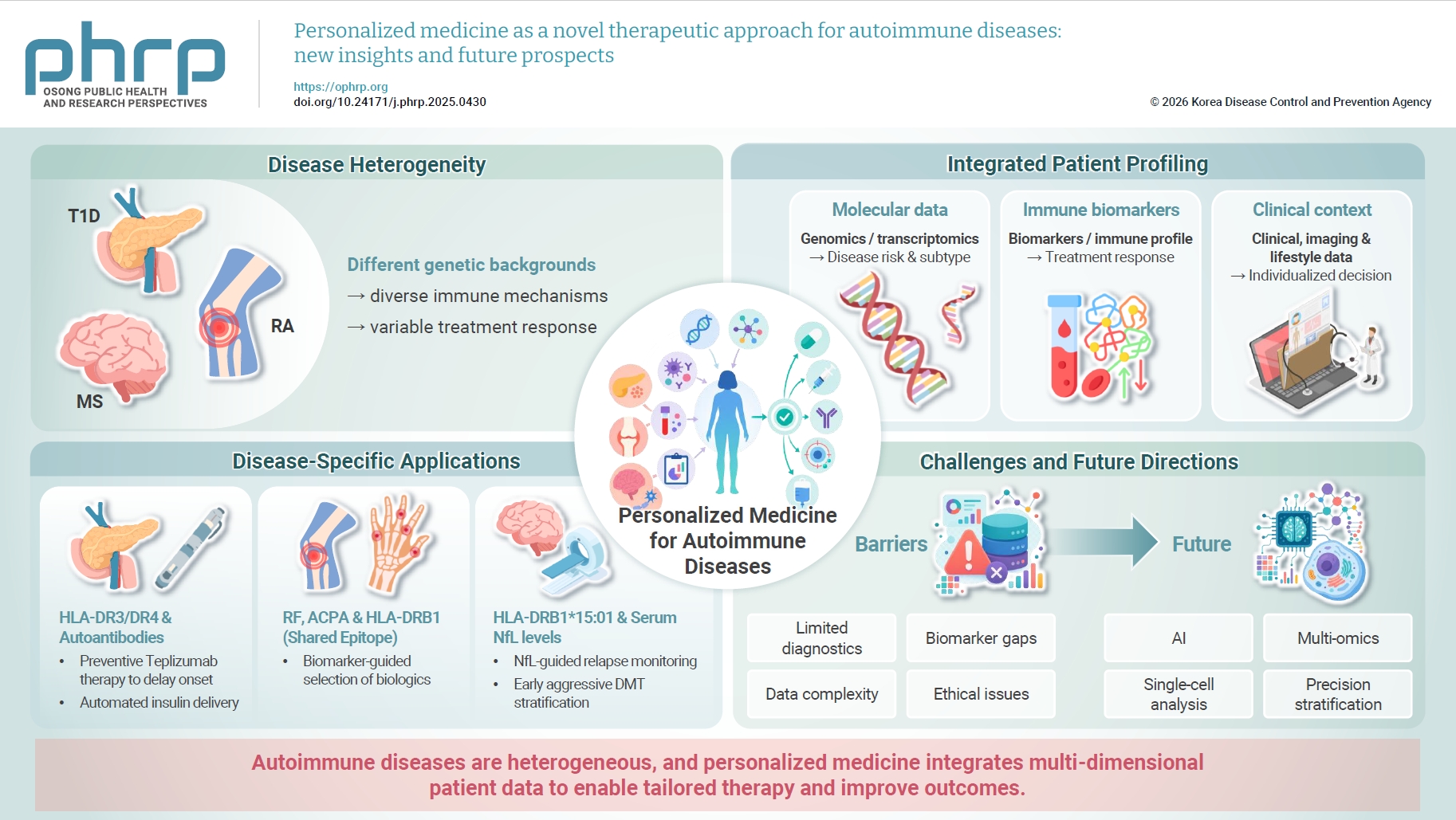
Autoimmune diseases are caused by dysfunction of the immune system, leading to inappropriate attacks on healthy tissues. Because patients have diverse genetic predispositions and heterogeneous responses to therapy, personalized medicine (PM) offers an opportunity to improve treatment effectiveness. PM uses diagnostic assessments to tailor treatment through individualized medical interventions. PM may improve therapeutic precision beyond traditional trial-and-error approaches, reduce adverse consequences, and improve outcomes by integrating genomic and transcriptomic data. PM considers genetic and molecular landscapes, immunologic factors, epigenetic influences, and environmental exposures to assess treatment response. However, challenges remain related to diagnostic access, the slow pace of biomarker identification, technological limitations, sustained patient engagement, data management, and computational requirements. Nevertheless, continued efforts to improve understanding of disease pathophysiology, gene expression, and immune regulation—together with the application of novel technologies and machine learning—may advance PM-based therapies. Additional opportunities include drug–target modeling and exploratory singlecell–based approaches to clarify patient-specific therapeutic mechanisms. This review briefly introduces the potential of PM for type 1 diabetes, rheumatoid arthritis, and multiple sclerosis.


 First
 Prev


