Introduction
The coronavirus disease 2019 (COVID-19) pandemic led to a reconceptualization of infectious diseases as systemic disruptions affecting society as a whole. Gross domestic product (GDP) per capita declined in nearly 95% of global economies in 2020, marking the most widespread concurrent economic decline since 1870 [
1,
2]. Global GDP declined by 3.4%, and the G20 economies contracted by 3.1%. In contrast, the Republic of Korea’s GDP declined by only 1.0% in 2020 and rebounded with 4.1% growth in 2021 [
3,
4]. This resilience was rooted in the nation's robust public health infrastructure, early testing, and coordinated communication led by the Korea Disease Control and Prevention Agency (KDCA) [
5].
This preparedness can be traced to the 2015 Middle East respiratory syndrome (MERS) outbreak [
6]. After difficulties controlling MERS, the Republic of Korea invested in disease-control infrastructure, including emergency operation centers and isolation facilities. Nevertheless, the crisis exposed systemic limitations during the early response period, particularly a shortage of trained field epidemiological investigators and fragmented information systems. These weaknesses showed that preparedness depends on skilled human resources and an integrated, data-driven information system capable of rapid analysis and decision support [
7].
In response to these gaps, the KDCA implemented 2 major initiatives in 2024: the Training Programs for Public Health Workforce (TPPHW), a systematic program to train and expand the infectious disease response workforce, and the advancement of the Infectious Disease Information System (IDIS) and the Infectious Disease Big Data Platform [
5]. Both programs aim to improve early detection, support evidence-based decision-making, and reduce economic losses from large-scale outbreaks. The training programs prepare epidemiological investigation officers and frontline healthcare practitioners for prompt response, whereas the IDIS links reporting, laboratory data, and quarantine management within an integrated digital network. These initiatives represent systemic investments in pandemic preparedness and may contribute to economic stabilization during public health emergencies.
Similar efforts have been implemented elsewhere. The U.S. Centers for Disease Control and Prevention launched the BioSense Platform to improve readiness for and responses to public health threats [
8]. The European Centre for Disease Prevention and Control launched the European Surveillance System (TESSy) in 2008 to standardize and provide communicable disease surveillance data [
9]. The World Health Organization (WHO) also promotes digital transformation through its Health Information System Strategy 2024–2030, which emphasizes data interoperability and early-warning systems [
10]. In addition, WHO developed OpenWHO, which enables large-scale training across geographical distances [
11–
13]. These initiatives demonstrate the importance of digital transformation, early warning, and workforce training in public health preparedness.
Nonetheless, empirical evidence on economic effectiveness remains limited. Few studies have empirically assessed the cost-benefit impact of preparedness programs [
14]. Evidence remains especially limited regarding whether investments in workforce training and integrated surveillance information systems reduce economic losses during pandemics.
To address this gap, this study used a cost-benefit analysis (CBA) framework to assess the economic effectiveness of infectious disease workforce training and integrated information system development, measured as reductions in pandemic-related GDP losses relative to program costs. CBA has received little attention as a framework for analyzing pandemic preparedness investments. This study addresses that methodological gap by developing a structured CBA estimation model combining expert elicitation with scenario-based sensitivity analysis, making economic evaluation feasible when intervention-specific outcome data are scarce.
This study had 3 objectives: first, to develop a CBA-based estimation model for the economic evaluation of public health emergency preparedness; second, to estimate the economic benefits of the KDCA’s TPPHW and IDIS; and third, to assess the economic justification for sustained government investment in preparedness infrastructure. This study reframes prevention as an economically justifiable form of risk management, and its results may inform national policy, advance the application of CBA methods in this field, and contribute to international discussion on economically sustainable pandemic preparedness.
This analysis focused on direct macroeconomic benefits. Although preparedness activities may also reduce morbidity and mortality, these substantial health benefits fell outside the economic scope of this study.
Materials and Methods
Analytical Approach
This study employed a CBA framework with the parameters derived from structured expert elicitation and existing literature.
First, a literature review was conducted to examine domestic and international policies, research reports, academic publications, and internal data provided by the KDCA. This review established the contextual background and identified trends in workforce training and information system development for infectious disease response. Second, consultations and structured 2-stage surveys were conducted with public health experts and stakeholders, including KDCA officials, system users, and field specialists. The 2-stage survey incorporated field-level insights to enhance the practical validity of the findings. Third, a CBA was conducted to assess the economic effectiveness of 2 core policy initiatives: (1) training infectious disease response personnel and (2) developing the IDIS. The CBA model and its indicators were tailored to the characteristics of these national public health programs.
Economic Evaluation Framework
To assess the economic feasibility of these initiatives, standard CBA indicators were applied [
15,
16], including net present value (NPV), benefit-cost ratio (BCR), and internal rate of return (IRR). NPV represents the difference between discounted total benefits and total costs over time; a positive NPV indicates that a project is economically viable. BCR measures the ratio of discounted benefits to discounted costs (BCR >1: expected benefits outweigh costs). IRR is defined as the discount rate at which the present value (PV) of benefits equals the PV of costs. When the IRR exceeds the social discount rate, the project is considered economically sound. This study focused on NPV and BCR because they are generally considered more appropriate than IRR for assessing investment justification in public-sector projects. NPV is sensitive to project scale and is therefore useful for assessing the absolute magnitude of economic value, whereas BCR provides a comparative efficiency measure across projects and can inform prioritization decisions.
Estimation of Benefits from the TPPHW Involved in Infectious Disease Response
The benefits of government-funded programs can be categorized into 2 types: (1) market-creation benefits and (2) cost-reduction benefits. The present analysis focused primarily on cost-reduction benefits rather than market-creation effects. The economic benefits of specialized workforce training reflected the extent to which such programs can reduce economic losses associated with pandemic outbreaks. The estimation model incorporated the following 4 core components: (1) the estimated total economic loss from past pandemic events; (2) the proportion of outbreak-related economic loss averted through timely response; (3) the contribution rate of professional response personnel to reducing these losses; and (4) the project contribution rate of the KDCA’s TPPHW within the broader national infectious disease response framework.
Figure 1 presents the estimation formula for pandemic damage cost-reduction benefits from TPPHW. The first 2 components were derived from historical data and previous findings. The remaining 2 were calculated from expert surveys.
In
Figure 1, the total estimated pandemic loss was derived from historical averages for major global outbreaks since the establishment of WHO in 1948, including Asian flu (1957), Hong Kong flu (1968), severe acute respiratory syndrome (2002), H1N1 influenza (2009), MERS (2012), and COVID-19 (2019). These data were adjusted for annual occurrence probabilities. Second, the proportion of loss averted through timely response was estimated by simulating low-risk and high-risk scenarios that differed according to the degree of pandemic spread. Third, the contribution rate of professional personnel represented the proportion of total pandemic loss reduction attributable to trained response professionals. Finally, the project contribution rate was defined as the proportion of all national infectious disease training efforts attributable to the KDCA, including programs for infection control officers, epidemiological investigation officers, local government field practitioners, and reserve response personnel. These 4 parameters formed the basis for estimating the pandemic loss-reduction benefits of TPPHW.
Estimation of Benefits from the IDIS
For the IDIS, benefits were estimated using a cost-reduction framework analogous to that applied to workforce training. The pandemic loss-reduction benefit of the IDIS was calculated as the product of the following factors: (1) the estimated total economic loss from pandemic events; (2) the proportion of outbreak-related economic loss averted through timely response; (3) the contribution rate of information systems to reducing pandemic-related losses; and (4) the project contribution rate of the KDCA’s IDIS relative to the total national infectious disease information infrastructure.
Figure 2 presents the estimation formula for pandemic damage cost-reduction benefits from the IDIS.
The first 2 components of the estimation formula are identical to those used for TPPHW. The third component represented the proportion of total loss reduction attributable to the use of national-level digital and data-driven systems to accelerate outbreak response. This coefficient was derived through expert consultations and interviews with key operational personnel. The project contribution rate of the IDIS indicated the relative weight of the KDCA’s system within the national landscape of infectious disease surveillance and control platforms. These 4 parameters allowed estimation of the economic value of the IDIS as a component of rapid epidemic response by quantifying its role in reducing pandemic-related damage through improved data integration, timeliness, and decision support.
Data Collection
Loss-reduction contribution rates and project contribution rates for workforce training and information systems were estimated through an expert knowledge elicitation (EKE) process using a 2-stage structured survey. EKE was used because direct measurement of counterfactual outcomes was not feasible in this policy context, a common challenge in cost-benefit analyses of complex public health interventions. Consistent with established practice, EKE was used as a structured and transparent method for quantifying informed expert judgments rather than as a substitute for causal inference [
17].
The expert panel consisted of 29 department- and division-level chief officials at the KDCA, each with more than 10 years of professional experience in infectious disease prevention and response. The survey was deliberately restricted to senior executives with direct experience across KDCA operations. Their broad, cross-functional perspective positioned them to provide balanced judgments regarding the relative contributions of key response components.
In the first survey stage, experts were asked to allocate relative contribution weights across 10 key operational domains that played critical roles in the Republic of Korea’s COVID-19 response. These domains were identified from the “COVID-19 White Paper” published by the KDCA in 2025 as major contributors to successful pandemic management. Workforce training and information systems were intentionally excluded at this stage to avoid double counting in subsequent analyses. The domains included epidemiological investigation, diagnostic testing, patient management, vaccination, and other response activities. Respondents were instructed to distribute 100 percentage points across the 10 domains to reflect their relative contributions to overall rapid response capacity.
The first-stage survey question was phrased as follows: “To achieve a rapid response to infectious diseases, activities across multiple domains must operate in coordination. The 10 domains listed below represent key activities that played important roles during the COVID-19 response. Please consider the extent to which each domain contributed to the overall response and assign a contribution weight (%) to each domain, such that the total across all domains equals 100%.”
In the second stage, the same experts evaluated the relative contribution of 2 cross-cutting factors within each of the 10 operational domains: (A) training of response personnel and (B) information systems. Experts were asked to estimate the proportion of each domain’s total contribution attributable to workforce training, including training programs conducted by the KDCA and by all relevant institutions nationwide.
The corresponding survey question was formulated as follows: “Within each of the 10 domains that contributed to rapid response, what percentage of the domain’s overall contribution do you believe is attributable to training for response personnel, including all relevant training programs implemented by the KDCA and other related institutions nationwide? Please enter a numerical value.”
An identical estimation procedure was applied to information systems. Each expert completed the survey individually and without interaction with other respondents.
The quantitative estimates from this 2-stage expert survey constituted the empirical foundation for calculating the loss-reduction contribution rates of workforce training programs and information systems in the subsequent CBA. Respondents assigned percentage contributions to individual domains, which were treated as additive components in the model. In actual public health emergency responses, however, these factors often operate synergistically. Therefore, the analysis may underestimate the compounded benefit of multiple preparedness components working in coordination.
Results
Expert Survey Results
The results of the 2-stage expert survey are presented in
Tables 1–
3.
Table 1 presents the first-stage survey results, showing estimated sectoral contributions to the rapid response process during COVID-19.
Tables 2 and
3 present the estimated relative contributions of 2 cross-cutting factors within each domain: training for response personnel and information systems, respectively.
These quantitative estimates formed the empirical foundation for calculating the loss-reduction contribution rates of TPPHW and IDIS in the subsequent CBA. Based on the 2-stage survey, the loss-reduction contribution rates of workforce training and information systems were calculated by multiplying each respondent’s reported overall contribution for each domain by the
within-domain proportion attributed to each factor, as shown in
Tables 4 and
5, respectively.
As
Tables 4 and
5 show, the analysis yielded the following key findings: (1) The aggregate contribution of workforce training to rapid pandemic response averaged 31.1%, with a median of 26.4% and a standard deviation (SD) of 11.7% (
Table 4). (2) The aggregate contribution of information systems to rapid response averaged 24.9%, with a median of 18.5% and a SD of 10.1% (
Table 5).
These findings suggest that human resource development and information system development contributed at comparable levels to the Republic of Korea’s pandemic response.
Economic Effects of the TPPHW Involved in Infectious Disease Response
For the CBA, budgetary data on training and education for the infectious disease response workforce were obtained from the KDCA for the 3 most recent fiscal years (
Table 6). These figures served as the baseline cost inputs for estimating the economic efficiency and overall BCR of the national workforce development program. The dataset included expenditures for major subprograms, thereby capturing the broad scope of the KDCA’s workforce capacity-building initiatives.
Assumptions for Benefit Estimation
Several baseline assumptions were established to estimate the pandemic loss-reduction benefits associated with TPPHW. Total estimated pandemic loss was calculated as the product of 3 parameters: (1) the decline in national GDP expected during a pandemic event similar to COVID-19, (2) the duration of the pandemic, and (3) the annual probability of occurrence.
For reference, the Republic of Korea’s nominal GDP in 2024 was approximately 2,557 trillion Korean won (KRW). Assuming an average real GDP growth rate of 1.7% based on 2023–2024 data and an average inflation rate of 2.0% over the past decade, nominal GDP was projected to grow by 3.7% annually [
18]. The GDP contraction rate during a pandemic was conservatively assumed to be 0.5%, with a duration of 6 months and an annual occurrence probability of 5%. These 2 estimates were conservatively assumed based on historical data and prior empirical studies [
19,
20]. Since the establishment of WHO in 1948, 4 major pandemics have occurred, each causing a GDP contraction of at least 0.5%. The proportion of loss averted through timely response was set at 10%, reflecting estimates from previous research [
21].
The contribution rate of trained personnel to pandemic loss reduction was assumed to be 31.1%, corresponding to the mean derived from expert interviews. Sensitivity bounds were established at 19.4% (mean–1 SD) and 42.8% (mean+1 SD) to account for uncertainty. The project contribution rate of the KDCA’s training initiatives, defined as the share of total national infectious disease training efforts directly implemented by the agency, was assumed to be 53.6%, identical to that of the IDIS. Sensitivity limits for the TPPHW contribution rate were set at 40.8% (mean−1SD) and 66.4% (mean+1SD).
To convert future cost and benefit streams into PVs, a social discount rate of 4.5% was applied, following the Korea Development Institute (KDI) guidelines for preliminary feasibility studies [
22]. All estimates were discounted to the end of 2024 over a 10-year evaluation horizon. Cost inputs were based on KDCA budget allocations for 2023–2025, with post-2025 expenditures assumed to increase by 2.0% annually, reflecting the average inflation rate over the previous decade. Finally, benefits from workforce training were assumed to begin accruing after a 1-year implementation lag, representing the time required for trained personnel to contribute effectively to pandemic response capacity.
CBA results
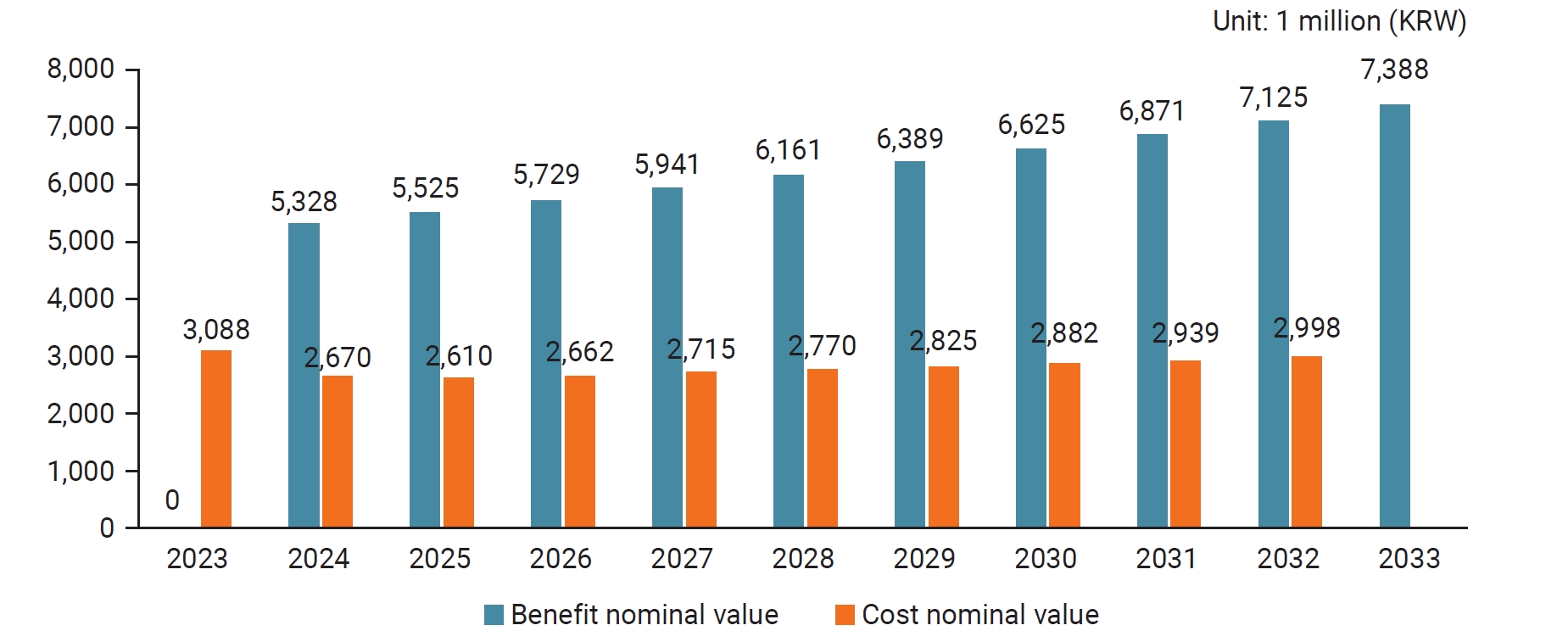
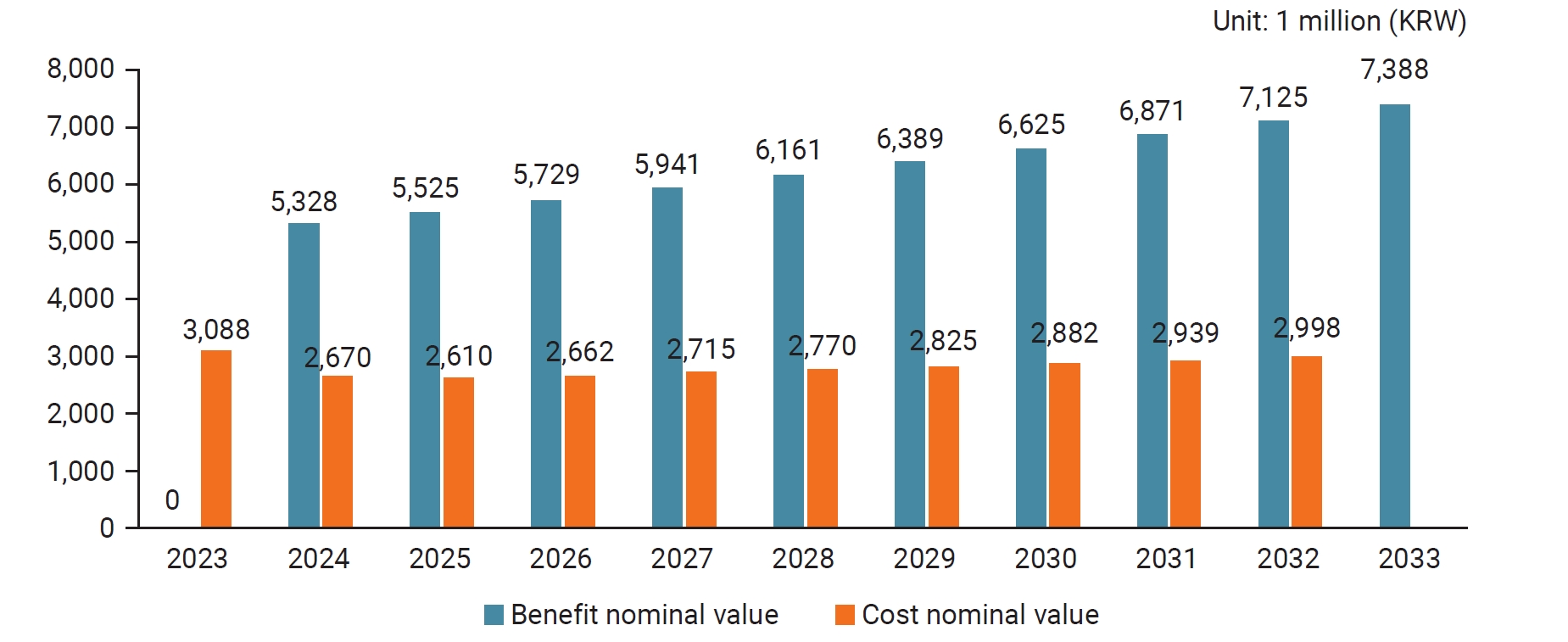
Based on the estimated parameters, the pandemic loss-reduction benefits of TPPHW were estimated at 5,328 million KRW as of the end of 2024 and 7,388 million KRW as of the end of 2033 (
Figure 3).
As shown in
Figure 3, the total nominal benefits of the KDCA’s TPPHW were estimated to reach 55,694 million KRW over the 10-year projection period (2024–2033). When discounted at a social discount rate of 4.5%, the PV of these benefits was 51,479 million KRW as of 2024. In contrast, the cumulative costs of the KDCA’s workforce training and education investments over 2023–2032 were estimated at 28,160 million KRW in nominal terms, with a discounted PV of 24,282 million KRW as of the end of 2024.
These results indicate that the PV of expected benefits substantially exceeded total program costs, suggesting strong economic justification for continued and potentially expanded investment in national infectious disease response training. Under the assumed social discount rate of 4.5%, the CBA produced a BCR of 2.120 and an NPV of 27,196 million KRW. Because the BCR exceeded 1.0 and the NPV was positive, the KDCA’s TPPHW appeared economically viable and yielded benefits that substantially outweighed implementation costs. This outcome provides empirical support for sustained investment in human resource development for national epidemic preparedness.
Sensitivity analysis results
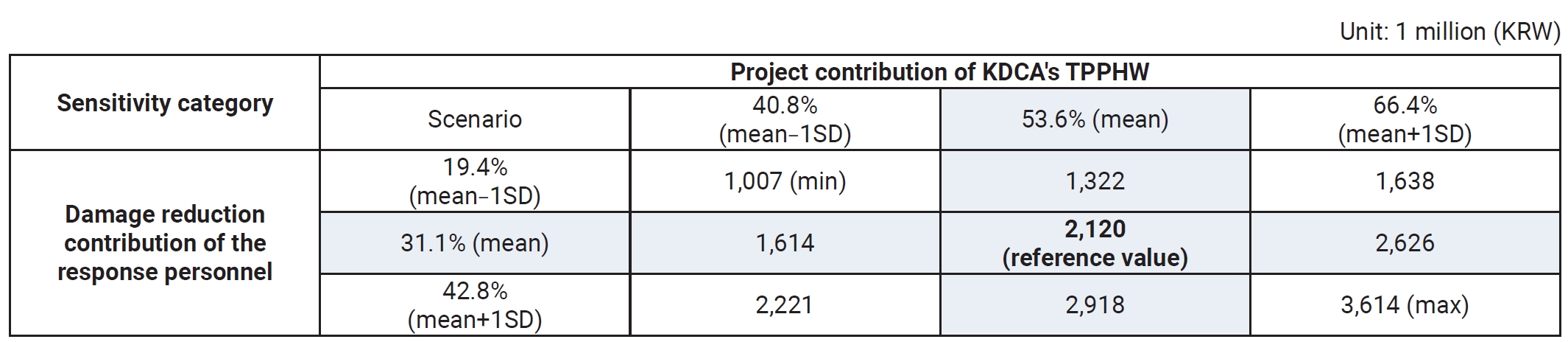
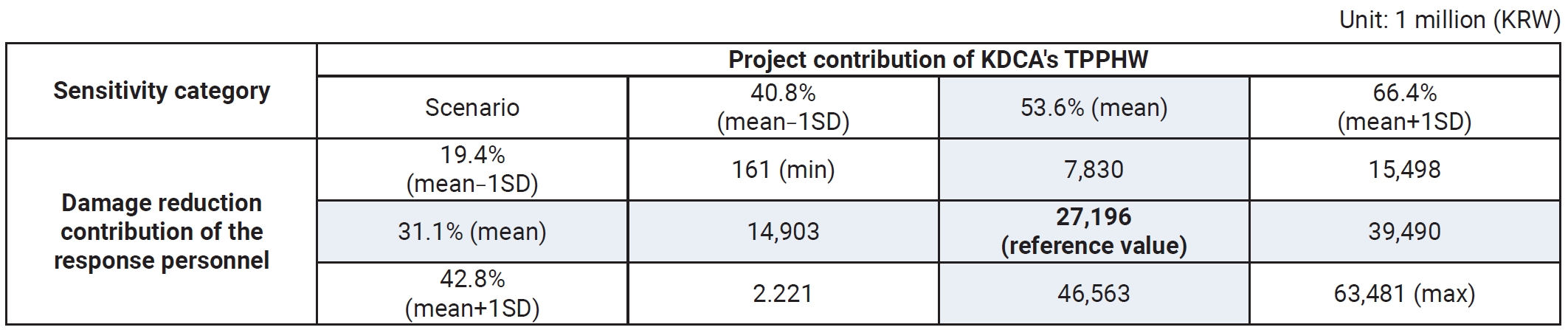
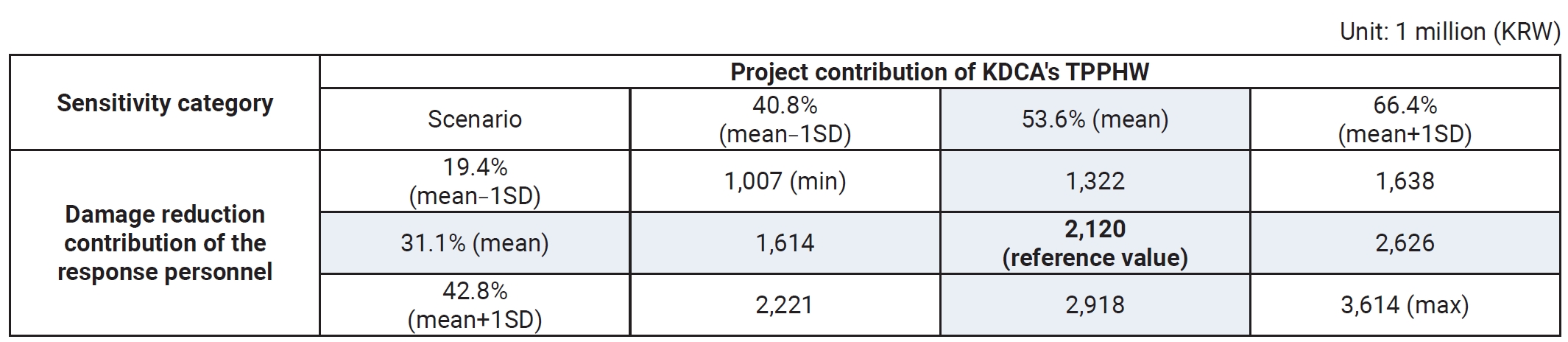
Sensitivity analysis was conducted to examine the robustness of the cost-benefit results under varying assumptions for 2 key parameters: (1) the loss-reduction contribution rate of trained personnel (mean±1 SD, 19.4%–42.8%) and (2) the project contribution rate of the KDCA’s TPPHW (mean±1 SD, 40.8%–66.4%).
The BCR ranged from 1.007 to 3.614, centered on the baseline value of 2.120 (
Figure 4).
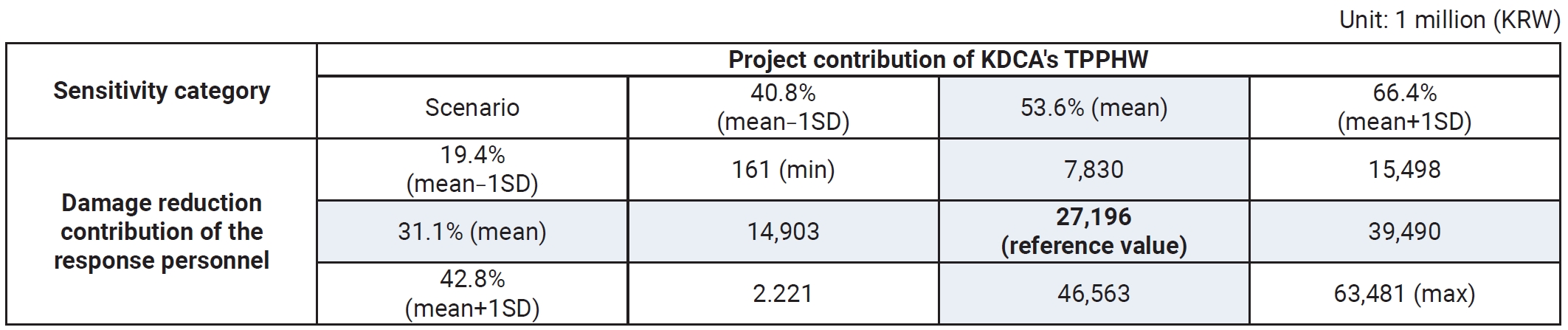
Similarly, the NPV ranged from 161 million KRW to 63,481 million KRW, relative to the baseline estimate of 27,196 million KRW (
Figure 5).
Thus, the economic viability of the KDCA’s TPPHW remained robust across a wide range of parameter variations, supporting its value as a high-return public investment in national pandemic preparedness.
Economic Effects of the IDIS
For the CBA of the IDIS, budgetary data were obtained from the KDCA for the 3 most recent fiscal years, 2023–2025 (
Table 7). These data served as the baseline cost inputs for evaluating the economic feasibility of the IDIS project and included expenditures related to system development, infrastructure establishment, maintenance, and operational management. This approach enabled assessment of both initial investment costs and recurring operational expenses associated with national digital infrastructure for infectious disease surveillance and response.
Assumptions for benefit estimation
The estimation of pandemic loss-reduction benefits for the IDIS followed the same methodological framework applied to TPPHW. Specifically, total pandemic loss was calculated as the product of 3 parameters: (1) the decline in national GDP expected during a pandemic event comparable to COVID-19, (2) the duration of the pandemic, and (3) the annual probability of occurrence.
For reference, the Republic of Korea’s nominal GDP in 2024 was approximately 2,557 trillion KRW. Assuming an average real GDP growth rate of 1.7% over 2023–2024 and an average inflation rate of 2.0% over the past decade, nominal GDP was projected to grow by 3.7% annually. The GDP contraction rate during a pandemic was conservatively set at 0.5%, with a pandemic duration of 6 months and an annual occurrence probability of 5%, equivalent to a 20-year recurrence cycle. The proportion of outbreak-related economic losses averted through timely response was assumed to be 10%, consistent with the assumption applied in the workforce-training benefits analysis.
The contribution rate of information systems to pandemic loss reduction was estimated at an average of 24.9%, based on survey results from KDCA senior officials, with sensitivity bounds of 14.9% (mean–1 SD) and 35.0% (mean+1 SD). The project contribution rate of the IDIS, defined as the share of national-level IDISs attributable to the KDCA’s integrated system, was also derived from the same survey. The baseline contribution rate was assumed to be 53.6% in 2025, with a lower bound of 53.6% (mean) and an upper bound of 79.2% (mean+2 SD).
To convert future cost and benefit streams into PVs, a social discount rate of 4.5% was applied in accordance with the KDI guidelines for preliminary feasibility studies. The evaluation period covered 10 years, with estimates discounted to the end of 2024. Cost data were drawn from the KDCA’s IDIS budget allocations for 2023–2025, with post-2025 expenditures assumed to increase by 2.0% annually, reflecting the average inflation rate over the past decade. As in the workforce-training analysis, IDIS benefits were assumed to begin accruing after a 1-year implementation lag.
CBA results
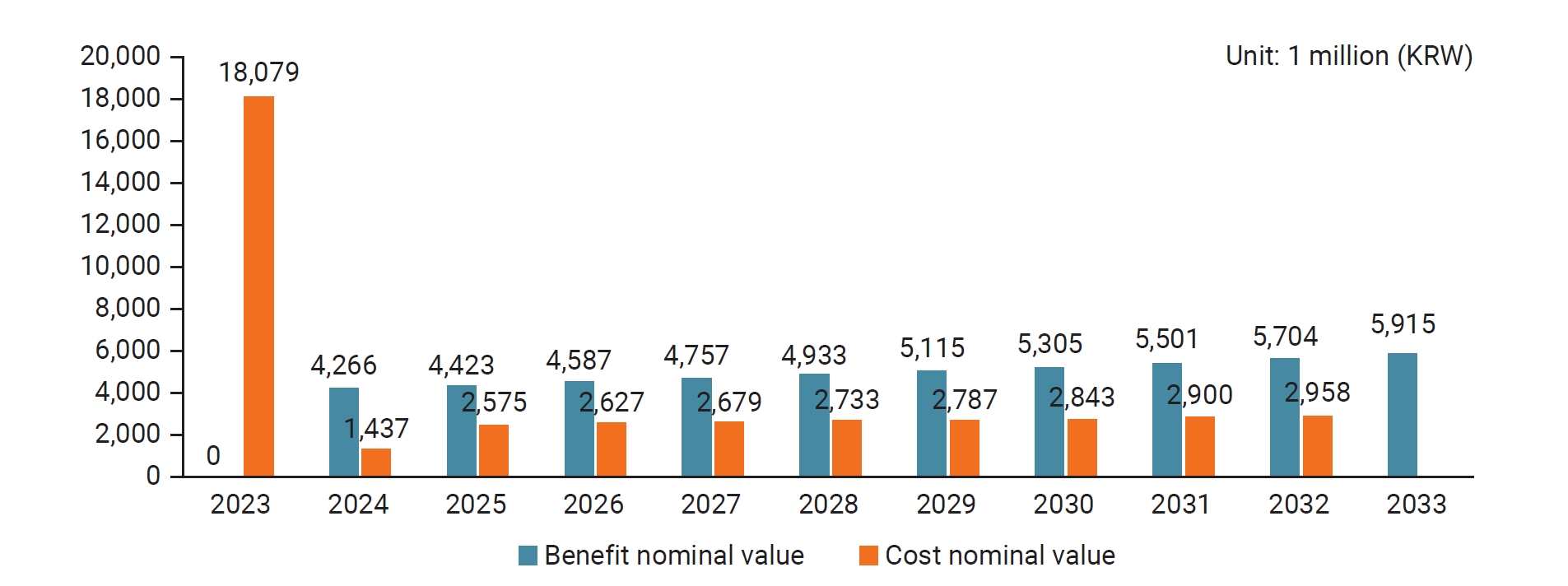
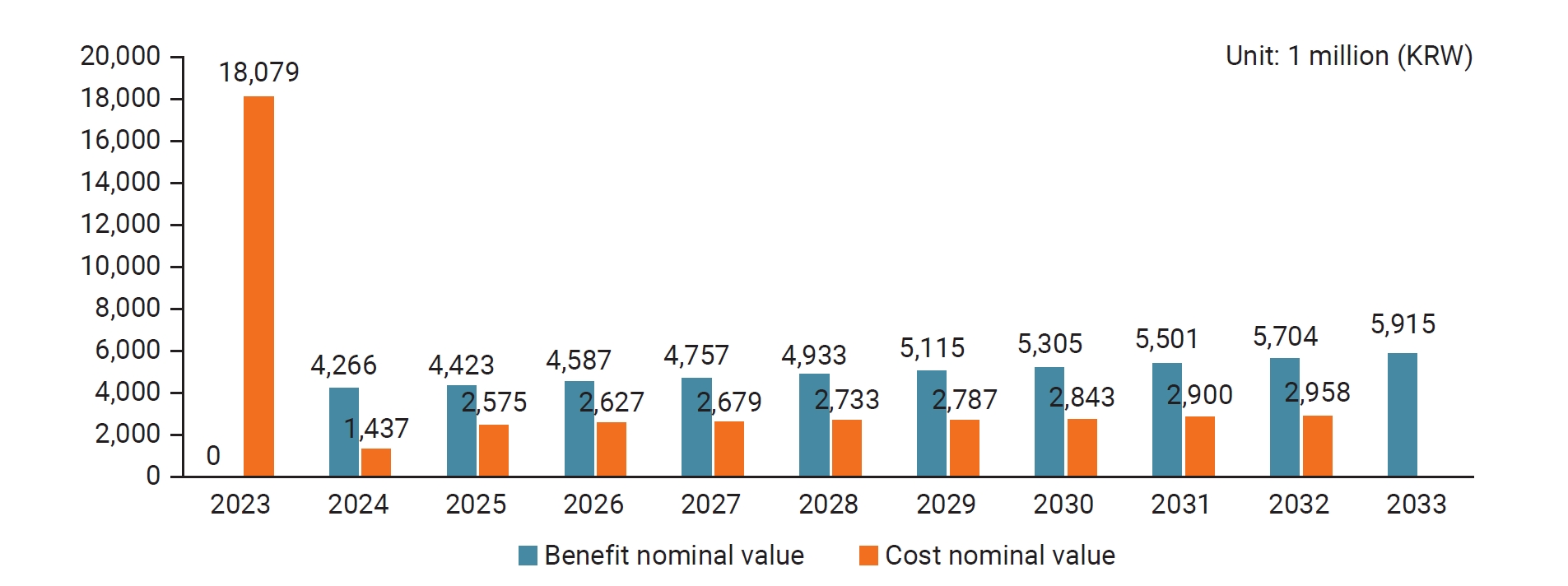
Based on the estimated parameters, the pandemic loss-reduction benefit of the IDIS was estimated at 4,266 million KRW as of the end of 2024 and 5,915 million KRW as of the end of 2033 (
Figure 6).
As shown in
Figure 6, the total nominal benefits of the IDIS were estimated at 44,591 million KRW over the 10-year projection period (2024–2033), corresponding to a PV of 41,216 million KRW when discounted at the social discount rate of 4.5%. The cumulative costs associated with the development, implementation, and operation of the IDIS over 2023–2032 were estimated at 41,617 million KRW in nominal terms. The discounted PV of costs was calculated at 38,469 million KRW as of the end of 2024.
These findings suggest that the IDIS yielded a positive net economic benefit as a digital infrastructure investment. Under the assumed social discount rate of 4.5%, the CBA for the IDIS produced a BCR of 1.071 and an NPV of 2,748 million KRW. Because the BCR exceeded 1.0 and the NPV was positive, the KDCA’s IDIS project appeared economically feasible, although the margin of feasibility was modest. These results suggest that the system generated benefits that outweighed its total implementation and operational costs, providing quantitative support for sustained investment in digital public health infrastructure to strengthen the Republic of Korea's epidemic response and surveillance capabilities.
Sensitivity analysis results
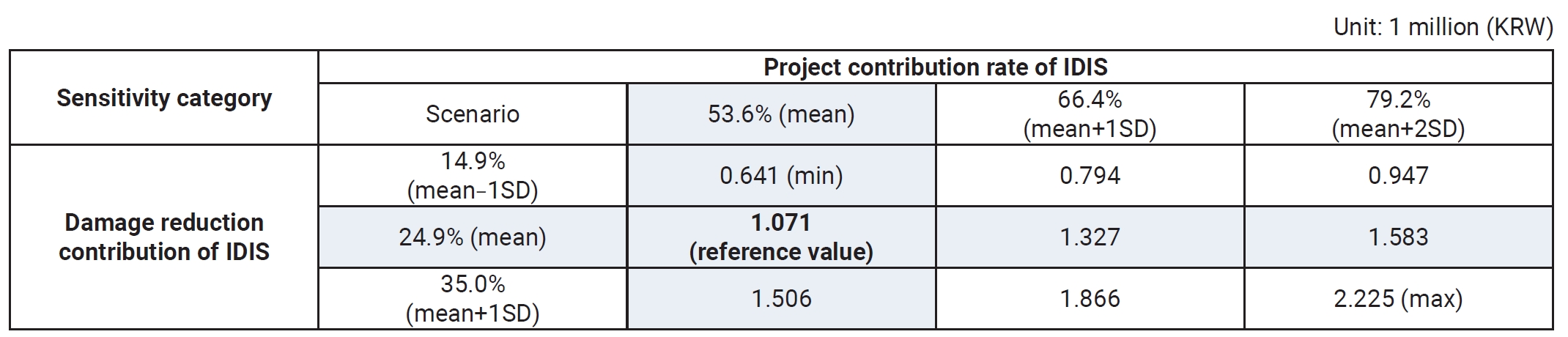
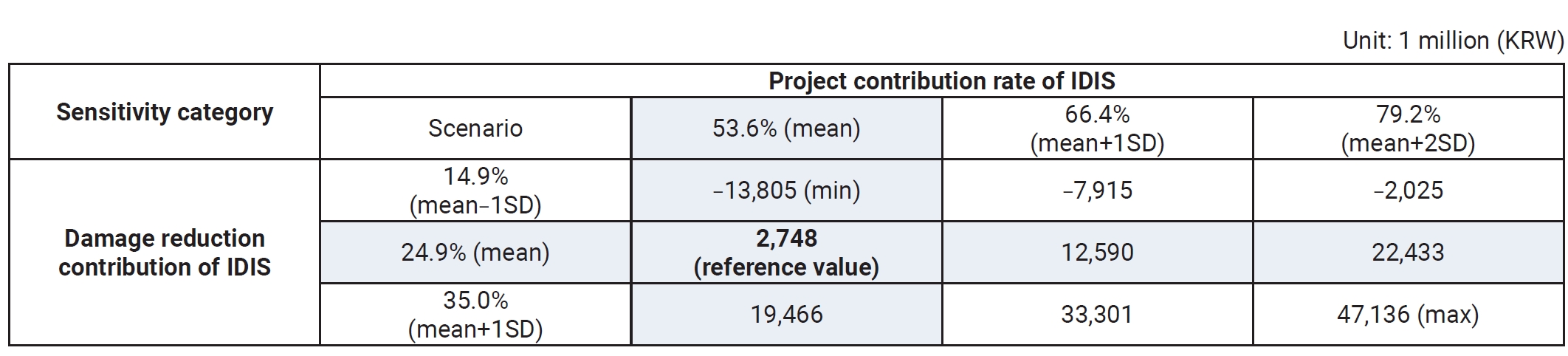
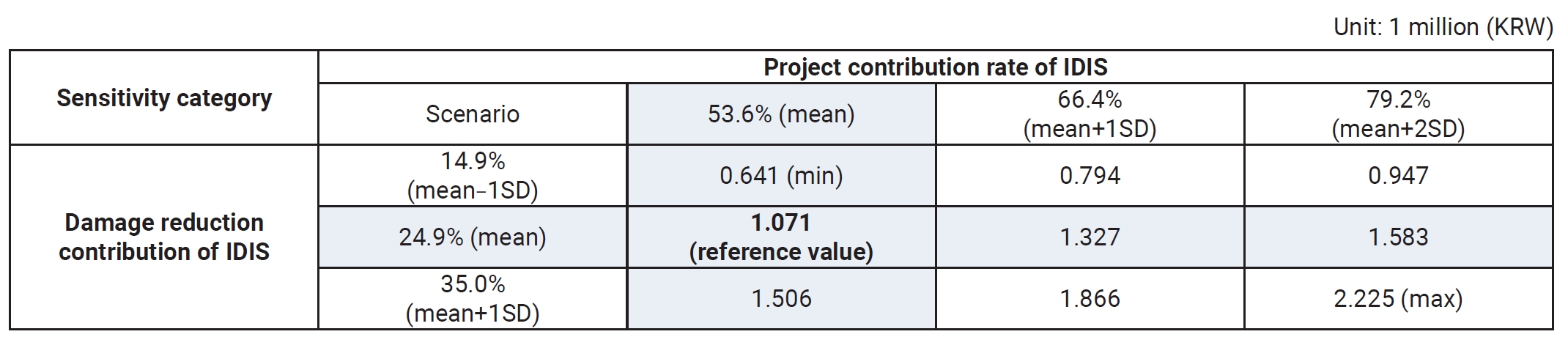
Sensitivity analysis was performed to evaluate the robustness of the cost-benefit results under varying assumptions for 2 key parameters: (1) the contribution rate of information systems to pandemic loss reduction (mean±1 SD, 14.9%–35.0%) and (2) the project contribution rate of the KDCA's IDIS (mean to mean+2 SD, 53.6%–79.2%). The BCR ranged from 0.641 to 2.225, with a baseline value of 1.071 (
Figure 7).
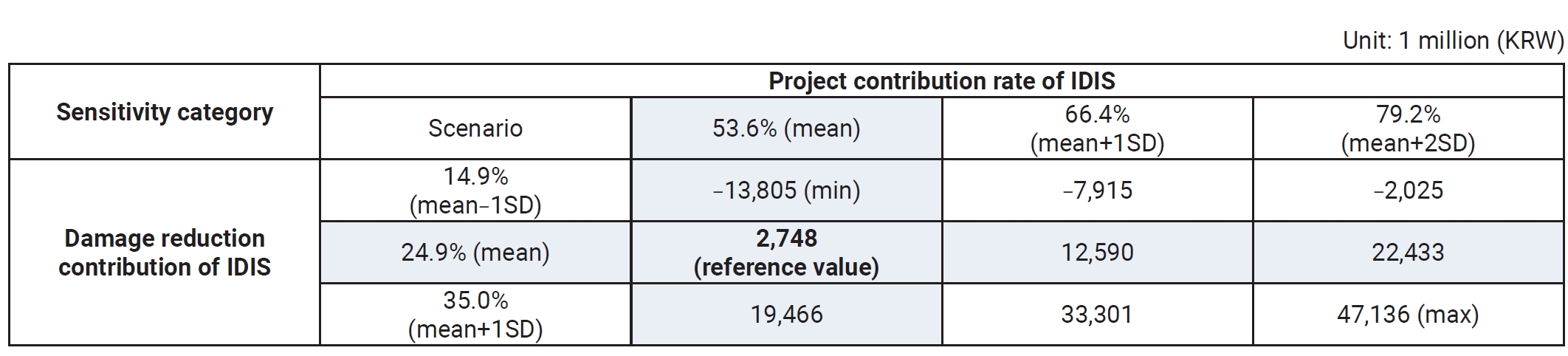
Similarly, the NPV ranged from -13,805 million KRW to 47,136 million KRW, centered on the baseline estimate of 2,748 million KRW (
Figure 8).
For TPPHW, the BCR remained above 1.0 across the entire assumed parameter space (1.007–3.614), with a corresponding NPV that remained positive even under the most conservative combination of assumptions (
Figures 4,
5). This finding indicates that current training-related expenditure is more likely to be underprovided than overprovided. For IDIS, by contrast, economic justification was primarily governed by its contribution to damage reduction. When this parameter was at or above its mean value of 24.9%, the investment was justified across all assumed project-contribution levels (BCR, 1.071–2.225); when it fell 1 SD below the mean to 14.9%, the BCR fell below 1.0 (0.641–0.947) regardless of the project-contribution rate. Thus, the justification for IDIS investment was conditional and was not robust to a meaningful reduction in the system’s realized contribution to loss reduction.
The more conditional justification for IDIS investment should be understood in light of its cost structure rather than interpreted as evidence of limited effectiveness. Information-system investments involve large upfront capital costs, whereas the resulting infrastructure continues to generate benefits beyond the 10-year projection window (2024–2033). Although the estimated nominal benefits of IDIS (44,591 million KRW) were comparable in magnitude to those of TPPHW (55,694 million KRW), IDIS had a lower BCR primarily because of its substantially higher initial investment cost. Because the 10-year period includes the full upfront costs but excludes benefits that continue beyond the evaluation period, the analysis likely understates the true value of IDIS investment.
Taken together, these patterns suggest a differentiated policy implication: workforce training represents a consistently warranted investment, whereas the economic case for integrated information systems is more sensitive to the realization of moderate-to-favorable response outcomes.
Finally, the sensitivity analysis captured only quantifiable monetary outcomes. The nonmonetary and longer-term benefits of integrated information systems remained outside these estimates and may offset the apparent decline in economic feasibility. Accordingly, the findings are best interpreted as directional indicators of investment adequacy rather than precise valuations.
Discussion
Based on the findings of this study, we further estimated the time-series economic effects of both TPPHW and IDIS. In a scenario in which the project contribution rate of the KDCA’s TPPHW increased by 2 percentage points annually over the next 8 years, from 53.6% in 2025 to approximately 69.6%, the BCR was projected to rise from its baseline value of 2.120 to 2.400. Under the same scenario, the NPV was expected to increase from 27,196 million KRW to 33,996 million KRW.
In a more realistic scenario, in which the training and education budget increased by 5% per year, reflecting both 2% inflation and an additional 3% annual increment, the BCR would still increase moderately from 2.120 to 2.223. When both the contribution rate and budget were assumed to increase simultaneously, the NPV was projected to rise from 27,196 million KRW to 32,063 million KRW.
Taken together, the cost-benefit and sensitivity analyses indicate that investing in continuous education and training for infectious disease response personnel is economically justified and efficient for national pandemic preparedness. Enhancing and expanding workforce development programs during non-crisis periods represents a cost-effective policy intervention that strengthens national capacity to respond to future large-scale infectious disease outbreaks.
The same scenarios were applied to the KDCA’s IDIS project. In a scenario in which the project contribution rate of the IDIS increased by 4 percentage points annually over the next 8 years, from 53.6% in 2025 to approximately 85.6%, the BCR was projected to rise from its baseline value of 1.071 to 1.697. Under the same assumption, the NPV was expected to increase from 2,748 million KRW to 26,820 million KRW.
In a more conservative but realistic scenario, in which the IDIS operating budget grew by 5% annually, reflecting 2% inflation plus an additional 3% increase each year, the BCR was projected to increase from 1.071 to 1.617. If both the contribution rate and annual budget increased concurrently, the NPV was estimated to increase from 2,748 million KRW to 24,912 million KRW.
Under these conditions, the cost-benefit and sensitivity analyses collectively suggest that the IDIS project is economically justifiable and financially sustainable under baseline assumptions. Although the sensitivity analysis indicates that feasibility was not sustained under less favorable scenarios, the findings nonetheless suggest the potential value of continuous and incremental investment in IDIS during non-crisis periods. Such investment may be an economically efficient and strategically meaningful measure for strengthening the Republic of Korea’s preparedness against future pandemics and improving the agility of its national disease surveillance infrastructure. These prospective benefits, however, are contingent on future epidemiological conditions and sustained institutional investment and should therefore be regarded as projections rather than guaranteed outcomes.
The results presented here should be interpreted with caution because they are model-based projections under specified assumptions rather than observed empirical outcomes. The contribution weights and benefit estimates were derived from expert elicitation and scenario-based assumptions rather than direct empirical measurement.
Conclusion
This study analyzed the economic effectiveness of TPPHW and the IDIS project. The CBA indicated that both preparedness programs were economically justified, although to different degrees. TPPHW showed a robust return (BCR, 2.120; NPV, 27.2 billion KRW), whereas IDIS showed a more modest and conditional return (BCR, 1.071; NPV, 2.7 billion KRW). The lower ratio for IDIS reflects its high upfront infrastructure costs and the fact that many of its benefits continue beyond the 10-year evaluation period; therefore, its true value is likely understated.
To our knowledge, this is among the first applications of CBA to pandemic preparedness in the Republic of Korea's public health sector. The main contribution of this study lies in its structured, replicable framework for evaluating preparedness investments. The 2 initiatives demonstrate an application of this framework, which can be updated and extended to other settings with similar data constraints.
Preparedness should be reframed as a strategic investment in national risk management. First, tiered advanced training for epidemiological investigation officers and local health officers should be sustained as an ongoing program to maintain readiness between crises. Second, artificial intelligence-based real-time analytics and interagency data interoperability should be adopted. Third, preparedness programs should be funded through stable, long-term financing.
Several limitations should be noted. The most important is the reliance on expert elicitation. This approach makes the benefit estimates susceptible to anchoring or institutional bias. Thus, the estimates are model-dependent and scenario-based, and the findings should be interpreted with caution. Future research should use anonymization or formal calibration procedures in expert elicitation, such as a Delphi approach, to reduce such bias. Future studies could also empirically validate expert-based assumptions using real-world outbreak data or simulation models.
Another major limitation is that the analysis captured only GDP-based monetary benefits and omitted essential public health outcomes. The study did not monetize reductions in disability-adjusted life years, increases in quality-adjusted life years, or reductions in mortality, transmission rates, and outbreak duration. Thus, the results likely underestimate the full value of the KDCA’s investments. Future evaluations should incorporate health-outcome metrics and consider hybrid models, such as cost-effectiveness analysis or cost-utility analysis, to provide a more comprehensive assessment.
A further limitation relates to how the estimation model treated each of the 10 preparedness components. Although the model treated these components additively, some components, often operate synergistically in practice and amplify one another when functioning together. This approach likely led to underestimation of their combined economic benefit. Future research could develop interaction models to capture these synergies and better estimate the compounded benefit of multiple components operating together.