Abstract
-
Objectives
This study assessed changes in the visibility of the National Health Information Portal (NHIP), operated by the Korea Disease Control and Prevention Agency, across conventional search portals and generative artificial intelligence (AI) platforms.
-
Methods
We analyzed 150 health-related keywords derived from NHIP traffic data, Daum search logs, and chronic disease categories across 7 platforms: Naver, Google, Bing, Daum, ChatGPT, Perplexity, and Gemini. Searches were conducted in September 2025 and February 2026; Gemini was assessed only in the second survey. NHIP exposure was defined as appearance within the top 10 organic search results, whereas AI citation was defined as explicit source attribution. Changes were tested using McNemar's test.
-
Results
Organic search exposure for the NHIP increased on Naver (64.0% to 73.3%, p=0.018) and decreased on Bing (72.0% to 61.3%, p=0.021). AI-summary citation rates increased more substantially on Naver AI Briefing (8.0% to 62.7%, p<0.001), Bing AI Summary (6.7% to 44.7%, p<0.001), Google AI Overview (30.0% to 48.0%, p=0.001), and ChatGPT (16.7% to 38.0%, p<0.001). Gemini cited the NHIP for 96.0% of keywords. For dyslipidemia-related keywords (n=10), Google and ChatGPT showed no NHIP exposure, whereas Gemini cited the NHIP for all keywords.
-
Conclusion
AI citation represents a new dimension of health information accessibility. To address visibility gaps and marked platform divergence, public health portals should implement a 3-level optimization strategy encompassing machine-readable infrastructure, AI-friendly content formatting, and continuous multi-platform monitoring.
-
Keywords: Artificial intelligence; Consumer health information; Health literacy; Information dissemination; Search engine
Introduction
The internet is now the primary channel through which the public accesses health information. In a 2020 survey of 1,000 Korean adults, internet portals were the most frequently used source of health information, but they ranked only fifth in user satisfaction [
1,
2]. This gap is partly attributable to the large volume of online health content that lacks scientific evidence or reflects commercial interests [
3], making it difficult for users to identify trustworthy sources. Inaccurate health information can lead to inappropriate self-care, delayed treatment, and distorted health behaviors [
4], with downstream effects on population-level health literacy [
5].
In addition to being accurate, public health information should be written in plain language that users with varying levels of health literacy can understand. This requirement has become especially important as health information is increasingly retrieved, summarized, and redistributed through generative AI platforms.
To address the problem of unreliable online health information, the Korea Disease Control and Prevention Agency (KDCA) has operated the National Health Information Portal (NHIP;
https://health.kdca.go.kr) since 2017. The portal provides verified, evidence-based information on more than 800 diseases and health topics through a standardized authoring and expert review process [
6,
7]. Its content is also shared with external platforms through an Open API service, allowing Naver Encyclopedia and Daum Encyclopedia to display NHIP content in their search results [
7].
The way people search for health information has changed rapidly in recent years. Generative artificial intelligence (AI) services such as ChatGPT (OpenAI), Gemini (Google), and Perplexity (Perplexity AI) now provide AI-generated summary answers rather than only lists of search results [
8]. In the Republic of Korea, this shift accelerated after Naver launched its AI Briefing feature in March 2025 and Google expanded AI Overview to Korean-language queries. Because these AI summaries select and cite content from external sources, a portal's digital visibility now depends not only on traditional search engine rankings but also on whether it is cited in AI-generated responses.
This shift has important implications for public health. If AI-generated summaries rely mainly on commercial or unverified sources, the public may receive health information of uncertain quality without recognizing its limitations. Conversely, if government health portals can ensure that AI platforms select and cite their content, they may extend the reach of evidence-based information into new digital channels. Generative engine optimization (GEO), defined as strategies to increase the likelihood that content is cited by generative AI systems, was formally introduced by Aggarwal et al. [
9], in 2024. Although GEO has attracted increasing attention, empirical evidence on its application to public health portals remains scarce.
In the Republic of Korea, the NHIP operating team has begun implementing GEO-oriented content improvements, including structured summary paragraphs and AI-friendly content formats [
7]. However, no study has yet examined whether these changes are associated with improved visibility across search portals and generative AI platforms.
This study assessed changes in NHIP visibility across multiple digital platforms, including conventional search portals (Naver, Google, Bing, and Daum) and generative AI services (ChatGPT, Perplexity, and Gemini), over a 5-month period during which content improvements were implemented. By comparing NHIP exposure and citation rates at 2 time points, September 2025 and February 2026, we sought to provide empirical evidence of GEO-related changes for a public health information portal and to identify platform-specific patterns that may inform future optimization strategies.
Materials and Methods
Study Design
This repeated cross-sectional observational study compared NHIP visibility across multiple digital platforms at 2 time points: September 19 to October 10, 2025 (first survey), and February 9 to 27, 2026 (second survey), approximately 5 months later. During this interval, the NHIP operating team implemented several content improvements, including adding structured summary paragraphs to content pages and publishing new content in AI-friendly formats, such as concise, list-based, question-and-answer structures [
7]. The study was designed and reported in accordance with the Strengthening the Reporting of Observational Studies in Epidemiology (STROBE) guidelines for cross-sectional studies.
A service disruption occurred between the 2 surveys. From September 26 to October 30, 2025, the NHIP content management system was inaccessible because of a fire at the National Information Resources Service. During this period, NHIP pages continued to appear in search engine results, but clicking the links returned an error page. The first survey’s exposure measurements, which recorded search result listings rather than click-through availability, were not directly affected. However, prolonged error responses may have influenced search engine ranking algorithms afterward. This event is addressed in the Discussion as a potential confounding factor.
This study did not involve human participants and used only publicly available search results; therefore, institutional review board approval was not required.
Keyword Selection
A total of 150 health-related keywords were selected from 3 sources. First, the top 100 content pages by pageview count were identified from NHIP Google Analytics 4 (GA4) data for January through August 2025, and their page titles were used as keywords. Second, 13 high-frequency health queries were obtained from the Daum portal (
https://www.daum.net/), which provides monthly search-log data to the NHIP operating team under a data-sharing arrangement. Finally, to ensure comprehensive coverage, 31 disease-specific keywords representing major chronic conditions (11 for hypertension, 10 for diabetes, and 10 for dyslipidemia) and 6 additional relevant keywords were included, yielding a final set of 150 distinct keywords.
Keywords corresponded to NHIP content page titles, such as disease or condition names including “hypertension,” “diabetes mellitus,” and “atherosclerosis,” rather than natural-language queries, such as “what to do when blood pressure is high.” This approach was used because the study aimed to assess the visibility of existing NHIP content pages across platforms.
Platform Selection
Platforms were selected to cover the major digital environments through which Korean users access health information. In the first survey, 6 platforms were assessed: 4 conventional search portals (Naver, Google, Bing, and Daum) and 2 generative AI services (ChatGPT and Perplexity). Naver and Daum are the main domestic search portals in the Republic of Korea, whereas Google is the leading global search engine. Bing serves as the engine underlying Microsoft Copilot. ChatGPT and Perplexity are large language model (LLM)-based answer services with growing use in the Republic of Korea.
In the second survey, Gemini was added as a seventh platform. Gemini had been excluded from the first survey because of widely recognized limitations in its Korean-language reliability for medical queries at that time. To capture the rapid evolution of the LLM landscape, it was included in the second survey after noticeable improvements in localized performance. In addition to organic search results, 2 encyclopedia channels were assessed: Naver Encyclopedia and Daum Encyclopedia, both of which receive NHIP content through a formal Open API agreement. Platforms were selected on the basis of their reach among Korean health-information users rather than to represent all available services. Accordingly, several globally prominent tools, including Grok (xAI), DeepSeek, and the Yandex search engine, were not assessed because their share among Korean users was negligible during the study period. Claude (Anthropic) was also not included, as noted in the Discussion.
Measurement Procedures
All searches were conducted by 2 trained data collectors using a standardized protocol. Before the second survey, the data collectors received additional training, including a detailed explanation of the procedures and a supervised practice session, to support consistency between the 2 data-collection periods. Searches were conducted in private browsing mode on a single dedicated device, with no user accounts logged in, to minimize personalization effects. Each of the 150 keywords was entered into each platform without additional search operators or modifiers.
Conventional search portals
For each keyword, we recorded whether the NHIP website, identified by the URL domain health.kdca.go.kr, appeared within the top 10 organic search results. Exposure was defined as a direct link to the NHIP domain at any position from 1 to 10. Textual mentions of the NHIP embedded within third-party websites or documents were excluded and coded as “not exposed.”
AI-generated summary features on search portals
Each search portal’s AI-generated summary feature was assessed separately from the organic results. Naver AI Briefing, Google AI Overview, and Bing AI Summary were evaluated for 2 outcomes: whether the AI summary feature appeared for the keyword and whether the NHIP was cited as a source. NHIP citation was defined as the presence of a direct URL link to the NHIP website in the source attribution or reference section. Text-level mentions of the “National Health Information Portal” within the AI summary, without a corresponding clickable URL, were excluded and coded as “not cited.”
Generative AI platforms
For ChatGPT, Perplexity, and Gemini, NHIP citation was coded as “cited” only when the platform's source panel or reference list explicitly displayed a URL from the NHIP domain. Text-level mentions without a direct source URL were excluded. For Perplexity and Gemini, up to 3 platform-cited sources were recorded for each keyword; citation was recognized if any listed source provided a direct link to the NHIP. For platforms that provided multiple references, the relative citation rank of the NHIP among the listed sources was also recorded to assess its prominence in the AI-generated response.
Encyclopedia channels
For Naver Encyclopedia and Daum Encyclopedia, NHIP content exposure was assessed using the same top-10 standard applied to organic search results.
Statistical Analysis
The primary outcome was the proportion of keywords (out of 150) for which the NHIP was exposed or cited on each platform at each time point. Changes between the first and second surveys were tested using McNemar’s test with continuity correction, which is appropriate for paired binary outcomes measured for the same keyword set at 2 time points. A 2-sided p-value of less than 0.05 was considered statistically significant. For Gemini, which was assessed only at the second time point, descriptive statistics were reported without a between-survey comparison. A subgroup analysis was also conducted for the 10 dyslipidemia-related keywords, which showed a distinctive pattern across platforms. All analyses were performed using R (ver. 4.3.1; R Foundation for Statistical Computing).
Use of AI-Assisted Technologies
During manuscript preparation, the authors used Claude Opus 4.6 (Anthropic) and Gemini 3 Pro (Google) to improve readability and language accuracy in scientific writing. The authors thoroughly reviewed and edited all AI-assisted content for accuracy and originality, and take full responsibility for the final manuscript.
Results
Keyword Characteristics
We assessed 150 health-related keywords across all platforms at both time points. The keywords were selected from 3 sources: the top 100 keywords by user traffic from NHIP GA4 data, 13 high-frequency queries from Daum search logs, and 37 keywords added by the research team to ensure comprehensive clinical coverage. The 37 added keywords comprised 31 disease-specific keywords (11 for hypertension, 10 for diabetes, and 10 for dyslipidemia) and 6 additional relevant keywords. Keywords corresponded to NHIP content page titles, such as disease or condition names, rather than natural-language queries. All 150 keywords were evaluated on every platform at both time points, except for Gemini, which was assessed only in the second survey.
Changes in NHIP Visibility on Search Portals
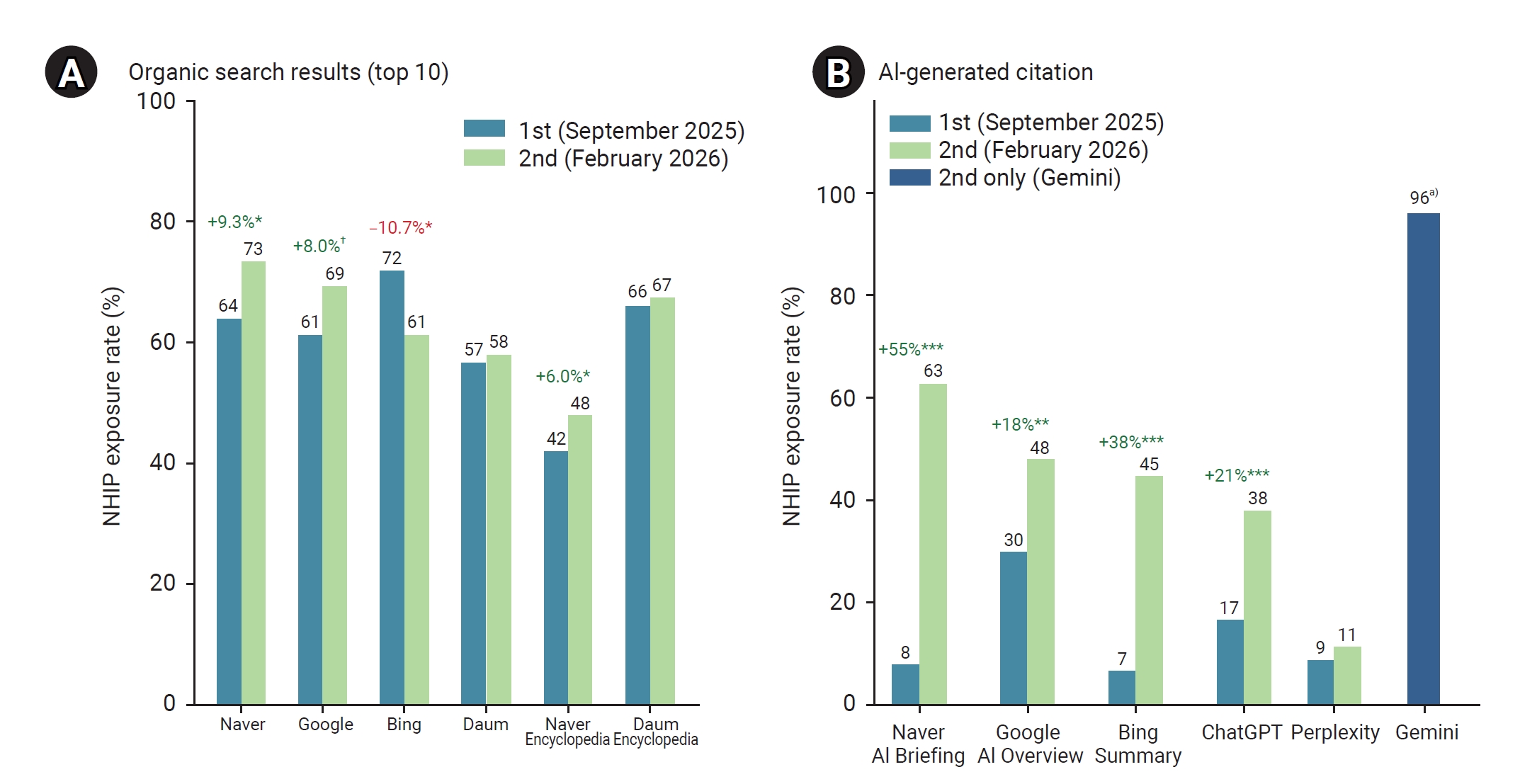
Table 1 and
Figure 1A show the proportion of keywords for which the NHIP appeared within the top 10 organic search results. On Naver, NHIP exposure increased from 64.0% (96/150) to 73.3% (110/150), a gain of 9.3 percentage points (McNemar’s χ
2=5.63,
p=0.018). On Google, exposure increased from 61.3% (92/150) to 69.3% (104/150), although this change was not statistically significant (McNemar’s χ
2=3.18,
p=0.074). Bing showed a significant decline, from 72.0% (108/150) to 61.3% (92/150), a decrease of 10.7 percentage points (McNemar’s χ
2=5.36,
p=0.021). Daum remained stable (56.7% vs. 58.0%,
p=0.823). Naver Encyclopedia, which receives NHIP content through an Open API agreement, increased from 42.0% (63/150) to 48.0% (72/150,
p=0.027). Daum Encyclopedia was essentially unchanged (66.0% vs. 66.7%,
p=1.000).
Changes in AI-Generated Summary Features
Growth of AI summary features
AI-generated summary blocks became more common across all 3 search portals between the 2 surveys. Naver AI Briefing appeared for 29.3% (44/150) of keywords in September 2025 and 86.0% (129/150) in February 2026. Google AI Overview increased from 60.7% (91/150) to 92.7% (139/150), and Bing AI Summary increased from 20.7% (31/150) to 68.7% (103/150).
NHIP citation within AI summaries
The largest changes observed in this study involved NHIP citation rates within AI summary blocks (
Table 2;
Figure 1B). Citation of the NHIP in Naver AI Briefing increased from 8.0% (12/150) to 62.7% (94/150), a gain of 54.7 percentage points (McNemar’s χ
2=74.56,
p<0.001). Bing AI Summary showed a 38.0-percentage-point increase, from 6.7% (10/150) to 44.7% (67/150; McNemar’s χ
2=53.15,
p<0.001). Google AI Overview increased from 30.0% (45/150) to 48.0% (72/150), an 18.0-percentage-point gain (McNemar’s χ
2=10.40,
p=0.001).
However, a gap remained between the appearance of AI features and citation of the NHIP. For example, although Google AI Overview generated summaries for 92.7% (139/150) of keywords in the second survey, it cited the NHIP as a source for only 48.0% (72/150) of all keywords. This finding suggests that even when an AI summary is generated, the platform may bypass the NHIP and select other sources.
Changes in Generative AI Platform Citations
ChatGPT citation of the NHIP increased from 16.7% (25/150) to 38.0% (57/150), a gain of 21.3 percentage points (McNemar’s χ2=20.89, p<0.001). Perplexity showed little change, increasing from 8.7% (13/150) to 11.3% (17/150, p=0.584).
Gemini, which was assessed only in the second survey, cited the NHIP for 144 of 150 keywords (96.0%), the highest citation rate among all assessed platforms. The NHIP appeared among the top 3 sources for 141 keywords (94.0%).
Platform Divergence: Dyslipidemia Keywords
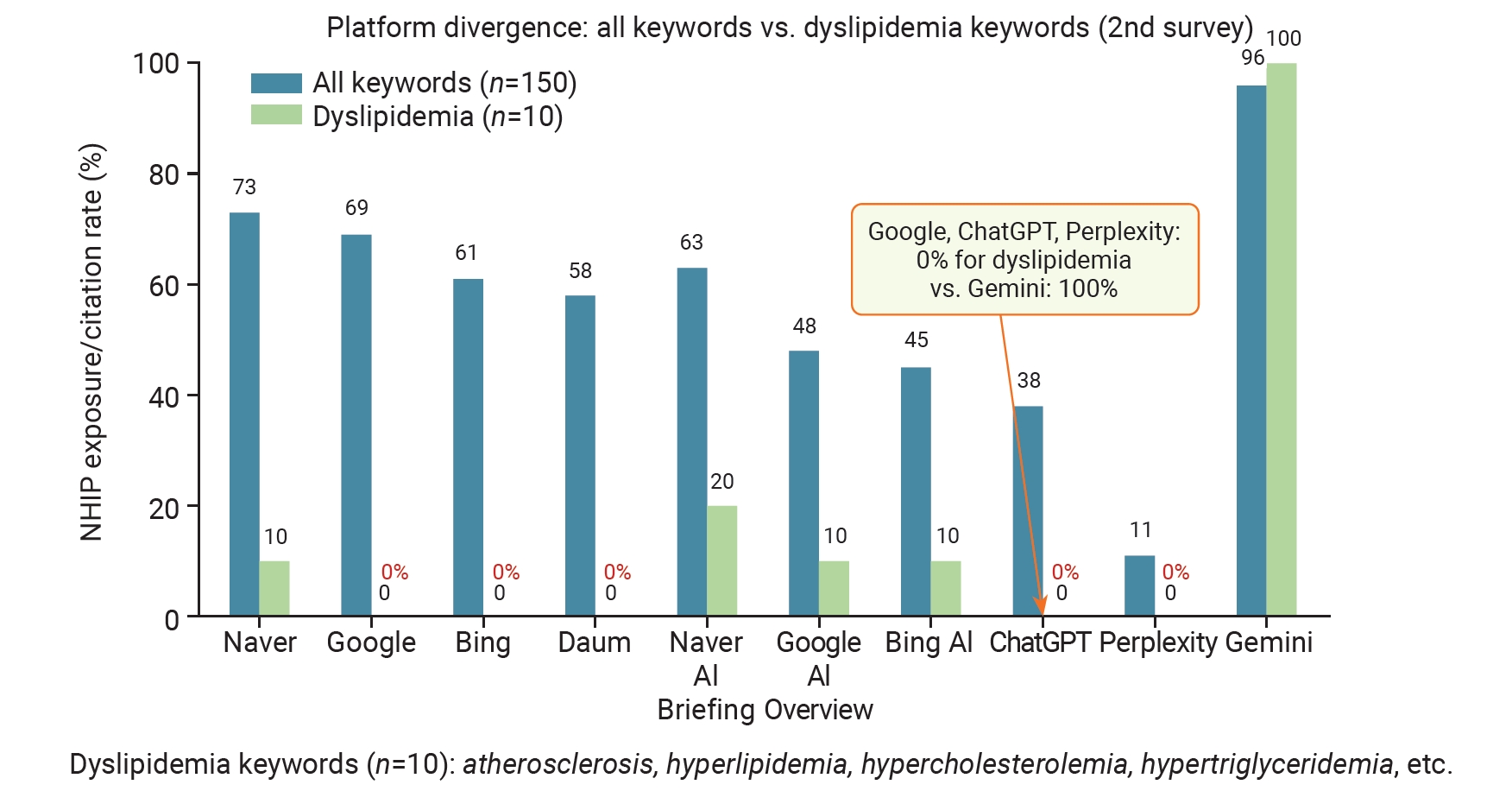
A marked divergence was observed among the 10 dyslipidemia-related keywords (
Table 3;
Figure 2). On Google, the NHIP did not appear in the top 10 organic results for any of these keywords at either time point. ChatGPT and Perplexity also did not cite the NHIP for any dyslipidemia-related keyword in either survey. In contrast, Gemini cited the NHIP for all 10 keywords (100%) in the second survey, and the NHIP ranked among the top 3 sources for 9 of 10 keywords.
On Naver, exposure improved slightly from 0/10 to 1/10. Bing and Daum both declined from 1/10 to 0/10. This pattern, with no NHIP exposure on Google, ChatGPT, or Perplexity but complete NHIP citation on Gemini for the same keywords, was not observed in any other disease category. These findings suggest that platform algorithms differ substantially in how they retrieve and rank NHIP content for specific disease topics.
Discussion
Key Results
This study assessed the visibility of the NHIP across 7 digital platforms at 2 time points separated by 5 months. Three main findings emerged. First, citation of the NHIP within generative AI platforms increased substantially, most notably in Naver AI Briefing (from 8.0% to 62.7%) and ChatGPT (from 16.7% to 38.0%), whereas changes in organic search exposure were more modest and varied by platform. Second, Gemini showed a very high NHIP citation rate of 96.0% in the second survey, far exceeding the rates observed on the other platforms. Third, the dyslipidemia keyword subgroup showed marked divergence: Google and ChatGPT returned no NHIP exposure at either time point, whereas Gemini cited the NHIP for all 10 keywords. These findings provide empirical evidence of GEO-related visibility changes for a public health information portal in the Republic of Korea.
Interpretation of Findings
The shift from search engine optimization to GEO
The contrast between organic search results and AI citation rates is notable. Organic search exposure changed only modestly: Naver increased by 9.3 percentage points, Google increased by 8.0 percentage points without reaching statistical significance, and Bing decreased by 10.7 percentage points. In contrast, AI citation rates increased much more substantially across platforms. This pattern is consistent with a broader shift in how users access health information, with AI-generated summaries increasingly supplementing or replacing traditional search result pages [
8]. For public health portals, this finding suggests that visibility strategies should not rely solely on traditional search engine optimization but should also include GEO approaches, as proposed by Aggarwal et al. [
9].
Between the 2 survey periods, the NHIP operating team made several content improvements. These included adding structured summary paragraphs to content pages, updating approximately one-third of health information articles, and publishing new content in an AI-friendly format, including concise, list-based, question-and-answer structures. The large increase in AI citation rates, especially the rise in Naver AI Briefing from 8.0% to 62.7%, coincided with these changes. Although the observational design precludes causal attribution, the magnitude and consistency of the improvement across multiple platforms suggest that structured content formatting may have enhanced AI visibility.
The service disruption between the 2 surveys should be considered as an alternative explanation, particularly for the organic search results. Search engines may lower the rankings of sites that repeatedly return error pages, and some subsequent changes in organic search visibility could therefore reflect recovery from such penalties rather than the effects of GEO-related content improvements alone. This uncertainty cannot be fully disentangled in the present before-and-after design. However, the observed organic search changes were modest or mixed across platforms: Naver increased by 9.3 percentage points, Google increased by 8.0 percentage points without statistical significance, and Bing decreased by 10.7 percentage points. By contrast, the largest changes in this study occurred in AI citation rates, most notably the increase in Naver AI Briefing from 8.0% to 62.7%. Although indirect platform-level effects cannot be excluded, the magnitude and pattern of the AI-citation changes suggest that ranking-penalty recovery alone is unlikely to fully explain these findings. The disruption therefore introduces important uncertainty, especially in interpreting the organic search results, and the AI-citation findings should be interpreted cautiously in light of this limitation.
The gap between AI feature presence and NHIP citation
An important finding was the gap between AI feature presence and NHIP citation within those features. In the second survey, Google AI Overview appeared for 92.7% of keywords but cited the NHIP in only 48.0%. This gap indicates that the presence of an AI summary alone does not ensure citation of authoritative public health sources. AI platforms select sources on the basis of content structure, authority signals, and relevance to the query [
9]. The gap also indicates room for further improvement through Schema.org markup, structured metadata, and ontology-based content organization [
7].
Platform divergence and algorithmic differences
The dyslipidemia subgroup analysis revealed a marked pattern: Google, ChatGPT, and Perplexity returned no NHIP exposure for all 10 keywords at both time points, whereas Gemini cited the NHIP for all 10 keywords. This divergence was not observed in any other disease category. The finding suggests that platform algorithms differ substantially in how they index, retrieve, and rank content from government health portals for specific disease topics.
Several factors may explain this pattern. First, dyslipidemia-related content on the NHIP may lack structural signals, such as Schema.org MedicalCondition markup or prominent summary paragraphs, that Google and ChatGPT require or prioritize for source selection. Alternatively, competing sources, such as university hospital websites, may dominate these queries on certain platforms. Gemini’s consistently high citation of the NHIP across all disease categories, including dyslipidemia, may reflect a different source-selection algorithm that gives greater weight to government-operated health portals.
Gemini's overall 96.0% citation rate should likewise not be interpreted as evidence of NHIP optimization alone. Gemini was excluded from the first survey because its Korean-language reliability for medical queries was considered insufficient at that time, and it was added only after its localized performance appeared to improve. Its high citation rate may therefore partly reflect advances in Gemini’s own Korean-language and medical-language processing over the 5-month interval, in addition to changes on the NHIP side. Because the NHIP was assessed on Gemini at only one time point, the platform’s intrinsic evolution cannot be separated from NHIP-related optimization effects. We therefore present the Gemini result as a cross-sectional observation rather than as evidence of GEO effectiveness and caution against attributing it solely to NHIP interventions.
This finding has practical implications: a single GEO strategy may not perform equally well across all platforms. Public health portal operators should monitor visibility on multiple platforms and consider platform-specific content optimization when persistent gaps are identified.
Policy Implications
The findings of this study have implications for the operation and improvement of public health information portals in the AI era. Effective GEO for public health portals requires attention at 3 complementary levels: infrastructure, content, and operations.
At the infrastructure level, making portal content machine-readable is a prerequisite for AI discoverability. This includes database restructuring to segment content into meaningful units, ontology-based knowledge management, and implementation of Schema.org markup. The gap observed in this study between AI feature presence (92.7% on Google) and NHIP citation (48.0%) highlights the importance of this infrastructure. Even when AI summaries are generated, the NHIP is often not selected as a source, possibly because the current system lacks the structured metadata that AI platforms use to prioritize sources.
At the content level, this study provides evidence that content formatting may matter independently of infrastructure. The addition of structured summary paragraphs coincided with a substantial increase in AI citation rates, including the increase in Naver AI Briefing citation from 8.0% to 62.7%. This finding suggests that how content is written and organized affects AI visibility even within existing infrastructure. In other words, infrastructure improvements alone, such as database restructuring or ontology mapping, may not fully close the visibility gap without corresponding content-level optimization. Providing the same health information in both a concise, AI-friendly summary format and a comprehensive, evidence-based detailed format could support both GEO effectiveness and clinical depth. Similar dual-layer content strategies have been adopted by MedlinePlus in the United States, which offers tiered information for different user needs [
10]. Beyond machine readability, the linguistic accessibility of health content also matters. Health agencies have long recommended that patient-facing materials be written in plain language at an accessible reading level. However, AI-generated health information often exceeds this standard: a recent comparison of ChatGPT, Gemini, and Perplexity found that responses on a common pain condition were written at significantly higher grade levels than the recommended sixth-grade level [
11]. Similar shortfalls in quality and readability have been reported for AI-generated texts on other conditions, indicating that this issue is not specific to a single disease area [
12]. The concise, structured formats associated with improved AI citation in this study are consistent with plain-language accessibility, suggesting that writing for human readability and writing for AI discoverability may be mutually reinforcing rather than competing aims.
At the operations level, the marked platform divergence for dyslipidemia-related keywords shows that visibility is not a one-time achievement but instead requires ongoing monitoring. The rapid evolution of the generative AI landscape, illustrated by Gemini’s shift from an excluded platform to the highest-performing platform within 5 months, further supports the need for continuous multi-platform monitoring. Establishing a regular assessment cycle could allow portal operators to detect emerging gaps and respond with targeted content adjustments.
Strengths
This study has several notable strengths. To our knowledge, it is the first to provide empirical, quantitative evidence of changes in the visibility of a government-operated public health portal during a period of GEO-oriented content improvements, using a paired design across 7 platforms at 2 time points. The use of real operational data from a national portal, rather than data from a simulated or experimental setting, strengthens the practical relevance of the findings for portal operators and policymakers.
Limitations
This study has several limitations. First, the before-and-after design with only 2 time points does not allow causal inference. Multiple changes occurred simultaneously between surveys, including content improvements, platform algorithm updates, and expansion of AI features. Therefore, we cannot determine the relative contribution of each factor to the observed changes. In particular, a service disruption from September 26 to October 30, 2025, during which NHIP pages appeared in search results but returned error pages when clicked, may have influenced search engine ranking algorithms afterward, potentially affecting the second survey's organic search results. Generative AI platforms and search engines also evolve continuously through model updates, retraining, and accumulated user-interaction data, and the criteria by which they identify and cite sources may shift as public adoption grows. Part of the observed increase in citation rates may therefore reflect broader platform-level learning and usage trends rather than NHIP-specific changes.
Second, the keyword set was drawn mainly from NHIP traffic data and content page titles rather than from population-level search behavior data. Therefore, the results reflect NHIP visibility for its existing content topics but may not capture the full range of natural-language health queries entered by users.
Third, longitudinal data could not be fully secured for all generative AI platforms. Gemini was included only in the second survey, precluding comparative analysis of its citation trends over the 5-month period. In addition, Claude was not assessed at either time point despite its growing adoption during the study period. Future studies should include a broader set of platforms and more frequent assessment intervals.
Fourth, this study focused on a single government health portal in one country. Whether these findings apply to other public health information portals or language environments requires further investigation. Future studies using controlled experimental designs, such as A/B testing of specific content formats, would help isolate the effects of individual GEO strategies.
Fifth, we measured only whether the NHIP was cited, not the contextual accuracy, appropriateness, or quality of those citations. We did not assess whether AI platforms used NHIP content correctly or whether the surrounding AI-generated text was accurate. These issues were outside the scope of this study and warrant further investigation.
Conclusion
This study provides empirical evidence of changes in a public health portal’s visibility across both traditional search engines and generative AI platforms. The findings show that AI citation, particularly within AI-generated summary features, is a new and important dimension of public health information accessibility. Over the 5-month study period, AI citation rates changed substantially more than organic search exposure.
The results point to the need for action at 3 complementary levels. First, at the infrastructure level, the gap between AI feature presence (92.7% on Google) and NHIP citation (48.0%) suggests that structured metadata, ontology-based content management, and Schema.org markup are needed to help AI systems prioritize the NHIP as a source. Second, at the content level, the large increase in Naver AI Briefing citation, from 8.0% to 62.7%, after structured summary paragraphs were added suggests that how content is written and organized matters independently of infrastructure. Infrastructure improvements alone may not close the visibility gap without corresponding content optimization.
Third, at the operations level, the marked platform divergence for dyslipidemia-related keywords and rapid changes in the AI landscape show that visibility requires continuous monitoring and platform-specific strategies. For example, Gemini cited the NHIP for 96.0% of keywords, whereas ChatGPT cited it for 38.0%, suggesting that each platform applies different source-selection criteria. A regular multi-platform assessment cycle would help portal operators detect new gaps early and make timely adjustments. Future research should identify which content features, such as document structure, reference density, or standardized terminology, are associated with higher citation rates on each platform.
At the same time, higher visibility is not an end in itself. AI-generated summaries and online sources remain supplementary tools and cannot replace clinical assessment by a qualified professional. In critical domains such as risk-benefit assessment and recognition of warning signs, online and AI-generated information tends to remain superficial relative to established clinical guidelines [
13]. Ensuring that authoritative content is cited is therefore valuable because it improves the quality of the information the public encounters, not because it substitutes for clinical care. Ultimately, this approach may help ensure that the public continues to receive authoritative health information as search technologies evolve.
HIGHLIGHTS
• Citation of the Korean National Health Information Portal (NHIP) in Naver AI Briefing increased from 8.0% to 62.7% over 5 months, the largest increase observed across all platforms.
• Gemini cited the NHIP for 96.0% of health-related keywords, the highest citation rate among the assessed platforms.
• Dyslipidemia-related keywords showed no NHIP exposure on Google or ChatGPT but 100% citation on Gemini, indicating marked platform-level divergence.
• Artificial intelligence-generated summary citations changed more substantially than organic search exposure, suggesting a shift in how the public accesses health information.
• Multi-platform monitoring is needed because no single optimization strategy performed consistently across all platforms.
Article information
Ethics Approval
Not applicable.
Conflicts of Interest
The authors declare a potential conflict of interest because they are currently involved in the operation and management of the NHIP through a project commissioned by the KDCA. However, the authors affirm that this operational role did not influence the objective interpretation of the data or the preparation of this manuscript. The authors have no other conflicts of interest to declare.
Funding
This work was supported by the KDCA through the contracted-out project “Health Information Production and National Health Information Portal Operation.” The funding source had no role in the study design; collection, analysis, or interpretation of data; writing of the report; or decision to submit the article for publication.
Availability of Data
The datasets analyzed during the current study are available from the corresponding author on reasonable request.
Authors’ Contributions
Conceptualization: YC, BC; Data curation: YC, HKN; Formal analysis: YC; Funding acquisition: BC; Investigation: YC, HKN; Methodology: YC, BC; Project administration: YC; Software: YC; Supervision: BC; Validation: all authors; Visualization: YC; Writing–original draft: YC; Writing–review & editing: all authors. All authors read and approved the final manuscript.
Acknowledgements
This work was supported by a contracted-out project of the KDCA. We thank the staff of the Division of Chronic Disease Prevention, KDCA, for their administrative support and cooperation throughout the long-term partnership.
Figure 1.Changes in the visibility of the National Health Information Portal (NHIP) across digital platforms. (A) NHIP exposure rates within the top 10 organic search results and encyclopedia channels. (B) NHIP citation rates within artificial intelligence (AI)-generated summary features and standalone generative AI platforms. Statistical significance for the changes between the first (September 2025) and second (February 2026) surveys was calculated using McNemar’s test with continuity correction (*p<0.05, **p<0.01, ***p<0.001, †p<0.1). a)Gemini was assessed only at the second survey.
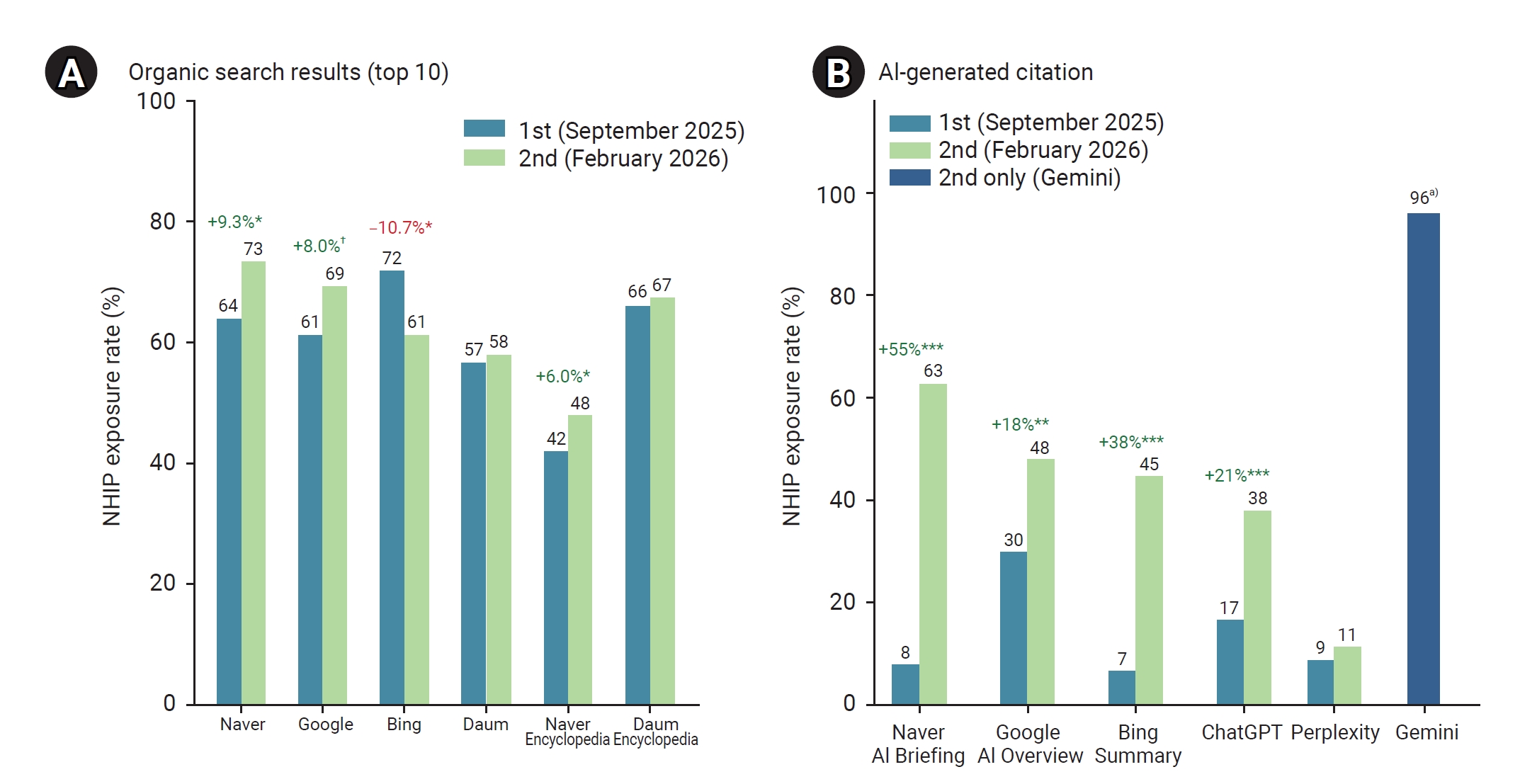
Figure 2.Platform divergence in the National Health Information Portal (NHIP) visibility: overall keywords versus the dyslipidemia subgroup. Comparison of NHIP exposure and citation rates between the complete keyword set (n=150) and the dyslipidemia-specific subgroup (n=10) during the second survey (February 2026). The bar chart highlights a stark algorithmic contrast among platforms for specific disease queries: while Google, ChatGPT, and Perplexity showed 0% NHIP visibility for dyslipidemia keywords, Gemini cited the NHIP for 100% of the same terms.
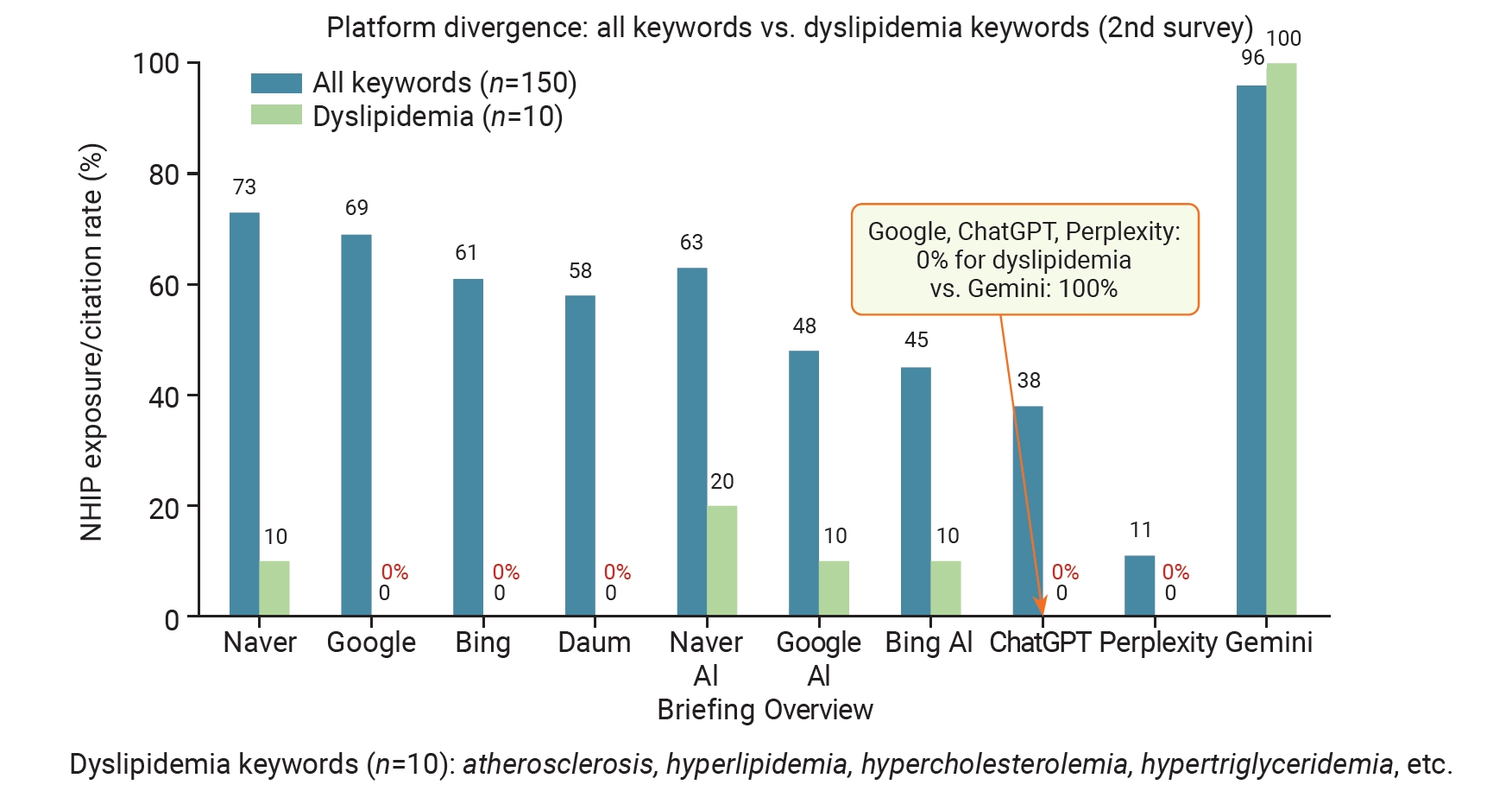
Table 1.NHIP exposure within the top 10 organic search results (n=150 keywords)
Table 1.
| Platform |
1st survey (n, %) |
2nd survey (n, %) |
Δ (%p) |
χ² |
p |
| Conventional search portals |
|
|
|
|
|
| Naver |
96 (64.0) |
110 (73.3) |
+9.3 |
5.63 |
0.018 |
| Google |
92 (61.3) |
104 (69.3) |
+8.0 |
3.18 |
0.074 |
| Bing |
108 (72.0) |
92 (61.3) |
−10.7 |
5.36 |
0.021 |
| Daum |
85 (56.7) |
87 (58.0) |
+1.3 |
0.05 |
0.823 |
| Encyclopedia channels (NHIP content via Open API) |
|
|
|
|
|
| Naver Encyclopedia |
63 (42.0) |
72 (48.0) |
+6.0 |
4.92 |
0.027 |
| Daum Encyclopedia |
99 (66.0) |
100 (66.7) |
+0.7 |
0.00 |
1.000 |
Table 2.NHIP citation within AI-generated summary features and standalone generative AI platforms (n=150 keywords)
Table 2.
| Platform |
1st survey (n, %) |
2nd survey (n, %) |
Δ (%p) |
χ² |
p |
| AI-generated summary features on search portals |
|
|
|
|
|
| Naver AI Briefing |
12 (8.0) |
94 (62.7) |
+54.7 |
74.56 |
<0.001 |
| Google AI Overview |
45 (30.0) |
72 (48.0) |
+18.0 |
10.40 |
0.001 |
| Bing AI Summary |
10 (6.7) |
67 (44.7) |
+38.0 |
53.15 |
<0.001 |
| Standalone generative AI platforms |
|
|
|
|
|
| ChatGPT |
25 (16.7) |
57 (38.0) |
+21.3 |
20.89 |
<0.001 |
| Perplexity |
13 (8.7) |
17 (11.3) |
+2.7 |
0.30 |
0.584 |
| Gemini |
NA |
144 (96.0) |
NA |
NA |
NA |
Table 3.Platform divergence in NHIP visibility for dyslipidemia-related keywords (n=10 keywords)
Table 3.
| Platform |
1st survey (n/10) |
2nd survey (n/10) |
| Organic search and encyclopedia channels |
|
|
| Naver |
0 |
1 |
| Google |
0 |
0 |
| Bing |
1 |
0 |
| Daum |
1 |
0 |
| Naver Encyclopedia |
1 |
1 |
| Daum Encyclopedia |
3 |
2 |
| AI-generated summary features and standalone AI platforms |
|
|
| Naver AI Briefing |
0 |
2 |
| Google AI Overview |
0 |
1 |
| Bing AI Summary |
0 |
1 |
| ChatGPT |
0 |
0 |
| Perplexity |
0 |
0 |
| Gemini |
NA |
10 (top 3: 9/10) |
References
- 1. Choi SK, Kim HY, Hwang JN, et al. A study for improving health literacy. Report No.: 2020-24. Korea Institute for Health and Social Affairs; 2020. Korean.
- 2. Kim G. Can we trust health information on the Internet? [Internet]. Medifonews; 2018 [cited 2026 Mar 20]. Available from: https://www.medifonews.com/news/article.html?no=138730. Korean.
- 3. Syed-Abdul S, Fernandez-Luque L, Jian WS, et al. Misleading health-related information promoted through video-based social media: anorexia on YouTube. J Med Internet Res 2013;15:e30.
- 4. Moon S, Kim J, Choi Y, et al. Influencing factors on health literacy and the influence of health literacy on healthcare utilization. Health Soc Welf Rev 2024;44:130−50. Korean.
- 5. Oh YS, Cho Y. Exploring the limitations in the use of online health information and future direction: focused on analysis of expert knowledge in the frame of ignorance. Health Soc Welf Rev 2019;39:358−93. Korean.
- 6. Jang J, Kim J, Lim D, et al. Improving health information: focusing on the National Health Information online service. Public Health Wkly Rep 2024;17:17−29. Korean.
- 7. Choi Y, Cho B. Current status and directions for improvement of the National Health Information Portal. Public Health Wkly Rep 2025;18:1952−66. Korean.
- 8. Moran K, Rosala M, Brown J. How AI is changing search behaviors [Internet]. Nielsen Norman Group; 2025 [cited 2026 Mar 20]. Available from: https://www.nngroup.com/articles/ai-changing-search-behaviors/.
- 9. Aggarwal P, Murahari V, Rajpurohit T, et al. GEO: generative engine optimization. In: Proceedings of the 30th ACM SIGKDD Conference on Knowledge Discovery and Data Mining; 2024 Aug 25-29; Barcelona, Spain. Association for Computing Machinery; 2024. p. 5−16.
- 10. Burgess S, Dennis S, Lanka S, et al. MedlinePlus Connect: linking health IT systems to consumer health information. IT Prof 2012;14:22−8.
- 11. Erkin Y, Ozduran E, Ozbek IC, et al. Readability, quality, and reliability of AI-generated information on myofascial pain syndrome: a comparative analysis of ChatGPT, Gemini, and Perplexity. PLoS One 2026;21:e0350402.
- 12. Ozbek IC, Hanci V, Ozduran E. Digital guidance: quality and readability analysis of artificial intelligence-generated spondyloarthropathy texts. Turk J Osteoporos 2025;31:12−8.
- 13. Ozbek IC, Ozduran E, Hanci V. Artificial intelligence in pain: a comprehensive review. Med J West Black Sea 2026;10:168−78.