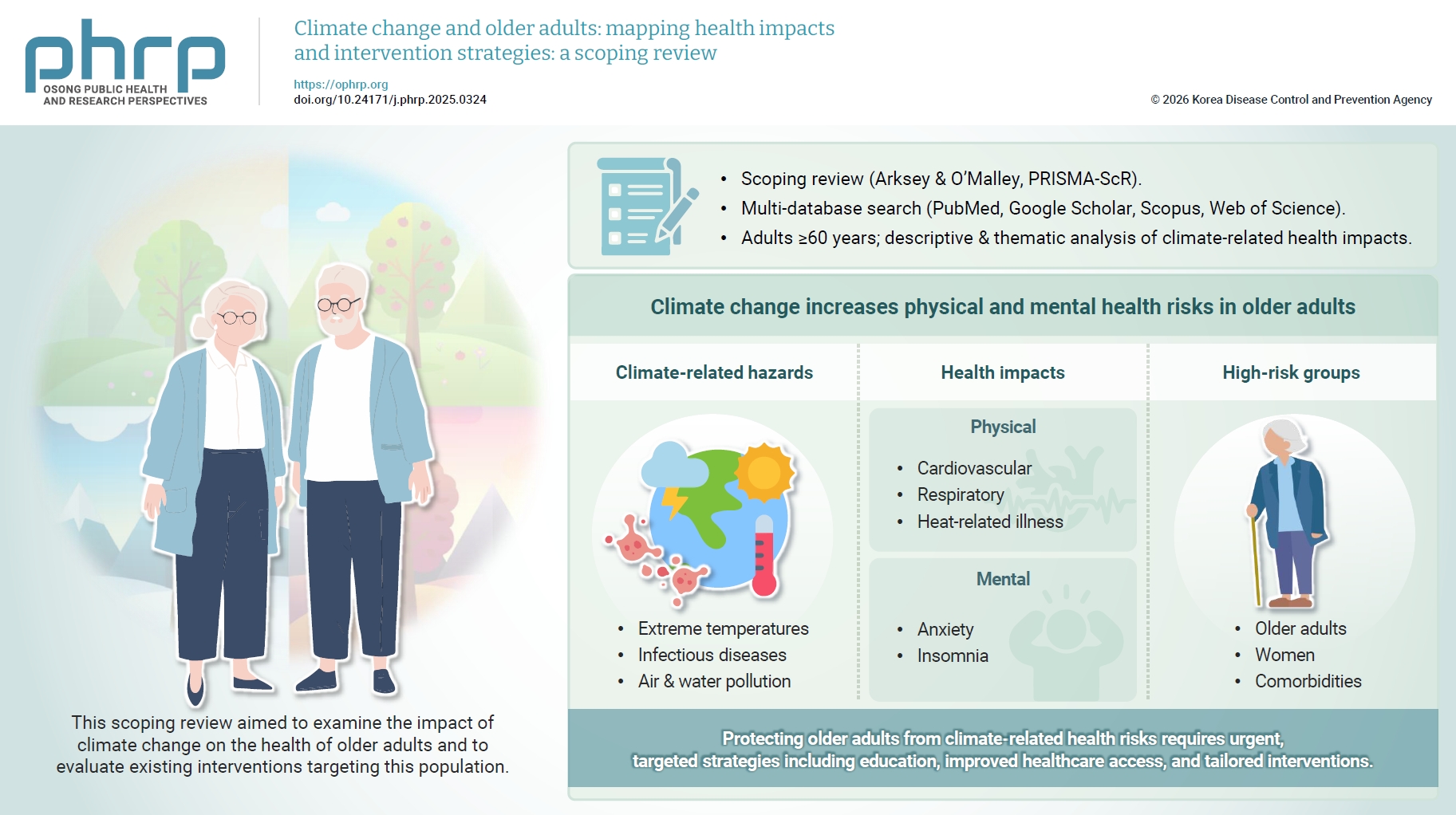
Objectives This scoping review aimed to examine the impact of climate change on the health of older adults and to evaluate existing interventions targeting this population. Methods: The review followed Arksey and O’Malley’s framework and the PRISMA-ScR guidelines. A comprehensive search was conducted across PubMed, Google Scholar, Scopus, and Web of Science. Eligible studies included those focusing on adults aged 60 years and older that examined the physical and mental health impacts of climate change across any geographic setting or level of care. Descriptive and thematic analyses were performed to identify key findings and knowledge gaps. Results: Climate change adversely affects the physical and mental health of older adults through increased exposure to infectious diseases, extreme temperatures, and poor air and water quality. Older adults are particularly vulnerable to heat-related illnesses, cardiovascular events, and respiratory conditions, with women and individuals with comorbidities at higher risk. Climate change is also associated with increased anxiety, insomnia, and other mental health concerns in this population. Social support and targeted interventions—such as community awareness programs and subsidized cooling costs—are associated with reduced risk. Community-based initiatives have demonstrated potential in reducing mortality and enhancing resilience among older adults during extreme weather events. Conclusion: Healthcare professionals should be educated about climate-related health outcomes affecting older adults. Protecting this vulnerable population requires urgent, inclusive, and targeted strategies, including education, improved healthcare access, and tailored interventions.
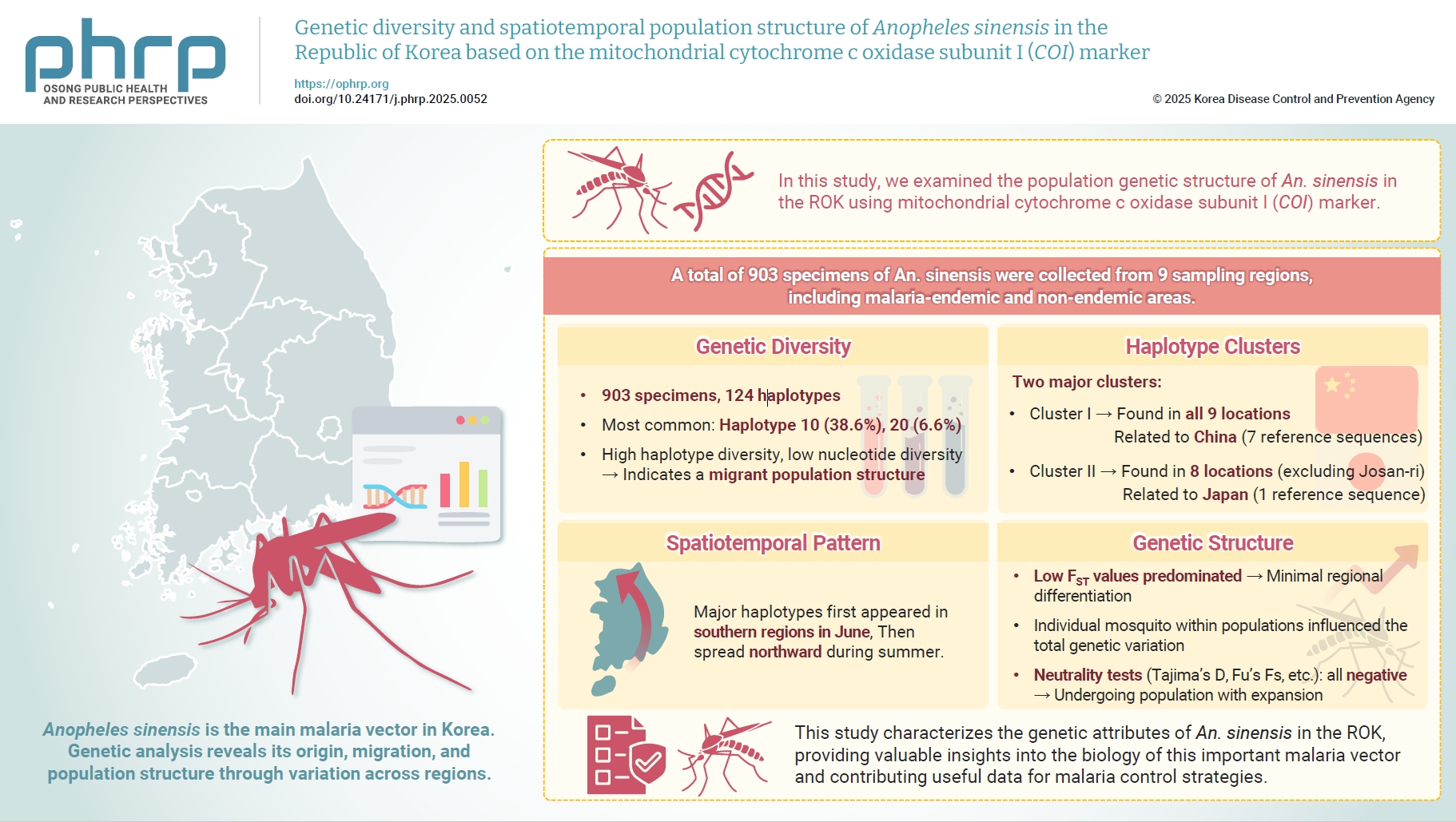
Objectives Anopheles sinensis is a predominant malaria vector found throughout the Republic of Korea (ROK). Population genetic analysis can provide insights into the origins and migration patterns of malaria vectors by assessing genetic variation and distribution among populations. Methods: In this study, we examined the population genetic structure of An. sinensis in the ROK using mitochondrial cytochrome c oxidase subunit I (COI) marker. Results: A total of 903 specimens of An. sinensis were collected from 9 sampling regions, including malaria-endemic and non-endemic areas. All populations displayed characteristics typical of migrant populations, with high haplotype diversity (Hd) and low nucleotide diversity (Pi). Network analysis identified 124 haplotypes grouped into 2 clusters. Both clusters included haplotypes from malaria-endemic and non-endemic areas. Cluster I shared its most recent common ancestry with Chinese reference sequences, while cluster II had related with Japanese reference sequences. Pairwise genetic distance (FST) analysis indicated generally low genetic differentiation among populations. Furthermore, FST values tended to increase proportionally with geographical distance between regions. Analysis of molecular variance confirmed that individual mosquitoes within the population had a large effect on the overall variation. Neutrality tests using 4 methods (Tajima’s D, Fu’s Fs, Fu and Li’s D, and Fu and Li’s F) yielded negative values, suggesting that An. sinensis populations are expanding in all studied regions. Conclusion: This study characterizes the genetic attributes of An. sinensis in the ROK, providing valuable insights into the biology of this important malaria vector and contributing useful data for malaria control strategies.
Citations
Citations to this article as recorded by
Artificial intelligence and biohealth: the Republic of Korea’s emerging priorities in health care R&D Jong-Koo Lee Osong Public Health and Research Perspectives.2025; 16(4): 309. CrossRef
Tae Jung Kim, Hak Seung Lee, Seong-Eun Kim, Jinju Park, Jun Yup Kim, Jiyoon Lee, Ji Eun Song, Jin-Hyuk Hong, Joongyub Lee, Joong-Hwa Chung, Hyeon Chang Kim, Dong-Ho Shin, Hae-Young Lee, Bum Joon Kim, Woo-Keun Seo, Jong-Moo Park, Soo Joo Lee, Keun-Hwa Jung, Sun U. Kwon, Yun-Chul Hong, Hyo-Soo Kim, Hyun-Jae Kang, Juneyoung Lee, Hee-Joon Bae
Osong Public Health Res Perspect 2024;15(1):18-32. Published online January 31, 2024
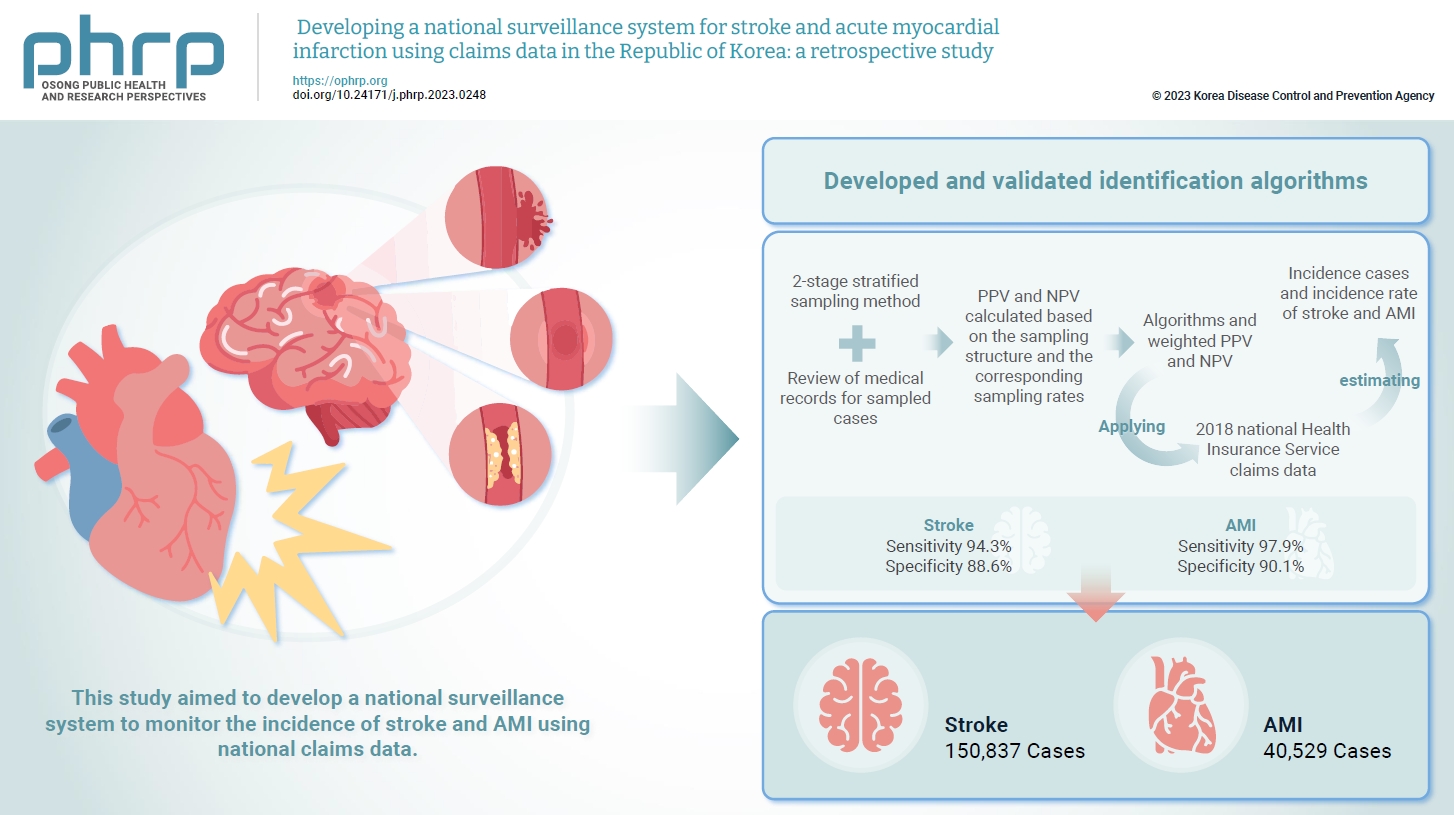
Objectives Limited information is available concerning the epidemiology of stroke and acute myocardial infarction (AMI) in the Republic of Korea. This study aimed to develop a national surveillance system to monitor the incidence of stroke and AMI using national claims data. Methods: We developed and validated identification algorithms for stroke and AMI using claims data. This validation involved a 2-stage stratified sampling method with a review of medical records for sampled cases. The weighted positive predictive value (PPV) and negative predictive value (NPV) were calculated based on the sampling structure and the corresponding sampling rates. Incident cases and the incidence rates of stroke and AMI in the Republic of Korea were estimated by applying the algorithms and weighted PPV and NPV to the 2018 National Health Insurance Service claims data. Results: In total, 2,200 cases (1,086 stroke cases and 1,114 AMI cases) were sampled from the 2018 claims database. The sensitivity and specificity of the algorithms were 94.3% and 88.6% for stroke and 97.9% and 90.1% for AMI, respectively. The estimated number of cases, including recurrent events, was 150,837 for stroke and 40,529 for AMI in 2018. The age- and sex-standardized incidence rate for stroke and AMI was 180.2 and 46.1 cases per 100,000 person-years, respectively, in 2018. Conclusion: This study demonstrates the feasibility of developing a national surveillance system based on claims data and identification algorithms for stroke and AMI to monitor their incidence rates.
Citations
Citations to this article as recorded by
Effect of a ≥50% Reduction in Low-Density Lipoprotein Cholesterol From Baseline in Patients With Ischemic Stroke Minyoul Baik, Jimin Jeon, Joonsang Yoo, Jinkwon Kim Neurology.2026;[Epub] CrossRef
Objectives We estimated the overall and age-specific percentages of the Korean population
with presumed immunity against severe acute respiratory syndrome coronavirus 2 (SARSCoV-2) as of April 2022 using the national registry.
Methods We used the national coronavirus disease 2019 (COVID-19) infection and vaccination
registry from South Korea, as described to define individuals with a previous history of
COVID-19 infection, vaccination, or both, as persons with presumed immunity.
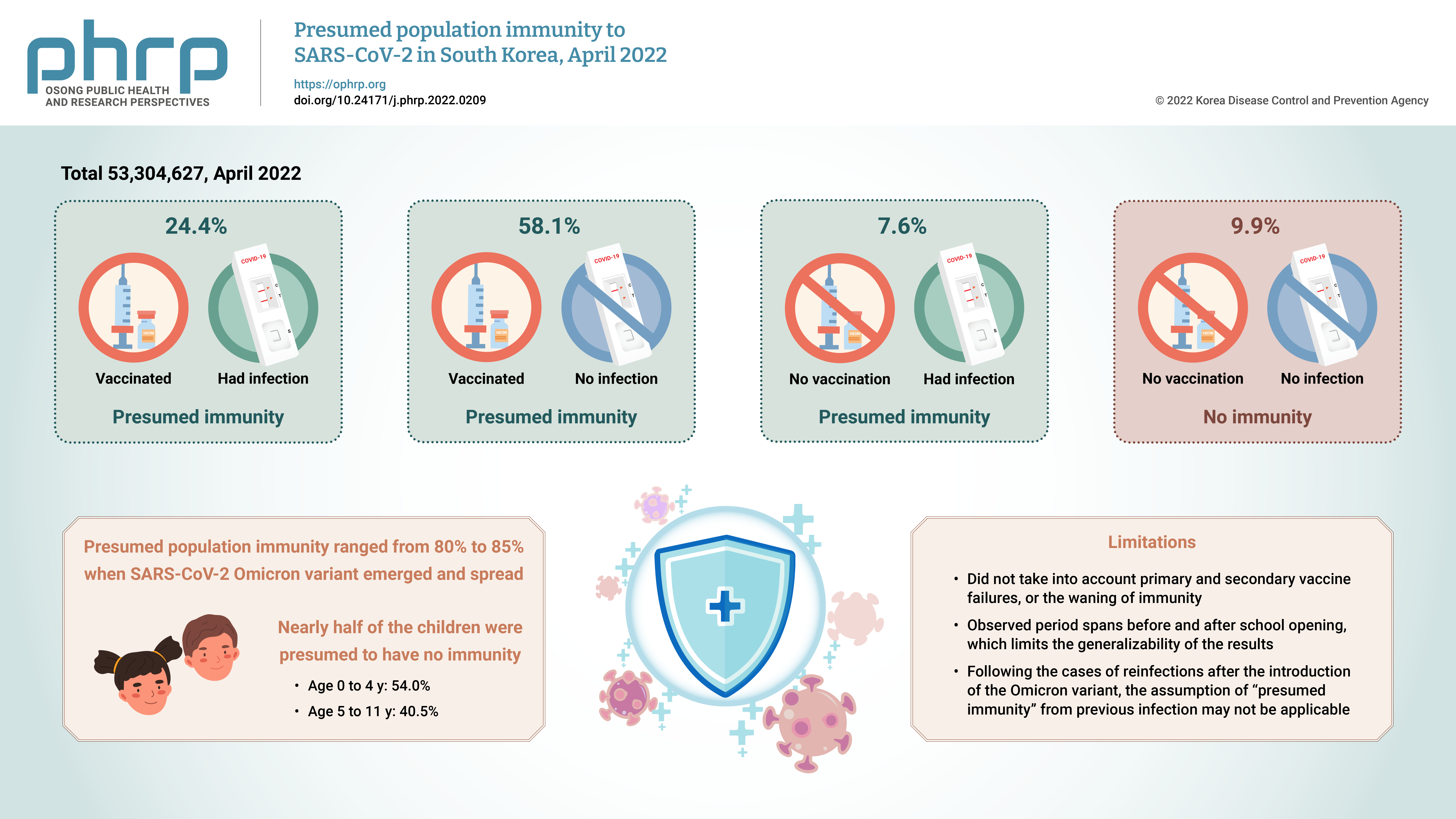
Results Of a total of 53,304,627 observed persons, 24.4% had vaccination and infection, 58.1%
had vaccination and no infection, 7.6% had infection and no vaccination, and 9.9% had no
immunity. The SARS-CoV-2 Omicron variant emerged at a time when the presumed population
immunity ranged from 80% to 85%; however, nearly half of the children were presumed to
have no immunity.
Conclusion We report a gap in population immunity, with lower presumed protection in
children than in adults. The approach presented in this work can provide valuable informed
tools to assist vaccine policy-making at a national level.
Citations
Citations to this article as recorded by
Realistic Estimation of COVID-19 Infection by Seroprevalence Surveillance of SARS-CoV-2 Antibodies: An Experience From Korea Metropolitan Area From January to May 2022 In Hwa Jeong, Jong-Hun Kim, Min-Jung Kwon, Jayoung Kim, Hee Jin Huh, Byoungguk Kim, Junewoo Lee, Jeong-hyun Nam, Eun-Suk Kang Journal of Korean Medical Science.2024;[Epub] CrossRef
Epidemiology of Coronavirus Disease 2019 in Infants and Toddlers, Seoul, South Korea JiWoo Sim, Euncheol Son, Young June Choe Pediatric Infection & Vaccine.2024; 31(1): 94. CrossRef
Predicting adherence to COVID-19 preventive measures among South Korean adults aged 40 to 69 Years using the expanded health empowerment model Su-Jung Nam, Tae-Young Pak SSM - Population Health.2023; 22: 101411. CrossRef
Acute COVID-19 in unvaccinated children without a history of previous infection during the delta and omicron periods Jee Min Kim, Ji Yoon Han, Seung Beom Han Postgraduate Medicine.2023; 135(7): 727. CrossRef
Objectives We conducted a comparative analysis of the differences in the incidence of 8 acute respiratory viruses and the changes in their patterns before and during the coronavirus disease 2019 (COVID-19) pandemic. Methods: Three sentinel surveillance systems of the Korea Disease Control and Prevention Agency and data from the Health Insurance Review and Assessment Service were analyzed. The average numbers of reported cases and the related hospital admissions and outpatient data were compared between April 2018–2019 and 2020–2021. Changes in the disease burden and medical expenditures between these 2 time periods were evaluated. Results: During the COVID-19 pandemic, the number of reported cases of all acute respiratory viral infections, except for human bocavirus, decreased significantly. Data from the Health Insurance Review and Assessment Service also showed decreases in the actual amount of medical service usage and a marked reduction in medical expenditures. Conclusion: Non-pharmacological interventions in response to COVID-19 showed preventive effects on the transmission of other respiratory viruses, as well as COVID-19. Although COVID-19 had a tremendous impact on society as a whole, with high social costs, there were also positive effects, such as a reduction in the incidence of acute respiratory viral infections.
Citations
Citations to this article as recorded by
Performance Evaluation of a Respiratory Virus Multiplex Real-Time PCR Panel Including SARS-CoV-2 and Its Clinical Utility in the Post-Pandemic Period Sunggyun Park Keimyung Medical Journal.2025; 44(1): 30. CrossRef
Machine learning forecasts for seasonal epidemic peaks: Lessons learnt from an atypical respiratory syncytial virus season Roger A. Morbey, Daniel Todkill, Conall Watson, Alex J. Elliot, André Ricardo Ribas Freitas PLOS ONE.2023; 18(9): e0291932. CrossRef
Objectives
The Korea HIV/AIDS cohort was constructed with 18 hospitals that care for HIV-infected individuals in 2006. We compared the epidemiological and immunological characteristics of the cohort registrants with those of the HIVinfected population at the time of HIV diagnosis. Methods
This study was conducted on 5717 people living with HIV/AIDS from 1985 to 2009, of which 789 individuals registered with the Korea HIV/AIDS cohort study. Individuals who had data from initial CD4+ T-cell counts measured within 6 months following HIV diagnosis were selected as study participants to predict the status of disease progression at the time of HIV diagnosis. A total of 2886 patients (50%) were selected from people living with HIV/AIDS, of whom 424 individuals (54%) were cohort registrants. The χ<sup>2</sup> test and Wilcoxon rank sum test were used for analysis. Results
The distributions of age, marital status, diagnosed regions, reason for HIV testing, and screening site were similar between the HIV-infected population and the cohort registrants. In 1985–2004, the male ratio for the cohort registrants (94.3%) was significantly higher than that measured for the HIV-infected population (89.5%) (<i>p</i> = 0.0339). With regard to transmission route, homosexual contact of cohort registrants (46.6%) was higher than that of the HIV-infected population (40.1%) (<i>p</i> = 0.022) in 2005–2009. No statistical difference in CD4+ T-cell counts at the time of HIV diagnosis was found between the HIVinfected population and cohort registrants (<i>p</i> = 0.2195). Conclusion
The Korea HIV/AIDS cohort registrants represent the HIV-infected population, and the data collected from this cohort could be used as a foundation for national statistics.
Citations
Citations to this article as recorded by
Changing Patterns of HIV Epidemic in 30 Years in East Asia S. Pilar Suguimoto, Teeranee Techasrivichien, Patou Masika Musumari, Christina El-saaidi, Bhekumusa Wellington Lukhele, Masako Ono-Kihara, Masahiro Kihara Current HIV/AIDS Reports.2014; 11(2): 134. CrossRef
Can Stigma Still Distort the Spectrum of a Disease? Hae-Wol Cho, Chaeshin Chu Osong Public Health and Research Perspectives.2012; 3(2): 65. CrossRef



 First
 Prev


