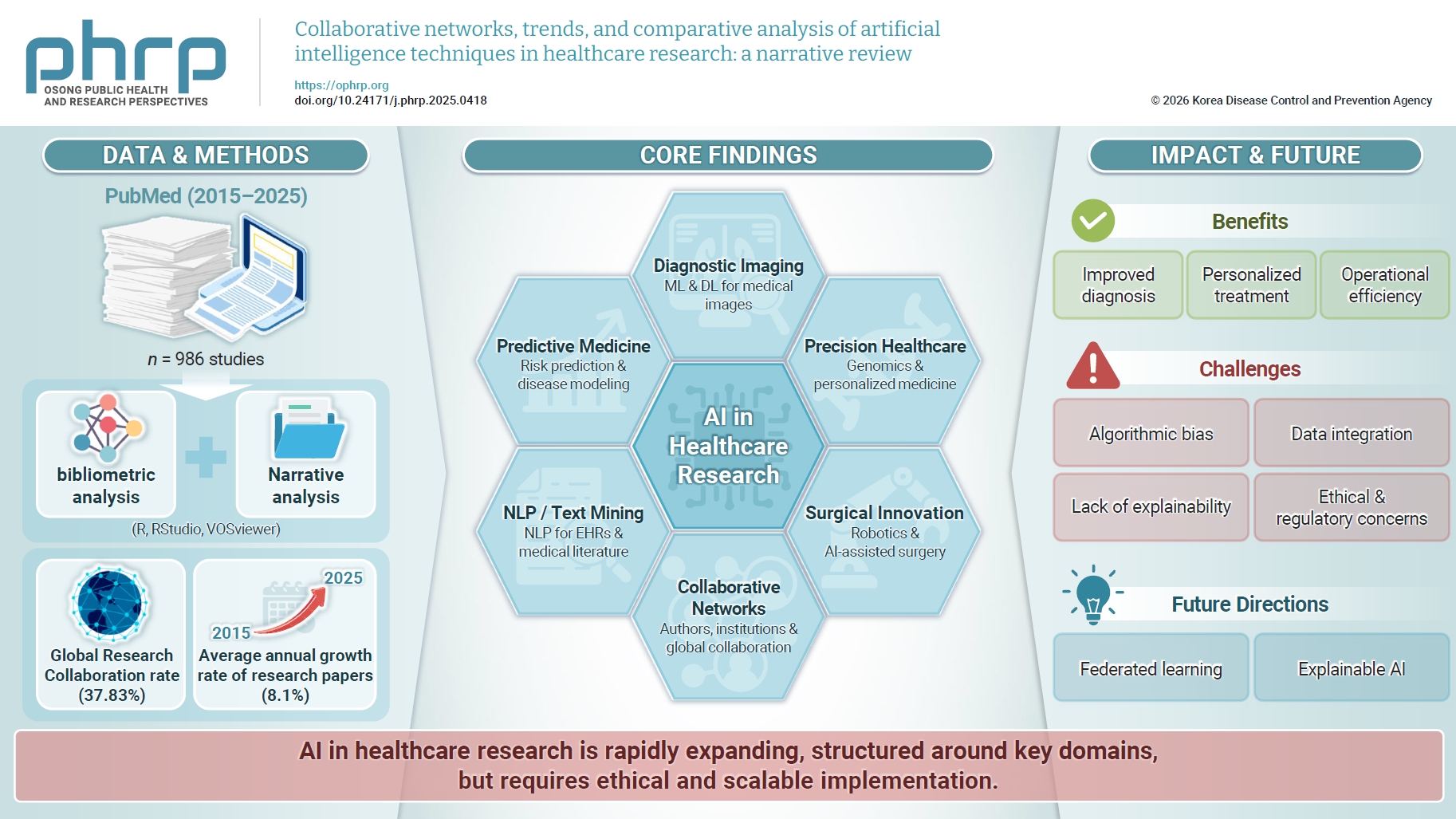
Objectives Artificial intelligence (AI) is reshaping healthcare by improving diagnosis and treatment planning, increasing operational efficiency, and streamlining administrative workflows. This paper integrates findings from an extensive PubMed search (2015–2025) with bibliometric analysis using RStudio and VOSviewer to investigate the comparative applications of AI methods in healthcare, collaborative networks, and emerging trends.
Methods A total of 1,243 records were identified through the PubMed search, and after removal of 143 duplicates, 1,100 records were screened. Following full-text assessment and exclusion of ineligible studies, 986 articles were included in the final bibliometric analysis.
Results The main research areas included robotic-assisted surgery, predictive analytics, diagnostic imaging, and precision medicine, with particular emphasis on the prevalence of machine learning and deep learning in imaging and the increasing application of natural language processing to unstructured medical information.
Conclusion The review emphasizes the need for greater budgetary allocation to scalable and pragmatic AI technologies and for interdisciplinary cooperation among researchers, industry, and healthcare providers. Despite this growth, challenges such as algorithmic bias, data integration, and ethical concerns persist. The paper also highlights the importance of equitable collaboration, accountable AI, and multinational partnerships in ensuring that AI can be used ethically and efficiently in healthcare over the long term to improve patient care and biomedical innovation. It does so by mapping international and regional trends, identifying the most influential authors, institutions, and funding sources, and evaluating methodological approaches.
Gustavo Vital de Mendonça, Crispim Cerutti Junior, Alfredo Carlos Rodrigues Feitosa, Brígida Franco Sampaio de Mendonça, Lucia Helena Sagrillo Pimassoni
Osong Public Health Res Perspect 2024;15(3):212-220. Published online June 27, 2024
Objectives The objective of this study was to examine the hypothesis that periodontal disease is associated with chronic non-communicable diseases. Methods: In this cross-sectional study, we evaluated the periodontal health condition of the population, based on the community periodontal index, as well as the number of missing teeth and the presence of systemic health conditions. We quantified the association between oral health and the presence of chronic diseases using simple logistic regression, adjusting for confounding factors including age, smoking, and overweight. Results: The study population consisted of 334 volunteers, aged between 19 and 81 years. In patients over 45 years old, periodontal disease was found to be significantly associated with hypertension and diabetes. Furthermore, in female patients, periodontal disease was significantly associated with hypertension, diabetes, and cancer. Conclusion: Our findings indicate that periodontal disease is positively and significantly associated with both arterial hypertension and diabetes, independent of potential confounding factors.
Citations
Citations to this article as recorded by
Comparative Antimicrobial and Antibiofilm Activity of Antiseptics and Commercial Mouthwashes Against Porphyromonas gingivalis ATCC 33277 Marzena Korbecka-Paczkowska, Tomasz M. Karpiński, Marcin Ożarowski Journal of Clinical Medicine.2025; 14(24): 8909. CrossRef
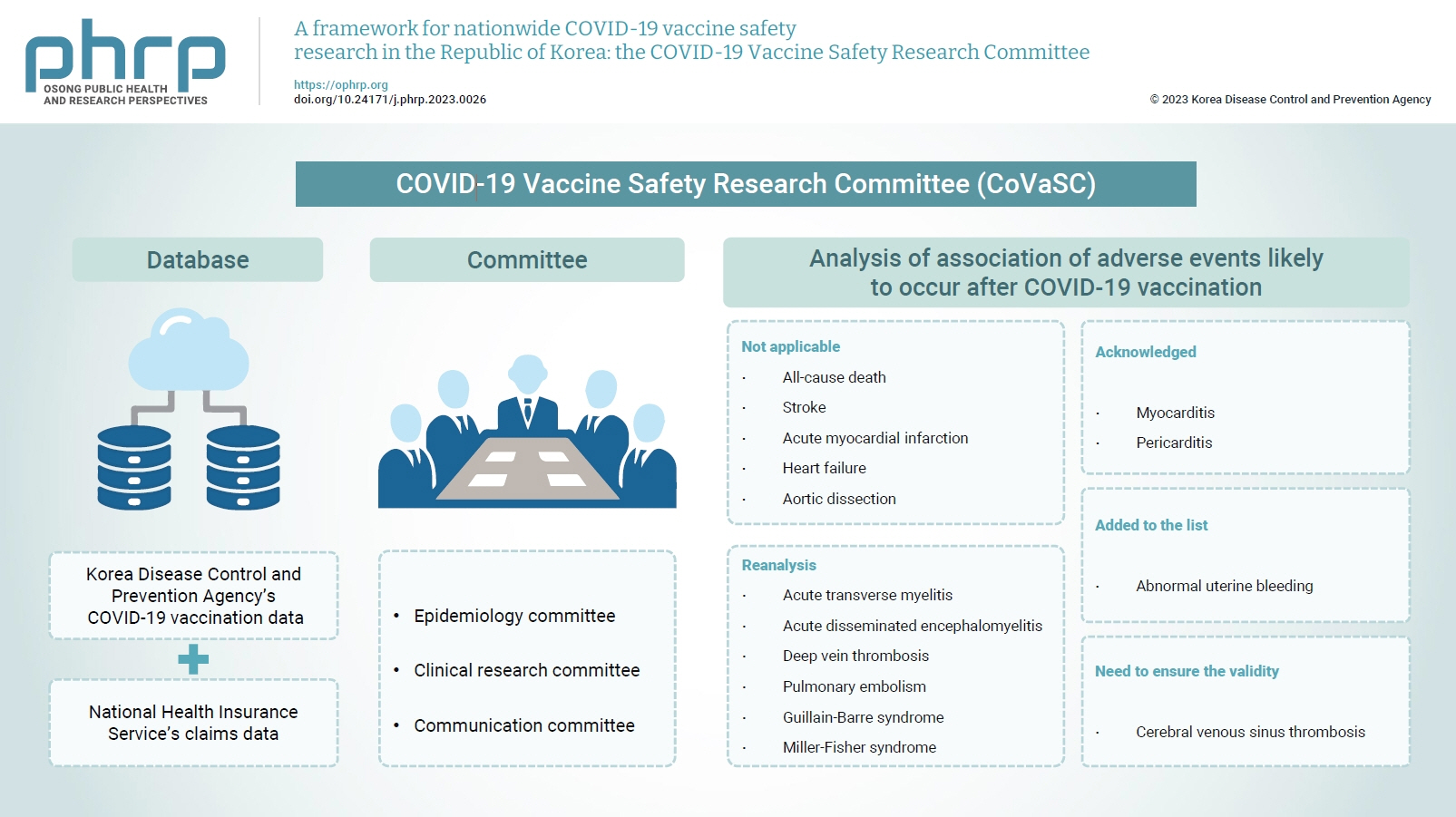
The COVID-19 Vaccine Safety Research Committee (CoVaSC) was established in November 2021 to address the growing need for independent, in-depth scientific evidence on adverse events (AEs) following coronavirus disease 2019 (COVID-19) vaccination. This initiative was requested by the Korea Disease Control and Prevention Agency and led by the National Academy of Medicine of Korea. In September 2022, the COVID-19 Vaccine Safety Research Center was established, strengthening CoVaSC’s initiatives. The center has conducted various studies on the safety of COVID-19 vaccines. During CoVaSC’s second research year, from September 29, 2022 to July 19, 2023, the center was restructured into 4 departments: Epidemiological Research, Clinical Research, Communication & Education, and International Cooperation & Policy Research. Its main activities include (1) managing CoVaSC and the COVID-19 Vaccine Safety Research Center, (2) surveying domestic and international trends in AE causality investigation, (3) assessing AEs following COVID-19 vaccination, (4) fostering international collaboration and policy research, and (5) organizing regular fora and training sessions for the public and clinicians. Causality assessments have been conducted for 27 diseases, and independent research has been conducted after organizing ad hoc committees comprising both epidemiologists and clinical experts on each AE of interest. The research process included protocol development, data analysis, interpretation of results, and causality assessment. These research outcomes have been shared transparently with the public and healthcare experts through various fora. The COVID-19 Vaccine Safety Research Center plans to continue strengthening and expanding its research activities to provide reliable, high-quality safety information to the public.
Citations
Citations to this article as recorded by
Active Surveillance for COVID-19 Vaccine Safety Using Sequential Analysis in Korea: Population-Based Retrospective Observational Study Na-Young Jeong, Haerin Cho, Heehyun Won, Suvin Park, Joongyub Lee, Hyesook Park, Nam-Kyong Choi JMIR Public Health and Surveillance.2026; 12: e75094. CrossRef
Risk of new-onset polymyalgia rheumatica following COVID-19 vaccination in South Korea: a self-controlled case-series study Jieun Woo, Mu Kyung Kim, HyunJoo Lim, Ju Hwan Kim, Hyunah Jung, Hyoun-Ah Kim, Ju-Young Shin RMD Open.2025; 11(2): e005138. CrossRef
SARS-CoV-2-Vaccine-Related Endocrine Disorders: An Updated Narrative Review Avraham Ishay, Kira Oleinikov, Elena Chertok Shacham Vaccines.2024; 12(7): 750. CrossRef
Active Surveillance for Safety Monitoring of XBB.1.5-Containing COVID-19 mRNA Vaccines in Korea Bomi Park, Hye Ah Lee, Yeonjae Kim, Chung Ho Kim, Hyunjin Park, Seunghee Jun, Hyelim Lee, Seunghyun Lewis Kwon, Yesul Heo, Hyungmin Lee, Hyesook Park Journal of Korean Medical Science.2024;[Epub] CrossRef
With the introduction of coronavirus disease 2019 (COVID-19) vaccines, the Korea Disease Control and Prevention Agency (KDCA) commissioned the National Academy of Medicine of Korea to gather experts to independently assess post-vaccination adverse events. Accordingly, the COVID-19 Vaccine Safety Research Committee (CoVaSC) was launched in November 2021 to perform safety studies and establish evidence for policy guidance. The CoVaSC established 3 committees for epidemiology, clinical research, and communication. The CoVaSC mainly utilizes pseudonymized data linking KDCA’s COVID-19 vaccination data and the National Health Insurance Service’s claims data. The CoVaSC’s 5-step research process involves defining the target diseases and organizing ad-hoc committees, developing research protocols, performing analyses, assessing causal relationships, and announcing research findings and utilizing them to guide compensation policies. As of 2022, the CoVaSC completed this research process for 15 adverse events. The CoVaSC launched the COVID-19 Vaccine Safety Research Center in September 2022 and has been reorganized into 4 divisions to promote research including international collaborative studies, long-/short-term follow-up studies, and education programs. Through these enhancements, the CoVaSC will continue to swiftly provide scientific evidence for COVID-19 vaccine research and compensation and may serve as a model for preparing for future epidemics of new diseases.
Citations
Citations to this article as recorded by
Risk of anxiety disorders and insomnia following COVID-19 vaccination Haerin Cho, Joon Hyung Jung, Hwoyeon Seo, Won Chul Shin, Jung-Ick Byun, Suvin Park, Na-Young Jeong, Sanghoon Oh, Nam-Kyong Choi Journal of Psychiatric Research.2026; 192: 109. CrossRef
Active Surveillance for COVID-19 Vaccine Safety Using Sequential Analysis in Korea: Population-Based Retrospective Observational Study Na-Young Jeong, Haerin Cho, Heehyun Won, Suvin Park, Joongyub Lee, Hyesook Park, Nam-Kyong Choi JMIR Public Health and Surveillance.2026; 12: e75094. CrossRef
MIS‐C Overlap, Not Prior COVID‐19 Itself, Drives Treatment Escalation in Kawasaki Disease: A Nationwide Cohort Study Min Ji Kim, Jong Seung Kim, Jee Young Hong, Jihye You Pediatrics International.2026;[Epub] CrossRef
Postmenopausal Bleeding Risk after COVID-19 Vaccination: A Population-Based Self-Controlled Case Series Study Na-Young Jeong, HyeMin Park, SiHyun Cho, Nam-Kyong Choi Yonsei Medical Journal.2026; 67(11): 831. CrossRef
Risk of Kawasaki Disease/Multisystem Inflammatory Syndrome Following COVID-19 Vaccination in Korean Children: A Self-Controlled Case Series Study Suyeon Kim, Hwa Yeon Ko, Jeongin Oh, Dongwon Yoon, Ju Hwan Kim, Young June Choe, Ju-Young Shin Journal of Korean Medical Science.2025;[Epub] CrossRef
The association between acute transverse myelitis and COVID‐19 vaccination in Korea: Self‐controlled case series study Eunsun Lim, Yoo Hwan Kim, Na‐Young Jeong, Su‐Hyun Kim, Heehyun Won, Jong‐Seok Bae, Nam‐Kyong Choi European Journal of Neurology.2025;[Epub] CrossRef
Coronavirus disease vaccine linked menstrual changes: mobile application study Sung Eun Kim, Joseph J. Noh, Yoo-Young Lee Obstetrics & Gynecology Science.2025; 68(2): 155. CrossRef
Multilevel analysis of individual, household, and community factors influencing COVID-19 vaccination intention: evidence from the 2021 Korea Community Health Survey Ji-seon Seong, Jong-Yeon Kim Osong Public Health and Research Perspectives.2025; 16(2): 169. CrossRef
Association between COVID-19 vaccination and first healthcare utilization for chronic obstructive pulmonary disease: A nationwide population-based cohort study Sang Hyuk Kim, Seung-Hun You, Ju Won Lee, Eunji Kim, Youlim Kim, Hyun Lee, Sun-Young Jung, Ji-Yong Moon Vaccine.2025; 61: 127367. CrossRef
Evaluating Vaccine Safety Through the Vaccine Safety Datalink: A Comprehensive Review of Research Contributions Eunsun Lim, Na-Young Jeong, Heehyun Won, Nam-Kyong Choi Journal of Health Informatics and Statistics.2025; 50(2): 113. CrossRef
COVID-19 vaccination and the risk of abnormal uterine bleeding: A nationwide self-controlled case series study Na-Young Jeong, SiHyun Cho, Eunsun Lim, Jung Ryeol Lee, Jae Yen Song, Joong Shin Park, Nam-Kyong Choi Vaccine.2025; 63: 127619. CrossRef
Risk of new-onset seizures following immunization against COVID-19: a self-controlled case-series study Hwa Yeon Ko, Dongwon Yoon, Ju Hwan Kim, Han Eol Jeong, Seung Bong Hong, Won-Chul Shin, Ju-Young Shin Epidemiology and Health.2025; 47: e2025024. CrossRef
Risk of encephalitis and meningitis after COVID-19 vaccination in South Korea: a self-controlled case series analysis Ju Hwan Kim, Dongwon Yoon, Hwa Yeon Ko, Kyungyeon Jung, Jun-Sang Sunwoo, Won Chul Shin, Jung-Ick Byun, Ju-Young Shin BMC Medicine.2024;[Epub] CrossRef
The COVID-19 Vaccine Safety Research Center: a cornerstone for strengthening safety evidence for COVID-19 vaccination in the Republic of Korea Na-Young Jeong, Hyesook Park, Sanghoon Oh, Seung Eun Jung, Dong-Hyun Kim, Hyoung-Shik Shin, Hee Chul Han, Jong-Koo Lee, Jun Hee Woo, Jaehun Jung, Joongyub Lee, Ju-Young Shin, Sun-Young Jung, Byung-Joo Park, Nam-Kyong Choi Osong Public Health and Research Perspectives.2024; 15(2): 97. CrossRef
A Causality Assessment Framework for COVID-19 Vaccines and Adverse Events at the COVID-19 Vaccine Safety Research Center Seyoung Kim, Jeong Ah Kim, Hyesook Park, Sohee Park, Sanghoon Oh, Seung Eun Jung, Hyoung-Shik Shin, Jong Koo Lee, Hee Chul Han, Jun Hee Woo, Byung-Joo Park, Nam-Kyong Choi, Dong-Hyun Kim Journal of Korean Medical Science.2024;[Epub] CrossRef
To become a more stronger and safer country Jong-Koo Lee Osong Public Health and Research Perspectives.2023; 14(2): 67. CrossRef
Risk of lymphadenopathy from SARS-CoV-2 vaccination in Korea: a self-controlled case series analysis Mi-Sook Kim, Bongyoung Kim, Jeong Pil Choi, Nam-Kyong Choi, Jung Yeon Heo, Jun Yong Choi, Joongyub Lee, Sang Il Kim Epidemiology and Health.2023; 45: e2023090. CrossRef
Objectives
Tobacco is an important risk factor for tuberculosis (TB) infection and TB disease. Identifying tobacco users and providing tobacco cessation services is expected to reduce the burden of TB. We assessed tobacco use among presumptive TB patients attending a tertiary hospital and their willingness to attend tobacco cessation services. Methods
A cross-sectional study was conducted among presumptive TB patients attending a designated microscopy center of a tertiary hospital in South India. All presumptive TB patients aged ≥ 18 years attending the designated microscopy center were interviewed using a semistructured interview schedule. Data on presumptive TB patient's age, sex, tobacco use and forms of tobacco, attempts to quit tobacco since 1 year, and willingness to attend a smoking cessation clinic in tertiary hospital were captured. History of use of tobacco in the past 1 month was considered as “tobacco use.”. Results
A total of 424 presumptive TB patients aged ≥ 18 years were interviewed. Tobacco use in the past 1 month was reported by 176 (41.5%, 95% confidence interval: 36.9–46.3%) presumptive TB patients. In total, 78 (18%) presumptive TB patients were eventually diagnosed with smear-positive pulmonary TB, of them 63 (80%) were tobacco users. Presumptive TB patients aged ≥ 30 years, male sex, and < 10 years of education were significantly associated with tobacco use. Of 176, a majority of 132 (75%) used some form of smoking. Of a total of 132 smokers, 70 (53%) were willing to avail of tobacco cessation services. Conclusion
Tobacco use among presumptive TB patients was high. Considering the high willingness to quit among smokers, proven brief interventions to help quit smoking can be tried.
Citations
Citations to this article as recorded by
Effect of tobacco use and nicotine dependence on the quality of sleep among tuberculosis patients: A cross-sectional study Tukaram Kendre, Rajat Mishra, Priyanka Guha, Gulshan Singh Rana, Krishna Pandey, Sameer Dhingra Clinical Epidemiology and Global Health.2025; 31: 101870. CrossRef
Tobacco Troubles: Unraveling Tobacco's role in TB positivity among presumptive patients attending a taluka hospital in Karnataka, India Ankeeta Menona Jacob, Jeni Jacob, Avinash K. Shetty Clinical Epidemiology and Global Health.2025; 34: 102059. CrossRef
Use of smokeless tobacco by patients with drug-sensitive pulmonary tuberculosis: The need for strengthening tuberculosis–tobacco collaborative in India ANTARA BANIK, MIHIR P. RUPANI, ATULKUMAR V. TRIVEDI, JIGNA D. DAVE The National Medical Journal of India.2025; 38: 138. CrossRef
Prevalence of tobacco consumption among pulmonary tuberculosis patients and its correlation with tuberculosis incidence: a systematic review and meta-analysis in the Indian context Aninda Debnath, Ravindra Nath, Anubhav Mondal, Pankaj Chandrabhan Nathe, Jugal Kishore, Pranav Ish, Vidushi Rathi, Jagdish Kaur Monaldi Archives for Chest Disease.2025;[Epub] CrossRef
Smoking cessation interventions in South Asian Region: a systematic scoping review Sajid Iqbal, Rubina Barolia, Pammla Petrucka, Laila Ladak, Rameesha Rehmani, Abdul Kabir BMC Public Health.2022;[Epub] CrossRef
Influence of the systemic inflammatory response on the state of homeostasis of the body and its reactivity in patients with respiratory tuberculosis against the «background» of chronic obstructive pulmonary disease O. N. Brazhenko, A. V. Katicheva Tuberculosis and socially significant diseases.2021; 9(2): 38. CrossRef
Tobacco use and nicotine dependence among newly diagnosed pulmonary tuberculosis patients in Ballabgarh tuberculosis unit, Haryana Rakesh Kumar, Shashi Kant, Ankit Chandra, Anand Krishnan Journal of Family Medicine and Primary Care.2020; 9(6): 2860. CrossRef
A narrative review of facilitators and barriers to smoking cessation and tobacco-dependence treatment in patients with tuberculosis in low- and middle-income countries Kamila Zvolska, Alexandra Pankova, Iveta Nohavova, Rumana Huque, Helen Elsey, Melanie Boeckmann, Aziz Sheikh, Kamran Siddiqi, Eva Kralikova Tobacco Induced Diseases.2020;[Epub] CrossRef
Effective Counseling: A Major Challenge of Tuberculosis Control Programme in Tackling the Dual Disease Burden of Tobacco Consumption among Tuberculosis Patients in India Bidhata Khatri, K.K. Shyamala, Nehal LNU, Supriya Tiwari Indian Journal of Respiratory Care.2020; 9(1): 77. CrossRef
Characteristics and sputum conversion of tuberculosis (TB) patients in Kalutara, Sri Lanka Sumal Nandasena, Chaminda Senavirathna, Champa Munasinghe, Chapa Wijesena, Ridmi Sucharitharathna Indian Journal of Tuberculosis.2019; 66(1): 76. CrossRef
Tuberculosis and cigarette smoke exposure: An update ofin vitroandin vivostudies Y. López-Hernández, C. E. Rivas-Santiago, J. A. López, G. Mendoza-Almanza, R. Hernandez-Pando Experimental Lung Research.2018; 44(2): 113. CrossRef
Objectives
This study analyzes the influence of the financial structure of pharmaceutical companies on R&D investment to create a next-generation profit source or develop relatively cost-effective drugs to maximize enterprise value. Methods
The period of the empirical analysis is from 2000 to 2012. Financial statements and comments in general and internal transactions were extracted from TS-2000 of the Korea Listed Company Association (KLCA), and data related to stock price is extracted from KISVALUE-Ⅲ of NICE Information Service Co., Ltd. Stata 12.0 was used as the statistical package for panel analysis. Results
The current ratio had a positive influence on R&D investment, the debt ratio had a negative influence on R&D investment, and return on investment and net sales growth rate did not have a significant influence on R&D investment. Conclusion
It was found in this study that the higher liquidity ratio, the greater the R&D investment. The stability of pharmaceutical companies has a negative influence on R&D investment. This finding is consistent with the prediction that if a company faces a financial risk, it will be passive in R&D investment due to its financial difficulties.
Citations
Citations to this article as recorded by
A curvilinear relationship between intangible assets and high-quality enterprise development: Evidence from Chinese-listed companies in cross-border e-commerce Zhixiong Gao, Yanjuan Li, Hongcheng Shen, Zeyuan Liu Heliyon.2026; 12(12): e45155. CrossRef
Does Business Group Affiliation Enhance Firm-level Innovation? Evidence from Indian Automotive Components Industry J. Vineesh Prakash, D. K. Nauriyal The Indian Economic Journal.2025; 73(2): 217. CrossRef
Assessment of Local Pharmaceutical Manufacturing Sector in a Low-income Country: A Descriptive Study Tesfa Marew, Anteneh Belete, Frances J. Richmond, Tsige Gebre-Mariam Therapeutic Innovation & Regulatory Science.2025; 59(2): 379. CrossRef
Maliyet Yapışkanlığı Kavramı: Borsa İstanbul 30 Endeksinde Yer Alan Şirketler Üzerinde Bir Uygulama Sevgi Cengiz Verimlilik Dergisi.2024; 58(4): 573. CrossRef
Tác động của quản lý vốn lưu động đến đầu tư nghiên cứu và phát triển Liên Lê Quỳnh Tạp chí Khoa học Thương mại.2024; : 76. CrossRef
How Indian Pharma Industry Performed in the Last Decade? Impact of a Non-macroeconomic Variable and Financial Distress Pooja Singh, Anindita Chakraborty Jindal Journal of Business Research.2023; 12(2): 143. CrossRef
How structural changes are driving R&D activity in India’s pharmaceutical sector Niloufer Sohrabji, Kristen Marquette Journal of Pharmaceutical Health Services Research.2023; 14(3): 256. CrossRef
Patent and Marketing Exclusivities 101 for Drug Developers Bryan Oronsky, Scott Caroen, Franck Brinkhaus, Tony Reid, Meaghan Stirn, Raj Kumar Recent Patents on Biotechnology.2023; 17(3): 257. CrossRef
The driving process of technological innovation in construction: a firm-level CDM analysis Zheng Gong, Nannan Wang Construction Innovation
.2022; 22(2): 222. CrossRef
Envisioning the challenges of the pharmaceutical sector in the Indian health-care industry: a scenario analysis Giuseppe Festa, Ashutosh Kolte, Maria Rosaria Carli, Matteo Rossi Journal of Business & Industrial Marketing.2022; 37(8): 1662. CrossRef
Can the Profitability of Medical Enterprises Be Improved After Joining China's Centralized Drug Procurement? A Difference-in-Difference Design Yu-Fei Hua, Jin Lu, Bing Bai, Han-Qing Zhao Frontiers in Public Health.2022;[Epub] CrossRef
Ambidexterity's influence on export strategy development—The case of the Indian pharmaceutical industry Ashutosh Kolte, Giuseppe Festa, Matteo Rossi, Alkis Thrassou, Demetris Vrontis, Michael Christofi Thunderbird International Business Review.2022; 64(5): 465. CrossRef
Local pharmaceutical research and development capacity in a developing country: a qualitative exploration of perspectives from key stakeholders in Ethiopia Muluken Nigatu Selam, Samuel Abera, Helen Geremew, Eskinder Eshetu Ali Journal of Pharmaceutical Policy and Practice.2022;[Epub] CrossRef
Optimization and Quest of HPMC loaded Stavudine Controlled Release Dosage Development by Central Composite Design utilizing Reduced Factorial Screening Technique Jyothsna Gangolu, Sandyapakula Balaiah, Sisir Nandi, Harekrishna Roy Brazilian Journal of Pharmaceutical Sciences.2022;[Epub] CrossRef
The contribution of intellectual capital to financial stability in Indian pharmaceutical companies Giuseppe Festa, Matteo Rossi, Ashutosh Kolte, Luca Marinelli Journal of Intellectual Capital.2021; 22(2): 337. CrossRef
Factors affecting profitability of pharmaceutical company: an Indonesian evidence Harianto Lim, Rofikoh Rokhim Journal of Economic Studies.2021; 48(5): 981. CrossRef
Impact of Monetary Policy Uncertainty on R&D Investment Smoothing Behavior of Pharmaceutical Manufacturing Enterprises: Empirical Research Based on a Threshold Regression Model Jingyuan Yang, Ling Wang, Ziyuan Sun, Fangming Zhu, Yihui Guo, Yan Shen International Journal of Environmental Research an.2021; 18(21): 11560. CrossRef
Drivers of ICT investments in bakery and sugar confectionery processed food sub-sector in India Navyashree GR, Savita Bhat Journal of Agribusiness in Developing and Emerging.2020; 10(2): 191. CrossRef
Gouvernance et intensité d’innovation dans les ETI innovantes Léopold Djoutsa Wamba, Éric Braune, Frédéric Teulon Management & Avenir.2020; N° 118(4): 111. CrossRef
MALİYET YAPIŞKANLIĞININ YENİDEN GÖZDEN GEÇİRİLMESİ: BORSA İSTANBUL İMALAT SANAYİ ÖRNEĞİ Mehmet Emin KARABAYIR Muhasebe ve Vergi Uygulamaları Dergisi.2019; 12(2): 317. CrossRef
Bioaugmentation effect of Aeromonas hydrophila and Pseudomonas putida on kinetics of activated sludge process in treating pharmaceutical industrial wastewater Marija Vuković Domanovac, Monika Šabić Runjavec, Ernest Meštrović Journal of Chemical Technology & Biotechnology.2019; 94(8): 2721. CrossRef
Replicating the R&D investments and financial structure relationship: evidence from Borsa İstanbul Nasif Ozkan Management Review Quarterly.2018; 68(4): 399. CrossRef
Firm level R&D intensity: evidence from Indian drugs and pharmaceutical industry Shilpi Tyagi, D. K. Nauriyal, Rachita Gulati Review of Managerial Science.2018; 12(1): 167. CrossRef
Impact of investment in intangible assets on corporate performance in India Aparna Bhatia, Khushboo Aggarwal International Journal of Law and Management.2018; 60(5): 1058. CrossRef
Relation of R&D expense to turnover and number of listed companies in all industrial fields Jun-Hwan Park, Bangrae Lee, Yeong-Ho Moon, GyuSeok Kim, Lee-Nam Kwon Journal of Open Innovation: Technology, Market, an.2018; 4(1): 1. CrossRef
Policy to encourage the development of antimicrobials Ayman Chit, Paul Grootendorst International Journal of Health Governance.2018; 23(2): 101. CrossRef
O IMPACTO DOS INVESTIMENTOS EM P&D NO DESEMPENHO DAS EMPRESAS: APLICAÇÕES NO USO DE REGRESSÃO QUANTÍLICA COM VARIÁVEIS INSTRUMENTAIS Leonardo Andrade Rocha, Ahmad Saeed Khan, Patrícia Verônica Pinheiro Sales Lima, Maria Ester Soares Dal Poz, Carlos Alano Soares de Almeida Revista de Economia Contemporânea.2018;[Epub] CrossRef
Objectives
The purpose of this study is to analyze the influence of the corporate governance of pharmaceutical companies on research and development (R&D) investment. Methods
The period of the empirical analysis is from 2000 to 2012. Financial statements and comments in general, and internal transactions were extracted from TS-2000 of the Korea Listed Company Association. Sample firms were those that belong to the medical substance and drug manufacturing industries. Ultimately, 786 firm-year data of 81 firms were included in the sample (unbalanced panel data). Results
The shareholding ratio of major shareholders and foreigners turned out to have a statistically significant influence on R&D investment (<i>p</i> < 0.05). No statistical significance was found in the shareholding ratio of institutional investors and the ratio of outside directors. Conclusion
The higher the shareholding ratio of the major shareholders, the greater the R&D investment. There will be a need to establish (or switch to) a holding company structure. Holding companies can directly manage R&D in fields with high initial risks, and they can diversify these risks. The larger the number of foreign investors, the greater the R&D investment, indicating that foreigners directly or indirectly impose pressure on a manager to make R&D investments that bring long-term benefits.
Citations
Citations to this article as recorded by
EFFECT OF CORPORATE GOVERNANCE PRACTICES ON R&D AND INNOVATION COSTS: A CASE STUDY ON BORSA İSTANBUL Hüseyin Ali KUTLU, Bekir GEREKAN Muhasebe ve Vergi Uygulamaları Dergisi.2021; 14(3): 967. CrossRef
Corporate governance and the environment in the health sector: Systematic literature review Isabel Cristina Panziera Marques, Zélia Maria da Silva Serrasqueiro Teixeira, Fernanda Maria Duarte Nogueira Journal of Governance and Regulation.2020; 9(2): 8. CrossRef
Gouvernance et intensité d’innovation dans les ETI innovantes Léopold Djoutsa Wamba, Éric Braune, Frédéric Teulon Management & Avenir.2020; N° 118(4): 111. CrossRef
Differentiation of innovation strategies based on pharmaceutical licensing agreements: Insight from Korean pharmaceutical firms Chie Hoon Song, Jens Leker Technology Analysis & Strategic Management.2019; 31(2): 169. CrossRef
Objectives
The aim of this study is to analyze the influence of the research and development (R&D) investment of pharmaceutical companies on enterprise value. Methods
The period of the empirical analysis is from 2000 to 2012, considering the period after the influence of the financial crisis. Financial statements and comments in general and internal transactions were extracted from TS-2000 of the Korea Listed Company Association, and data related to stock price were extracted from KISVALUE-III of National Information and Credit Evaluation Information Service Co., Ltd. STATA 12.0 was used as the statistical package for panel analysis. Results
In the pharmaceutical firms, the influence of the R&D intensity with regard to Tobin's <i>q</i> was found to be positive. However, only the R&D expenditure intensities of previous years 2 and 5 (<i>t</i>–2 and <i>t</i>–5, respectively) were statistically significant (<i>p</i> < 0.1), whereas those of previous years 1, 3, and 4 years (<i>t</i>–1, <i>t</i>–3, and <i>t</i>–4, respectively) were not statistically significant. Conclusion
R&D investment not only affects the enterprise value but is also evaluated as an investment activity that raises the long-term enterprise value. The research findings will serve as valuable data to understand the enterprise value of the Korea pharmaceutical industry and to strengthen reform measures. Not only should new drug development be made, but also investment and support should be provided according to the specific factors suitable to improve the competitiveness of each company, such as generic, incrementally modified drugs, and biosimilar products.
Citations
Citations to this article as recorded by
Entrepreneurial Orientation and Knowledge‐Driven Innovation Fahad Aljaeed, Nasser Alqahtani, Basma Khoja Knowledge and Process Management.2026; 33(3): 1095. CrossRef
Innovation Paradox and firm value in global Big Tech: Lag effects and the moderating role of profitability Young Wan Jin, Taeyeon Oh Journal of Open Innovation: Technology, Market, an.2026; 12(3): 100835. CrossRef
Finding the marketing sweet spot: when and where it works best Tarun Kumar Soni, Sanjeewani Sehgal, Divya Mehta Marketing Intelligence & Planning.2026; : 1. CrossRef
R&D investment and corporate total factor productivity under the heterogeneous environmental regulations: evidence from Chinese micro firms X. Ding, Y. Zhang, Y. Fu, Z. Xu International Journal of Environmental Science and.2025; 22(2): 753. CrossRef
Impact of Chinese environmental protection tax law on high-pollution firms' employment growth - A quasi natural experiment Yunshu Shao, Yuxiang Cheng Economic Analysis and Policy.2025; 86: 416. CrossRef
Exploration of R&D input and technological innovation output in high-tech industries—based on the perspective of financing channels of China Chengguo Jin, Faizal Baharum, Dayao Li, Md Azree Othuman Mydin, Ernawati Mustafa Kamal Sage Open.2025;[Epub] CrossRef
A new perspective for European SMEs’ innovative support analysis: Does non-financial support matter? Solomon Gyamfi, Wolfgang Gerstlberger, Viktor Prokop, Jan Stejskal Heliyon.2024; 10(1): e23796. CrossRef
Lead–lag effect of research between conference papers and journal papers in data mining Yue Huang, Runyu Tian WIREs Data Mining and Knowledge Discovery.2024;[Epub] CrossRef
R&D activity and firm performance: mapping the field Kseniia Boiko Management Review Quarterly.2022; 72(4): 1051. CrossRef
Pharmaceutical industry in export marketing: a closer look at competitiveness Mehdi Mohammadzadeh, Nima Bakhtiari, Reza Safarey, Tayebeh Ghari International Journal of Pharmaceutical and Health.2021; 13(3): 331. CrossRef
The effect of intangible assets on sustainable growth and firm value – Evidence on intellectual capital investment in companies listed on Bucharest Stock Exchange Catalin Ionita, Elena Dinu Kybernetes.2021; 50(10): 2823. CrossRef
AR-GE GİDERLERİ İLE KÂRLILIK VE BÜYÜME ARASINDA NEDENSELLİK İLİŞKİSİ: BIST ÜZERİNE BİR İNCELEME Mehmet DİKİCİ, Kadir GÜRDAL Muhasebe ve Vergi Uygulamaları Dergisi.2021; 14(3): 1193. CrossRef
R&D Investments, Debt Capital, and Ownership Concentration: A Three-Way Interaction and Lag Effects on Firm Performance in China's Pharmaceutical Industry Chih-Yi Su, Yao-Ning Guo, Kuang-Cheng Chai, Wei-Wei Kong Frontiers in Public Health.2021;[Epub] CrossRef
R&D SPENDING AND FINANCIAL PERFORMANCE: AN INVESTIGATION IN AN EMERGING MARKET Nasıf ÖZKAN International Journal of Management Economics and .2021;[Epub] CrossRef
The persistence of current market valuation of future capital investment Nancy Beneda Journal of Corporate Accounting & Finance.2020; 31(3): 163. CrossRef
Sustainability assessment of universities as small-scale urban systems: A comparative analysis using Fisher Information and Data Envelopment Analysis Ning Ai, Marc Kjerland, Cynthia Klein-Banai, Thomas L. Theis Journal of Cleaner Production.2019; 212: 1357. CrossRef
Analysing future change in the EU's energy innovation system Yeong Jae Kim, Charlie Wilson Energy Strategy Reviews.2019; 24: 279. CrossRef
A review of three years' experience of the first pharmacometrics company in Korea So Jin Lee, Sangil Jeon Translational and Clinical Pharmacology.2019; 27(4): 149. CrossRef
The impact of inter-industry R&D technology spillover on carbon emission in China Jianling Jiao, Yufei Yang, Yu Bai Natural Hazards.2018; 91(3): 913. CrossRef
Characteristics of Corporate R&D Investment in Emerging Markets: Evidence from Manufacturing Industry in China and South Korea Jian Xu, Jae-Woo Sim Sustainability.2018; 10(9): 3002. CrossRef
R&D Investments, EPO Patent Applications and the Economic Heterogeneity within the EU Zuzana Potužáková, Jan Öhm Review of Economic Perspectives.2018; 18(2): 177. CrossRef
Objectives
The purpose of this study was to describe and understand experiences of healthy dieting in male college students with obesity. Methods
The interview data were collected from nine male students and analyzed by using descriptive phenomenology of Colaizzi. The procedural steps described the phenomenon of interest, collected participants' descriptions of the phenomenon, extracted the meaning of significant statements, organized the meanings into clusters, wrote exhaustive descriptions, and then incorporated data into an exhaustive description. Results
The findings in 246 restatements, 47 constructed meanings, 31 themes, eight theme clusters, and four categories were deduced. The four categories were “Uneasiness at interpersonal relationships”, “Developing durability in dieting strategies”, “Practicing healthy diets based on information”, and “Perceived on healthy diets as a whole health support strategies”. Conclusion
This study described experiences in healthy dieting of male college students who were discharged from military services. These findings have important implications for understanding healthy dieting in young men and must be considered in developing health promotion in youth.
Citations
Citations to this article as recorded by
The relationship between social media use, eating attitude and body mass index among nutrition and dietetic female students: A cross-sectional study Şule Aktaç, Dicle Kargin, Fatma Esra Güneş Revista Española de Nutrición Humana y Dietética.2021; 25(1): 78. CrossRef
Objectives
The purpose of this study was to describe and understand the lifestyles of non-obese female college students with high body fat (HBF). Methods
The interview data were collected from 18 female students [body mass index (BMI) <23 kg/m<sup>2</sup> and body fat ratio ≥30%] and analyzed by using descriptive phenomenology of Colaizzi. The procedural steps described the phenomenon of interest, collected participants' descriptions of the phenomenon, extracted the meaning of significant statements, organized the meanings into clusters, wrote exhaustive descriptions and then incorporated data into an exhaustive description. Results
The results in 153 restatements, 36 constructed meanings, 22 themes, seven theme clusters, and three categories were deduced. The three categories were: diminished daily concerns of health, changes in living habits by stressors, and perceived unbalance in health. Conclusion
This study describes non-obese female university students' experiences with HBF and their lifestyles. The findings have important implications for health promotion for non-obese female university students with HBF and must be considered when developing education courses for preparing adults.
Citations
Citations to this article as recorded by
Body Composition and Cardiorespiratory Fitness Characteristics Among Female University Students: A Cross-Sectional Study Mădălina-Gabriela Coman, Andreea Maria Adam, Carmen Gheorghe, Mircea Dan Mocanu, Leonard Stoica, Daniel-Andrei Iordan, Ilie Onu, Dragoș Florin Teodor Balneo and PRM Research Journal.2024; 15(Vol.15, no): 753. CrossRef
The effect of physical activity intervention and nutritional habits on anthropometric measures in elementary school children: the health oriented pedagogical project (HOPP) Nandu Goswami, Irhad Trozic, Maren Valand Fredriksen, Per Morten Fredriksen International Journal of Obesity.2021; 45(8): 1677. CrossRef
Experiences in Healthy Dieting of Male College Students with Obesity in Korea Jeong Soo Kim Osong Public Health and Research Perspectives.2015; 6(1): 59. CrossRef




 First
 Prev


