Objectives This study investigated a large-scale foodborne outbreak caused by Staphylococcus aureus during a local festival in the Republic of Korea and performed genomic and molecular epidemiological analyses using whole-genome sequencing (WGS).
Methods Microbiological identification was performed using clinical, food, and environmental samples. Molecular characterization included pulsed-field gel electrophoresis (PFGE), multilocus sequence typing, and spa typing. WGS was conducted to evaluate clonal relatedness, virulence factors, and antimicrobial resistance genes.
Results A total of 141 suspected cases and 18 laboratory-confirmed cases were identified, and 24 S. aureus isolates were recovered (18 from patients, 3 from food samples, and 3 from environmental samples). All 17 isolates included in the genomic analysis carried the sea and sec genes and belonged to ST1-t321, with pairwise differences of 8–33 SNPs, supporting a clonal origin. These isolates exhibited a previously unreported PFGE pattern (STAS16.170) in the Republic of Korea. Virulence profiling identified hemolysin genes (hlgA, hlgB, hlgC), leukocidin genes (lukD, lukE), and immune evasion genes (sak, scn). In addition, all isolates were methicillin-susceptible and lacked mecA and mecC.
Conclusion This large-scale foodborne outbreak demonstrated that a single contaminated food source can result in widespread illness during mass gatherings. Genomic analysis clarified the clonal relatedness of the outbreak strains and highlighted the value of genomic surveillance for the early detection and prevention of S. aureus outbreaks.
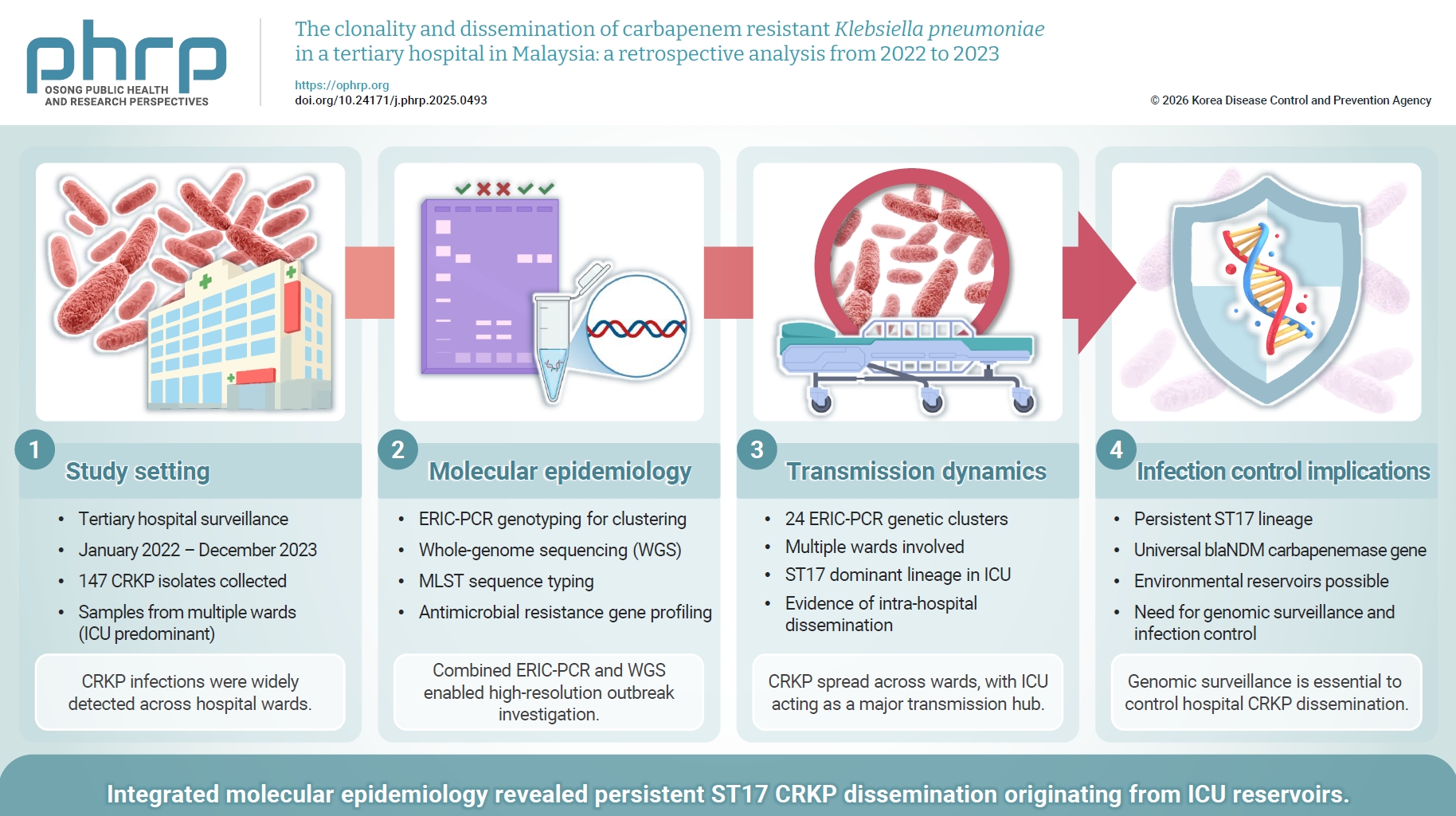
Objectives Cases of nosocomial carbapenem-resistant Klebsiella pneumoniae (CRKP) have been increasing steadily since the 1990s. In this study, we sought to assess CRKP clonal diversity and patterns of dissemination at Hospital Canselor Tuanku Muhriz (HCTM), a tertiary university hospital located in Kuala Lumpur, Malaysia. Methods: From January 2022 to December 2023, all CRKP isolates from HCTM were included in the investigation. Associated patient demographic data and clinical histories were retrieved from hospital records. Antibiotic susceptibility data for the collected isolates were obtained from the HCTM diagnostic laboratory. Molecular typing was performed using enterobacterial repetitive intergenic consensus polymerase chain reaction (ERIC-PCR) to identify genetic clusters. Based on ERIC-PCR clustering results and epidemiological investigations, selected CRKP isolates were subjected to whole-genome sequencing (WGS) to validate clonal relatedness, identify antimicrobial resistance genes, and establish phylogenomic relationships. Results: During the study period, a total of 147 CRKP isolates were recovered from various wards across HCTM. All isolates exhibited resistance to imipenem, meropenem, or ertapenem, with 124 isolates confirmed as carbapenemase producers. ERIC-PCR identified 24 genetic clusters disseminated across 23 wards within HCTM. Twelve CRKP isolates were selected for WGS based on integrated epidemiological investigation and ERIC-PCR genotyping; sequence typing revealed ST17 as the dominant circulating CRKP lineage in the intensive care unit, ward 6E, and possibly across the hospital. The carbapenemase gene bla_NDM was detected in all WGS-analyzed CRKP isolates. Conclusion: Integrating epidemiological investigation, phenotypic testing, molecular typing, and WGS is essential to understand resistance dynamics, map transmission, and guide hospital infection prevention strategies.


 First
 Prev


