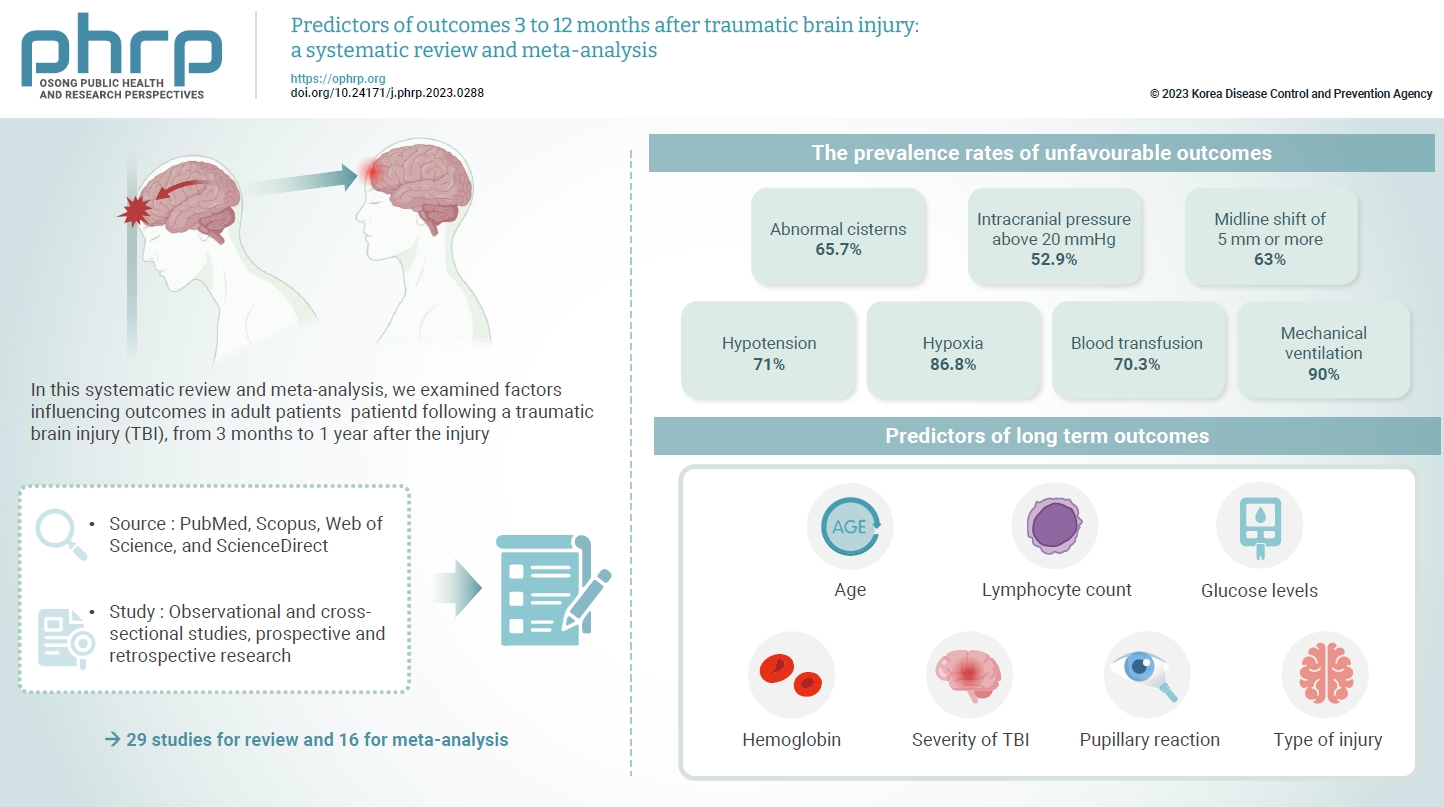
The exact factors predicting outcomes following traumatic brain injury (TBI) remain elusive. In this systematic review and meta-analysis, we examined factors influencing outcomes in adult patients with TBI, from 3 months to 1 year after injury. A search of four electronic databases—PubMed, Scopus, Web of Science, and ScienceDirect—yielded 29 studies for review and 16 for meta-analysis, in accordance with the Preferred Reporting Items for Systematic Reviews and Meta-Analysis guidelines. In patients with TBI of any severity, mean differences were observed in age (8.72 years; 95% confidence interval [CI], 4.77–12.66 years), lymphocyte count (−0.15 109/L; 95% CI, −0.18 to −0.11), glucose levels (1.20 mmol/L; 95% CI, 0.73–1.68), and haemoglobin levels (−0.91 g/dL; 95% CI, −1.49 to −0.33) between those with favourable and unfavourable outcomes. The prevalence rates of unfavourable outcomes were as follows: abnormal cisterns, 65.7%; intracranial pressure above 20 mmHg, 52.9%; midline shift of 5 mm or more, 63%; hypotension, 71%; hypoxia, 86.8%; blood transfusion, 70.3%; and mechanical ventilation, 90%. Several predictors were strongly associated with outcome. Specifically, age, lymphocyte count, glucose level, haemoglobin level, severity of TBI, pupillary reaction, and type of injury were identified as potential predictors of long-term outcomes.
Citations
Citations to this article as recorded by
Premorbid physical activity and recovery following an isolated acute traumatic brain injury: an exploratory study Naomie Maltais, Elaine de Guise, Maude Laguë-Beauvais, Laurence Trépanier, Jehane H. Dagher Global Neurological Insights.2026; 1(1): 100003. CrossRef
Association Between Sex and Mortality After Traumatic Brain Injury: A Systematic Review and Meta-Analysis Elise Beijer, Floor J. Mansvelder, Romein W. G. Dujardin, Nicole P. Juffermans, Linda J. Schoonmade, Leo M. G. Geeraedts, Frank W. Bloemers, Charissa E. van den Brom, Patrick Schober Neurocritical Care.2026; 45(1): 395. CrossRef
The severity of traumatic brain injury impacts the response to non-pharmacological treatment for post-traumatic amnesia: A retrospective observational study Èlia Vilageliu-Jordà, Antonia Enseñat-Cantallops, Alberto García-Molina Applied Neuropsychology: Adult.2026; : 1. CrossRef
Predictors of In-Hospital Mortality in Traumatic Acute Subdural Hematoma: The Role of Admission International Normalized Ratio, Imaging Parameters and Neurological Severity Serban Iancu Papacocea, Miruna Ioana Lazăr, Romica Cergan, Ioana Anca Badarau, Toma Marius Papacocea Biomedicines.2026; 14(6): 1388. CrossRef
A Systematic Review of Clinical Outcome Trajectories from 3 to 12 Months Following Mild or Moderate Traumatic Brain Injury Carl Marincowitz, Fiona Lecky, Abdullah Pandor, Ruth Wong, Thomas Shanahan, Michael Tonkins, Rajiv Singh, James Piercy, Andrew Maas, Lindsay Wilson Journal of Neurotrauma.2026;[Epub] CrossRef
Distinct Five-Year Latent Class Trajectories and Predictors of Functional Cognitive Independence Following Traumatic Brain Injury: A TBI Model Systems Study Evan D. Feigel, Charlotte B. Luster, Chris W. Lewis, Brenna Finegan, Michael J. Mastrodicasa, Maëlle-Marie Troadec, David Guo, Ben Olsen, Ignacio Fuentes, Joseph T. Giacino, Regina Barzilay, Daniel H. Daneshvar Neurotrauma Reports.2026;[Epub] CrossRef
Traumatic Brain Injury and Artificial Intelligence: Shaping the Future of Neurorehabilitation—A Review Seun Orenuga, Philip Jordache, Daniel Mirzai, Tyler Monteros, Ernesto Gonzalez, Ahmed Madkoor, Rahim Hirani, Raj K. Tiwari, Mill Etienne Life.2025; 15(3): 424. CrossRef
Tae Jung Kim, Hak Seung Lee, Seong-Eun Kim, Jinju Park, Jun Yup Kim, Jiyoon Lee, Ji Eun Song, Jin-Hyuk Hong, Joongyub Lee, Joong-Hwa Chung, Hyeon Chang Kim, Dong-Ho Shin, Hae-Young Lee, Bum Joon Kim, Woo-Keun Seo, Jong-Moo Park, Soo Joo Lee, Keun-Hwa Jung, Sun U. Kwon, Yun-Chul Hong, Hyo-Soo Kim, Hyun-Jae Kang, Juneyoung Lee, Hee-Joon Bae
Osong Public Health Res Perspect 2024;15(1):18-32. Published online January 31, 2024
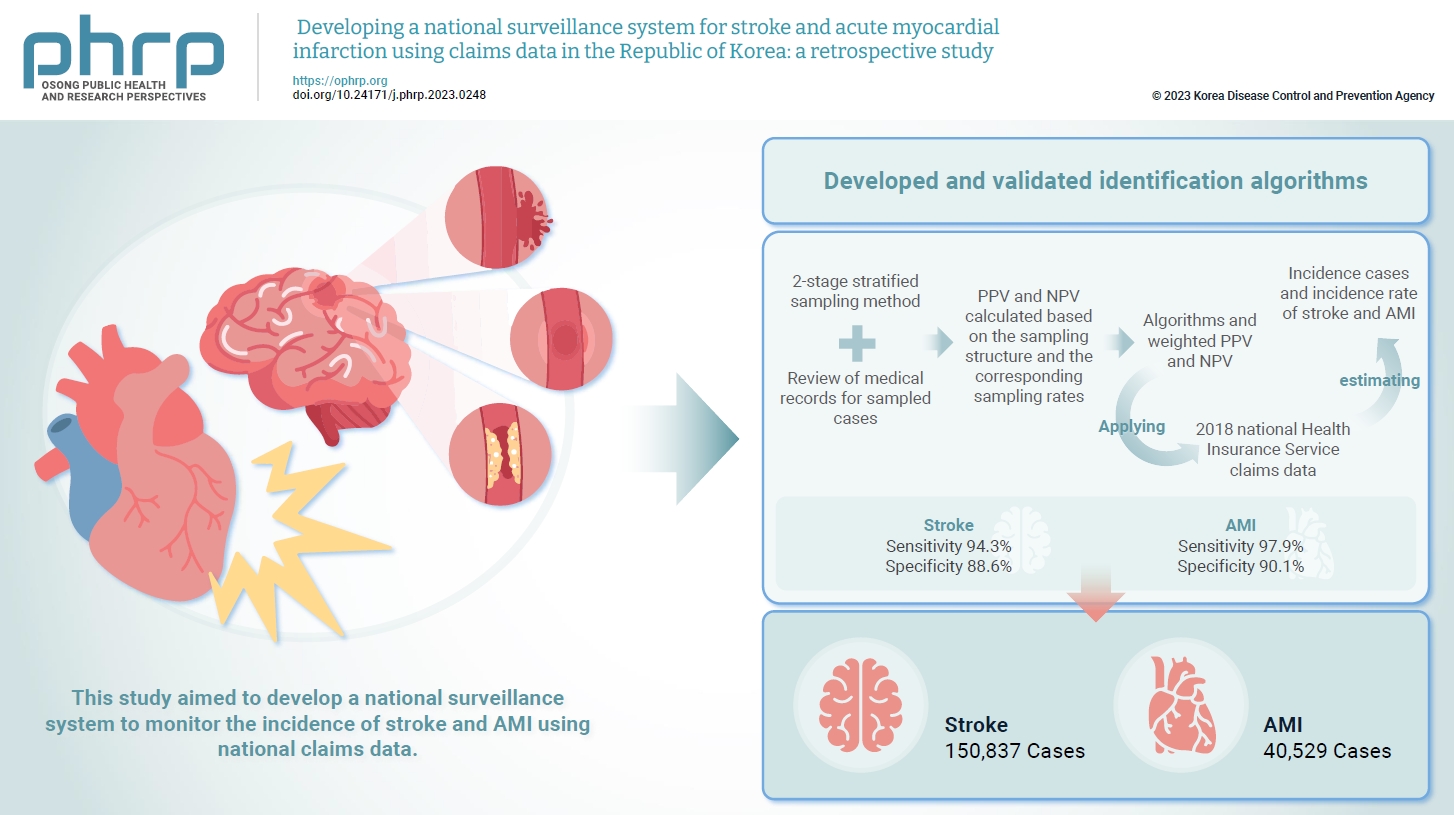
Objectives Limited information is available concerning the epidemiology of stroke and acute myocardial infarction (AMI) in the Republic of Korea. This study aimed to develop a national surveillance system to monitor the incidence of stroke and AMI using national claims data. Methods: We developed and validated identification algorithms for stroke and AMI using claims data. This validation involved a 2-stage stratified sampling method with a review of medical records for sampled cases. The weighted positive predictive value (PPV) and negative predictive value (NPV) were calculated based on the sampling structure and the corresponding sampling rates. Incident cases and the incidence rates of stroke and AMI in the Republic of Korea were estimated by applying the algorithms and weighted PPV and NPV to the 2018 National Health Insurance Service claims data. Results: In total, 2,200 cases (1,086 stroke cases and 1,114 AMI cases) were sampled from the 2018 claims database. The sensitivity and specificity of the algorithms were 94.3% and 88.6% for stroke and 97.9% and 90.1% for AMI, respectively. The estimated number of cases, including recurrent events, was 150,837 for stroke and 40,529 for AMI in 2018. The age- and sex-standardized incidence rate for stroke and AMI was 180.2 and 46.1 cases per 100,000 person-years, respectively, in 2018. Conclusion: This study demonstrates the feasibility of developing a national surveillance system based on claims data and identification algorithms for stroke and AMI to monitor their incidence rates.
Citations
Citations to this article as recorded by
Effect of a ≥50% Reduction in Low-Density Lipoprotein Cholesterol From Baseline in Patients With Ischemic Stroke Minyoul Baik, Jimin Jeon, Joonsang Yoo, Jinkwon Kim Neurology.2026;[Epub] CrossRef
Han Thi Vo, Tien Duc Dao, Tuyen Van Duong, Tan Thanh Nguyen, Binh Nhu Do, Tinh Xuan Do, Khue Minh Pham, Vinh Hai Vu, Linh Van Pham, Lien Thi Hong Nguyen, Lan Thi Huong Le, Hoang Cong Nguyen, Nga Hoang Dang, Trung Huu Nguyen, Anh The Nguyen, Hoan Van Nguyen, Phuoc Ba Nguyen, Hoai Thi Thanh Nguyen, Thu Thi Minh Pham, Thuy Thi Le, Thao Thi Phuong Nguyen, Cuong Quoc Tran, Kien Trung Nguyen
Osong Public Health Res Perspect 2024;15(1):33-44. Published online February 19, 2024
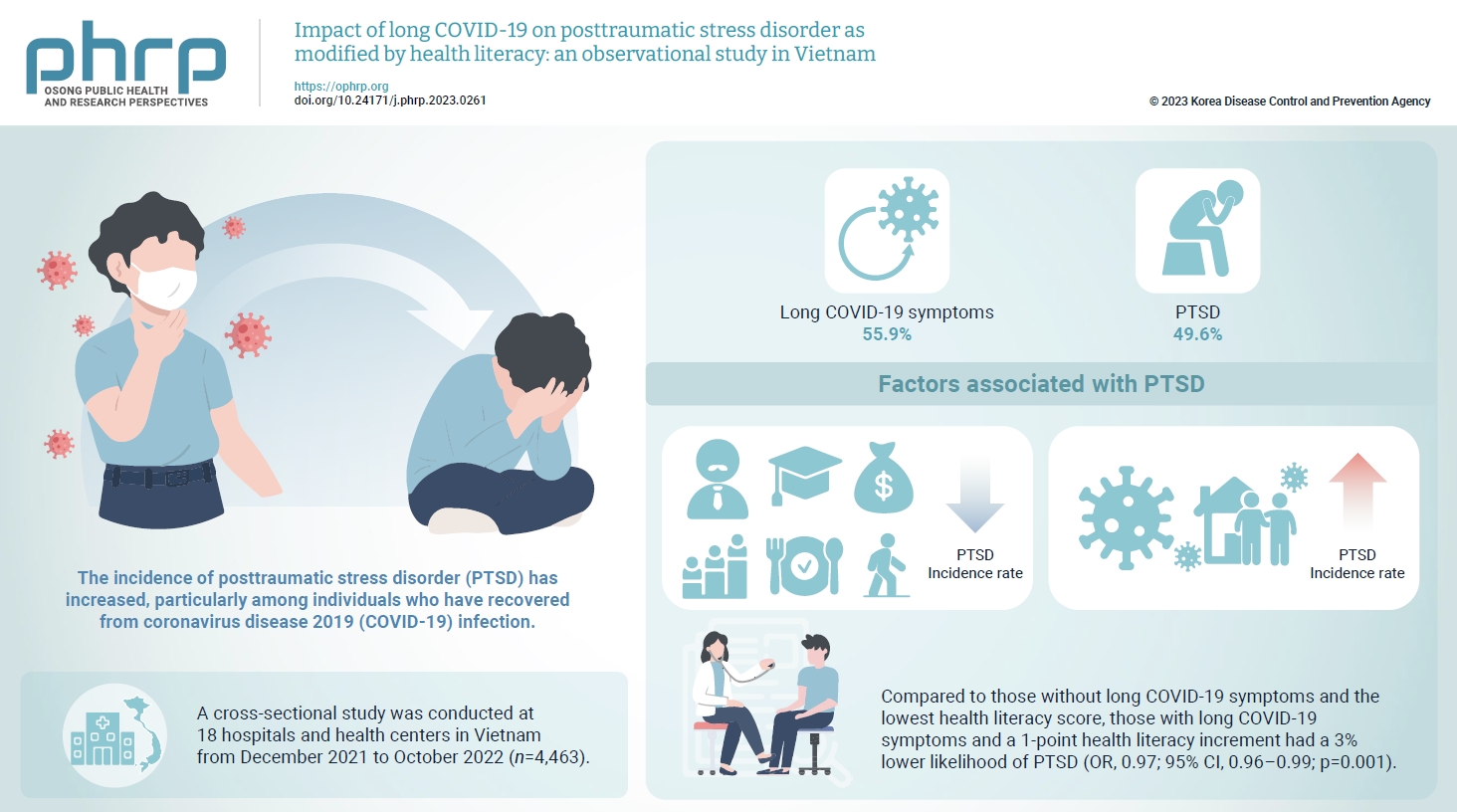
Objectives The prevalence of posttraumatic stress disorder (PTSD) has increased, particularly among individuals who have recovered from coronavirus disease 2019 (COVID-19) infection. Health literacy is considered a “social vaccine” that helps people respond effectively to the pandemic. We aimed to investigate the association between long COVID-19 and PTSD, and to examine the modifying role of health literacy in this association. Methods: A cross-sectional study was conducted at 18 hospitals and health centers in Vietnam from December 2021 to October 2022. We recruited 4,463 individuals who had recovered from COVID-19 infection for at least 4 weeks. Participants provided information about their sociodemographics, clinical parameters, health-related behaviors, health literacy (using the 12-item short-form health literacy scale), long COVID-19 symptoms and PTSD (Impact Event Scale-Revised score of 33 or higher). Logistic regression models were used to examine associations and interactions. Results: Out of the study sample, 55.9% had long COVID-19 symptoms, and 49.6% had PTSD. Individuals with long COVID-19 symptoms had a higher likelihood of PTSD (odds ratio [OR], 1.86; 95% confidence interval [CI], 1.63–2.12; p<0.001). Higher health literacy was associated with a lower likelihood of PTSD (OR, 0.98; 95% CI, 0.97–0.99; p=0.001). Compared to those without long COVID-19 symptoms and the lowest health literacy score, those with long COVID-19 symptoms and a 1-point health literacy increment had a 3% lower likelihood of PTSD (OR, 0.97; 95% CI, 0.96–0.99; p=0.001). Conclusion: Health literacy was found to be a protective factor against PTSD and modified the negative impact of long COVID-19 symptoms on PTSD.
Citations
Citations to this article as recorded by
Prospective association between long COVID and COVID-related post-traumatic stress disorder among a population-based cohort of adults diagnosed with COVID-19 in Michigan Akash Patel, Soomin Ryu, Blair Whittington, Christine Chyu, Emma Chrzanowski, Sameera Ahmed, Elizabeth Slocum, Nancy L. Fleischer Journal of Affective Disorders.2026; 410: 122009. CrossRef
Psychiatric symptoms of long COVID among adults: observational case–control study in Johannesburg, South Africa Andrew Wooyoung Kim, Someleze Swana, Simiso Sokhela, Samanta Lalla-Edward, Ncomeka Manentsa, Alexander C. Tsai, W. D. Francois Venter BJPsych Open.2026;[Epub] CrossRef
Mental health and post-traumatic stress among unprivileged people in the aftermath of COVID-19 pandemic in Southwest Bangladesh: a cross-sectional study Md. Salauddin Khan, Maliha Mahazabin, Ishita Shahid Sams, Lasker Ershad Ali, Umama Khan Cogent Mental Health.2025;[Epub] CrossRef
Exploring the psychological impact of long COVID: symptoms, mechanisms, and treatments Shi Shen, Xin Zhao, Jianxin Pei, Bijue Wang, Jingjing Hou, Ru Chai, Yiqiong Guo, Feiyu Li, Jian Hao, Zhonglan Wu Frontiers in Psychiatry.2025;[Epub] CrossRef
Pathophysiological, Neuropsychological, and Psychosocial Influences on Neurological and Neuropsychiatric Symptoms of Post-Acute COVID-19 Syndrome: Impacts on Recovery and Symptom Persistence Alex Malioukis, R Sterling Snead, Julia Marczika, Radha Ambalavanan Biomedicines.2024; 12(12): 2831. CrossRef
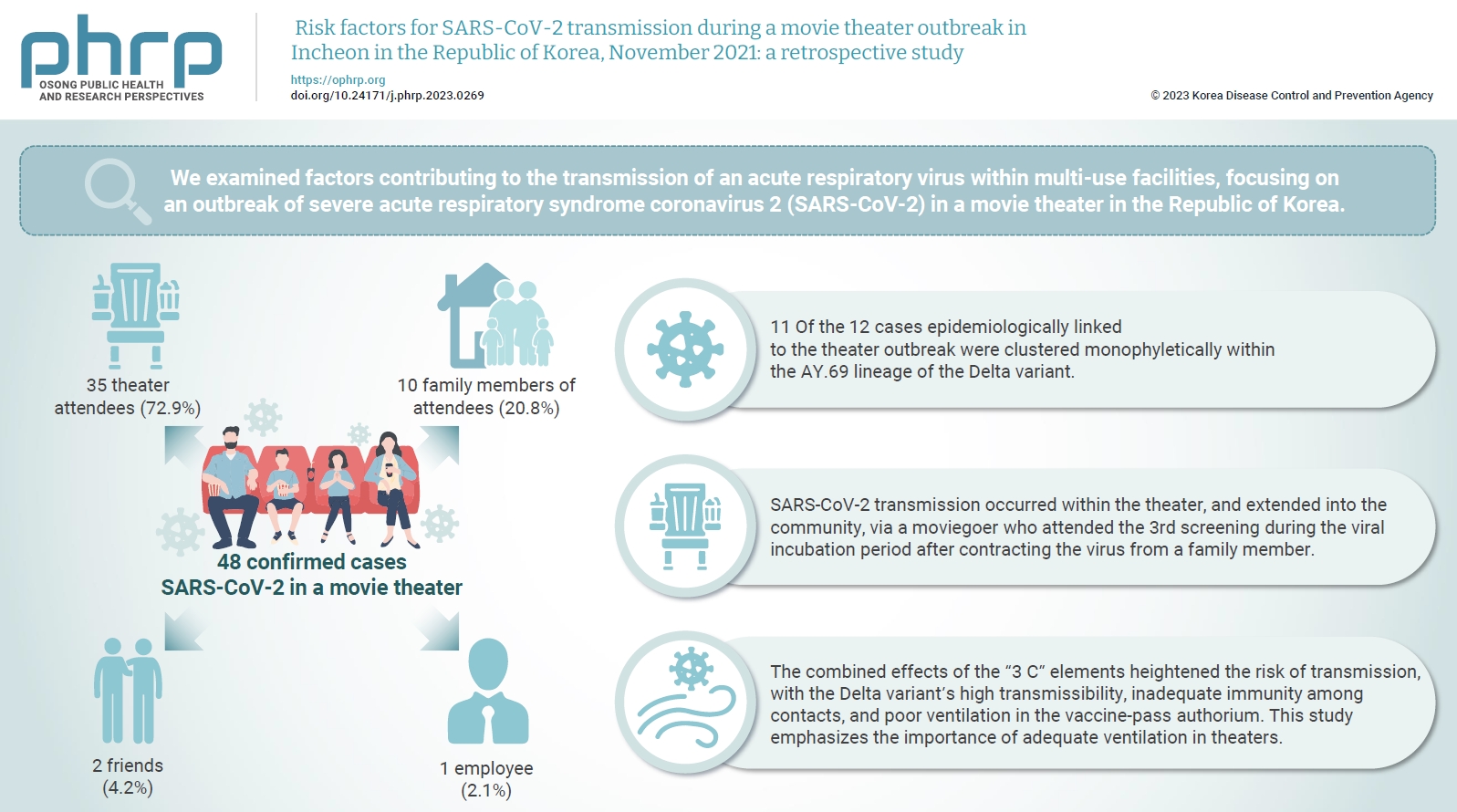
Objectives We examined factors contributing to the transmission of an acute respiratory virus within multi-use facilities, focusing on an outbreak of severe acute respiratory syndrome coronavirus 2 (SARS-CoV-2) in a movie theater in the Republic of Korea. Methods: This retrospective cohort study involved a descriptive analysis of 48 confirmed cases. Logistic regression was applied to a cohort of 80 theater attendees to identify risk factors for infection. The infection source and transmission route were determined through gene sequencing data analysis. Results: Of the 48 confirmed cases, 35 were theater attendees (72.9%), 10 were family members of attendees (20.8%), 2 were friends (4.2%), and 1 was an employee (2.1%). Among the 80 individuals who attended the 3rd to 5th screenings of the day, 35 became infected, representing a 43.8% attack rate. Specifically, 28 of the 33 third-screening attendees developed confirmed SARSCoV-2, constituting an 84.8% attack rate. Furthermore, 11 of the 12 cases epidemiologically linked to the theater outbreak were clustered monophyletically within the AY.69 lineage. At the time of the screening, 35 individuals (72.9%) had received 2 vaccine doses. However, vaccination status did not significantly influence infection risk. Multivariate analysis revealed that close contacts had a 15.9-fold higher risk of infection (95% confidence interval, 4.37–78.39) than casual contacts. Conclusion: SARS-CoV-2 transmission occurred within the theater, and extended into the community, via a moviegoer who attended the 3rd screening during the viral incubation period after contracting the virus from a family member. This study emphasizes the importance of adequate ventilation in theaters.
Citations
Citations to this article as recorded by
Indoor air quality (IAQ) and ventilation efficiency in after-school educational centers in Athens during the post-COVID-19 era Constantinos Karamalis, Georgia Maria Markopoulou, Marianna Foteini Dafni, Georgia Kyriakopoulou, Theodora Skreka, Sofia Giannakopoulou, Constantinos Delezos Journal of Public Health.2026;[Epub] CrossRef
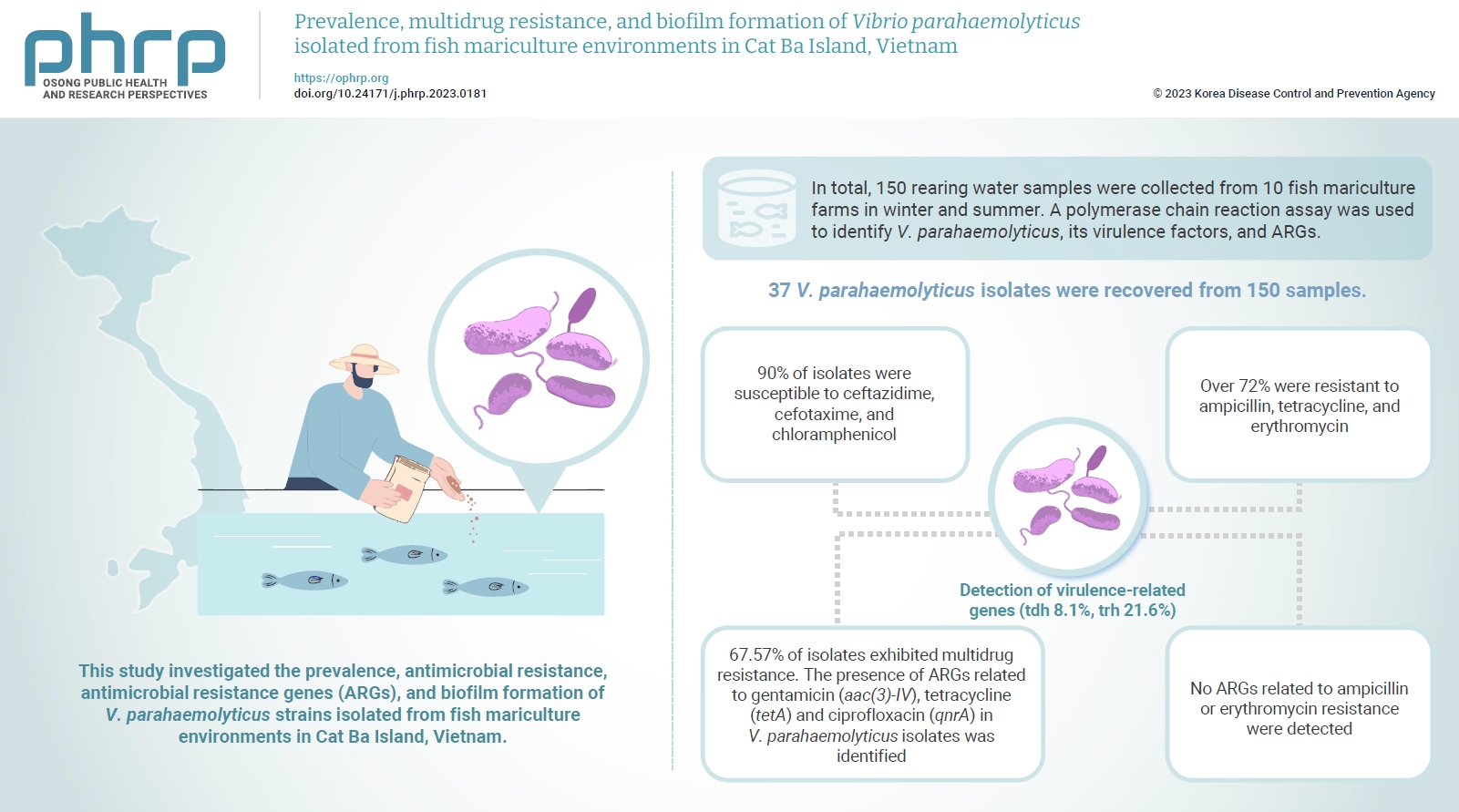
Objectives Vibrio parahaemolyticus is a major foodborne pathogen in aquatic animals and a threat to human health worldwide. This study investigated the prevalence, antimicrobial resistance, antimicrobial resistance genes (ARGs), and biofilm formation of V. parahaemolyticus strains isolated from fish mariculture environments in Cat Ba Island, Vietnam. Methods: In total, 150 rearing water samples were collected from 10 fish mariculture farms in winter and summer. A polymerase chain reaction assay was used to identify V. parahaemolyticus, its virulence factors, and ARGs. The antimicrobial resistance patterns and biofilm formation ability of V. parahaemolyticus strains were investigated using the disk diffusion test and a microtiter plate-based crystal violet method, respectively. Results: Thirty-seven V. parahaemolyticus isolates were recovered from 150 samples. The frequencies of the tdh and trh genes among V. parahaemolyticus isolates were 8.1% and 21.6%, respectively. More than 90% of isolates were susceptible to ceftazidime, cefotaxime, and chloramphenicol, but over 72% were resistant to ampicillin, tetracycline, and erythromycin. Furthermore, 67.57% of isolates exhibited multidrug resistance. The presence of ARGs related to gentamicin (aac(3)-IV), tetracycline (tetA) and ciprofloxacin (qnrA) in V. parahaemolyticus isolates was identified. Conversely, no ARGs related to ampicillin or erythromycin resistance were detected. Biofilm formation capacity was detected in significantly more multidrug-resistant isolates (64.9%) than non-multidrug-resistant isolates (18.9%). Conclusion: Mariculture environments are a potential source of antibiotic-resistant V. parahaemolyticus and a hotspot for virulence genes and ARGs diffusing to aquatic environments. Thus, the prevention of antibiotic-resistant foodborne vibriosis in aquatic animals and humans requires continuous monitoring.
Citations
Citations to this article as recorded by
The synthetic peptide GATR-3 shows significant antibacterial and biofilm-inhibition activity against shellfish- and oyster-associated bacteria Vibrio vulnificus and Vibrio parahaemolyticus Sabrina Hsin-Yin Tsai, Brett A. Froelich, Monique L. van Hoek Comparative Immunology Reports.2026; 10: 200266. CrossRef
Antimicrobial resistance in shrimp aquaculture: Pathways, ecosystem risks, and policy responses Lovely Akter, Neaz A. Hasan, Moshiur Rahman, Nasrullah Forajy, Mohammad Mahfujul Haque Environmental Challenges.2026; 22: 101401. CrossRef
Influence of environmental parameters on total and pathogenic Vibrio parahaemolyticus isolated from mussels and clams Görkem Cengiz, Özlem Küplülü Microbial Pathogenesis.2026; 213: 108352. CrossRef
Phenotypic and genomic characterization of Vibrio parahaemolyticus isolated from Pacific white shrimp (Litopenaeus vannamei) at wet markets and online retail channels Xiaoyu Wang, Jiayi Zhang, Yongheng Zhu, Jun Wang, Tian Ding, Xinyu Liao, Juhee Ahn Food Science and Biotechnology.2026; 35(5): 1319. CrossRef
The role of cortisol as a physiological stress indicator in fish contamination by Vibrio parahaemolyticus and its implications for human health Rzgar Farooq Rashid Italian Journal of Food Safety.2026;[Epub] CrossRef
Assessment of Antibiotic Susceptibility and Biofilm Formation in Bacteria Isolated from White-Leg Shrimp in Traditional Markets, Can Tho City, Vietnam Hau Huu Tran, Nhi Thao Huynh, Nam Van Be Tran, Thanh Uyen Le, Tam Ngoc Thanh Huynh World's Veterinary Journal.2026; 16(1): 259. CrossRef
New insights into the resistome-mobilome–biofilm relationship in Vibrio parahaemolyticus Antoine Régnier, Virginie Chesnais, Cecile Dumaire, Cecile Berdous, Romain Briandet, Sabine Debuiche, Virgile Guéneau, Graziella Midelet, Mélanie Gay, Thomas Brauge Food Microbiology.2026; 140: 105162. CrossRef
Molecular Epidemiology, Antibiotic Susceptibility, and Virulence Profiling of
Vibrio parahaemolyticus
Isolated from Aquatic Foods in Shenzhen, China
Fei Zha, Rui Luo, Longfei Hu, Weipeng Chen, Chun-Xu Xue Foodborne Pathogens and Disease.2026;[Epub] CrossRef
Interface-dependent V. parahaemolyticus biofilm under varying temperatures, media, and oxygen conditions: implications for seafood safety Hansani Nilupama Kumari Senarath Pathirana, Steve Flint, Jon Palmer Food Research International.2026; 242: 120008. CrossRef
Molecular epidemiology of multidrug-resistant, biofilm-producing Vibrio parahaemolyticus from a brackish water aquaculture-estuarine interface S.J. Abisha Juliet Mary, M. Petchimuthu, S. Deepika, G. Ferolin Jessina, S. Balasundari Environmental Pollution.2026; 409: 128990. CrossRef
Optimization of immune priming interval using Imuno-FS Plus enhances the efficacy of oral formalin-killed Vibrio parahaemolyticus vaccine in Pacific white shrimp (Litopenaeus vannamei) Annisa Widya Ananda, Sri Nuryati, Dinamella Wahjuningrum, Munti Yuhana, Ardana Kurniaji Comparative Immunology Reports.2026; 11: 200316. CrossRef
Exploring the antibiofilm efficacy of pyrimidines against Vibrio parahaemolyticus, mechanisms and their potential food processing applications Olajide Sunday Faleye, Jin-Hyung Lee, Jintae Lee LWT.2025; 215: 117229. CrossRef
The role of sea fish meat in the transmission of Vibrio parahaemolyticus to humans: An in-depth analysis of seasonal and species-specific variations Maged A. Al-Garadi, Dhary Alewy Almashhadany, Rasha N. Aziz, Dheyazan M. Ali Al-Qabili, Ohoud S. Alhumaidan, Hanouf Alnuwaysir, Al-Hammadi Mohammed Ali, Essam Sayed, A. M. Alabsi Veterinary World.2025; : 348. CrossRef
Multidrug Resistance, Biofilm-Forming Ability, and Molecular Characterization of Vibrio Species Isolated from Foods in Thailand Watcharapong Mitsuwan, Ratchadaporn Boripun, Phirabhat Saengsawang, Sutsiree Intongead, Sumaree Boonplu, Rawiwan Chanpakdee, Yukio Morita, Sumalee Boonmar, Napapat Rojanakun, Natnicha Suksriroj, Chollathip Ruekaewma, Titima Tenitsara Antibiotics.2025; 14(3): 235. CrossRef
Antimicrobial resistance of zoonotic bacteria isolated from shrimp aquaculture environments in Selangor, Malaysia S. Devadas, Z. Zakaria, M. Shariff, S. Bhassu, M. Karim, I. Natrah Aquaculture.2025; 604: 742480. CrossRef
Characterization of Virulence Genotypes and Prevalence of Vibrio parahaemolyticus from Fish Samples Collected from Thoothukudi Fish Landing Centres, India Selvamathi Veerabhadran Ragul, Fathiraja Parthiban, Rajendran Shalini, Sivasankar Panchavarnam, Thandapani Muthulakshmi, Mohamed Mansoor, Stephen Jerusha, Selvam Krishnakumar Thalassas: An International Journal of Marine Scie.2025;[Epub] CrossRef
Persistent Threats: A Comprehensive Review of Biofilm Formation, Control, and Economic Implications in Food Processing Environments Alexandra Ban-Cucerzan, Kálmán Imre, Adriana Morar, Adela Marcu, Ionela Hotea, Sebastian-Alexandru Popa, Răzvan-Tudor Pătrînjan, Iulia-Maria Bucur, Cristina Gașpar, Ana-Maria Plotuna, Sergiu-Constantin Ban Microorganisms.2025; 13(8): 1805. CrossRef
Southeast‑Asian landscape of antimicrobial resistance research (2014–2024): A bibliometric analysis Alex S. Borromeo, Allan M. Manaloto, Ronilo P. Antonio Journal of Global Antimicrobial Resistance.2025; 45: 125. CrossRef
A New Strategy: Antibiotic Circumstances for Rational Drug use Against Clinical Aeromonas hydrophila And Bacterial Properties of This Bacteria on Different Agars Nurdan Filik, Fethi Filik, Ayşegül Kubilay Acta Aquatica Turcica.2024; 20(4): 312. CrossRef
Passive immunoprophylaxis with Ccombodies against Vibrio parahaemolyticus in Pacific white shrimp (Penaeus vannamei) Wanna Sirimanapong, Prawporn Thaijongrak, Chiranan Sudpraseart, Dennis Berbulla Bela-ong, Abigail Joy D. Rodelas-Angelia, Mark Rickard N. Angelia, Seungbeom Hong, Jaesung Kim, Kim D. Thompson, Tae Sung Jung Fish & Shellfish Immunology.2024; 154: 109973. CrossRef
Isolation of H2S-generating Bacterium (Desulfovibrio sp.) and Vibrio parahaemolyticus From Aquatic Farming and In Vitro Evaluation of the Ability of Bacteriophages as Biocontrol Truong Thi Bich Van, Nguyen Thi Loan Anh, Nguyen Huu Tri , Chau Thanh Tuan Jurnal Ilmiah Perikanan dan Kelautan.2024; 17(1): 167. CrossRef
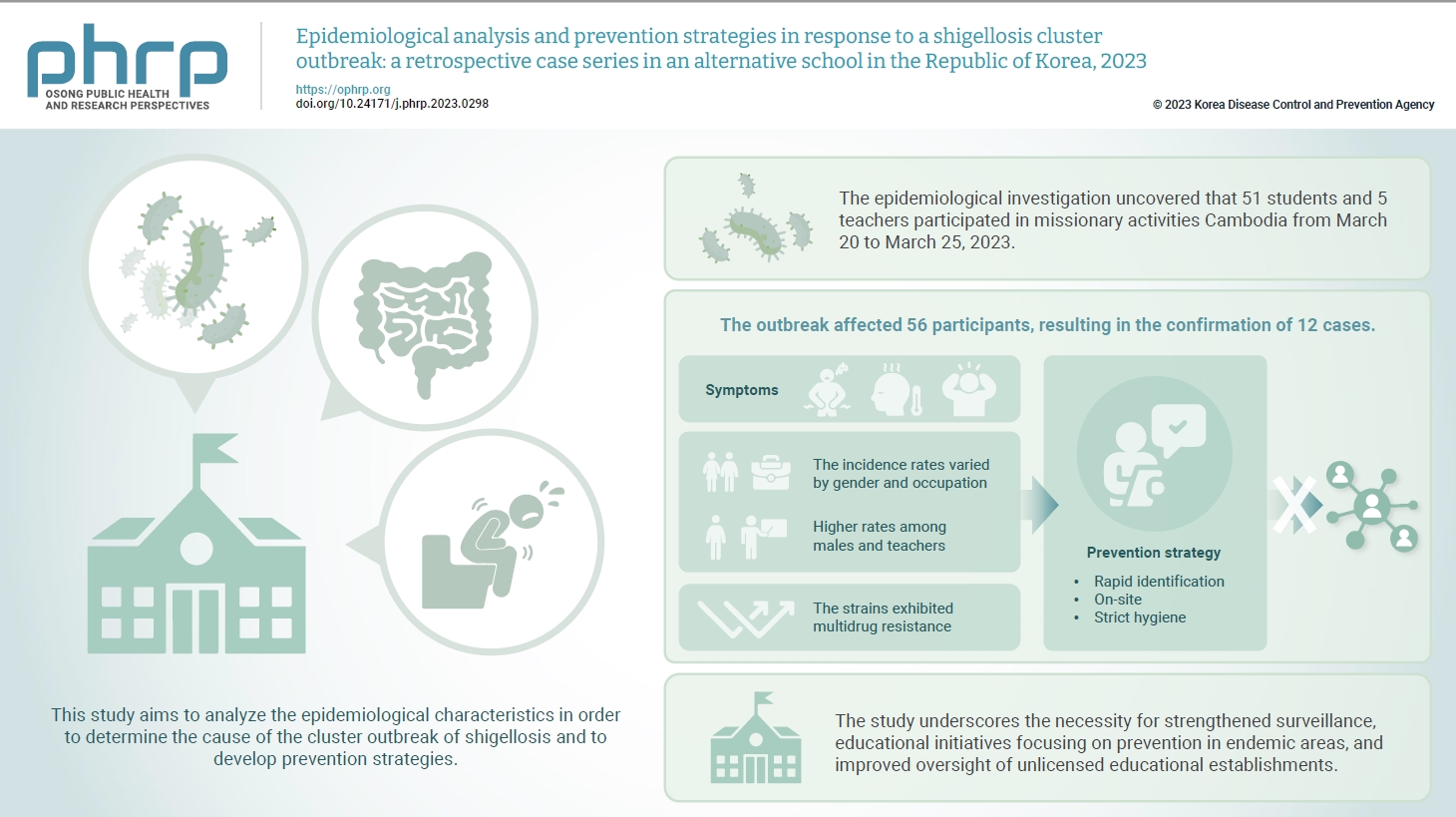
Objectives In March 2023, an alternative school in the Republic of Korea reported 12 cases of shigellosis. This study aims to analyze the epidemiological characteristics in order to determine the cause of the cluster outbreak of shigellosis and to develop prevention strategies. Methods: This study focused on 12 patients with confirmed Shigella infection and investigated their demographics, clinical features, epidemiology, diagnostics, and antimicrobial susceptibility. Following the identification of Shigella, we conducted follow-up rectal smear cultures to manage patients, implementing isolation and control measures. Results: This study investigated the emergence of multidrug-resistant Shigella following missionary activities in Cambodia, documenting a cluster infection within an alternative school in Daejeon, the Republic of Korea. The outbreak affected 56 participants, resulting in the confirmation of 12 cases. The incidence rates varied by gender and occupation, with higher rates among males and teachers. All 12 cases demonstrated multidrug resistance. Challenges included delayed pathogen confirmation and suboptimal adherence to isolation criteria. The incident prompted revisions in the criteria for isolation release, focusing on symptom resolution. The study underscores the necessity for strengthened surveillance, educational initiatives focusing on prevention in endemic areas, and improved oversight of unlicensed educational establishments. Conclusion: Successful response strategies included swift situation assessment, collaborative efforts, effective infection control measures, and modified criteria for isolation release. Continued surveillance of multidrug-resistant strains is recommended, especially in regions with a high prevalence.
Citations
Citations to this article as recorded by
A One Health Scoping Review of Antimicrobial Resistance in Cambodia: Evidence Mapping and Insights into Klebsiella pneumoniae Sao Puth, Chanroth Chhoung, Limmuy Hav, Chandy Rin, Kennarey Seang, Luis Sagaon-Teyssier, Vonthanak Saphonn Microorganisms.2026; 14(10): 2161. CrossRef
Shigella flexneri Outbreak at a Rehabilitation Center: First Report from Saudi Arabia Khalifa Binkhamis, Sarah Alangari, Fatema Juma, Sahar Althawadi, Ahmed A. Al-Qahtani, Marie Fe F. Bohol, Fatimah S. Alshahrani, Fawzia Alotaibi Healthcare.2025; 13(9): 971. CrossRef
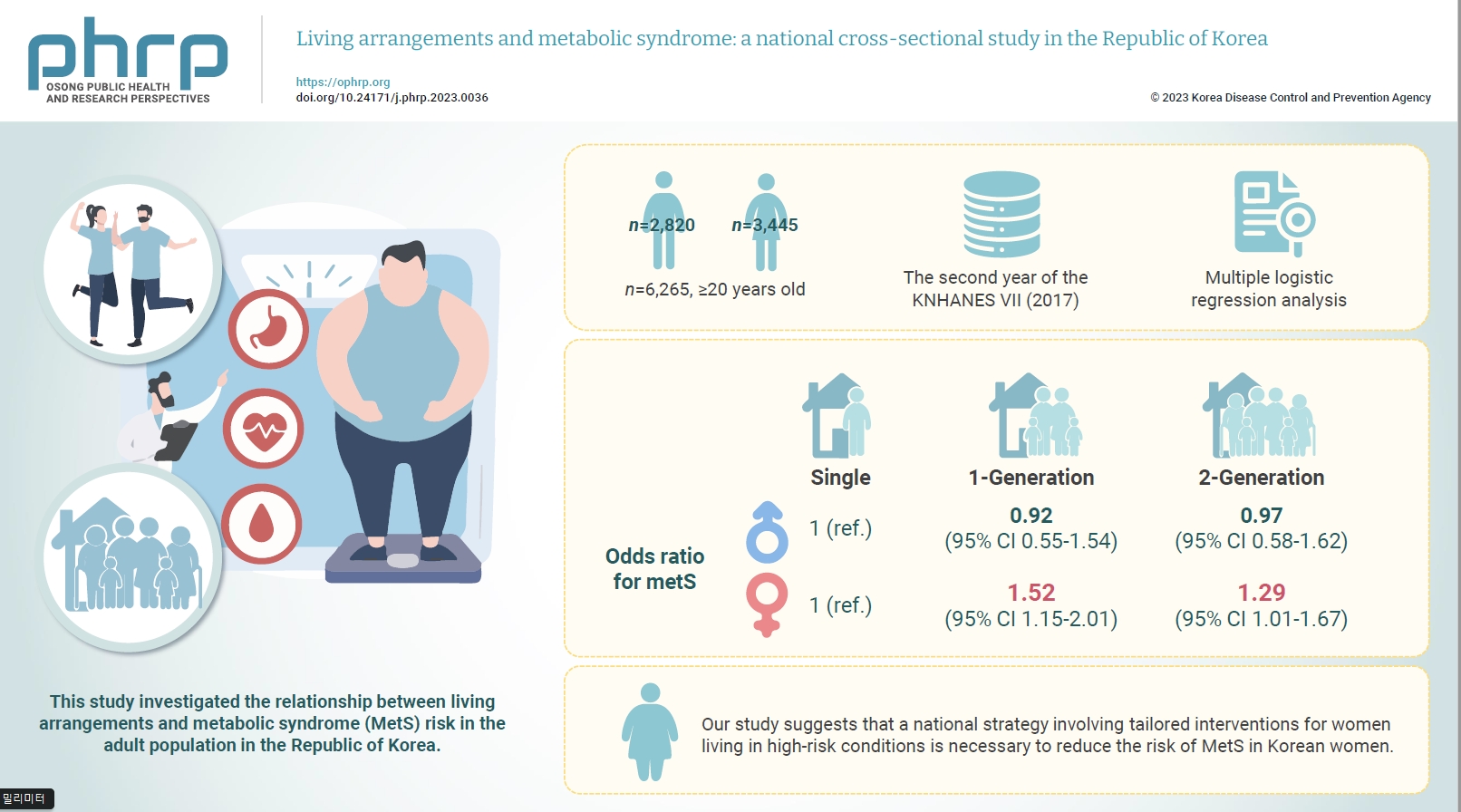
Objectives This study investigated the relationship between living arrangements and metabolic syndrome (MetS) risk in the adult population in the Republic of Korea. Methods: The samples were derived from the data collected during the second year of the seventh Korea National Health and Nutrition Examination Survey. The study targeted a total of 6,265 adults who were aged 20 years and above, and multiple logistic regression analysis was conducted. Living arrangements were classified into 4 categories: single-person households, 1-generation households, 2-generation households, and other family types. MetS was identified by the presence of at least 3 out of the 5 National Cholesterol Education Program Adult Treatment Panel III criteria. Results: For men, the odds ratio (ORs) for MetS in 1- and 2-generation households, compared to single-person households, were 0.92 (95% confidence interval [CI], 0.55–1.54) and 0.97 (95% CI, 0.58–1.62), respectively. The OR for other types of households was 0.96 (95% CI, 0.79–1.17). For women, the OR for MetS in 1- and 2-generation households, compared to single-person households, were 1.52 (95% CI, 1.15–2.01) and 1.29 (95% CI, 1.01–1.67), respectively. Conclusion: Our study suggests that a national strategy involving tailored interventions for women living in high-risk conditions is necessary to reduce the risk of MetS in Korean women.
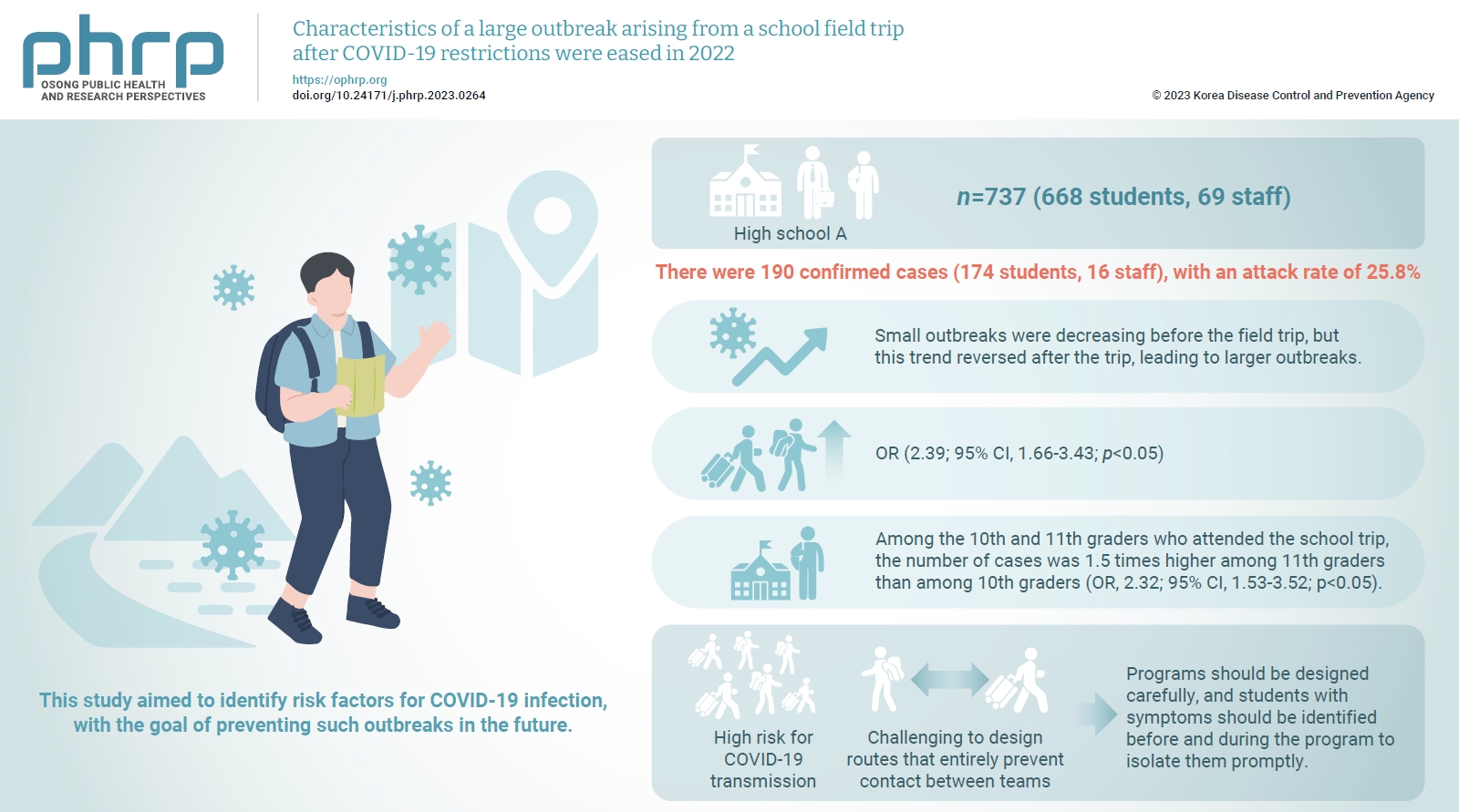
Objectives This study analyzed a large outbreak of coronavirus disease 2019 (COVID-19) that occurred during a high school field trip in the Jeonbuk region and aimed to identify risk factors for COVID-19 infection, with the goal of preventing such outbreaks in the future. Methods: A retrospective cohort study of 737 participants, including 668 students and 69 staff at High School A, was designed to describe the epidemiological characteristics of this large COVID-19 outbreak. Logistic regression analysis was performed to calculate relative risks (odds ratios [ORs]) and 95% confidence intervals (CIs). Results: There were 190 confirmed cases (174 students, 16 staff), with an attack rate of 25.8%. Small outbreaks were decreasing before the field trip, but this trend reversed after the trip, leading to larger outbreaks. Logistic regression showed an OR of 2.39 (95% CI, 1.66–3.43; p<0.05) for COVID-19 infection among field trip participants. Among them, 11th graders had an OR of 2.32 (95% CI, 1.53–3.52; p<0.05) compared to 10th graders, while no significant risk difference was found within same-grade teams. Conclusion: There was a high risk for COVID-19 transmission during extracurricular activities with a large number of participants, such as field trips, even after the nationwide Omicron variant epidemic subsided. Even when students are separated into teams and follow different routes, it is challenging to design routes that entirely prevent contact between teams. Thus, programs should be designed carefully, and students with symptoms should be identified before and during the program to isolate them promptly.
Citations
Citations to this article as recorded by
Uncommon pathogen, common activity: Streptococcus pneumoniae conjunctivitis outbreak traced to a primary school field trip Xiaojian Duan, Xiaobin Ren, Kai Song, Jiayun Wang, Yi Wang, Yuanming Zhang, Li Ren, Liangliang Huo, Jing Wang Frontiers in Public Health.2026;[Epub] CrossRef
Effect of the establishment of the Korea Centers for Disease Control and Prevention/Korea Disease Control and Prevention Agency from the perspective of global health security Chaeshin Chu Global Health & Medicine.2025; 7(2): 141. CrossRef




 First
 Prev


