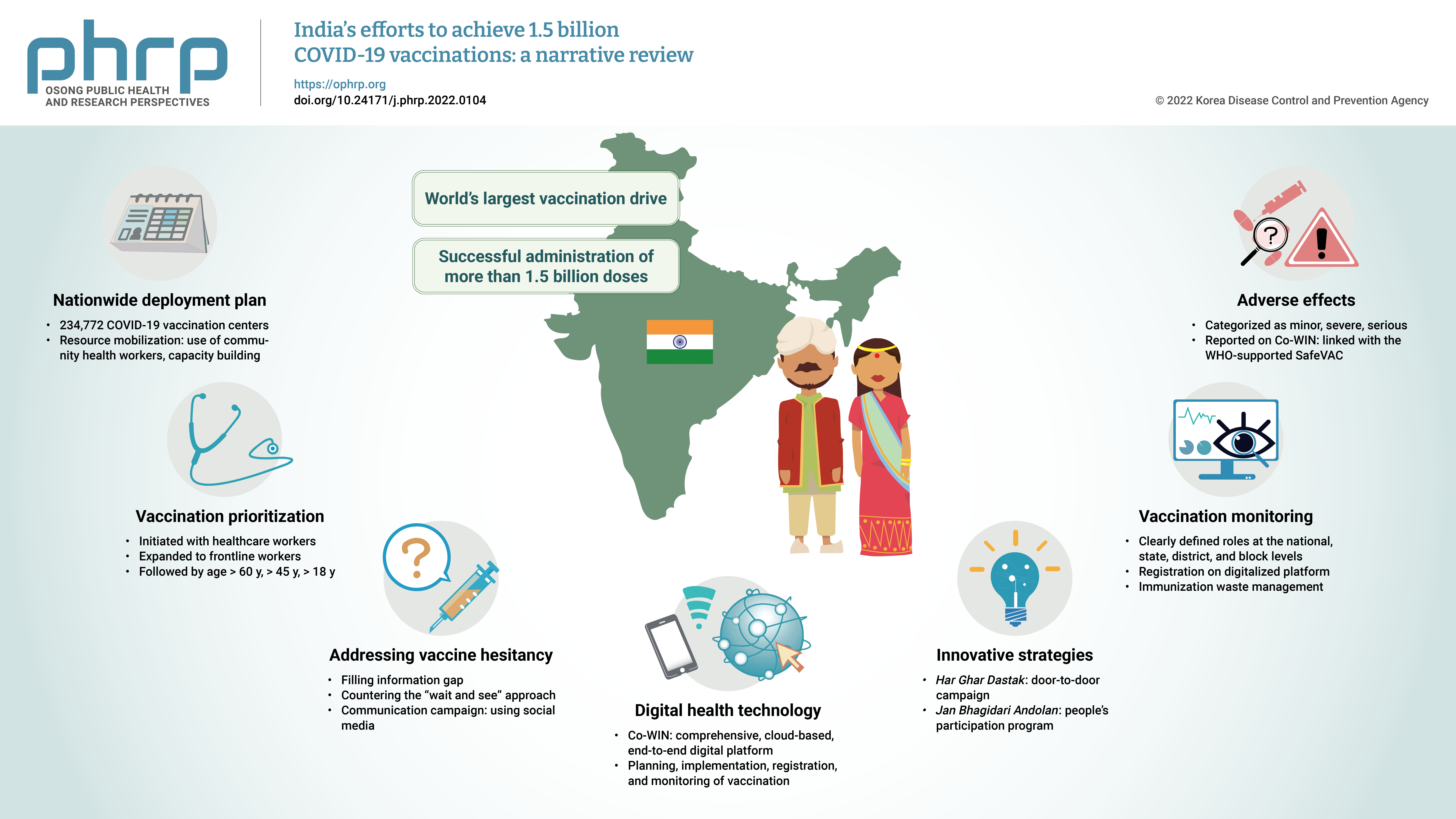
The initial case of coronavirus disease 2019 (COVID-19) in India was reported on January 30, 2020, and subsequently, the number of COVID-19-infected patients surged during the first wave of April 2020 and the second wave in the same month of 2021. The government of India imposed a strict nationwide lockdown in April 2020 and extended it until May 2020. The second wave of COVID-19 in India overwhelmed the country’s health facilities and exhausted its medical and paramedical workforce. This narrative review was conducted with the aim of summarizing the evidence drawn from policy documents of governmental and non-governmental organizations, as well as capturing India's COVID-19 vaccination efforts. The findings from this review cover the Indian government's vaccination initiatives, which ranged from steps taken to combat vaccine hesitancy to vaccination roadmaps, deployment plans, the use of digital health technology, vaccination monitoring, adverse effects, and innovative strategies such as Har Ghar Dastak and Jan Bhagidari Andolan (people’s participation). These efforts collectively culminated in the successful administration of more than 1.8 billion doses of COVID-19 vaccines in India. This review also provides insights into other countries’ responses to COVID-19 and guidance for future pandemics.
Citations
Citations to this article as recorded by
The Lancet Commission on a citizen-centred health system for India Vikram Patel, Anuska Kalita, Kheya Melo Furtado, Nachiket Mor, Shubhangi Bhadada, Sandra Albert, Hasna Ashraf, Satchit Balsari, Indu Bhushan, Vijay Chandru, Mirai Chatterjee, Sarika Chaturvedi, Raghu Dharmaraju, Atul Gupta, Kiran Mazumdar-Shaw, Gautam I M The Lancet.2026; 407(10526): 388. CrossRef
Psychosocial Factors in Help-Seeking Among Older Adults During the COVID-19 Pandemic: A Qualitative Analysis of Calls to India’s National Psychosocial Support and Mental Health Services Helpline Allen D Christopher, Jayakumar Christy, Bangalore Roopesh, Sanjeev K Manikappa, Marimuthu Palaniyappan Cureus.2026;[Epub] CrossRef
Usability of peer assisted SARS CoV 2 self testing model among factory workers in india using a mixed methods cross sectional study Meghana Ratna Pydi, Neha Parikh, Purnima Ranawat, Ravneet Kaur, A. G. Shankar, Angela Chaudhuri, Petra Stankard, Sonjelle Shilton, Aditi Srinivasan, Joyita Chowdhury, Elena Ivanova Reipold, Syama B. Syam Discover Public Health.2026;[Epub] CrossRef
Strengthening cervical cancer prevention through district-wide HPV vaccination: an implementation case study from Bareilly district, Uttar Pradesh, India Anurag Gautam, Prashant Ranjan, Vinit Yajurvedi, Renu Shrivas International Journal of Research in Medical Scien.2026; 14(10): 4667. CrossRef
Multi-strain COVID-19 dynamics with vaccination strategies: Mathematical modeling and case study Venkatesh Ambalarajan, Ankamma Rao Mallela, Prasantha Bharathi Dhandapani, Vinoth Sivakumar, Víctor Leiva, Cecilia Castro Alexandria Engineering Journal.2025; 119: 665. CrossRef
Influenza vaccination uptake of health care workers in a tertiary hospital: Findings from qualitative research in Mysuru, India Jantine Marly van Wijlick, K. S. Sahana, P. A. Mahesh, B. S. Jayaraj, Gangadhar Mysore Rajagopal, Christopher Pell Global Public Health.2025;[Epub] CrossRef
COVID-19 Vaccine Acceptance and Hesitancy: Perceptions in Kerala, the Indian State With the Highest Literacy Dhanya Muralidharan, Arun Paul, Suhaila Panangadanakath, Sreelakshmi T. Nandakumar, Shana S. Poothotill, Rahila A. MoiduKunhi, Zainul Ameen Journal of Preventive Medicine and Public Health.2025; 58(5): 527. CrossRef
Global Mapping of Evidence on Vaccination Related Education Through School Based Curriculum Bhupender Singh Khanuja, Palak Badhwar, Kapil Singh, Shipra Verma, Anjori Agrawal, Ashwani Verma Delaware Journal of Public Health.2025; 11(5): 44. CrossRef
Developments and Trends of Immunization in India: A Narrative Review Pratik P Tawde, Zahiruddin Quazi, Abhay Gaidhane, Sonali G Choudhari Cureus.2024;[Epub] CrossRef
Digital health technology used in emergency large-scale vaccination campaigns in low- and middle-income countries: a narrative review for improved pandemic preparedness Paula Mc Kenna, Lindsay A. Broadfield, Annik Willems, Serge Masyn, Theresa Pattery, Ruxandra Draghia-Akli Expert Review of Vaccines.2023; 22(1): 243. CrossRef
Media Reporting Relating to COVID-19 Vaccination as a Driver of Vaccine Hesitancy Prior to the Second Wave of the COVID-19 Pandemic in India: A Content Analysis of Newspaper and Digital Media Reports Saurav Basu, Himanshi Sharma Cureus.2023;[Epub] CrossRef
An assessment of the strategy and status of COVID-19 vaccination in India Sneh Lata Gupta, Surbhi Goswami, Ananya Anand, Namrata Naman, Priya Kumari, Priyanka Sharma, Rishi K. Jaiswal Immunologic Research.2023; 71(4): 565. CrossRef
Development of a Choice-framework for Covid vaccines in India using a multi-criteria decision analysis approach Tarun K. George, Nayana P. Nair, Awnish Kumar Singh, A. Dilesh Kumar, Arup Deb Roy, Varshini Neethi Mohan, Gagandeep Kang Vaccine.2023; 41(25): 3755. CrossRef
COVID-19 Booster Dose Coverage and Hesitancy among Older Adults in an Urban Slum and Resettlement Colony in Delhi, India Nandini Sharma, Saurav Basu, Heena Lalwani, Shivani Rao, Mansi Malik, Sandeep Garg, Rahul Shrivastava, Mongjam Meghachandra Singh Vaccines.2023; 11(7): 1177. CrossRef
Review of the unmet medical need for vaccination in adults with immunocompromising conditions: An Indian perspective Ashok Vaid, Neha Rastogi, T. Mark Doherty, Peter San Martin, Yashpal Chugh Human Vaccines & Immunotherapeutics.2023;[Epub] CrossRef
Translating the COVID-19 experience in widening the HPV vaccination campaign for cervical cancer in India Aruni Ghose, Anisha Agarwal, Bhawna Sirohi, Shona Nag, Linus Chuang, Swarupa Mitra Gynecologic Oncology Reports.2023; 48: 101247. CrossRef
Symptomatic prevalence of covid-19 in vaccinated and non-vaccinated population Jay Bhupesh Pandya, Nirali Milind Shethia, Divya Bangera, Shailaja Gada Saxena IP International Journal of Medical Microbiology a.2023; 9(2): 110. CrossRef
Active surveillance of adverse events following COVID-19 vaccines in a tertiary care hospital Naveena Mary Cherian, Dravya Anna Durai, Muhammed Jaisel, Divyansh Sharma, Juny Sebastian, Chetak Kadabasal Basavaraja, Merrin Mathew Therapeutic Advances in Vaccines and Immunotherapy.2023;[Epub] CrossRef
Effectiveness of ayurvedic formulation, NAOQ19 along with standard care in the treatment of mild-moderate COVID-19 patients: A double blind, randomized, placebo-controlled, multicentric trial Pankaj Bhardwaj, Kalaiselvan Ganapathy, Monika Pathania, K.H. Naveen, Jaykaran Charan, Siddhartha Dutta, Ravisekhar Gadepalli, Srikanth Srinivasan, Manoj Kumar Gupta, Akhil D. Goel, Naresh Midha, Bharat Kumar, Meenakshi Sharma, Praveen Sharma, Mithu Baner Journal of Ayurveda and Integrative Medicine.2023; 14(6): 100778. CrossRef
Balancing Routine and Pandemic: The Synergy of India’s Universal Immunization Program and COVID-19 Vaccination Program Pawan Kumar, Ashish Birendra Chakraborty, Suhas Dhandore, Pritu Dhalaria, Ajeet Kumar Singh, Disha Agarwal, Kapil Singh, Pretty Priyadarshini, Paras Jain, Vidushi Bahl, Gunjan Taneja Vaccines.2023; 11(12): 1776. CrossRef
Unveiling vaccine safety: a narrative review of pharmacovigilance in India's COVID-19 vaccination Megha Hegde, Saurav Raj, Dhananjay Tikadar, Sanatkumar B Nyamagoud Monaldi Archives for Chest Disease.2023;[Epub] CrossRef
This systematic review and meta-analysis aimed to understand the characteristics of medication adherence interventions for older adults with chronic illnesses, and to investigate the average effect size by combining the individual effects of these interventions. Data from studies meeting the inclusion criteria were systematically collected in accordance with the Preferred Reporting Items for Systematic Reviews and Meta-Analysis guidelines. The results showed that the average effect size (Hedges’ g) of the finally selected medication adherence interventions for older adults with chronic illnesses calculated using a random-effects model was 0.500 (95% confidence interval [CI], 0.342−0.659). Of the medication adherence interventions, an implementation intention intervention (using face-to-face meetings and telephone monitoring with personalized behavioral strategies) and a health belief model–based educational program were found to be highly effective. Face-to-face counseling was a significantly effective method of implementing medication adherence interventions for older adults with chronic illnesses (Hedges’ g=0.531, 95% CI, 0.186−0.877), while medication adherence interventions through education and telehealth counseling were not effective. This study verified the effectiveness of personalized behavioral change strategies and cognitive behavioral therapy based on the health belief model, as well as face-to-face meetings, as medication adherence interventions for older adults with chronic illnesses.
Citations
Citations to this article as recorded by
Impact of telemedicine on chronic disease patients: An overview of systematic reviews Kun Zhang, Yanhua Chen, Peicheng Wang, Yanrong He, Yanrong Du, Hailun Liang, Weiguo Zhu, Xiao Long, Leiyu Shi, Jiming Zhu Intelligent Medicine.2026; 6(2): 226. CrossRef
Updating Interventions to Enhance Medication Adherence among Community-Dwelling Older Adults with Chronic Diseases Luu Thi Thuy, Nguyen Thi Yen Hoai, Diep Thi Tieu Mai Home Healthcare Now.2026; 44(1): 40. CrossRef
Treatment Adherence and Persistence of Anti-Fibrotic Drugs in Real Life in Greece Georgia Kourlaba, Stylianos Ravanidis, Garyfallia Stefanou, Konstantinos Mathioudakis, Anastasios Tsolakidis, Dimitrios Zografopoulos Advances in Respiratory Medicine.2026; 94(1): 6. CrossRef
Reasons for delayed medical treatment among cholelithiasis patients: a qualitative study based on the health belief model Min Jiang, Yajie Shi, Jiao Liu, Yan Liu, Yanzhang Tian, Fang He BMC Health Services Research.2026;[Epub] CrossRef
Can We Predict Older Adults’ Long-Term Healthy Behavior Maintenance? Identifying the Optimal Machine Learning Model HeSen Li, WeiCheng Pan, Hong Chen, YiZhuo Hou International Journal of Human–Computer Interactio.2026; 42(20): 17782. CrossRef
Medication adherence trajectories and association with risk factors and clinical outcomes in type 2 diabetes treatment Sara Mucherino, Valentina Orlando, Marcia Vervloet, Yvette Weesie, Liset van Dijk, Enrica Menditto, Yee Gary Ang PLOS One.2026; 21(2): e0342056. CrossRef
Designing age-friendly interfaces and wearable–environment integrations to enhance medication adherence: a discrete choice experiment among older adults Jialin Qin, Zeyu Wu, Hao Zhang, Xiaopan Qi Frontiers in Medicine.2026;[Epub] CrossRef
Psychosocial predictors of non-adherence to antihypertensive medication among Korean adults: A nationwide cross-sectional study Kunhee Han, Hwa Sun Kim, Young Lee, Chung-woo Lee, Muhammad Haroon Stanikzai PLOS One.2026; 21(3): e0345509. CrossRef
Nurse-led interventions in enhancing outcomes for patients with tuberculosis: a scoping review Nita Arisanti Yulanda, Hidayat Arifin, Titan Ligita, Lestari Makmuriana, Alfi Syahri, Susanti Susanti, Komang Ardidhana Nugraha Putra, Andri Setiya Wahyudi, Somsak Thojampa, Tintin Sukartini Journal of Research in Nursing.2026;[Epub] CrossRef
Bedside Cognitive Behavioral Therapy Techniques in Primary Care Meredith L.C. Williamson, Danielle L. Terry, Kaylee J. Jackson Primary Care: Clinics in Office Practice.2026; 53(2): 251. CrossRef
Mobile health apps for older adults: real-world evidence on engagement and medication adherence Elyssa Wiecek, Scott Taylor, Hugo Rourke, Fiona Hammond, Noelia Amador-Fernandez Frontiers in Digital Health.2026;[Epub] CrossRef
Medication adherence in older adults with chronic diseases: a scoping review of barriers, facilitators, and effective interventions Doris Cardona-Arango, Valeria Santacruz-Restrepo, Alejandra Rendón-Montoya, Juliana Madrigal-Cadavid, Alejandra Segura-Cardona, Jorge Iván Estrada-Acevedo Frontiers in Aging.2026;[Epub] CrossRef
A pilot feasibility study of a tablet-based virtual community application with shared avatars for promoting health behavior change in older adult care facilities Kenji Nakamura, Keiichi Yamazaki, Akiko Yamazaki, Yoshiaki Ohyama Frontiers in Digital Health.2026;[Epub] CrossRef
Chrono-modulated drug delivery systems for oncology: Mechanisms, translational evidence, and pharmaceutical innovations Santoshini Nayak, Rajat Kumar Kar, Prasanta Kumar Biswal, Ranjit Prasad Swain, Snehamayee Mohapatra Chronobiology International.2026; 43(11): 1728. CrossRef
Medication Adherence Interventions for Older Adults: A National Mixed‐Methods Study of Implementation Across Italian Healthcare Settings Sara Mucherino, Luca Pasina, Manuela Casula, Monia Donati, Carlotta Lunghi, Elena Olmastroni, Valentina Orlando, Emanuel Raschi, Stefano Scotti, Marco Salluzzo, Elisabetta Poluzzi, Alessandro Nobili, Enrica Menditto Journal of the American Geriatrics Society.2026;[Epub] CrossRef
Yaşlılarda ilaç uyumunun geliştirilmesine yönelik stratejiler Soner Mete, Kamuran Özdil Mersin Üniversitesi Sağlık Bilimleri Dergisi.2026; 19(2): 415. CrossRef
Confronting finitude and treatment adherence in older adults with chronic diseases: a qualitative study Leovaldo Alcântara, Luís Midão, Elísio Costa, Constança Paúl BMC Geriatrics.2026;[Epub] CrossRef
Adherencia terapéutica en pacientes con hipertensión arterial en segundo nivel de atención Vidal Marcelino Villanueva Pérez, Daniel Canaán Pérez, Diego Sánchez Rodríguez REDSA Revista Ecuatoriana de Desarrollo Social y A.2026; 1(3): 268. CrossRef
Medication adherence in older people: Predictors and strategies for improvement Vladimir Petković, Jelena Horvat, Svitlica Brestovački Timocki medicinski glasnik.2025; 50(1-2): 32. CrossRef
Educational intervention for mental health and health behaviors in elderly Iranian women randomized controlled trial Razieh Asadi, Mahin Nazari, Abdolrahim Asadollahi, Narges Mobasheri Scientific Reports.2025;[Epub] CrossRef
Religious, Belief Medication, and Adherence Among Elderly with Chronic Diseases: A Multicenter Cross-Sectional Study in Papua, Indonesia AZ Izzah, DA Perwitasari, ES Sinaga, FE Appa, EI Sianturi Nigerian Journal of Clinical Practice.2025; 28(11): 1269. CrossRef
EXAMINING PRESCRIPTION DRUG USE AND HEALTH CARE ACCESS AMONG OLDER ADULTS IN RURAL AREAS: A CROSS-SECTIONAL STUDY BASED ON THE HEALTH BELIEF MODEL Yağmur ÖZKAYA, Büşra DEMİR ÇETİNKAYA, Gülden HAKVERDİ, Eyüp Can POLAT, Gülbin ÖZÇELİKAY Turkish Journal of Geriatrics.2025;[Epub] CrossRef
Health Behavior Change to Mitigate Dementia Risk: An Updated Review Victoria Sanborn, Jennifer D. Davis, Laura E. Korthauer Current Geriatrics Reports.2024; 13(3): 162. CrossRef
Relationship Between Depression and Medication Adherence Among Chronic Disease Patients in the Middle East Abdulrahman O Alomar, Rakan H Khushaim, Shahad K Al-Ghanem, Abeer T Bin Jumaiah, Suhail M Albaqami, Lujain A Alleft, Eman A Abahussain Cureus.2024;[Epub] CrossRef
Development and Preliminary Psychometric Testing of a Brief Tool to Measure Medication Adherence in Older Populations Paolo Iovino, Paola Obbia, Vincenzo De Luca, Clara Donnoli, Lola Patumi, Lisa Leonardini, Ernesto Palummeri, Manuela Ruatta, Anna Basso, Yari Longobucco, Laura Rasero, Giuseppe Liotta, Maddalena Illario Clinical Interventions in Aging.2024; Volume 19: 1765. CrossRef
Zika virus (ZIKV) was identified in 1947 in a rhesus monkey during an investigation of the yellow fever virus in the Zika Forest of Uganda; it was also isolated later from humans in Nigeria. The main distribution areas of ZIKV were the African mainland and South-East Asia in the 1980s, Micronesia in 2007, and more recently the Americas in 2014. ZIKV belongs to the Flaviviridae family and Flavivirus genus. ZIKV infection, which is transmitted by Aedes mosquitoes, is an emerging arbovirus disease. The clinical symptoms of ZIKV infection are fever, headache, rashes, arthralgia, and conjunctivitis, which clinically resemble dengue fever syndrome. Sometimes, ZIKV infection has been associated with Guillain-Barré syndrome and microcephaly. At the end of 2015, following an increase in cases of ZIKV infection associated with Guillain-Barré syndrome and microcephaly in newborns in Brazil, the World Health Organization declared a global emergency. Therefore, considering the global distribution and pathogenic nature of this virus, the current study aimed at reviewing the virologic features, transmission patterns, clinical manifestations, diagnosis, treatment, and prevention of ZIKV infection.
Citations
Citations to this article as recorded by
Host protein interactome profiling of Akabane virus glycoprotein Gc reveals specific mitochondrial genes regulate viral replication Han Gao, Menghua Deng, Mengna Deng, Canyuan Li, Dengshuai Zhao, Xiangxiang Tan, Shengfeng Chen, Limei Qin, Keshan Zhang Veterinary Microbiology.2026; 312: 110815. CrossRef
Development of a Reverse Transcription Recombinase Polymerase Amplification CRISPR/Cas12a Assay for Visual and Highly Specific Identification of Zika Virus Xiao Cong, Xin Zhang, Feng Gu, Ningxin Tan, Shen Huang, Penghui Jia, Juan Su, Changyun Sun, Qiqi Tan, Ling Fang, Jieling Wang, Jin Yan, Chao Yu, Baisheng Li, Junqi Huang Journal of Medical Virology.2026;[Epub] CrossRef
Epidemiological and molecular analysis of the Chikungunya virus outbreak in the state of Rondônia Karolaine Santos Teixeira, Tárcio Peixoto Roca, Ana Maisa Passos-Silva, Edilene Pereira Pimentel, Jackson Alves da Silva Queiroz, Lourdes Maria Pinheiro Borzacov, Jansen Fernandes Medeiros, Juan Miguel Villalobos Salcedo, Deusilene Vieira Infection.2026; 54(4): 1725. CrossRef
ZIKA Virus, an Emerging Arbovirus in India: A Glimpse of Global Genetic Lineages Paramasivan Rajaiah, Bhavna Gupta, Muniyaraj Mayilsamy Microorganisms.2025; 13(3): 544. CrossRef
The Oropouche fever in Latin America: a hidden threat and a possible cause of microcephaly due to vertical transmission Nathália Mariana Santos Sansone, Matheus Negri Boschiero, Luiz Felipe Azevedo Marques, Fernando Augusto Lima Marson Frontiers in Public Health.2025;[Epub] CrossRef
Drosophila-Zika virus interactions: Dissecting host immunity and pathology against flavivirus infection Ioannis Eleftherianos, Sreeradha Mallick Virology.2025; 610: 110603. CrossRef
Development and Immunogenicity Assessment of a Multi-Epitope Antigen Against Zika Virus: An In Silico and In Vivo Approach Lígia Rosa Sales Leal, Matheus Gardini Amâncio Marques de Sena, Maria da Conceição Viana Invenção, Ingrid Andrêssa de Moura, André Luiz Santos de Jesus, Georon Ferreira de Sousa, Bárbara Rafaela da Silva Barros, Cristiane Moutinho Lagos de Melo, Lindomar Vaccines.2025; 14(1): 31. CrossRef
A Review on The Pathogenesis of Cardiovascular Disease of Flaviviridea Viruses Infection Tie-Hua Yang, Wen-Cong Gao, Xin Ma, Qian Liu, Pan-Pan Pang, Yong-Tang Zheng, Yinnong Jia, Chang-Bo Zheng Viruses.2024; 16(3): 365. CrossRef
The race against time: Zika virus on the horizon in Pakistan Moiz Ahmed Khan, Summaiya Zafar Tropical Doctor.2024; 54(3): 231. CrossRef
Zika’s resurgence in Thailand: a 300% surge demands urgent action Shriyansh Srivastava, Sachin Kumar, Nandani Jayaswal, Rachana Mehta, Prakasini Satapathy, Aroop Mohanty, Ranjit Sah International Journal of Surgery Open.2024; 62(2): 180. CrossRef
Zika virus tropism and pathogenesis: understanding clinical impacts and transmission dynamics Saeed Tajik, Ali Vasheghani Farahani, Omid Salahi Ardekani, Saba Seyedi, Zahra Tayebi, Mostafa Kami, Faezeh Aghaei, Tahmine Mohammad Hosseini, Mohammad Mahdi Khosravi Nia, Roben Soheili, Arash Letafati Virology Journal.2024;[Epub] CrossRef
Predição de casos de arboviroses no Recife utilizando computação de reservatório Ana Clara Gomes Da Silva, Cláudia Priscila Nunes Silva, Clarisse Lins De Lima, Danilo Wanderley Lapa, Felipe Estevão Da Silva, Mariana Marinho da Silva Andrade, Arianne Sarmento Torcate, Cecília Cordeiro Da Silva, Giselle Machado Magalhães Moreno, Welling Journal of Health Informatics.2024;[Epub] CrossRef
Zika virus disease: an alarming situation resurfacing on the radar – a short communication Sanobar Shariff, Burhan Kantawala, Nakyanzi Hamiidah, Tularam Yadav, Abubakar Nazir, Olivier Uwishema Annals of Medicine & Surgery.2023; 85(10): 5294. CrossRef
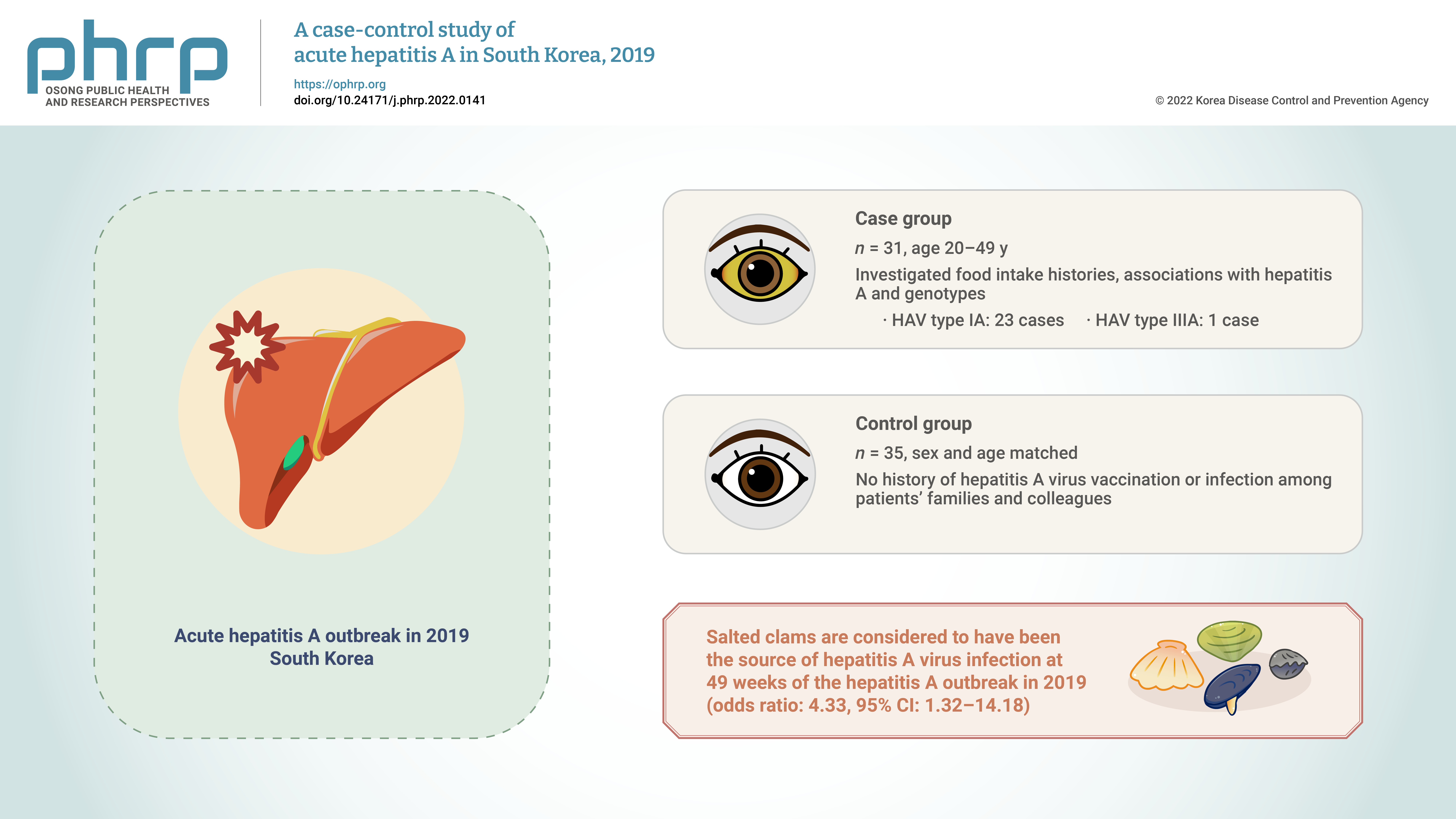
Objectives We aimed to reconfirm the source of hepatitis A virus (HAV) infection through epidemiological and genotype investigations of individual cases in a 2019 outbreak in South Korea. Methods: We investigated food intake histories, associations with hepatitis A, and genotypes of HAV in 31 patients with hepatitis aged 20 to 49 years registered in the integrated disease and health management system during December 1–7, 2019 (case group) and in 35 sex- and agematched people without a history of HAV vaccination or infection among patients’ families and colleagues (control group). Results: The consumption of salted clams was a significant factor (odds ratio, 4.33; 95% confidence interval, 1.32–14.18) in the risk factor analysis of food intake history. HAV genotypes were analyzed in 24 of 31 patients. Type IA and type IIIA were found in 23 and 1 cases, respectively. Conclusion: Salted clams are considered to have been the source of HAV infection at 49 weeks of the HAV outbreak in 2019; this result was consistent with that of a previous epidemiological investigation conducted by the Korea Disease Control and Prevention Agency in September 2019. Therefore, monitoring of the production and distribution of salted clams needs to be continued.
Citations
Citations to this article as recorded by
Surto de hepatite A associado ao consumo de alimentos e práticas sexuais: estudo caso-controle, Curitiba, Paraná, 2024 Janilza Silveira Silva, Renata Barbosa Vilaça Marques de Carvalho, Alcides Souto de Oliveira, Liza Regina Bueno Rosso, Diego Spinoza dos Santos, Leia Regina Silva, Cláudia Weingaertner Palm, Clea Elisa Ribeiro, Katiuska Ferraz Jansen Negrello, Dirlene Pac Epidemiologia e Serviços de Saúde.2026;[Epub] CrossRef
Hepatitis A outbreak associated with food consumption and sexual practices: a case-control study, Curitiba, Paraná, 2024 Janilza Silveira Silva, Renata Barbosa Vilaça Marques de Carvalho, Alcides Souto de Oliveira, Liza Regina Bueno Rosso, Diego Spinoza dos Santos, Leia Regina Silva, Cláudia Weingaertner Palm, Clea Elisa Ribeiro, Katiuska Ferraz Jansen Negrello, Dirlene Pac Epidemiologia e Serviços de Saúde.2026;[Epub] CrossRef
Development of a direct whole genome sequencing for hepatitis A virus from serum and analysis of genetic characteristics Daseul Yeo, Soontag Jung, Danbi Yoon, Seongwon Hwang, Dong Jae Lim, Songfeng Jin, Jinho Choi, Ki Ho Hong, Changsun Choi Scientific Reports.2025;[Epub] CrossRef
Infectious Diseases in an Era of Climate Crisis: Emergence and Resurgence Gui Nam Wee, Sunju Kim, Kyuwon Shim, Soojin Jang Journal of Environmental Health Sciences.2025; 51(6): 353. CrossRef
Monitoring viruses and beta-lactam resistance genes through wastewater surveillance during a COVID-19 surge in Suwon, South Korea Rajendra Singh, Jaewon Ryu, Sung Soo Park, Sungpyo Kim, Keugtae Kim Science of The Total Environment.2024; 922: 171223. CrossRef
Prevalence of Enteric Viruses in Raw Seafood Collected from the Retail Shops in Tehran, Iran, 2022–2023 Golshid Javdani Shahedin, Maryam Yazdanizad, Seyed Davood Mousavi Nasab, Delaram Doroud, Rahman Shokri, Ramin Mazaheri Nezhad Fard Iranian Journal of Medical Microbiology.2024; 18(3): 190. CrossRef
Prevalence of foodborne viruses and influenza A virus from poultry processing plants to retailed chickens Daseul Yeo, Mengxiao Song, Md. Iqbal Hossain, Soontag Jung, Zhaoqi Wang, Dong Joo Seo, Min Suk Rhee, Changsun Choi Frontiers in Sustainable Food Systems.2023;[Epub] CrossRef
A Study on the Detection Rate of Hepatitis A from Gastroenteritis Patients and the Genotype Analysis of Hepatitis A Virus in Busan Sun Hee Park, Chanhee Kim, Summi Lee, Jihye Jeong, Junghye Choi, Seung Ju Lee Journal of Bacteriology and Virology.2023; 53(2): 74. CrossRef
A Study on the Detection Rate of Hepatitis A from Gastroenteritis Patients and the Genotype Analysis of Hepatitis A Virus in Busan Sun Hee Park, Chanhee Kim, Summi Lee, Jihye Jeong, Junghye Choi, Seung Ju Lee Journal of Bacteriology and Virology.2023; 53(2): 74. CrossRef
Objectives Despite the introduction of vaccines, treatments, and massive diagnostic testing, the evolution of severe acute respiratory syndrome coronavirus 2 (SARS-CoV-2) has continued to overcome barriers that had slowed its previous spread. As the virus evolves towards increasing fitness, it is critical to continue monitoring the occurrence of new mutations that could evade human efforts to control them. Methods: We performed whole-genome sequencing using Oxford Nanopore MinION sequencing on 58 SARS-CoV-2 isolates collected during the ongoing coronavirus disease 2019 pandemic at a tertiary hospital in South Korea and tracked the emergence of mutations responsible for massive spikes in South Korea. Results: The differences among lineages were more pronounced in the spike gene, especially in the receptor-binding domain (RBD), than in other genes. Those RBD mutations could compromise neutralization by antibodies elicited by vaccination or previous infections. We also reported multiple incidences of Omicron variants carrying mutations that could impair the diagnostic sensitivity of reverse transcription-polymerase chain reaction-based testing. Conclusion: These results provide an understanding of the temporal changes of variants and mutations that have been circulating in South Korea and their potential impacts on antigenicity, therapeutics, and diagnostic escape of the virus. We also showed that the utilization of the nanopore sequencing platform and the ARTIC workf low can provide convenient and accurate SARS-CoV-2 genomic surveillance even at a single hospital.
Citations
Citations to this article as recorded by
Understanding large scale sequencing datasets through changes to protein folding David Shorthouse, Harris Lister, Gemma S Freeman, Benjamin A Hall Briefings in Functional Genomics.2024; 23(5): 517. CrossRef
Molecular epidemiology of SARS‐CoV‐2 in Mongolia, first experience with nanopore sequencing in lower‐ and middle‐income countries setting Munkhtuya Erendereg, Suvd Tumurbaatar, Otgonjargal Byambaa, Gerelmaa Enebish, Natsagdorj Burged, Tungalag Khurelsukh, Nomin‐Erdene Baatar, Badmaarag Munkhjin, Jargaltulga Ulziijargal, Anuujin Gantumur, Oyunbaatar Altanbayar, Ochbadrakh Batjargal, Delgermu Immunity, Inflammation and Disease.2023;[Epub] CrossRef
Objectives This study analyzed the clinical outcomes of remdesivir treatment in coronavirus disease 2019 (COVID-19) patients in South Korea.
Methods This retrospective cohort study involved the secondary analysis of epidemiological data. Among patients diagnosed with COVID-19 from July 2, 2020 to March 23, 2021 (12 AM), 4,868 who received oxygen therapy and were released from isolation after receiving remdesivir treatment were assigned to the treatment group, and 6,068 patients who received oxygen therapy but not remdesivir were assigned to the untreated group. The study subjects included children under the age of 19. The general characteristics and severity were compared between the groups. Differences in the time to death and mortality were also compared.
Results In the untreated group, the hazard ratio [HR] for mortality was 1.59 among patients aged ≥70 years and 2.32 in patients with severe disease in comparison to the treatment group. In a comparison of survival time among patients with severe disease aged ≥70 years, the HR for mortality before 50 days was 2.09 in the untreated group compared to the treatment group.
Conclusion Patients with remdesivir treatment showed better clinical outcomes in this study, but these results should be interpreted with caution since this study was not a fully controlled clinical trial.
Citations
Citations to this article as recorded by
The Role of Multidimensional Prognostic Index to Identify Hospitalized Older Adults with COVID-19 Who Can Benefit from Remdesivir Treatment: An Observational, Prospective, Multicenter Study Carlo Custodero, Nicola Veronese, Eva Topinkova, Helena Michalkova, Maria Cristina Polidori, Alberto Cella, Alfonso J. Cruz-Jentoft, Christine A. F. von Arnim, Margherita Azzini, Heidi Gruner, Alberto Castagna, Giovanni Cenderello, Romina Custureri, Tania Drugs & Aging.2023; 40(7): 643. CrossRef
Remdesivir: A Review in COVID-19 Hannah A. Blair Drugs.2023; 83(13): 1215. CrossRef
Objectives We estimated the overall and age-specific percentages of the Korean population
with presumed immunity against severe acute respiratory syndrome coronavirus 2 (SARSCoV-2) as of April 2022 using the national registry.
Methods We used the national coronavirus disease 2019 (COVID-19) infection and vaccination
registry from South Korea, as described to define individuals with a previous history of
COVID-19 infection, vaccination, or both, as persons with presumed immunity.
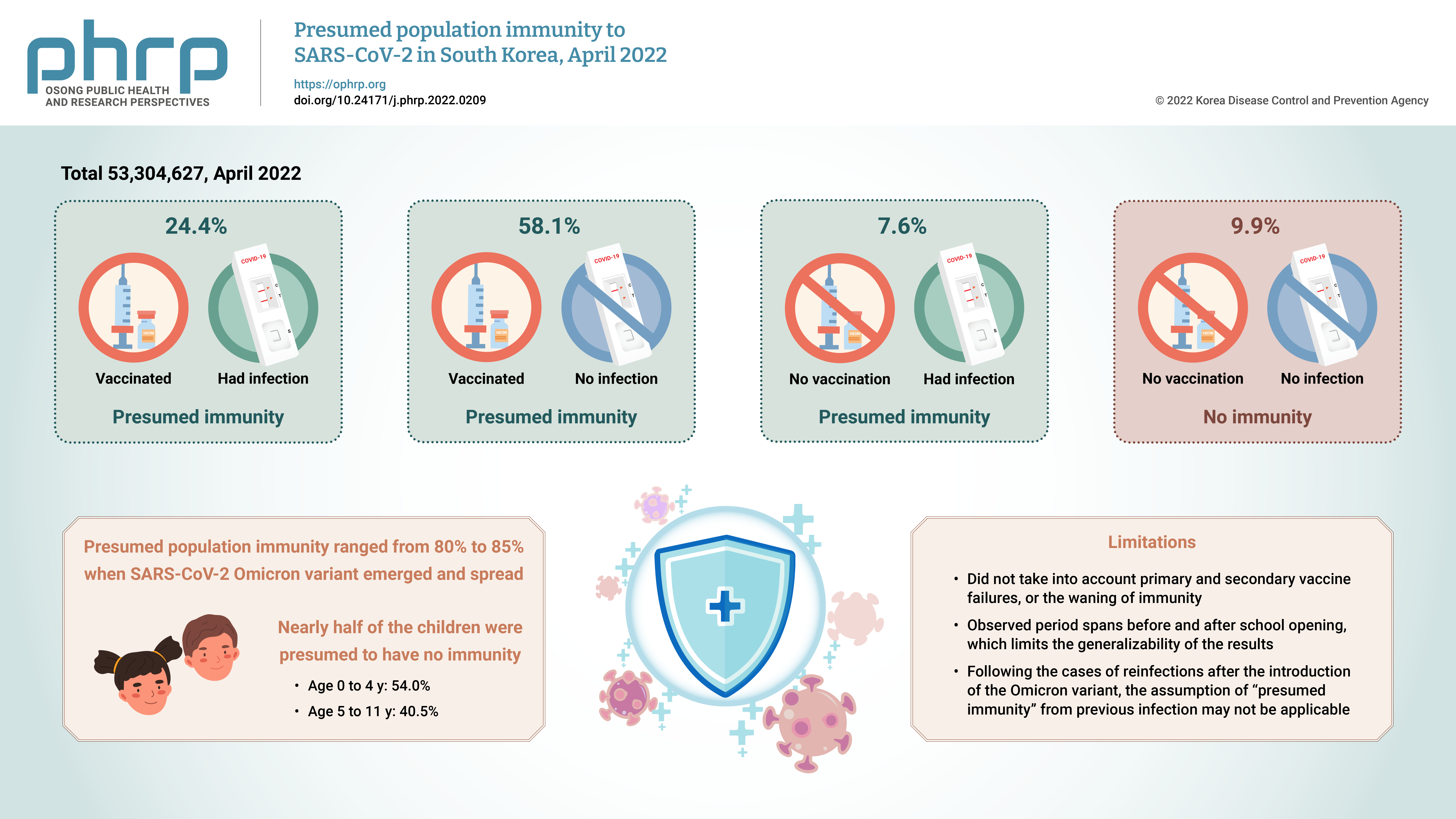
Results Of a total of 53,304,627 observed persons, 24.4% had vaccination and infection, 58.1%
had vaccination and no infection, 7.6% had infection and no vaccination, and 9.9% had no
immunity. The SARS-CoV-2 Omicron variant emerged at a time when the presumed population
immunity ranged from 80% to 85%; however, nearly half of the children were presumed to
have no immunity.
Conclusion We report a gap in population immunity, with lower presumed protection in
children than in adults. The approach presented in this work can provide valuable informed
tools to assist vaccine policy-making at a national level.
Citations
Citations to this article as recorded by
Realistic Estimation of COVID-19 Infection by Seroprevalence Surveillance of SARS-CoV-2 Antibodies: An Experience From Korea Metropolitan Area From January to May 2022 In Hwa Jeong, Jong-Hun Kim, Min-Jung Kwon, Jayoung Kim, Hee Jin Huh, Byoungguk Kim, Junewoo Lee, Jeong-hyun Nam, Eun-Suk Kang Journal of Korean Medical Science.2024;[Epub] CrossRef
Epidemiology of Coronavirus Disease 2019 in Infants and Toddlers, Seoul, South Korea JiWoo Sim, Euncheol Son, Young June Choe Pediatric Infection & Vaccine.2024; 31(1): 94. CrossRef
Predicting adherence to COVID-19 preventive measures among South Korean adults aged 40 to 69 Years using the expanded health empowerment model Su-Jung Nam, Tae-Young Pak SSM - Population Health.2023; 22: 101411. CrossRef
Acute COVID-19 in unvaccinated children without a history of previous infection during the delta and omicron periods Jee Min Kim, Ji Yoon Han, Seung Beom Han Postgraduate Medicine.2023; 135(7): 727. CrossRef
Objectives This study aimed to identify potential safety signals and adverse events following the primary Pfizer-BioNTech coronavirus disease 2019 (COVID-19) vaccination series among children and adolescents aged 5 to 17 years in the Republic of Korea. Methods: Adverse events reported through the COVID-19 vaccination management system (CVMS, a web-based passive vaccine safety surveillance system) and adverse events and health conditions collected from a text message-based survey were analyzed. Results: A total of 14,786 adverse events among 5 to 17-year-old children and adolescents were reported in the CVMS; 14,334 (96.9%) were non-serious and 452 (3.1%) were serious, including 125 suspected cases of acute cardiovascular injury and 101 suspected cases of anaphylaxis. The overall reporting rate was lower in 5 to 11-year-old children (64.5 per 100,000 doses) than in 12 to 17-year-old adolescents (300.5 per 100,000 doses). The text message survey identified that local and systemic adverse events after either dose were reported less frequently in 5 to 11-year-old children than in 12 to 17-year-old adolescents (p<0.001). The most commonly reported adverse events were pain at the injection site, myalgia, headache, and fatigue/tiredness. Conclusion: The overall results are consistent with the results of controlled trials; serious adverse events were extremely rare among 5 to 17-year-old children and adolescents following Pfizer-BioNTech COVID-19 vaccination. Adverse events were less frequent in children aged 5 to 11 years than in adolescents aged 12 to 17 years.
Citations
Citations to this article as recorded by
Post vaccination acute kidney injury and other renal complications after COVID-19 and influenza vaccination Yunn Honey Aye Kyaw, Pierre Yip, Kay Choong See World Journal of Nephrology.2026;[Epub] CrossRef
The descriptive epidemiology of adverse events following two doses of mRNA COVID-19 vaccination in Curaçao, the Caribbean Jonathan Lambo, Sirving Keli, Shaheen Khan Kaplan, Temiloluwa Njideaka-Kevin, Sireesha Bala Arja, Alaa Khedir Omer Altahir, Itunu Olonade, Rohit Kumar Infectious Diseases.2025; 57(2): 137. CrossRef
Myocarditis and Pericarditis are Temporally Associated with BNT162b2 COVID-19 Vaccine in Adolescents: A Systematic Review and Meta-analysis Yongyeon Choi, Jue Seong Lee, Young June Choe, Hyeran Lee, Yoonsun Yoon, Seung Hwan Shin, Myung-Jae Hwang, HyoSug Choi, Sara Na, Jong Hee Kim, Hyun Mi Kang, Bin Ahn, Kyoungsan Seo, Sangshin Park Pediatric Cardiology.2025; 46(8): 2193. CrossRef
mRNA COVID-19 vaccine safety among children and adolescents: a Canadian National Vaccine Safety Network cohort study Phyumar Soe, Otto G. Vanderkooi, Manish Sadarangani, Monika Naus, Matthew P. Muller, James D. Kellner, Karina A. Top, Hubert Wong, Jennifer E. Isenor, Kimberly Marty, Hennady P. Shulha, Gaston De Serres, Louis Valiquette, Allison McGeer, Julie A. Bettinge The Lancet Regional Health - Americas.2024; 40: 100949. CrossRef
Safety of the bivalent COVID-19 mRNA booster vaccination among persons aged over 18 years in the Republic of Korea Seok-Kyoung Choi, Seontae Kim, Mijeong Ko, Yeseul Heo, Tae Eun Kim, Yeonkyeong Lee, Juyeon Jang, Eunok Bahng Osong Public Health and Research Perspectives.2024; 15(6): 542. CrossRef
Safety monitoring of COVID-19 vaccines: February 26, 2021, To June 4, 2022, Republic of Korea Yeon-Kyeng Lee, Yunhyung Kwon, Yesul Heo, Eun Kyoung Kim, Seung Yun Kim, Hoon Cho, Seontae Kim, Mijeong Ko, Dosang Lim, Soon-Young Seo, Enhi Cho Clinical and Experimental Pediatrics.2023; 66(10): 415. CrossRef
Effectiveness of the BNT162b2 vaccine in preventing morbidity and mortality associated with COVID-19 in children aged 5 to 11 years: A systematic review and meta-analysis Sumayyah Ebrahim, Ntombifuthi Blose, Natasha Gloeck, Ameer Hohlfeld, Yusentha Balakrishna, Rudzani Muloiwa, Andy Gray, Andy Parrish, Karen Cohen, Ruth Lancaster, Tamara Kredo, Julia Robinson PLOS Global Public Health.2023; 3(12): e0002676. CrossRef




 First
 Prev


