Análisis bibliométrico sobre publicación en estudios de comunicación en revistas científicas latinoamericanas durante el período de 2020 a 2023 Felipe Anderson Rios Incio, Ángel Páez Moreno, Luis Ernesto Paz Enrique Biblios Journal of Librarianship and Information S.2024; (87): e001. CrossRef
The emergence of antimicrobial resistance raises the fear of untreatable diseases. Antimicrobial resistance is a multifaceted and dynamic phenomenon that is the cumulative result of different factors. While Gram-positive pathogens, such as methicillin-resistant Staphylococcus aureus and Clostridium difficile, were previously the most concerning issues in the field of public health, Gram-negative pathogens are now of prime importance. The World Health Organization’s priority list of pathogens mostly includes multidrug-resistant Gram-negative organisms particularly carbapenem-resistant Enterobacterales, carbapenem-resistant Pseudomonas aeruginosa, and extensively drug-resistant Acinetobacter baumannii. The spread of Gram-negative bacterial resistance is a global issue, involving a variety of mechanisms. Several strategies have been proposed to control resistant Gram-negative bacteria, such as the development of antimicrobial auxiliary agents and research into chemical compounds with new modes of action. Another emerging trend is the development of naturally derived antibacterial compounds that aim for targets novel areas, including engineered bacteriophages, probiotics, metal-based antibacterial agents, odilorhabdins, quorum sensing inhibitors, and microbiome-modifying agents. This review focuses on the current status of alternative treatment regimens against multidrug-resistant Gram-negative bacteria, aiming to provide a snapshot of the situation and some information on the broader context.
Citations
Citations to this article as recorded by
Progress in Characterization of Lipopolysaccharides and Lipid A by Mass Spectrometry Amanda Helms, Jennifer S. Brodbelt Mass Spectrometry Reviews.2026; 45(5): 929. CrossRef
Effect of MgO/P2O5 ratio on the structure and antibacterial property of Ag2O doped zinc phosphate glass Jeongho Cho, Bongki Ryu, Jaeyeop Chung Journal of the Korean Ceramic Society.2026; 63(3): 440. CrossRef
Antimicrobial effect and safety of 228 nm far-UVC light-emitting diodes Honoka Fujikawa, Yuki Shimizu, Mane Nishimura, Tomohiro Fujii, Yu Okada, Keisuke Kawasaki, Kenji Watanabe, Yoichi Mizukami, Jun Nishikawa Journal of Photochemistry and Photobiology B: Biol.2026; 278: 113410. CrossRef
Role of novel β-lactam antibiotics in the treatment of bacterial pneumonia Susanna Esposito, Nicola Principi Expert Opinion on Pharmacotherapy.2026; 27(5): 423. CrossRef
Ten Year Review of Wound Culture Results and Antimicrobial Resistance Patterns in a Burn Center Gabrielle Bierlein-De La Rosa, Patrick Ten Eyck, Colette Galet, Shady Al Hayek Journal of Surgical Research.2026; 322: 35. CrossRef
RAGE in Neutrophils: A Sensor for Pathogen-Associated Structures and Beyond Ekaterina A. Golenkina, Sofia V. Navarnova, Galina M. Viryasova, Svetlana I. Galkina, Tatjana V. Gaponova, Yulia M. Romanova, Galina F. Sud’ina Biomedicines.2026; 14(5): 1128. CrossRef
Thermal degradation kinetics and multifunctional properties of gelatin/carrageenan films incorporating eugenol-loaded Pickering emulsions for active packaging applications Khadijah Husna Abd Hamid, Theja Sree Pothula Ganesh Kumar, Nasratun Masngut, Mohd Hafiz Arzmi, Nurul Aini Mohd Azman Journal of Food Measurement and Characterization.2026; 20(7): 13843. CrossRef
Synthesis and biological evaluation of novel carbazole derivatives as broad-spectrum antibacterial agents to fight antimicrobial resistance (AMR) Maria Grazia Martina, Francesca Barbieri, Sacha Michèle Idriss Cancade, Gioele Benocci, Alida Chittolina, Matteo Longo, Lisa Giannessi, Sara Rossi, Sandra Gemma, Giuseppe Campiani, Jean-Denis Docquier, Marco Radi European Journal of Pharmaceutical Sciences.2026; 224: 107595. CrossRef
A synergistic bio–electro–topological strategy based on an MXene/silk fibroin hydrogel and electrical stimulation for diabetic wound healing Wenli Du, Yuanyuan Xu, Yuecheng Peng, Zhiyu Chen, Zihan Yao, Junjie Wang, Xuefeng Hu, Jieyu Zhang, Yunbing Wang Materials Horizons.2026; 13(16): 8223. CrossRef
Outer membrane as a drug target for the treatment of GNB infections Urjoshi Chattoraj, Ayesha Fatima, Deepanshi Saxena, Sidharth Chopra Drug Discovery Today.2026; 31(5): 104768. CrossRef
Collateral sensitivity-harnessing microbial vulnerabilities as a solution to antimicrobial resistance Rishav Jana, Priyanka Bhowmik Molecular Biology Reports.2026;[Epub] CrossRef
Isolation, derivatization, and anti-microbial evaluation of secondary metabolites from
Garcinia dryobalanoides
Nur Fazlin Zafirah Zaine, Nor Hisam Zamakshshari, Ainaa Nadiah Abd Halim, Vivien Jong Yi Mian, Ngieng Ngui Sing Natural Product Research.2025; 39(22): 6383. CrossRef
Bioactive Potential and Chemical Composition of Vitex agnus-castus L. Leaf Extracts Collected in Algeria: A Combined In Vitro and In Silico Approach Amina Bramki, Ghozlane Barboucha, Ouided Benslama, Anna Andolfi, Fatima Zohra Makhlouf, Maria Smati, Djamila Benouchenne, Mohamed Moussaoui, Chawki Bensouici, Alessio Cimmino, Jesús G. Zorrilla, Maria Michela Salvatore, Marco Masi Molecules.2025; 30(3): 749. CrossRef
Viability and Surface Morphology of Human Erythrocytes upon Interaction with Chitosan Derivatives Evgeniya A. Bezrodnykh, Marina G. Holyavka, Tatyana N. Belyaeva, Svetlana M. Pankova, Valery G. Artyukhov, Yurij A. Antonov, Boris B. Berezin, Inesa V. Blagodatskikh, Vladimir E. Tikhonov ACS Applied Bio Materials.2025; 8(3): 1909. CrossRef
Effect of Mutations on the Evolution of Extended Spectrum β-lactamases (ESBL) Anirudha Dutta, Antarika Chowdhury, Parijat Roy, Priyanka Bhowmik The Protein Journal.2025; 44(5): 501. CrossRef
Membrane-targeting antibacterial isoniazid schiff base against S. aureus and biofilms Yaguang Liu, Lianzhi Hu, Binbin Liu, Zheng Qu Frontiers in Chemistry.2025;[Epub] CrossRef
Rapidez diagnóstica na detecção de carbapenemases como estratégia de políticas públicas no controle e prevenção de infecção hospitalar Ana Beatriz Nascimento Costa, Ana Carolina Cavalcante Tiburcio, Akemi Oshiro Guirelli, Andréia Moreira dos Santos Carmo, Vilma Dos Santos Menezes Gaiotto Daros, Ivana Barros de Campos, Jaqueline Maria Gerbase, Maria Edvania Ferreira Teodoro, Murilo Carlos BEPA. Boletim Epidemiológico Paulista .2025; 22: 81. CrossRef
Resistance of Gram-negative bacteria to aztreonam-avibactam: An evaluation of data from in vitro studies Matthew E. Falagas, Laura T. Romanos, Dimitrios S. Kontogiannis, Charalampos Filippou International Journal of Antimicrobial Agents.2025; 66(6): 107624. CrossRef
Facile Phyto fabrication of Mg interconnected ZrO2 nanocomposites for effective decontamination of infected water bodies M. Pushpa, S. Mageswari, S. Na Shereenaa, S. Surendhiran Journal of the Indian Chemical Society.2025; 102(11): 102193. CrossRef
Antibiotic Resistance: A Genetic and Physiological Perspective Rania G. Elbaiomy, Ahmed H. El‐Sappah, Rong Guo, Xiaoling Luo, Shiyuan Deng, Meifang Du, Xiaohong Jian, Mohammed Bakeer, Zaixin Li, Zhi Zhang MedComm.2025;[Epub] CrossRef
Interactive effects of environment on antimicrobial activity of extracts of the termite Macrotermes subhyalinus (Blattodea: Termitidae) Miriam Awuor Oluoch, Benson Odhiambo Onyango, Peter Bulli, Ellen Klinger Journal of Insect Science.2025;[Epub] CrossRef
Plasmon-enhanced photocatalysis and antimicrobial activity of Ag/LaVO4:Eu3+ nanoparticle gel for wound healing V.K. Klochkov, O.O. Sedyh, G.V. Grygorova, N.O. Karpenko, P.O. Maksimchuk, S.B. Pavlov, T.P. Osolodchenko, S.L. Yefimova Functional Materials.2025; 32(4): 663. CrossRef
Efficacy of new generation biosorbents for the sustainable treatment of antibiotic residues and antibiotic resistance genes from polluted waste effluent Barkha Madhogaria, Sangeeta Banerjee, Atreyee Kundu, Prasanta Dhak Infectious Medicine.2024; 3(1): 100092. CrossRef
Evaluation of Plant-Based Silver Nanoparticles for Antioxidant Activity and Promising Wound-Healing Applications Maria Qubtia, Shazia Akram Ghumman, Sobia Noreen, Huma Hameed, Shazia Noureen, Rizwana Kausar, Ali Irfan, Pervaiz Akhtar Shah, Hafsa Afzal, Misbah Hameed, Mohammad Raish, Maria Rana, Ajaz Ahmad, Katarzyna Kotwica-Mojzych, Yousef A. Bin Jardan ACS Omega.2024; 9(10): 12146. CrossRef
Progress and potentialities in wood extractives-based materials for active food packaging applications Eliana I. Fernández Sosa, Nanci Ehman, Fernando E. Felissia, M. Guadalupe Chaves, M. Cristina Area Food Bioscience.2024; 60: 104489. CrossRef
A comprehensive investigation of the anion inhibition profile of a β-carbonic anhydrase from
Acinetobacter baumannii
for crafting innovative antimicrobial treatments
Viviana De Luca, Simone Giovannuzzi, Claudiu T. Supuran, Clemente Capasso Journal of Enzyme Inhibition and Medicinal Chemist.2024;[Epub] CrossRef
Objectives Tuberculosis (TB) and drug-resistant TB (DR-TB) are national health burdens in Vietnam. In this study, we investigated the prevalence of rifampicin (RIF) and/or isoniazid (isonicotinic acid hydrazide, INH) resistance in patients with suspected TB, and applied appropriate techniques to help rapidly target DR-TB. Methods: In total, 1,547 clinical specimens were collected and cultured using the BACTEC MGIT system (Becton Dickinson and Co.). A resazurin microtiter assay (REMA) was used to determine the proportions of RIF and/or INH resistance. A real-time polymerase chain reaction panel with TaqMan probes was employed to identify the mutations of rpoB and katG associated with DR-TB in clinical isolates. Genotyping of the identified mutations was also performed. Results: A total of 468 Mycobacterium tuberculosis isolates were identified using the REMA. Of these isolates, 106 (22.6%) were found to be resistant to 1 or both antibiotics. Of the resistant isolates, 74 isolates (69.8%) were resistant to isoniazid (INH) only, while 1 isolate (0.94%) was resistant to RIF only. Notably, 31 isolates (29.24%) were resistant to both antibiotics. Of the 41 phenotypically INH-resistant isolates, 19 (46.3%) had the Ser315Thr mutation. There were 8 different rpoB mutations in 22 (68.8%) of the RIF-resistant isolates. The most frequently detected mutations were at codons 531 (37.5%), 526 (18.8%), and 516 (6.3%). Conclusion: To help prevent new cases of DR-TB in Vietnam, it is crucial to gain a comprehensive understanding of the genotypic DR-TB isolates.
Citations
Citations to this article as recorded by
Identification of Potent Molecule for Rifampicin‐Resistant Mycobacterium tuberculosis using Natural Compounds by Structure‐Based Analysis Madhana Priya N, Magesh R ChemistrySelect.2026;[Epub] CrossRef
Clinical Evaluation of a Tandem qPCR-CRISPR Assay for Multidrug-Resistant or Rifampicin-Resistant Tuberculosis: A Prospective Diagnostic Accuracy Study Ying Wang, Zhe Song, Jianfeng Zeng, Yajuan Dong, Houming Liu, Jian Zeng, Xuhui Liu, Liang Fu, Xuelin Li, Shuihua Lu, Zhen Huang, Xiao-Yong Fan Microorganisms.2026; 14(8): 1750. CrossRef
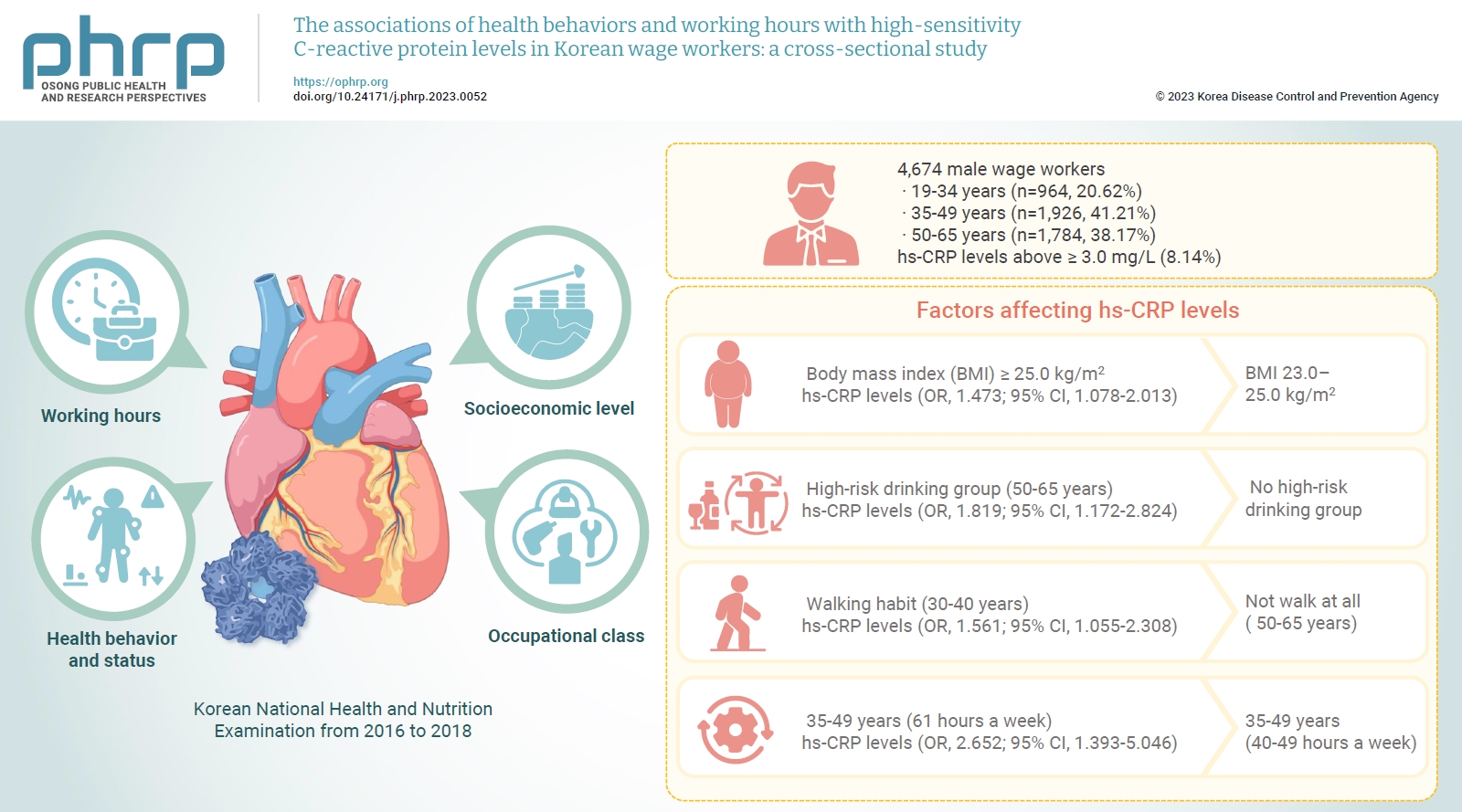
Objectives We investigated differences in high-sensitivity C-reactive protein (hs-CRP) levels by age group according to working hours, socioeconomic level, health behavior and status, and occupational class, and aimed to identify factors affecting hs-CRP levels in various age groups using data from the Korean National Health and Nutrition Examination from 2016 to 2018. Methods: The study included a total of 4,786 male wage workers across the nation, aged between 19 and 65. Data from 4,674 workers were analyzed using multiple logistic regression analysis. Results: Obesity, metabolic syndrome, and weekly working hours were associated with hs-CRP, a biomarker of inflammation. Participants with a body mass index (BMI) ≥25.0 kg/m2 showed significantly higher hs-CRP levels than those with a BMI 23.0 to 25.0 kg/m2. Workers with high-risk drinking and metabolic syndrome showed significantly higher hs-CRP levels in the 50 to 65 years group. Obesity, walking 0 to 149 min/wk, and working ≥61 hours a week were associated with significantly higher hs-CRP levels in the 35 to 49 years group. The factors that significantly affected hs-CRP levels were different among age groups. Conclusion: Plans to adjust working hours should be considered health behaviors, such as drinking and physical activity, and health conditions, such as metabolic syndrome and obesity, according to workers’ age.
Objectives The global prevalence of psychiatric disturbances is rising, detrimentally affecting the quality of care and treatment outcomes for individuals, particularly those with diabetes.This study investigated the association of risk factors for psychiatric disturbances among productive-age patients with diabetes (ages 30−59 years), considering sociodemographic characteristics and co-existing diseases. The risk factors considered included sociodemographic factors (e.g., residence, age, sex, marital status, education, and occupation) and co-existing diseases (e.g., hypertension, heart disease, stroke, renal failure, rheumatism, asthma, and cancer). Methods: This cross-sectional study utilized data from the 2018 Indonesian National Health Survey (Riskesdas). The study population comprised respondents aged between 30 and 59 years who had diabetes and had completed the 20-question self-reporting questionnaire (SRQ-20). After the exclusion of incomplete SRQ-20 data, the sample included 8,917 respondents. Data were analyzed using logistic regression. Results: Approximately 18.29% of individuals with diabetes displayed symptoms indicative of psychiatric disturbances. After adjusting for sociodemographic factors such as age, sex, education level, occupation, marital status, and place of residence, patients with diabetes who had co-existing conditions such as hypertension, heart diseases, rheumatic disorders, asthma, or cancer had a higher risk for developing psychiatric disturbances than those with diabetes alone (adjusted odds ratio, 6.67; 95% confidence interval, 4.481−9.928; p<0.001). Conclusion: The elevated risk of psychiatric disturbances among patients with diabetes who had comorbidities underscores the importance of addressing mental health issues in the management of diabetes, especially in patients with concurrent disease conditions.
Citations
Citations to this article as recorded by
The impact of dietary consumption on hypertension in indonesia: An analysis of indonesian health survey 2023 Cici A. Yanti, Ratna Djuwita, Evi Martha, Besral, Debby Ratno Kustanto, Noor Mastura Mohd Mujar Journal of Education and Health Promotion.2025;[Epub] CrossRef
Investigating the association between physical fitness and blood pressure among healthcare workers in Indonesia Wahyu Sulistiadi, Riswandy Wasir, Astriana, Badra Al Aufa, Sri Rahayu, Wasir Thalib, Fadilah Aulia Rahma Discover Social Science and Health.2024;[Epub] CrossRef
Correction to “The risk associated with psychiatric disturbances in patients with diabetes in Indonesia (2018): a cross-sectional observational study” [Osong Public Health Res Perspect 2023;14(5):368–78] Siti Isfandari, Betty Roosihermiatie, Sulistyowati Tuminah, Laurentia Konadi Mihardja Osong Public Health and Research Perspectives.2023; 14(6): 530. CrossRef
Objectives To identify factors associated with general and abdominal obesity in middle-aged and older Korean women based on the biopsychosocial model. Methods: Data from 4,076 women aged ≥45 years who participated in the Korea National Health and Nutrition Examination Survey from 2015 to 2020 were analyzed. Complex sampling analysis was performed using IBM SPSS ver. 26.0. Results: The combination of general and abdominal obesity was positively associated with age ≥65 years, postmenopausal status, and without breastfeeding experience among biomedical factors; depressive symptoms and prolonged (≥8 hours a day) sedentary behavior among psychosocial factors; and an educational level lower than middle or high school graduation and the first and second income quantiles among biosocial factors. Conclusion: Healthcare providers in communities and public societies should screen for risk factors for the combination of general and abdominal obesity while considering non-modifiable biomedical (e.g., age) and biosocial factors (e.g., educational level). In addition, intervention strategies should be developed by considering modifiable psychosocial factors such as sedentary behavior.
Citations
Citations to this article as recorded by
Relationship between anthropometric risk variables for chronic diseases in users of a primary care center José Ander Asenjo-Alarcón Población y Salud en Mesoamérica.2025;[Epub] CrossRef
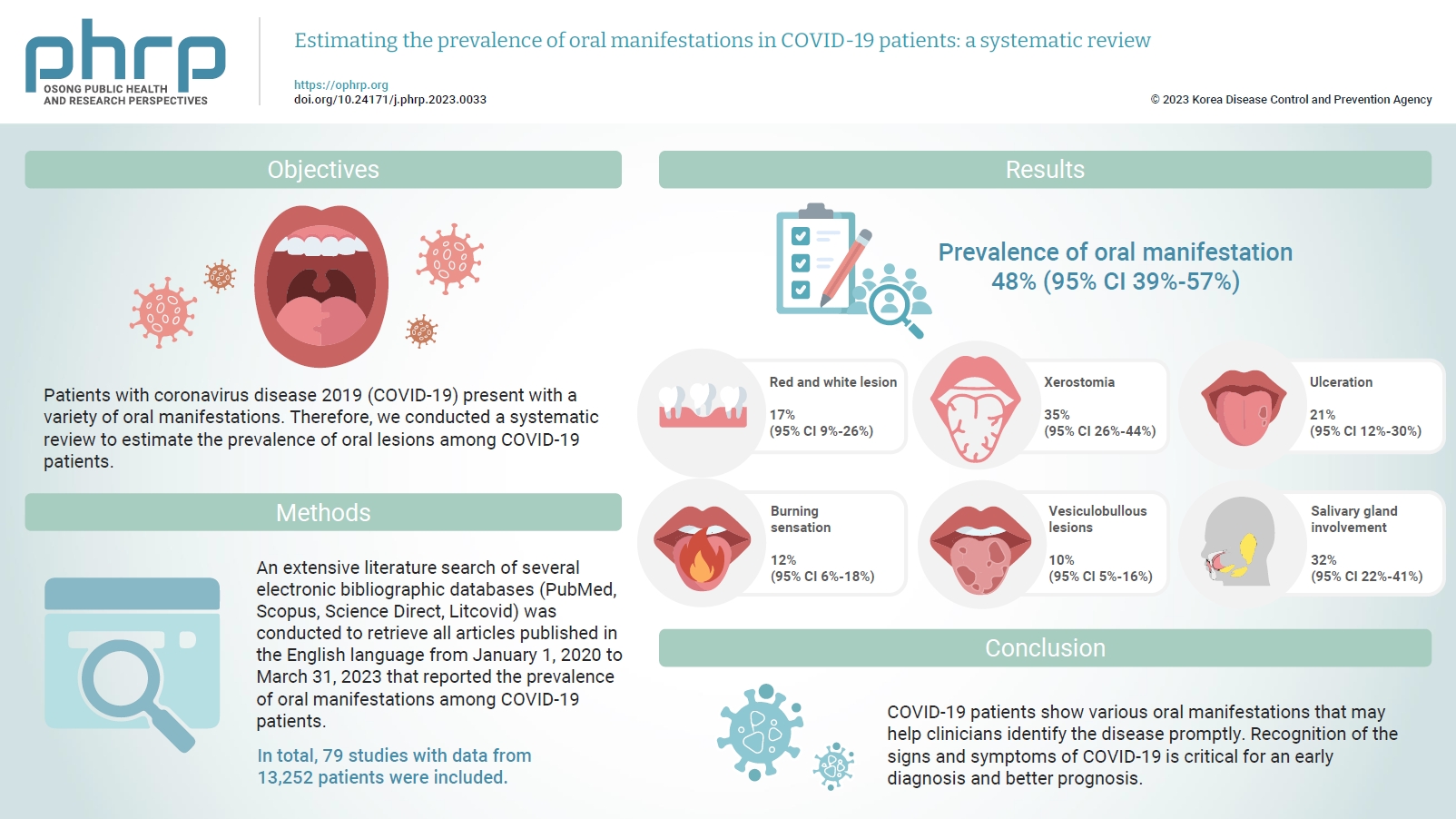
Objectives Patients with coronavirus disease 2019 (COVID-19) present with a variety of oral manifestations. Therefore, we conducted a systematic review to estimate the prevalence of oral lesions among COVID-19 patients. Methods: An extensive literature search of several electronic bibliographic databases (PubMed, Scopus, Science Direct, Litcovid) was conducted to retrieve all articles published in the English language from January 1, 2020 to March 31, 2023 that reported the prevalence of oral manifestations among COVID-19 patients. A meta-analysis of pooled prevalence was performed using Jamovi ver. 2.3 (2022). The I2 and Q statistics were used to assess heterogeneity between studies, and p-values <0.01 were considered statistically significant. Results: In total, 79 studies with data from 13,252 patients were included. The articles were predominantly published in 2020 (n=33), and Italy was the most common country (n=14). Most of the affected patients more than 50 years old and women (56.6%). The most common sites of involvement were the tongue (n=65), followed by the oral mucosa (n=37) and lips (n=19). High heterogeneity was found between studies. The most common oral manifestation was taste alteration, followed by xerostomia and ulceration, showing pooled prevalence rates of 48%, 35%, and 21%, respectively. Conclusion: COVID-19 patients show various oral manifestations that may help clinicians identify the disease promptly. Recognition of the signs and symptoms of COVID-19 is critical for an early diagnosis and better prognosis.
Citations
Citations to this article as recorded by
Prevalence and risk of oral adverse outcomes in patients with COVID-19: a retrospective real-world cohort study Stella O. Oyewole, Adetokunbo B. Olawuyi, Osariemen Okhuaihesuyi, Adepitan A. Owosho Oral Surgery, Oral Medicine, Oral Pathology and Or.2026; 142(1): 57. CrossRef
Radiotherapy for postoperative groin lymphatic fistulas: A systematic review of clinical outcomes and treatment planning Nicolas Vial, Salvatore Cozzi, Daniele Brenna, Giulio Brignoli, Marialuisa Puglisi, Franscesco Mosè Castronovo, Davide Giovanni Bosetti, Letizia Deantonio, Francesco Martucci, Calin-Simion Toma-Micle, Myriam-Ines Gana, Bertrand Le Roy, Celine Chauleur, Pa Clinical and Translational Radiation Oncology.2026; 61: 101274. CrossRef
Prevalence, characteristics and risk factors for chronic lower-limb oedema in the older population living in the community or in an aged-care home: a systematic review Maree O’connor, Suzanne Kuys, Michael Steele, Peter Franks, Helen Badge Age and Ageing.2026;[Epub] CrossRef
Oral health, smoking status, and oral manifestations of adult patients with SARS-CoV-2 during the Omicron outbreak in China: a cross-sectional study Huan Zhang, Zhixia Zhang, Lingxia Liu, Xinyao Wang, Ru Xue, Yixin Wang, Ling Fan, Xiuru Tian, Yujin Zhang, Rui Liu Scientific Reports.2025;[Epub] CrossRef
Severe acute respiratory syndrome coronavirus 2 pathology and cell tropism in tongue tissues of COVID-19 autopsies Longda Ma, Qian Liu, Manli Wang, Liang Liu, Zhihong Hu, Yiwu Zhou, Jia Liu Frontiers in Cellular and Infection Microbiology.2024;[Epub] CrossRef
Impact of COVID-19 Disease on the Development of Osteomyelitis of Jaws: A Systematic Review Emmanouil Vardas, Daniela Adamo, Federica Canfora, Maria Kouri, Konstantina Delli, Michele Davide Mignogna, Nikolaos Nikitakis Journal of Clinical Medicine.2024; 13(15): 4290. CrossRef
Painful ulcerations associated with COVID-19 in an adolescent patient: a case report David O. Danesh, Kyulim Lee, Rebecca G. Wallihan, Janice A. Townsend, Ira Mulo, Ashok Kumar Frontiers in Dental Medicine.2024;[Epub] CrossRef
Characteristics of Oral Adverse Effects following COVID-19 Vaccination and Similarities with Oral Symptoms in COVID-19 Patients: Taste and Saliva Secretory Disorders Hironori Tsuchiya, Maki Mizogami Medical Principles and Practice.2024; 34(2): 101. CrossRef
Comparison of Oral Manifestations in Hospitalized COVID-19 Positive Patients and COVID-19 Negative Dental Outpatients. A Case Series Study and Literature Review Flora Zervou-Valvi, Emmanouil M. Valvis, Angeliki Giannopoulou, Eleana Stoufi, Charilaos Samaras, Olga Spiropoulou, Antonia Hadjicosta, Smaragda Diamanti International Journal of Otolaryngology and Head &.2024; 13(03): 225. CrossRef
Min Jei Lee, Myung-Jae Hwang, Dong Seob Kim, Seon Kyeong Park, Jihyun Choi, Ji Joo Lee, Jong Mu Kim, Young-Man Kim, Young-Joon Park, Jin Gwack, Sang-Eun Lee
Osong Public Health Res Perspect 2023;14(5):418-426. Published online October 19, 2023
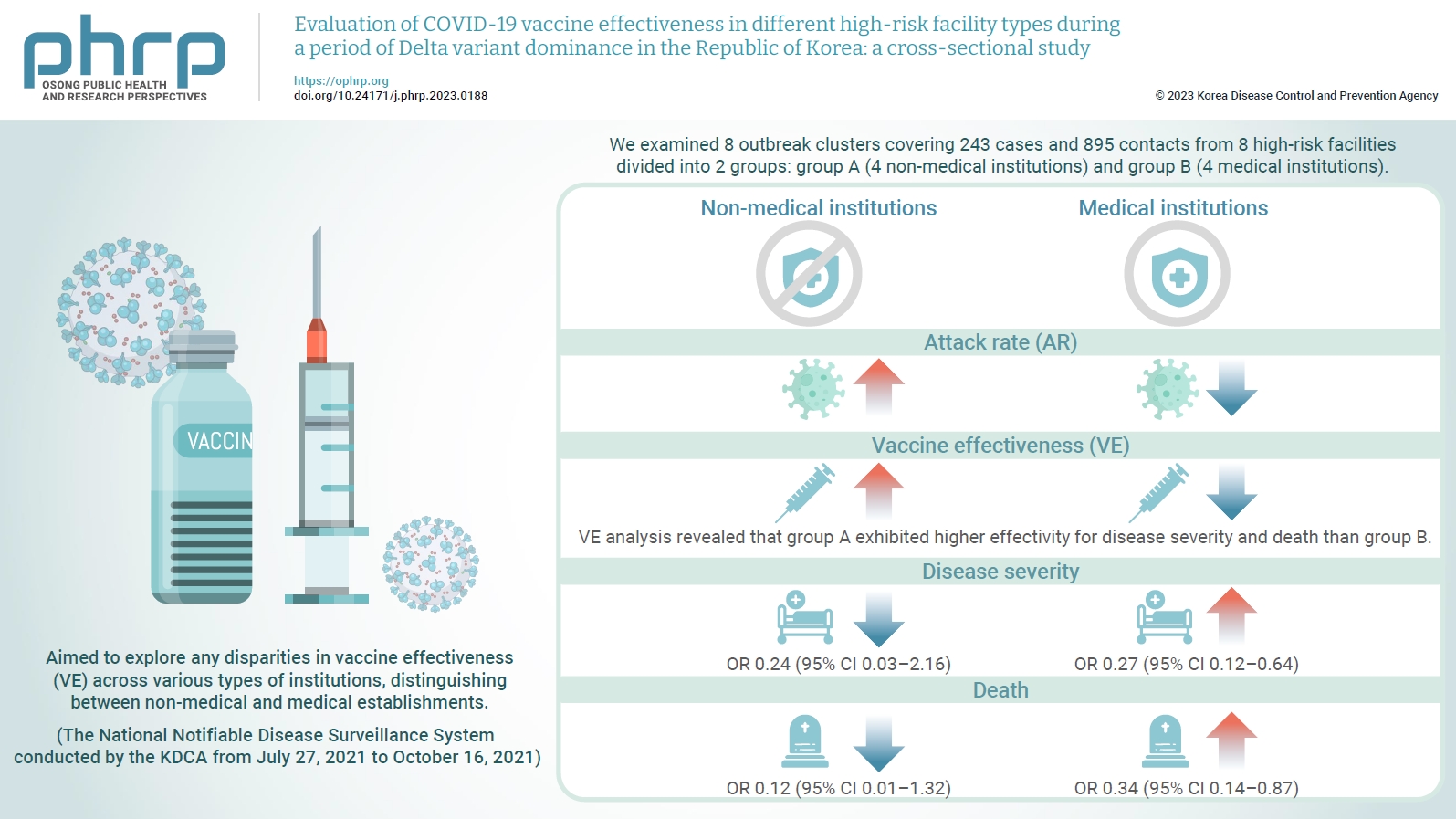
Objectives We evaluated the effectiveness of coronavirus disease 2019 vaccination in high-risk facilities in the Republic of Korea during the period when the highly transmissible Delta variant was prevalent. Additionally, we aimed to explore any disparities in vaccine effectiveness (VE) across various types of institutions, specifically distinguishing between non-medical and medical establishments. Methods: We examined 8 outbreak clusters covering 243 cases and 895 contacts from 8 high-risk facilities divided into 2 groups: group A (4 non-medical institutions) and group B (4 medical institutions). These clusters were observed from July 27, 2021 to October 16, 2021 for the attack rate (AR) and VE with respect to disease severity. A generalized linear model with a binomial distribution was used to determine the odds ratio (OR) for disease severity and death. Results: AR was notably lower in group B (medical institutions). Furthermore, VE analysis revealed that group A exhibited higher effectivity for disease severity and death than group B. The OR for disease severity was 0.24 (95% confidence interval [CI], 0.03–2.16) for group A and 0.27 (95% CI, 0.12–0.64) for group B, with the OR for death at 0.12 (95% CI, 0.01–1.32) in group A and 0.34 (95% CI, 0.14–0.87) in group B. Conclusion: Although VE may vary across institutions, our findings underscore the importance of implementing vaccinations in high-risk facilities. Customized vaccination programs, tailored response plans, and competent management personnel are essential for effectively addressing and mitigating public health challenges.
Objectives As the population ages worldwide, including in Japan, there is a growing expectation for older adults to remain active participants in society. The act of sharing one’s experiences and knowledge with younger generations through social engagement not only enriches the lives of older individuals, but also holds significant value for our society. In this study, we examined both positive and negative perceptions of older adults and investigated the correlation between these perceptions and generativity among older citizens. Additionally, we evaluated the impact of life satisfaction on these factors. Methods: We conducted a survey of 100 older adults in Japan (mean age, 71.68 years) and utilized multiple regression analyses, using positive and negative perceptions of older adults, life satisfaction, and demographic factors as independent variables. The sub-categories of generativity—namely, generative action, concern, and accomplishment—were used as dependent variables. Results: Participants who held a more positive perception of older adults demonstrated a higher level of generative actions and concerns. Additionally, participants who reported higher levels of life satisfaction also exhibited more generative actions, concerns, and accomplishments. Conversely, those who held a more negative perception of older adults were found to have higher levels of generative actions. Conclusion: Enhancing positive perceptions of older adults among them can boost the sub-categories of generativity. This study, which was conducted from an exploratory perspective, has several limitations, including a potential sampling bias. A more comprehensive examination of the relationship between perceptions of older adults and generativity is anticipated in future research.
Citations
Citations to this article as recorded by
How ageism may constrain generativity in later life: Introducing the ageism–generativity pathways model Yuho Shimizu Educational Gerontology.2026; : 1. CrossRef
Revision and Reliability-Validity Test of the Loyola Generativity Scale (LGS) in Chinese Elderly 义鑫 张 Advances in Psychology.2025; 15(02): 123. CrossRef
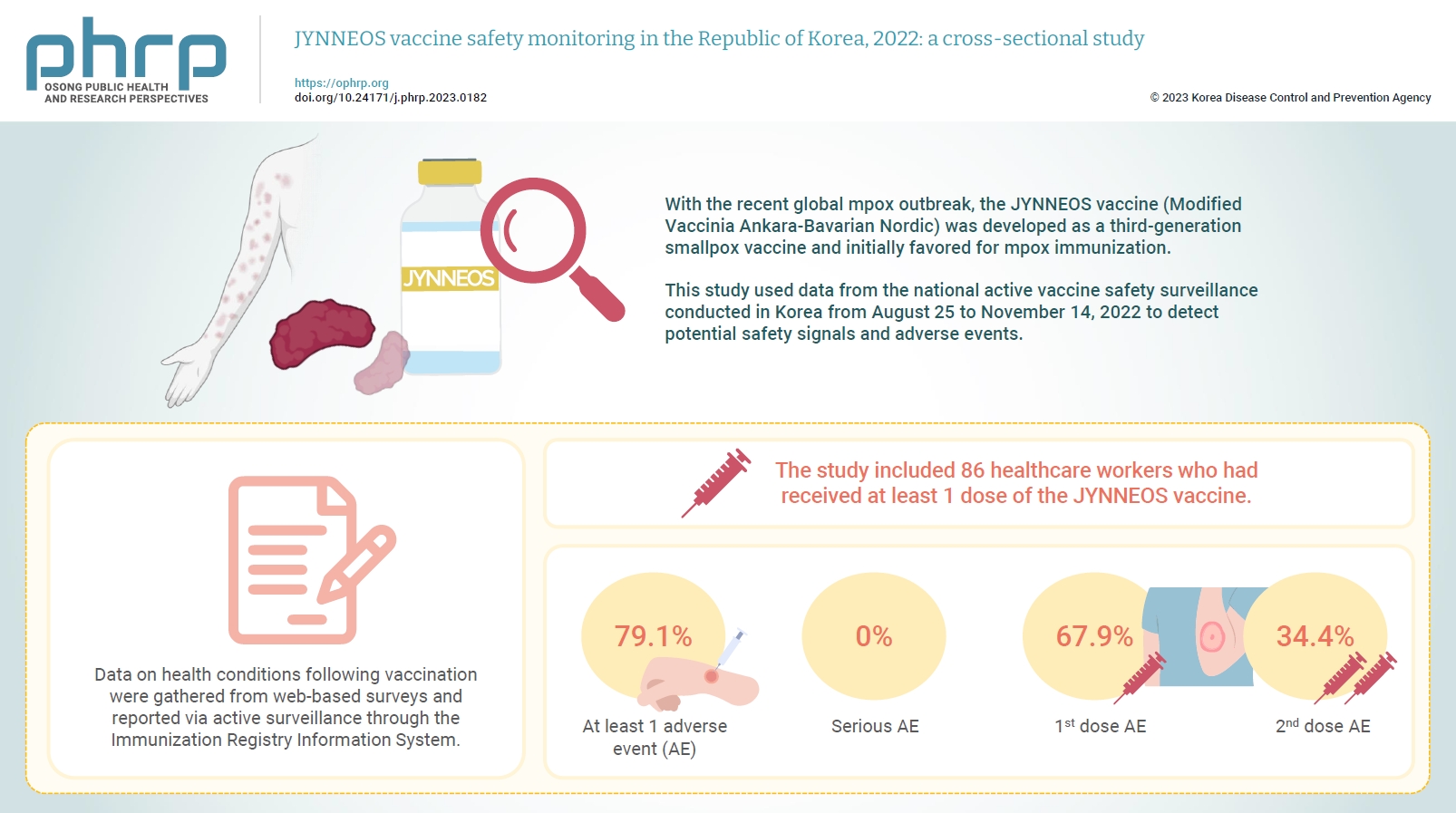
Objectives With the recent global mpox outbreak, the JYNNEOS vaccine (Modified Vaccinia Ankara-Bavarian Nordic) was developed as a third-generation smallpox vaccine and initially favored for mpox immunization. Vaccine-associated side effects contribute to vaccine hesitancy. Consequently, tracking adverse events post-immunization is crucial for safety management. This study used data from the national active vaccine safety surveillance conducted in Korea from August 25 to November 24, 2022 to detect potential safety signals and adverse events. Methods: Data on health conditions following vaccination were gathered from web-based surveys and reported via active surveillance through the Immunization Registry Information System. This follow-up system functioned via a text message link, surveying adverse events and health conditions beginning on the second day post-vaccination. Information about specific adverse events, including both local and systemic reactions, was collected. Results: The study included 86 healthcare workers who had received at least 1 dose of the JYNNEOS vaccine. Among the respondents, 79.1% reported experiencing at least 1 adverse event, with the majority being local reactions at the injection site. The incidence of adverse events was higher following the first dose (67.9%) than after the second dose (34.4%). The most frequently reported adverse event for both doses was mild pain at the injection site. Conclusion: The study provides crucial information on the safety of the JYNNEOS vaccine, demonstrating that most adverse events were manageable and predominantly localized to the injection site. Nonetheless, additional research is needed on the safety of various vaccine administration techniques and the vaccine’s effects on broader demographics.
Citations
Citations to this article as recorded by
Enhanced Immunogenicity and Affinity with A35R-Fc-Based Chimeric Protein Compared to MPXV A35R Protein Shimeng Bai, Yanxin Cui, Qibin Liao, Hongyang Yi, Zhonghui Liao, Gengwei Zhang, Fenfang Wu, Hongzhou Lu Viruses.2025; 17(1): 116. CrossRef
The Role of Adverse Event Follow-Up in Advancing the Knowledge of Medicines and Vaccines Safety: A Scoping Review Vijay Kara, Florence Van Hunsel, Andrew Bate, Eugène van Puijenbroek Drug Safety.2025; 48(9): 977. CrossRef
Potential of MRNA vaccines for mpox prevention: current evidence and future directions Toufik Abdul-Rahman, Ogungbemi Evelyn Faith, Oyinbolaji Akinwande Ajetunmobi, Hala Ibrahim Thaalibi, Chinelo Geraldine Ikele, Gargi Gautam, Faith Olanrewaju Omotayo, Poulami Roy, Alhazan Amir Adebayo, Muslimat Abolore Mojeed, Tolulope Taiwo Kareem, Halima Annals of Medicine & Surgery.2025; 87(9): 5650. CrossRef
Adverse Reactions After Intradermal Vaccination With JYNNEOS for Mpox in Korea So Yun Lim, Yu Mi Jung, Yeonjae Kim, Gayeon Kim, Jaehyun Jeon, BumSik Chin, Min-Kyung Kim Journal of Korean Medical Science.2024;[Epub] CrossRef
First Nationwide Mpox Vaccination Program in the Republic of Korea: Implications for an Enhanced Public Health Response Seunghyun Lewis Kwon, Minju Song, Wonkyung Lee, Jeeyeon Shin, Su-Yeon Lee, Sang-Gu Yeo, Minjeong Kim, Sanggyun Jeong, Joonku Park, Dongwoo Lee, Sookyoung Lim Journal of Korean Medical Science.2024;[Epub] CrossRef
Global perspectives on smallpox vaccine against monkeypox: a comprehensive meta-analysis and systematic review of effectiveness, protection, safety and cross-immunogenicity Hao Liu, Wenjing Wang, Yang Zhang, Fuchun Wang, Junyi Duan, Tao Huang, Xiaojie Huang, Tong Zhang Emerging Microbes & Infections.2024;[Epub] CrossRef






 First
 Prev


