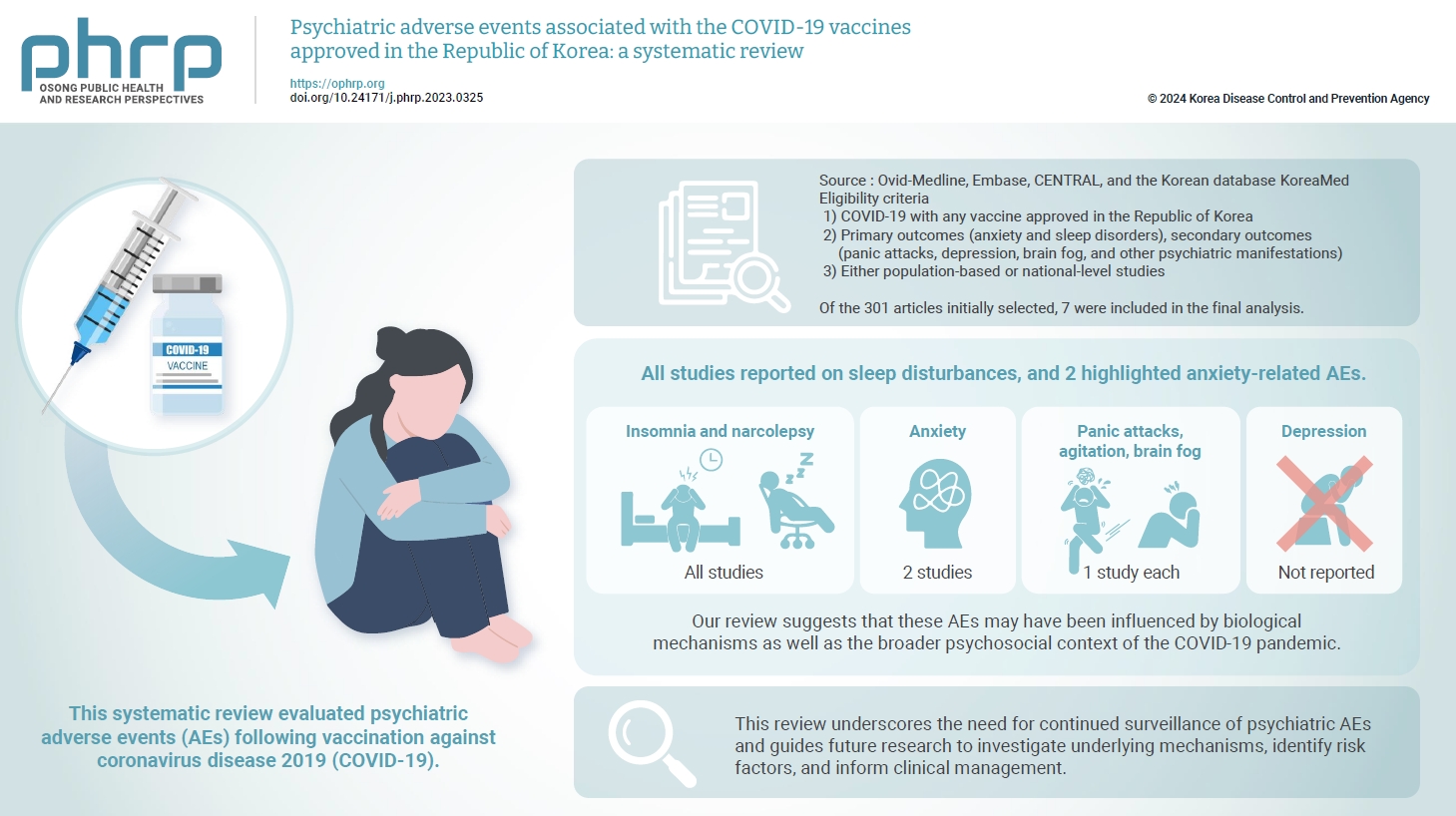
This systematic review evaluated psychiatric adverse events (AEs) following vaccination against coronavirus disease 2019 (COVID-19). We included studies that reported or investigated psychiatric AEs in individuals who had received an approved COVID-19 vaccine in the Republic of Korea. Systematic electronic searches of Ovid-Medline, Embase, CENTRAL, and KoreaMed databases were conducted on March 22, 2023. Risk of bias was assessed using the Risk of Bias Assessment Tool for Non-randomized Studies 2.0. The study protocol was registered in the International Prospective Register of Systematic Reviews (CRD42023449422). Of the 301 articles initially selected, 7 were included in the final analysis. All studies reported on sleep disturbances, and 2 highlighted anxiety-related AEs. Sleep disorders like insomnia and narcolepsy were the most prevalent AEs, while depression was not reported. Our review suggests that these AEs may have been influenced by biological mechanisms as well as the broader psychosocial context of the COVID-19 pandemic. Although this study had limitations, such as a primary focus on the BNT162b2 vaccine and an observational study design, it offered a systematic, multi-vaccine analysis that fills a critical gap in the existing literature. This review underscores the need for continued surveillance of psychiatric AEs and guides future research to investigate underlying mechanisms, identify risk factors, and inform clinical management.
Citations
Citations to this article as recorded by
Risk of anxiety disorders and insomnia following COVID-19 vaccination Haerin Cho, Joon Hyung Jung, Hwoyeon Seo, Won Chul Shin, Jung-Ick Byun, Suvin Park, Na-Young Jeong, Sanghoon Oh, Nam-Kyong Choi Journal of Psychiatric Research.2026; 192: 109. CrossRef
A review of the scientific literature on experimental toxicity studies of COVID-19 vaccines, with special attention to publications in toxicology journals Jose L. Domingo Archives of Toxicology.2024; 98(11): 3603. CrossRef
Objectives This study investigated the characteristics of coronavirus disease 2019 (COVID-19) among individuals with disabilities on a nationwide scale in the Republic of Korea, as limited research has examined this population. Methods: Between January 1 and November 30, 2021, a total of 5,687 confirmed COVID-19 cases among individuals with disabilities were reported through the Korea Disease Control and Prevention Agency’s COVID-19 web reporting system. Follow-up continued until December 24, and demographic, epidemiological, and clinical characteristics were analyzed. Results: Individuals with disabilities represented approximately 1.5% of confirmed cases, with a mean age of 58.1 years. Most resided in or near metropolitan areas (86.6%) and were male (60.6%). Frequent sources of infection included home (33.4%) and contact with confirmed cases (40.7%). Many individuals (75.9%) had underlying conditions, and 7.7% of cases were severe. People with disabilities showed significantly elevated risk of severe infection (adjusted odds ratio [aOR], 1.63; 95% confidence interval [CI], 1.47–1.81) and mortality (aOR, 1.65; 95% CI, 1.43–1.91). Vaccination against COVID-19 was associated with significantly lower risk of severe infection (aORs for the first, second, and third doses: 0.60 [95% CI, 0.42–0.85], 0.28 [95% CI, 0.22–0.35], and 0.16 [95% CI, 0.05–0.51], respectively) and death (adjusted hazard ratios for the first and second doses: 0.57 [95% CI, 0.35–0.93] and 0.30 [95% CI, 0.23–0.40], respectively). Conclusion: Individuals with disabilities showed higher risk of severe infection and mortality from COVID-19. Consequently, it is critical to strengthen COVID-19 vaccination initiatives and provide socioeconomic assistance for this vulnerable population.
Min Jei Lee, Myung-Jae Hwang, Dong Seob Kim, Seon Kyeong Park, Jihyun Choi, Ji Joo Lee, Jong Mu Kim, Young-Man Kim, Young-Joon Park, Jin Gwack, Sang-Eun Lee
Osong Public Health Res Perspect 2023;14(5):418-426. Published online October 19, 2023
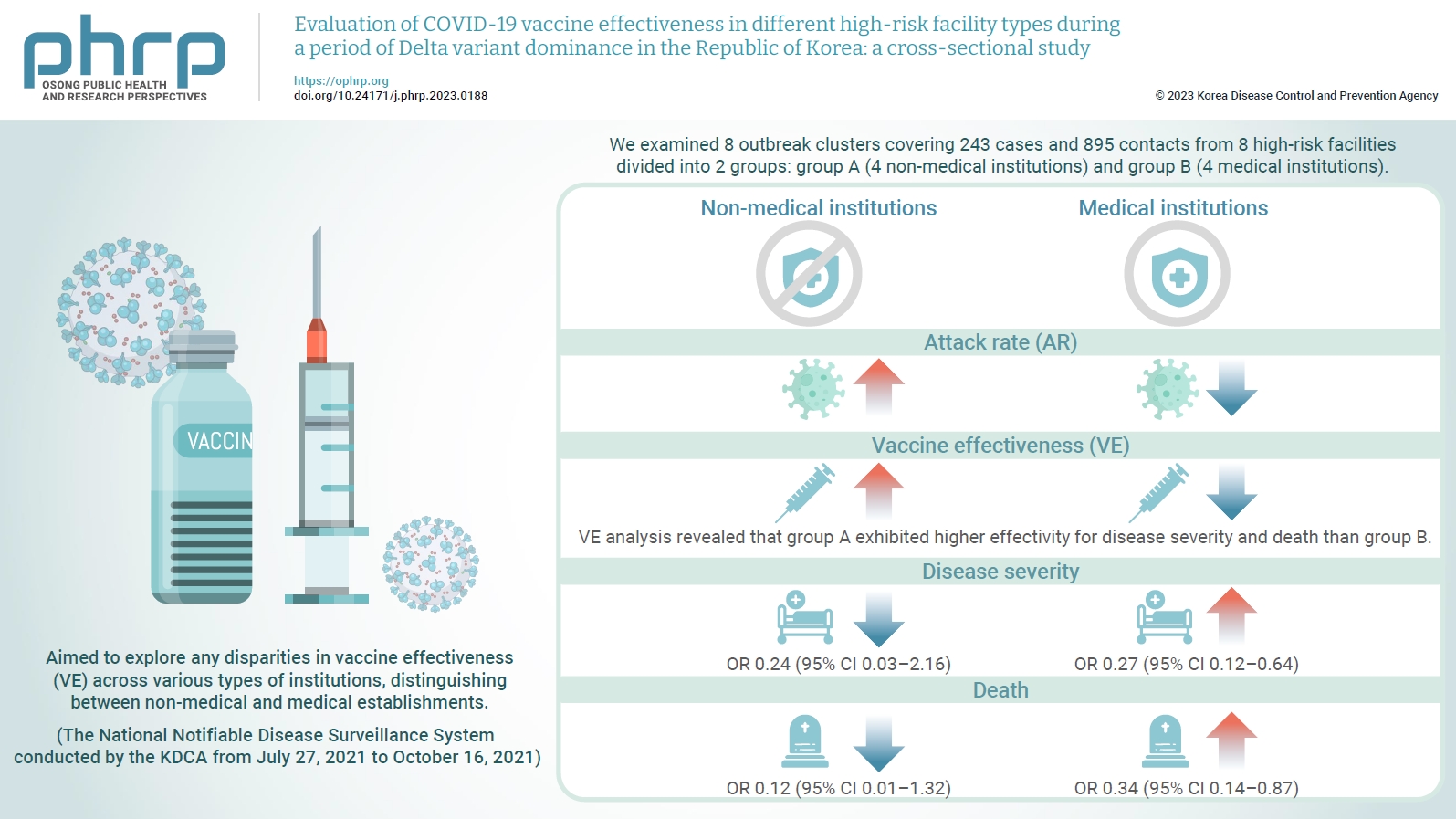
Objectives We evaluated the effectiveness of coronavirus disease 2019 vaccination in high-risk facilities in the Republic of Korea during the period when the highly transmissible Delta variant was prevalent. Additionally, we aimed to explore any disparities in vaccine effectiveness (VE) across various types of institutions, specifically distinguishing between non-medical and medical establishments. Methods: We examined 8 outbreak clusters covering 243 cases and 895 contacts from 8 high-risk facilities divided into 2 groups: group A (4 non-medical institutions) and group B (4 medical institutions). These clusters were observed from July 27, 2021 to October 16, 2021 for the attack rate (AR) and VE with respect to disease severity. A generalized linear model with a binomial distribution was used to determine the odds ratio (OR) for disease severity and death. Results: AR was notably lower in group B (medical institutions). Furthermore, VE analysis revealed that group A exhibited higher effectivity for disease severity and death than group B. The OR for disease severity was 0.24 (95% confidence interval [CI], 0.03–2.16) for group A and 0.27 (95% CI, 0.12–0.64) for group B, with the OR for death at 0.12 (95% CI, 0.01–1.32) in group A and 0.34 (95% CI, 0.14–0.87) in group B. Conclusion: Although VE may vary across institutions, our findings underscore the importance of implementing vaccinations in high-risk facilities. Customized vaccination programs, tailored response plans, and competent management personnel are essential for effectively addressing and mitigating public health challenges.
Objectives The incidence of Guillain-Barré syndrome (GBS) changed significantly during the coronavirus disease 2019 (COVID-19) pandemic. Emerging reports suggest that viral vector-based vaccines may be associated with an elevated risk of GBS.
Methods In this nationwide time-series correlation study, we examined the age-specific incidence of GBS from January 2011 to August 2022, as well as data on severe acute respiratory syndrome coronavirus 2 (SARS-CoV-2) vaccinations and infections from February 2021 to August 2022. We compared the forecasted estimates of age-specific GBS incidence, using the pre-SARS-CoV-2 period as a benchmark, with the actual incidence observed during the post-vaccination period of the pandemic. Furthermore, we assessed the temporal association between GBS, SARS-CoV-2 vaccinations, and COVID-19 for different age groups.
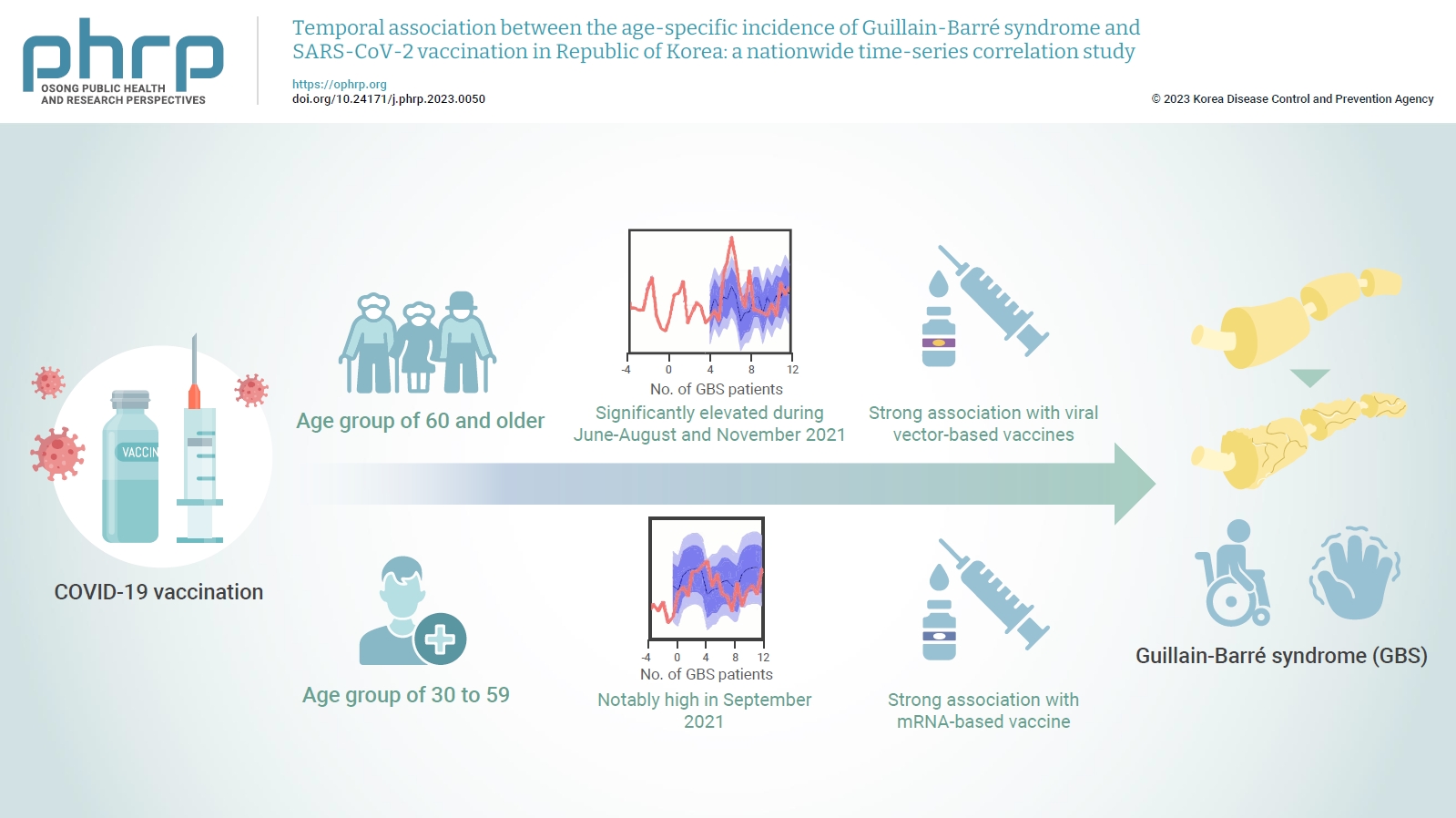
Results In the age group of 60 and older, the rate ratio was significantly elevated during June-August and November 2021. A significant, strong positive association was observed between viral vector-based vaccines and GBS incidence trends in this age group (r=0.52, p=0.022). For the 30 to 59 years age group, the rate ratio was notably high in September 2021. A statistically significant, strong positive association was found between mRNA-based vaccines and GBS incidence in this age group (r=0.61, p=0.006).
Conclusion Viral vector-based SARS-CoV-2 vaccines were found to be temporally associated with an increased risk of GBS, particularly in older adults. To minimize age-specific and biological mechanism-specific adverse events, future vaccination campaigns should adopt a more personalized approach, such as recommending homologous mRNA-based SARS-CoV-2 vaccines for older adults to reduce the heightened risk of GBS.
Citations
Citations to this article as recorded by
Assessing the Impact of Vaccination Strategies on COVID-19 Dynamics Via Time-varying Copulas Atina Ahdika, Muhammad Fakhruddin, Putu Veri Swastika Acta Biotheoretica.2026;[Epub] CrossRef
mRNA-LNP COVID-19 Vaccine Lipids Induce Complement Activation and Production of Proinflammatory Cytokines: Mechanisms, Effects of Complement Inhibitors, and Relevance to Adverse Reactions Tamás Bakos, Tamás Mészáros, Gergely Tibor Kozma, Petra Berényi, Réka Facskó, Henriette Farkas, László Dézsi, Carlo Heirman, Stefaan de Koker, Raymond Schiffelers, Kathryn Anne Glatter, Tamás Radovits, Gábor Szénási, János Szebeni International Journal of Molecular Sciences.2024; 25(7): 3595. CrossRef
Guillain–Barre syndrome following COVID-19 vaccination: a study of 70 case reports Biki Kumar Sah, Zahra Fatima, Rajan Kumar Sah, Bushra Syed, Tulika Garg, Selia Chowdhury, Bikona Ghosh, Binita Kunwar, Anagha Shree, Vivek Kumar Sah, Anisha Raut Annals of Medicine & Surgery.2024; 86(4): 2067. CrossRef
Deciphering changes in the incidence of hemorrhagic stroke and cerebral venous sinus thrombosis during the coronavirus disease 2019 pandemic: A nationwide time-series correlation study Soo Hyeon Cho, Dong Kyu Kim, Min Cheol Song, Euiho Lee, Seoncheol Park, Darda Chung, Jongmok Ha, Sonu Bhaskar PLOS ONE.2024; 19(10): e0301313. CrossRef
Before Diagnosing SARS-CoV-2 Vaccination-Related Funicular Myelosis, GBS and Other Differentials Must be Ruled Out Josef Finsterer Neurology India.2024; 72(5): 1100. CrossRef
Objectives Age-specific information regarding myocarditis/pericarditis in adolescents following mRNA-based coronavirus disease 2019 (COVID-19) vaccination in Asia remains insufficient. This study investigated the incidence and clinical characteristics of myocarditis/pericarditis in Republic of Korea adolescents after mRNA-based COVID-19 vaccination.
Methods This retrospective descriptive study utilized patient data from the Korea Immunization Management System. Incidence rates were calculated according to age and sex. Clinical characteristics (symptoms/signs, laboratory values, and imaging results) were compared between mild and severe cases.
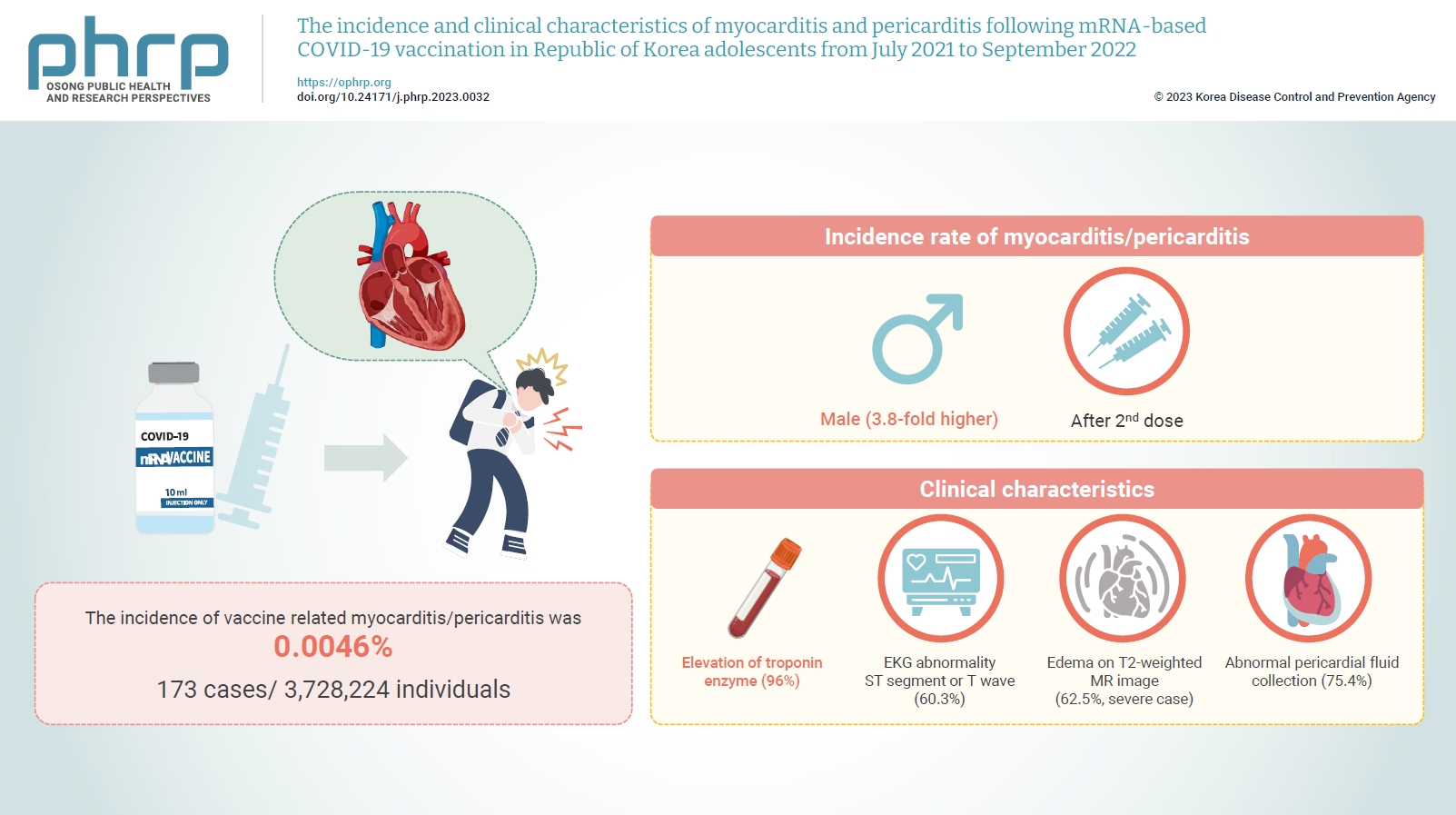
Results Between July 19, 2021 and September 30, 2022, 3,728,224 individuals aged 12 to 19 years received 6,484,165 mRNA-based COVID-19 vaccines, and 173 cases met the case definition for myocarditis/pericarditis: 151 mild (87.3%) and 22 severe (12.7%). The incidence was 3.8-fold higher in males than in females. Troponin I/ troponin T was elevated in 96% of myocarditis cases, demonstrating higher sensitivity than creatine kinase-myocardial band (67.6%) or C-reactive protein (75.2%). ST-segment or Twave on electrography abnormalities were found in 60.3% (85/141). Paroxysmal/sustained atrial/ventricular arrhythmias were more common in severe than in mild cases (45.5% vs. 16.8%, p=0.008). Edema on T2-weighted magnetic imaging occurred in 21.6% (8/37) and 62.5% (5/8) of mild and severe cases, respectively (p=0.03). Abnormal pericardial fluid collection or pericardial inflammation was found in 75.4% of pericarditis cases (49/65).
Conclusion Myocarditis/pericarditis occurred in rare cases following mRNA-based COVID-19 vaccination. Most cases were mild, but the incidence was higher in adolescent males and after the second dose. As bivalent severe acute respiratory syndrome coronavirus 2 mRNA vaccination started in Republic of Korea in October 2022, the post-vaccination incidence of myocarditis/pericarditis should be closely monitored, considering clinical characteristics.
Citations
Citations to this article as recorded by
Factors associated with carditis adverse events following SARS-COV-2-19 vaccination Kyung Hyun Min, Jun Hyeob Kim, Jin Yeon Gil, Jun Hyuk Park, Ji Min Han, Kyung Eun Lee Epidemiology and Infection.2025;[Epub] CrossRef
Unique Features and Collateral Immune Effects of mRNA-LNP COVID-19 Vaccines: Plausible Mechanisms of Adverse Events and Complications János Szebeni Pharmaceutics.2025; 17(10): 1327. CrossRef
Responses to Common Misconceptions Relating to COVID-19 Variant-Adapted mRNA Vaccines George Kassianos, Pauline MacDonald, Ivan Aloysius, Shanti Pather Vaccines.2024; 12(1): 57. CrossRef
Comparative safety of monovalent and bivalent mRNA COVID-19 booster vaccines in adolescents aged 12 to 17 years in the Republic of Korea Mijeong Ko, Seontae Kim, Seok-Kyoung Choi, Seung Hwan Shin, Yeon-Kyeng Lee, Yunhyung Kwon Osong Public Health and Research Perspectives.2024; 15(4): 364. CrossRef
Epidemiological Characteristics and Outcome of Myocarditis and Pericarditis Temporally Associated With BNT162b2 COVID-19 Vaccine in Adolescents: Korean National Surveillance Bin Ahn, Seung Hwan Shin, Myung-Jae Hwang, HyoSug Choi, Sara Na, Sangshin Park, Jue Seong Lee, Young June Choe, Yoonsun Yoon, Kyoungsan Seo, Jong Hee Kim, Hyun Mi Kang Journal of Korean Medical Science.2024;[Epub] CrossRef
To become a more stronger and safer country Jong-Koo Lee Osong Public Health and Research Perspectives.2023; 14(2): 67. CrossRef
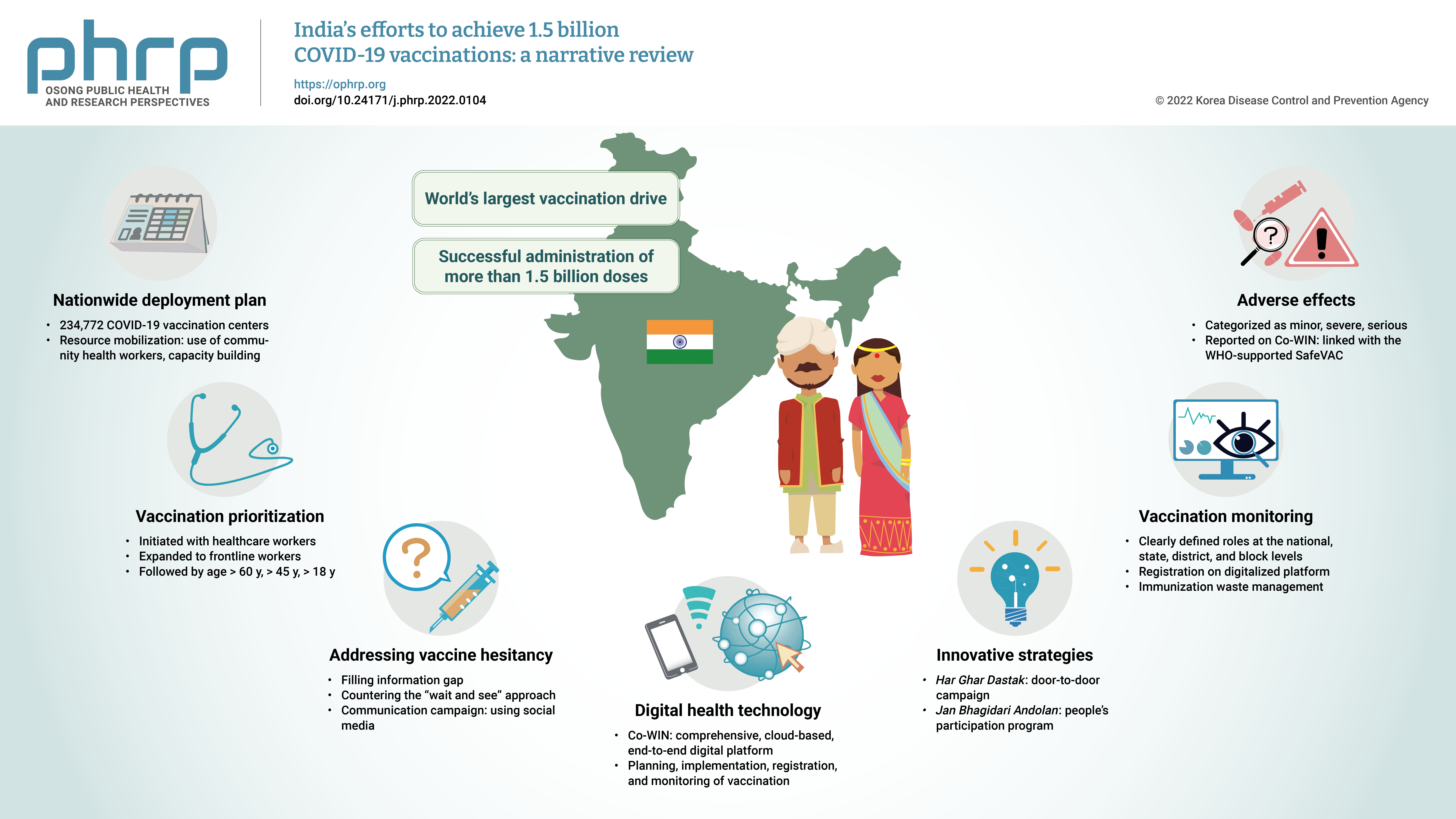
The initial case of coronavirus disease 2019 (COVID-19) in India was reported on January 30, 2020, and subsequently, the number of COVID-19-infected patients surged during the first wave of April 2020 and the second wave in the same month of 2021. The government of India imposed a strict nationwide lockdown in April 2020 and extended it until May 2020. The second wave of COVID-19 in India overwhelmed the country’s health facilities and exhausted its medical and paramedical workforce. This narrative review was conducted with the aim of summarizing the evidence drawn from policy documents of governmental and non-governmental organizations, as well as capturing India's COVID-19 vaccination efforts. The findings from this review cover the Indian government's vaccination initiatives, which ranged from steps taken to combat vaccine hesitancy to vaccination roadmaps, deployment plans, the use of digital health technology, vaccination monitoring, adverse effects, and innovative strategies such as Har Ghar Dastak and Jan Bhagidari Andolan (people’s participation). These efforts collectively culminated in the successful administration of more than 1.8 billion doses of COVID-19 vaccines in India. This review also provides insights into other countries’ responses to COVID-19 and guidance for future pandemics.
Citations
Citations to this article as recorded by
The Lancet Commission on a citizen-centred health system for India Vikram Patel, Anuska Kalita, Kheya Melo Furtado, Nachiket Mor, Shubhangi Bhadada, Sandra Albert, Hasna Ashraf, Satchit Balsari, Indu Bhushan, Vijay Chandru, Mirai Chatterjee, Sarika Chaturvedi, Raghu Dharmaraju, Atul Gupta, Kiran Mazumdar-Shaw, Gautam I M The Lancet.2026; 407(10526): 388. CrossRef
Psychosocial Factors in Help-Seeking Among Older Adults During the COVID-19 Pandemic: A Qualitative Analysis of Calls to India’s National Psychosocial Support and Mental Health Services Helpline Allen D Christopher, Jayakumar Christy, Bangalore Roopesh, Sanjeev K Manikappa, Marimuthu Palaniyappan Cureus.2026;[Epub] CrossRef
Usability of peer assisted SARS CoV 2 self testing model among factory workers in india using a mixed methods cross sectional study Meghana Ratna Pydi, Neha Parikh, Purnima Ranawat, Ravneet Kaur, A. G. Shankar, Angela Chaudhuri, Petra Stankard, Sonjelle Shilton, Aditi Srinivasan, Joyita Chowdhury, Elena Ivanova Reipold, Syama B. Syam Discover Public Health.2026;[Epub] CrossRef
Strengthening cervical cancer prevention through district-wide HPV vaccination: an implementation case study from Bareilly district, Uttar Pradesh, India Anurag Gautam, Prashant Ranjan, Vinit Yajurvedi, Renu Shrivas International Journal of Research in Medical Scien.2026; 14(10): 4667. CrossRef
Multi-strain COVID-19 dynamics with vaccination strategies: Mathematical modeling and case study Venkatesh Ambalarajan, Ankamma Rao Mallela, Prasantha Bharathi Dhandapani, Vinoth Sivakumar, Víctor Leiva, Cecilia Castro Alexandria Engineering Journal.2025; 119: 665. CrossRef
Influenza vaccination uptake of health care workers in a tertiary hospital: Findings from qualitative research in Mysuru, India Jantine Marly van Wijlick, K. S. Sahana, P. A. Mahesh, B. S. Jayaraj, Gangadhar Mysore Rajagopal, Christopher Pell Global Public Health.2025;[Epub] CrossRef
COVID-19 Vaccine Acceptance and Hesitancy: Perceptions in Kerala, the Indian State With the Highest Literacy Dhanya Muralidharan, Arun Paul, Suhaila Panangadanakath, Sreelakshmi T. Nandakumar, Shana S. Poothotill, Rahila A. MoiduKunhi, Zainul Ameen Journal of Preventive Medicine and Public Health.2025; 58(5): 527. CrossRef
Global Mapping of Evidence on Vaccination Related Education Through School Based Curriculum Bhupender Singh Khanuja, Palak Badhwar, Kapil Singh, Shipra Verma, Anjori Agrawal, Ashwani Verma Delaware Journal of Public Health.2025; 11(5): 44. CrossRef
Developments and Trends of Immunization in India: A Narrative Review Pratik P Tawde, Zahiruddin Quazi, Abhay Gaidhane, Sonali G Choudhari Cureus.2024;[Epub] CrossRef
Digital health technology used in emergency large-scale vaccination campaigns in low- and middle-income countries: a narrative review for improved pandemic preparedness Paula Mc Kenna, Lindsay A. Broadfield, Annik Willems, Serge Masyn, Theresa Pattery, Ruxandra Draghia-Akli Expert Review of Vaccines.2023; 22(1): 243. CrossRef
Media Reporting Relating to COVID-19 Vaccination as a Driver of Vaccine Hesitancy Prior to the Second Wave of the COVID-19 Pandemic in India: A Content Analysis of Newspaper and Digital Media Reports Saurav Basu, Himanshi Sharma Cureus.2023;[Epub] CrossRef
An assessment of the strategy and status of COVID-19 vaccination in India Sneh Lata Gupta, Surbhi Goswami, Ananya Anand, Namrata Naman, Priya Kumari, Priyanka Sharma, Rishi K. Jaiswal Immunologic Research.2023; 71(4): 565. CrossRef
Development of a Choice-framework for Covid vaccines in India using a multi-criteria decision analysis approach Tarun K. George, Nayana P. Nair, Awnish Kumar Singh, A. Dilesh Kumar, Arup Deb Roy, Varshini Neethi Mohan, Gagandeep Kang Vaccine.2023; 41(25): 3755. CrossRef
COVID-19 Booster Dose Coverage and Hesitancy among Older Adults in an Urban Slum and Resettlement Colony in Delhi, India Nandini Sharma, Saurav Basu, Heena Lalwani, Shivani Rao, Mansi Malik, Sandeep Garg, Rahul Shrivastava, Mongjam Meghachandra Singh Vaccines.2023; 11(7): 1177. CrossRef
Review of the unmet medical need for vaccination in adults with immunocompromising conditions: An Indian perspective Ashok Vaid, Neha Rastogi, T. Mark Doherty, Peter San Martin, Yashpal Chugh Human Vaccines & Immunotherapeutics.2023;[Epub] CrossRef
Translating the COVID-19 experience in widening the HPV vaccination campaign for cervical cancer in India Aruni Ghose, Anisha Agarwal, Bhawna Sirohi, Shona Nag, Linus Chuang, Swarupa Mitra Gynecologic Oncology Reports.2023; 48: 101247. CrossRef
Symptomatic prevalence of covid-19 in vaccinated and non-vaccinated population Jay Bhupesh Pandya, Nirali Milind Shethia, Divya Bangera, Shailaja Gada Saxena IP International Journal of Medical Microbiology a.2023; 9(2): 110. CrossRef
Active surveillance of adverse events following COVID-19 vaccines in a tertiary care hospital Naveena Mary Cherian, Dravya Anna Durai, Muhammed Jaisel, Divyansh Sharma, Juny Sebastian, Chetak Kadabasal Basavaraja, Merrin Mathew Therapeutic Advances in Vaccines and Immunotherapy.2023;[Epub] CrossRef
Effectiveness of ayurvedic formulation, NAOQ19 along with standard care in the treatment of mild-moderate COVID-19 patients: A double blind, randomized, placebo-controlled, multicentric trial Pankaj Bhardwaj, Kalaiselvan Ganapathy, Monika Pathania, K.H. Naveen, Jaykaran Charan, Siddhartha Dutta, Ravisekhar Gadepalli, Srikanth Srinivasan, Manoj Kumar Gupta, Akhil D. Goel, Naresh Midha, Bharat Kumar, Meenakshi Sharma, Praveen Sharma, Mithu Baner Journal of Ayurveda and Integrative Medicine.2023; 14(6): 100778. CrossRef
Balancing Routine and Pandemic: The Synergy of India’s Universal Immunization Program and COVID-19 Vaccination Program Pawan Kumar, Ashish Birendra Chakraborty, Suhas Dhandore, Pritu Dhalaria, Ajeet Kumar Singh, Disha Agarwal, Kapil Singh, Pretty Priyadarshini, Paras Jain, Vidushi Bahl, Gunjan Taneja Vaccines.2023; 11(12): 1776. CrossRef
Unveiling vaccine safety: a narrative review of pharmacovigilance in India's COVID-19 vaccination Megha Hegde, Saurav Raj, Dhananjay Tikadar, Sanatkumar B Nyamagoud Monaldi Archives for Chest Disease.2023;[Epub] CrossRef
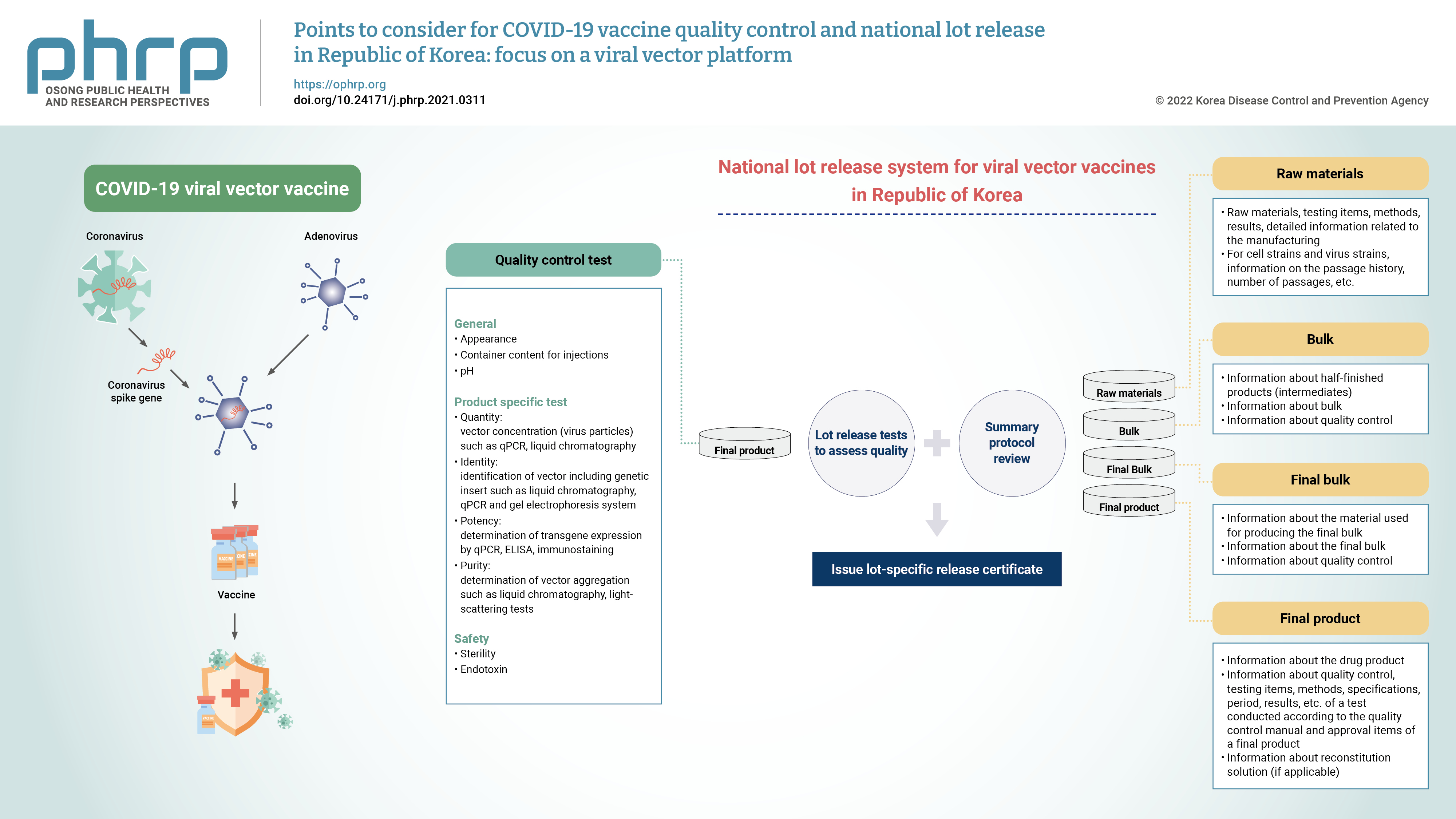
Due to the global public health crisis caused by the coronavirus disease 2019 (COVID-19) pandemic, the importance of vaccine development has increased. In particular, a rapid supply of vaccines and prompt deployment of vaccination programs are essential to prevent and overcome the spread of COVID-19. As a part of the vaccine regulations, national lot release is regulated by the responsible authorities, and this process involves the assessment of the lot before a vaccine is marketed. A lot can be released for use when both summary protocol (SP) review and quality control testing are complete. Accelerated lot release is required to distribute COVID-19 vaccines in a timely manner. In order to expedite the process by simultaneously undertaking the verification of quality assessment and application for approval, it is necessary to prepare the test methods before marketing authorization. With the prolonged pandemic and controversies regarding the effectiveness of the COVID-19 vaccine against new variants, public interest for the development of a new vaccine are increasing. Domestic developers have raised the need to establish standard guidance on the requirements for developing COVID-19 vaccine. This paper presents considerations for quality control in the manufacturing process, test items, and SP content of viral vector vaccines.
Citations
Citations to this article as recorded by
Development of an identity test for COVID-19 mRNA vaccines using SARS-CoV-2 NAT standard Miran Jo, Eunjo Lee, Ho Jung Oh, Jin Tae Hong, Kyung Hee Sohn Biosafety and Health.2025; 7(4): 224. CrossRef
Objectives The coronavirus disease 2019 (COVID-19) pandemic has set a precedent for the fastest-produced vaccine as a result of global collaboration and outreach. This study explored Malaysians’ acceptance of the COVID-19 vaccine and its associated factors.
Methods A cross-sectional anonymous web-based survey was disseminated to Malaysian adults aged ≥18 years old via social media platforms between July 10, 2020 and August 31, 2020.
Results In the analysis of 4,164 complete responses, 93.2% of participants indicated that they would accept the COVID-19 vaccine if it was offered for free by the Malaysian government. The median out-of-pocket cost that participants were willing to pay for a COVID-19 vaccine was Malaysian ringgit (MYR) 100 (interquartile range [IQR], 100) if it was readily available and MYR 150 (IQR, 200) if the supply was limited. Respondents with a low likelihood of vaccine hesitancy had 13 times higher odds of accepting the COVID-19 vaccine (95% confidence interval [CI], 8.69 to 19.13). High perceived risk and severity were also associated with willingness to be vaccinated, with adjusted odds ratios of 2.22 (95% CI, 1.44 to 3.41) and 2.76 (95% CI, 1.87 to 4.09), respectively. Age and ethnicity were the only independent demographic characteristics that predicted vaccine uptake.
Conclusion Public health strategies targeting perceived risk, perceived susceptibility and vaccine hesitancy could be effective in enhancing vaccine uptake.
Citations
Citations to this article as recorded by
Longitudinal Analysis of Antibody Dynamics in Post-COVID-19 Patients following CoronaVac-Based Hybrid Immunity Akmal Shukri Amir Muhaimin, Muhammad Amin Ibrahim, Mohammed Fauzi Abdul Rani, Mariam Mohamad, Seok Mui Wang, Ariza Adnan, Madyhah Abd. Monir, Fatmawati Kamal, Siti Farah Alwani Mohd Nawi Journal of Pure and Applied Microbiology.2026; 20(2): 1278. CrossRef
Impact of confidence in scientific community, manufacturers, and regulatory authorities on acceptance of locally manufactured mRNA vaccines Li Ping Wong, Haridah Alias, Hai Yen Lee Vaccine.2026; 88: 128792. CrossRef
Factors Affecting Reluctance to Malaysian Adults’ COVID-19 Vaccine Booster Doses Nadhiah Abd Rahman, Hemaloshinee Vasudevan, Heinko Dona Madon, Noorseha Ayob Buletin Ilmu Kebidanan dan Keperawatan.2026; 5(02): 116. CrossRef
Does the messenger make the difference? Perceived reliability of health information sources during the COVID-19 pandemic in multi-ethnic Malaysia Nicholas Yee Liang Hing, Yew Kong Lee, Hyung Joon Kim, Nurhyikmah M. Lothfi, Elizabeth Wong, Joan Costa-Font, Theingi Maung Maung PLOS Global Public Health.2026; 6(10): e0007397. CrossRef
From infodemic to resilience: Exploring COVID‐19 protective measures in armed‐conflict zone Mona Salim, Jiuchang Wei Risk Analysis.2025; 45(6): 1453. CrossRef
Development and validation of COVID-19 vaccination perception (CoVaP) instrument among healthcare workers in Malaysia Siti Nur Aisyah Zaid, Azidah Abdul Kadir, Mohd Noor Norhayati, Basaruddin Ahmad, Muhamad Saiful Bahri Yusoff, Anis Safura Ramli, Jasy Suet Yan Liew PeerJ.2025; 13: e19318. CrossRef
Assessing the Determinants of Influenza Vaccine Uptake in Malaysia: Strategies to Improve Public Health and Service Delivery Prebha Manickam, Tina Varghese, Suwarna Senthilvasan, Rubithra Ramesh, Suveitra Balanei Balasubramaniam Cureus.2025;[Epub] CrossRef
Enablers and Barriers of COVID-19 Vaccination in the Philippines Evalyn Roxas, Paulyn Jean Acacio-Claro, Maria Margarita Lota, Alvin Abeleda, Soledad Natalia Dalisay, Madilene Landicho, Yoshiki Fujimori, Jan Zarlyn Rosuello, Jessica Kaufman, Margaret Danchin, Vicente Belizario, Florian Vogt Vaccines.2025; 13(7): 719. CrossRef
Assessment of Allergic Reaction of Covid-19 Vaccination among Malaysian Adults: A Cross-sectional Study Abdah Md Akim, Nurhazwani Abd Rauf, Yazan Ranneh, Gul-e-Saba Chaudhry Malaysian Journal of Medicine and Health Sciences.2025;[Epub] CrossRef
Awareness, knowledge, disease prevention practices, and immunization attitude of hepatitis E virus among food handlers in Klang Valley, Malaysia Sakshaleni Rajendiran, Wong Li Ping, Yuvaneswary Veloo, Syahidiah Syed Abu Thahir Human Vaccines & Immunotherapeutics.2024;[Epub] CrossRef
Acceptability of COVID-19 booster vaccine in malaysia: a cross-sectional study Cheryl Minn Jee Khoo, Eve Zhi Qing Dea, Li Yeow Law, Sharon Siew Tong Wong, Khuen Yen Ng, Athirah Bakhtiar Scientific Reports.2024;[Epub] CrossRef
To Vaccinate or Not? Perceived Benefits and Social Media Exposure as Predictors of COVID-19 Booster Jab Vaccination Practices with Self-Efficacy as Moderator Tak Jie Chan, Pei Xin Chong, Sheh Chin Foo, Yang Tian, Riki Arswendi Journal of Communication, Language and Culture.2024; 4(2): 142. CrossRef
COVID-19 vaccine uptake and its determinants among teenagers and their parents in Zhejiang, China Yu Huang, Qingqing Wu, Shuiyang Xu, Xiang Zhao, Lei Wang, Qiaohong Lv, Suxian Wu, Xuehai Zhang Asian Pacific Journal of Tropical Medicine.2023; 16(4): 176. CrossRef
Factors influencing parents’ hesitancy to vaccinate their children aged 5–11 years old against COVID-19: results from a cross-sectional study in Malaysia Roy Rillera Marzo, Ritankar Chakraborty, Shean Yih Soh, Hui Zhu Thew, Collins Chong, Ching Sin Siau, Khairuddin Bin Abdul Wahab, Indang Ariati Binti Ariffin, Shekhar Chauhan, Ken Brackstone, Bijaya Kumar Padhi, Petra Heidler Frontiers in Public Health.2023;[Epub] CrossRef
A survey on Malaysian’s acceptance and perceptions towards COVID-19 booster dose Suresh Rajakumar, Noorasyikin Shamsuddin, Mohammed Abdullah Alshawsh, Sutha Rajakumar, Hasniza Zaman Huri Saudi Pharmaceutical Journal.2023; 31(11): 101797. CrossRef
Cross-sectional assessment of predictors for COVID-19 vaccine uptake: an online survey in Greece Petros Galanis, Irene Vraka, Olga Siskou, Olympia Konstantakopoulou, Aglaia Katsiroumpa, Ioannis Moisoglou, Daphne Kaitelidou Vacunas.2022; 23: S60. CrossRef
Key predictors of COVID-19 vaccine hesitancy in Malaysia: An integrated framework Jason Wei Jian Ng, Santha Vaithilingam, Mahendhiran Nair, Li-Ann Hwang, Kamarul Imran Musa, Anat Gesser-Edelsburg PLOS ONE.2022; 17(5): e0268926. CrossRef
Intention to receive a COVID-19 vaccine booster dose and associated factors in Malaysia Li Ping Wong, Haridah Alias, Yan-Li Siaw, Mustakiza Muslimin, Lee Lee Lai, Yulan Lin, Zhijian Hu Human Vaccines & Immunotherapeutics.2022;[Epub] CrossRef
Determinants of COVID-19 vaccine acceptance in Ethiopia: A systematic review and meta-analysis Ayenew Mose, Abebaw Wasie, Solomon Shitu, Kassahun Haile, Abebe Timerga, Tamirat Melis, Tadesse Sahle, Amare Zewdie, Dong Keon Yon PLOS ONE.2022; 17(6): e0269273. CrossRef
When do persuasive messages on vaccine safety steer COVID-19 vaccine acceptance and recommendations? Behavioural insights from a randomised controlled experiment in Malaysia Nicholas Yee Liang Hing, Yuan Liang Woon, Yew Kong Lee, Hyung Joon Kim, Nurhyikmah M Lothfi, Elizabeth Wong, Komathi Perialathan, Nor Haryati Ahmad Sanusi, Affendi Isa, Chin Tho Leong, Joan Costa-Font BMJ Global Health.2022; 7(7): e009250. CrossRef
COVID-19 vaccine acceptance rate and its predictors in Ethiopia: A systematic review and meta-analysis Getaneh Mulualem Belay, Tewodros Getaneh Alemu, Masresha Asmare Techane, Chalachew Adugna Wubneh, Nega Tezera Assimamaw, Tadesse Tarik Tamir, Addis Bilal Muhye, Destaye Guadie Kassie, Amare Wondim, Bewuketu Terefe, Bethlehem Tigabu Tarekegn, Mohammed Seid Human Vaccines & Immunotherapeutics.2022;[Epub] CrossRef
Cross-sectional assessment of predictors for COVID-19 vaccine uptake: an online survey in Greece Petros Galanis, Irene Vraka, Olga Siskou, Olympia Konstantakopoulou, Aglaia Katsiroumpa, Ioannis Moisoglou, Daphne Kaitelidou Vacunas (English Edition).2022; 23: S60. CrossRef




 First
 Prev


