Objectives This study aimed to assess the impact of high-level versus low-level construal messages about the coronavirus disease 2019 (COVID-19) Vaccine Injury Compensation Program (CVICP) on public attitudes toward the program and COVID-19 vaccination.
Methods A randomized controlled experimental design was employed. Adults aged 18 to 64 residing in the Republic of Korea were randomly assigned to either an experimental group (high-level construal message) or a control group (low-level construal message). Both groups viewed a 2-minute video about the CVICP, with construal level as the sole variable. Pre- and post-intervention questionnaires evaluated attitudes toward the CVICP and COVID-19 vaccination, including satisfaction, perceived necessity, and perceived effectiveness in enhancing vaccine acceptance. Data were analyzed using the paired t-test, repeated measures 2-way analysis of variance, and multiple linear regression.
Results The experimental group showed statistically significant improvements across all 6 attitude measures following exposure to the high-level construal message. By contrast, the control group demonstrated significant improvement in only 3 attitudes: satisfaction with the CVICP, willingness to recommend vaccination, and willingness for future vaccination. A significant difference between groups was observed for perceived effectiveness of the CVICP in enhancing vaccine acceptance (p=0.01), with high-level construal messaging being more impactful.
Conclusion High-level construal messages are more effective than low-level messages in shaping public perceptions and addressing vaccine hesitancy. Policymakers and health authorities should incorporate high-level construal elements into communication strategies to build trust and support for vaccination programs.
Addressing low-value care (LVC) in Asia: a narrative review of Choosing Wisely and other initiatives across Asia Jia Xuan Yeo, Yasuharu Tokuda, Shu Sasaki, Jay Pan, Hanin Kamaruzaman, Priya Ranganathan, Liyong Lu, Aliza Mohamad Yusof, Azarinah Izaham, C S Pramesh, Hairil Rizal Abdullah BMJ Open Quality.2026; 15(2): e003806. CrossRef
Objectives Subacute sclerosing panencephalitis (SSPE) is a rare but fatal neurodegenerative disease caused by persistent measles virus infection. After a significant measles outbreak in 2000–2001, the Republic of Korea implemented a nationwide measles elimination program, which led to a dramatic reduction in measles incidence. This study aimed to evaluate the impact of these measles elimination efforts on the incidence of SSPE in the Republic of Korea.
Methods This nationwide, population-based retrospective cohort study identified patients newly diagnosed with measles and SSPE between 2007 and 2022, registered in the Health Insurance Review and Assessment Service (HIRA) and Korea Disease Control and Prevention Agency (KDCA) databases. Population-based incidence rates of measles and SSPE were calculated and compared annually.
Results A total of 236 measles cases (HIRA data) and 1,168 measles cases (KDCA data), along with 2,736 SSPE cases, were diagnosed during the study period. Measles incidence significantly declined, reaching zero cases in 2021, while SSPE incidence displayed an upward trend, peaking in 2014. The mean age at SSPE onset was 21.2 years, with a marked male-to-female ratio of 13.0:1.
Conclusion SSPE incidence was remarkably low in the post-outbreak period, likely attributable to successful measles control. This study underscores the critical importance of maintaining low measles incidence through sustained vaccination efforts, preventing SSPE and other measles-related complications.
Citations
Citations to this article as recorded by
Measles subacute sclerosing panencephalitis in children: past and present G. P. Ivanova, N. V. Skripchenko, E. Yu. Skripchenk, O. V. Goleva, A. V. Astapova Rossiyskiy Vestnik Perinatologii i Pediatrii (Russ.2026; 71(4): 14. CrossRef
Long-term survival (≥2 years) in subacute sclerosing panencephalitis: a systematic review of prolonged survivors Ravindra Kumar Garg, Shweta Pandey, Imran Rizvi, Sanjay Singhal encephalitis.2026; 6(4): 91. CrossRef
The Republic of Korea’s health system at a turning point: from infectious disease threats to comprehensive reform Jong-Koo Lee Osong Public Health and Research Perspectives.2025; 16(3): 193. CrossRef
Pan-Immune Inflammation Value and Clinical Outcomes in Subacute Sclerosing Panencephalitis: A Retrospective Study Bilge Özgör, Murat Çağlar Şahin, Işınsu Bıçakcıoğlu, Gül Yücel, Meral Karadağ, Serdal Güngör Viruses.2025; 18(1): 18. CrossRef
This study aimed to establish a foundation for future collaborations aimed at preparing for and responding to infectious diseases by examining the vaccine injury compensation programs (VICPs) of East Asian countries. We reviewed the current status of VICPs in the Republic of Korea, Japan, and Taiwan by searching national government websites and reviewing relevant literature. Additionally, we conducted email inquiries targeting experts from Japan and Taiwan. Through the comprehensive analysis of VICPs in these 3 countries covered various aspects, we identified several similarities and differences in the VICPs across these countries. While the governments of the Republic of Korea, Japan, and Taiwan play a central role in supporting investigations into vaccine injuries and managing compensation procedures based on legal statutes, they differ in terms of financial resources for compensation, the range of vaccines covered, and the criteria for assessing causality. In the Republic of Korea, Japan, and Taiwan, compensation is typically paid in a lump sum, although the specific benefits available vary by country. This study on VICPs in the Republic of Korea, Japan, and Taiwan provides valuable insights for the further development and management of domestic systems.
Citations
Citations to this article as recorded by
The Vaccine That Was Never Mentioned: A Comparative Medico-Legal Analysis of the Duty to Inform and Document Preventive Immunization, with Proposed Practice Guidelines Sanit Thongsriratch, Therdpong Thongseiratch, Saratis Pairoh, Puttichart Khantee Vaccines.2026; 14(8): 664. CrossRef
Local Vaccine Manufacturing in Saudi Arabia: Examining the Role of National Legal Frameworks and Strategic Policies Tareq S. Alshammari Beijing Law Review.2025; 16(04): 2147. CrossRef
Determinants of childhood immunization coverage in Somalia: evidence from the Somalia Demographic and Health Survey 2020 Sharmake Gaiye Bashir, Yakub Burhan Abdullahi, Yusuf Hared Abdi, Hiba Abdi Salad, Mohamed Sharif Abdi, Naima Ibrahim Ahmed, Nuradin Abdullahi Sheikh Rashid, Obasanjo Bolarinwa, Ahmed Abdinasir Abdulle Archives of Public Health.2026;[Epub] CrossRef
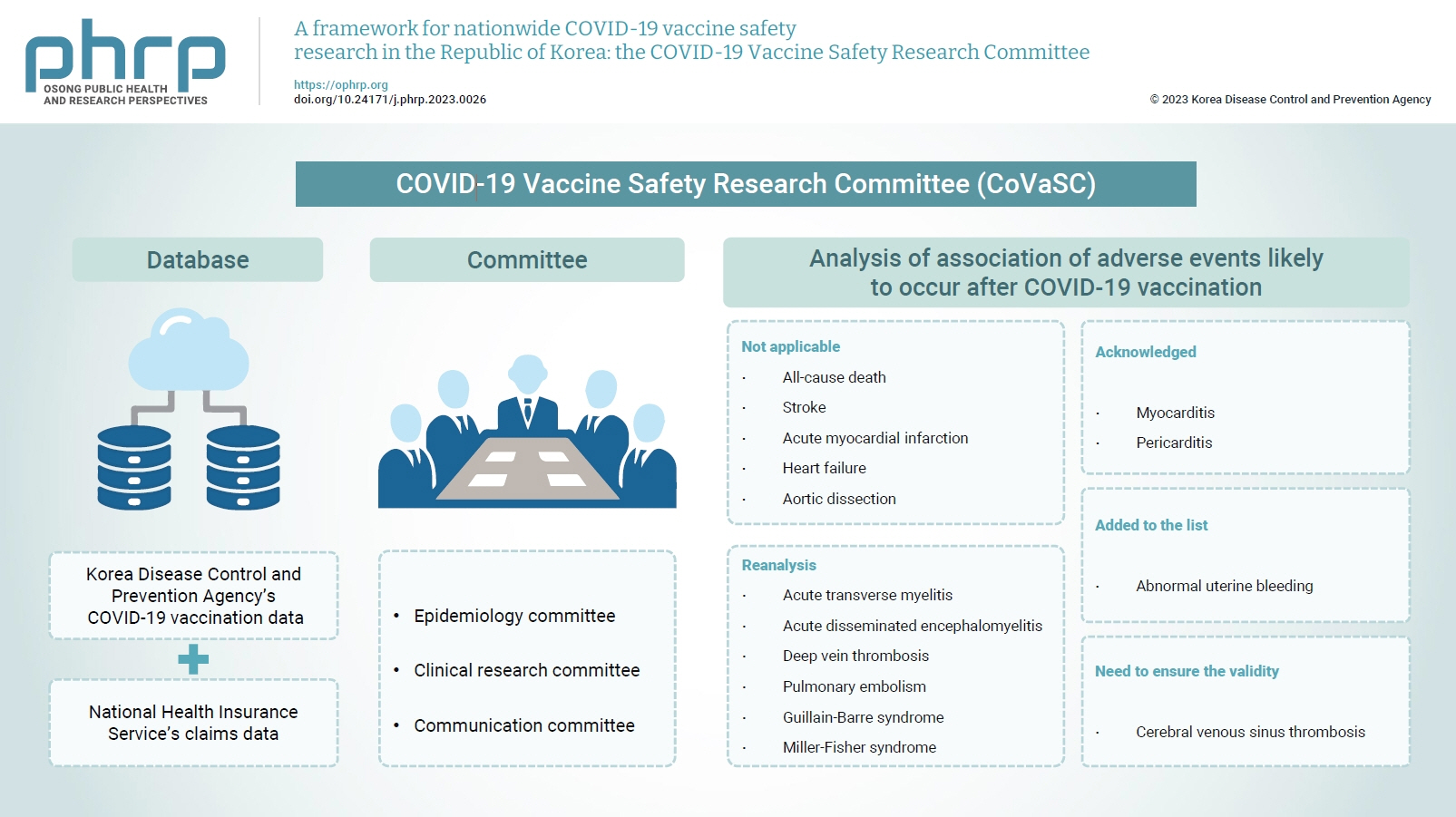
The COVID-19 Vaccine Safety Research Committee (CoVaSC) was established in November 2021 to address the growing need for independent, in-depth scientific evidence on adverse events (AEs) following coronavirus disease 2019 (COVID-19) vaccination. This initiative was requested by the Korea Disease Control and Prevention Agency and led by the National Academy of Medicine of Korea. In September 2022, the COVID-19 Vaccine Safety Research Center was established, strengthening CoVaSC’s initiatives. The center has conducted various studies on the safety of COVID-19 vaccines. During CoVaSC’s second research year, from September 29, 2022 to July 19, 2023, the center was restructured into 4 departments: Epidemiological Research, Clinical Research, Communication & Education, and International Cooperation & Policy Research. Its main activities include (1) managing CoVaSC and the COVID-19 Vaccine Safety Research Center, (2) surveying domestic and international trends in AE causality investigation, (3) assessing AEs following COVID-19 vaccination, (4) fostering international collaboration and policy research, and (5) organizing regular fora and training sessions for the public and clinicians. Causality assessments have been conducted for 27 diseases, and independent research has been conducted after organizing ad hoc committees comprising both epidemiologists and clinical experts on each AE of interest. The research process included protocol development, data analysis, interpretation of results, and causality assessment. These research outcomes have been shared transparently with the public and healthcare experts through various fora. The COVID-19 Vaccine Safety Research Center plans to continue strengthening and expanding its research activities to provide reliable, high-quality safety information to the public.
Citations
Citations to this article as recorded by
Active Surveillance for COVID-19 Vaccine Safety Using Sequential Analysis in Korea: Population-Based Retrospective Observational Study Na-Young Jeong, Haerin Cho, Heehyun Won, Suvin Park, Joongyub Lee, Hyesook Park, Nam-Kyong Choi JMIR Public Health and Surveillance.2026; 12: e75094. CrossRef
Risk of new-onset polymyalgia rheumatica following COVID-19 vaccination in South Korea: a self-controlled case-series study Jieun Woo, Mu Kyung Kim, HyunJoo Lim, Ju Hwan Kim, Hyunah Jung, Hyoun-Ah Kim, Ju-Young Shin RMD Open.2025; 11(2): e005138. CrossRef
SARS-CoV-2-Vaccine-Related Endocrine Disorders: An Updated Narrative Review Avraham Ishay, Kira Oleinikov, Elena Chertok Shacham Vaccines.2024; 12(7): 750. CrossRef
Active Surveillance for Safety Monitoring of XBB.1.5-Containing COVID-19 mRNA Vaccines in Korea Bomi Park, Hye Ah Lee, Yeonjae Kim, Chung Ho Kim, Hyunjin Park, Seunghee Jun, Hyelim Lee, Seunghyun Lewis Kwon, Yesul Heo, Hyungmin Lee, Hyesook Park Journal of Korean Medical Science.2024;[Epub] CrossRef
Development of a survey and worry score to evaluate physician burnout and wellness interventions during COVID-19 in the Rio Grande Valley: A pilot study Victoria Jacobsen, Ericka A. Vazquez, Lauren Herrera, Ruth Escalera, Daniel Salinas, Bharathi S. Gadad, Juan Carlos Lopez-Alvarenga, Kelsey Potter-Baker, Abdelaziz Hendy PLOS One.2026; 21(3): e0342993. CrossRef
Streamlining emergency nursing care post-pandemic: A lean approach for reducing wait times and improving patient and staff satisfaction in the hospital Azza Hassan Mohamed Hussein, Ebtsam Aly Omer Abou Hashish, Basmaa Ahmed Abd-Elghaffar, Nancy Sabry Hassan Elliethey BMC Nursing.2025;[Epub] CrossRef
Análisis bibliométrico sobre publicación en estudios de comunicación en revistas científicas latinoamericanas durante el período de 2020 a 2023 Felipe Anderson Rios Incio, Ángel Páez Moreno, Luis Ernesto Paz Enrique Biblios Journal of Librarianship and Information S.2024; (87): e001. CrossRef
With the introduction of coronavirus disease 2019 (COVID-19) vaccines, the Korea Disease Control and Prevention Agency (KDCA) commissioned the National Academy of Medicine of Korea to gather experts to independently assess post-vaccination adverse events. Accordingly, the COVID-19 Vaccine Safety Research Committee (CoVaSC) was launched in November 2021 to perform safety studies and establish evidence for policy guidance. The CoVaSC established 3 committees for epidemiology, clinical research, and communication. The CoVaSC mainly utilizes pseudonymized data linking KDCA’s COVID-19 vaccination data and the National Health Insurance Service’s claims data. The CoVaSC’s 5-step research process involves defining the target diseases and organizing ad-hoc committees, developing research protocols, performing analyses, assessing causal relationships, and announcing research findings and utilizing them to guide compensation policies. As of 2022, the CoVaSC completed this research process for 15 adverse events. The CoVaSC launched the COVID-19 Vaccine Safety Research Center in September 2022 and has been reorganized into 4 divisions to promote research including international collaborative studies, long-/short-term follow-up studies, and education programs. Through these enhancements, the CoVaSC will continue to swiftly provide scientific evidence for COVID-19 vaccine research and compensation and may serve as a model for preparing for future epidemics of new diseases.
Citations
Citations to this article as recorded by
Risk of anxiety disorders and insomnia following COVID-19 vaccination Haerin Cho, Joon Hyung Jung, Hwoyeon Seo, Won Chul Shin, Jung-Ick Byun, Suvin Park, Na-Young Jeong, Sanghoon Oh, Nam-Kyong Choi Journal of Psychiatric Research.2026; 192: 109. CrossRef
Active Surveillance for COVID-19 Vaccine Safety Using Sequential Analysis in Korea: Population-Based Retrospective Observational Study Na-Young Jeong, Haerin Cho, Heehyun Won, Suvin Park, Joongyub Lee, Hyesook Park, Nam-Kyong Choi JMIR Public Health and Surveillance.2026; 12: e75094. CrossRef
MIS‐C Overlap, Not Prior COVID‐19 Itself, Drives Treatment Escalation in Kawasaki Disease: A Nationwide Cohort Study Min Ji Kim, Jong Seung Kim, Jee Young Hong, Jihye You Pediatrics International.2026;[Epub] CrossRef
Postmenopausal Bleeding Risk after COVID-19 Vaccination: A Population-Based Self-Controlled Case Series Study Na-Young Jeong, HyeMin Park, SiHyun Cho, Nam-Kyong Choi Yonsei Medical Journal.2026; 67(11): 831. CrossRef
Risk of Kawasaki Disease/Multisystem Inflammatory Syndrome Following COVID-19 Vaccination in Korean Children: A Self-Controlled Case Series Study Suyeon Kim, Hwa Yeon Ko, Jeongin Oh, Dongwon Yoon, Ju Hwan Kim, Young June Choe, Ju-Young Shin Journal of Korean Medical Science.2025;[Epub] CrossRef
The association between acute transverse myelitis and COVID‐19 vaccination in Korea: Self‐controlled case series study Eunsun Lim, Yoo Hwan Kim, Na‐Young Jeong, Su‐Hyun Kim, Heehyun Won, Jong‐Seok Bae, Nam‐Kyong Choi European Journal of Neurology.2025;[Epub] CrossRef
Coronavirus disease vaccine linked menstrual changes: mobile application study Sung Eun Kim, Joseph J. Noh, Yoo-Young Lee Obstetrics & Gynecology Science.2025; 68(2): 155. CrossRef
Multilevel analysis of individual, household, and community factors influencing COVID-19 vaccination intention: evidence from the 2021 Korea Community Health Survey Ji-seon Seong, Jong-Yeon Kim Osong Public Health and Research Perspectives.2025; 16(2): 169. CrossRef
Association between COVID-19 vaccination and first healthcare utilization for chronic obstructive pulmonary disease: A nationwide population-based cohort study Sang Hyuk Kim, Seung-Hun You, Ju Won Lee, Eunji Kim, Youlim Kim, Hyun Lee, Sun-Young Jung, Ji-Yong Moon Vaccine.2025; 61: 127367. CrossRef
Evaluating Vaccine Safety Through the Vaccine Safety Datalink: A Comprehensive Review of Research Contributions Eunsun Lim, Na-Young Jeong, Heehyun Won, Nam-Kyong Choi Journal of Health Informatics and Statistics.2025; 50(2): 113. CrossRef
COVID-19 vaccination and the risk of abnormal uterine bleeding: A nationwide self-controlled case series study Na-Young Jeong, SiHyun Cho, Eunsun Lim, Jung Ryeol Lee, Jae Yen Song, Joong Shin Park, Nam-Kyong Choi Vaccine.2025; 63: 127619. CrossRef
Risk of new-onset seizures following immunization against COVID-19: a self-controlled case-series study Hwa Yeon Ko, Dongwon Yoon, Ju Hwan Kim, Han Eol Jeong, Seung Bong Hong, Won-Chul Shin, Ju-Young Shin Epidemiology and Health.2025; 47: e2025024. CrossRef
Risk of encephalitis and meningitis after COVID-19 vaccination in South Korea: a self-controlled case series analysis Ju Hwan Kim, Dongwon Yoon, Hwa Yeon Ko, Kyungyeon Jung, Jun-Sang Sunwoo, Won Chul Shin, Jung-Ick Byun, Ju-Young Shin BMC Medicine.2024;[Epub] CrossRef
The COVID-19 Vaccine Safety Research Center: a cornerstone for strengthening safety evidence for COVID-19 vaccination in the Republic of Korea Na-Young Jeong, Hyesook Park, Sanghoon Oh, Seung Eun Jung, Dong-Hyun Kim, Hyoung-Shik Shin, Hee Chul Han, Jong-Koo Lee, Jun Hee Woo, Jaehun Jung, Joongyub Lee, Ju-Young Shin, Sun-Young Jung, Byung-Joo Park, Nam-Kyong Choi Osong Public Health and Research Perspectives.2024; 15(2): 97. CrossRef
A Causality Assessment Framework for COVID-19 Vaccines and Adverse Events at the COVID-19 Vaccine Safety Research Center Seyoung Kim, Jeong Ah Kim, Hyesook Park, Sohee Park, Sanghoon Oh, Seung Eun Jung, Hyoung-Shik Shin, Jong Koo Lee, Hee Chul Han, Jun Hee Woo, Byung-Joo Park, Nam-Kyong Choi, Dong-Hyun Kim Journal of Korean Medical Science.2024;[Epub] CrossRef
To become a more stronger and safer country Jong-Koo Lee Osong Public Health and Research Perspectives.2023; 14(2): 67. CrossRef
Risk of lymphadenopathy from SARS-CoV-2 vaccination in Korea: a self-controlled case series analysis Mi-Sook Kim, Bongyoung Kim, Jeong Pil Choi, Nam-Kyong Choi, Jung Yeon Heo, Jun Yong Choi, Joongyub Lee, Sang Il Kim Epidemiology and Health.2023; 45: e2023090. CrossRef
Risk of COVID-19 transmission on long-haul flights: During the COVID-19 pandemic Jiyun Park, Gye jeong Yeom, Poowin Bunyavejchewin PLOS ONE.2024; 19(8): e0309044. CrossRef
A Possible Type IV Hypersensitivity Reaction to Older Antiepileptic Drugs During and
After Recovery from COVID-19 Infection Mohsen Khosravi Pharmacopsychiatry.2022; 55(01): 58. CrossRef
Points to consider for COVID-19 vaccine quality control and national lot release in Republic of Korea: focus on a viral vector platform Jung Hun Ju, Naery Lee, Sun-hee Kim, Seokkee Chang, Misook Yang, Jihyun Shin, Eunjo Lee, Sunhwa Sung, Jung-Hwan Kim, Jin Tae Hong, Ho Jung Oh Osong Public Health and Research Perspectives.2022; 13(1): 4. CrossRef
Broad humoral and cellular immunity elicited by one-dose mRNA vaccination 18 months after SARS-CoV-2 infection Chang Kyung Kang, Hyun Mu Shin, Pyoeng Gyun Choe, Jiyoung Park, Jisu Hong, Jung Seon Seo, Yung Hie Lee, Euijin Chang, Nam Joong Kim, Minji Kim, Yong-Woo Kim, Hang-Rae Kim, Chang-Han Lee, Jun-Young Seo, Wan Beom Park, Myoung-don Oh BMC Medicine.2022;[Epub] CrossRef
Impact of national Covid-19 vaccination Campaign, South Korea Seonju Yi, Young June Choe, Do Sang Lim, Hye Roen Lee, Jia Kim, Yoo-Yeon Kim, Ryu Kyung Kim, Eun Jung Jang, Sangwon Lee, Eunjoo Park, Seung-Jin Kim, Young-Joon Park Vaccine.2022; 40(26): 3670. CrossRef
Recent increase in the detection of human parainfluenza virus during the coronavirus disease-2019 pandemic in the Republic of Korea Heui Man Kim, Jee Eun Rhee, Nam-Joo Lee, Sang Hee Woo, Ae Kyung Park, Jaehee Lee, Cheon Kwon Yoo, Eun-Jin Kim Virology Journal.2022;[Epub] CrossRef
Trends of fear and anger on YouTube during the initial stage of the COVID-19 outbreak in South Korea Jae-Joon Lee, Jongwoo Kim, Soo-Kyoung Lee BMC Public Health.2024;[Epub] CrossRef
What is more dangerous – the disease, the vaccine or the government? Using governmentality theory to understand vaccine hesitancy among Israeli citizens in times of corona Yael Keshet, Ariela Popper-Giveon Health, Risk & Society.2022; 24(5-6): 208. CrossRef
Sensitivity of major chronic diseases and patients of different ages to the collapse of the healthcare system during the COVID-19 pandemic in China Ayub Qamar, Liu Hui Medicine.2024; 103(48): e40730. CrossRef
The COVID-19 Vaccines: Recent Development, Challenges and Prospects Yuxin Yan, Yoongxin Pang, Zhuoyi Lyu, Ruiqi Wang, Xinyun Wu, Chong You, Haitao Zhao, Sivakumar Manickam, Edward Lester, Tao Wu, Cheng Heng Pang Vaccines.2021; 9(4): 349. CrossRef
Trends of fear and anger on YouTube during the initial stage of the COVID-19 outbreak in South Korea Jae-Joon Lee, Jongwoo Kim, Soo-Kyoung Lee BMC Public Health.2024;[Epub] CrossRef
The impact of the COVID-19 pandemic on Polish orthopedics, in particular on the level of stress among orthopedic surgeons and the education process Łukasz Kołodziej, Dawid Ciechanowicz, Hubert Rola, Szymon Wołyński, Hanna Wawrzyniak, Kamila Rydzewska, Konrad Podsiadło, Jianguo Wang PLOS ONE.2021; 16(9): e0257289. CrossRef
The Role of Antigen Rapid Diagnostic Test in COVID-19 Diagnosis Ronni Mol Joji, Mohammad Shahid The Open COVID Journal.2021; 1(1): 108. CrossRef
Recurring Temporal Association Between Influenza A Epidemics and Subsequent Influenza B Dominance in Post‐Pandemic Korea, 2022−2026 Yoon Lee, Yoonsun Yoon, Ji Eun Park, Won Keun Kim, Youn Young Choi, Yun‐Kyung Kim, Changmin Kang, Young Yoo, Young June Choe Journal of Medical Virology.2026;[Epub] CrossRef
Short-term PM2.5 exposure among 3-year cancer survivors with incident cardiovascular disease before and during the COVID-19 pandemic period Hyun-Young Shin, Hyeokjong Lee, Jihun Song, Sun Jae Park, Jaewon Kim, Sangwoo Park, Hye Jun Kim, Jina Chung, Kyae Hyung Kim, Sang Min Park Atmospheric Pollution Research.2025; 16(9): 102574. CrossRef
Impact of COVID-19 on Severe Trauma Patients in Korea: A Nationwide Regional Subgroup Analysis Chung-Nyun Kim, Seok-Jun Yoon Disaster Medicine and Public Health Preparedness.2025;[Epub] CrossRef
Exploring the relationship between lifestyle factors and depressive symptoms in Korean adolescents amid the COVID-19 pandemic YoonJin Lee, Eunyeong Jang, Sejeong Park, Jinhee Lee BMC Psychiatry.2025;[Epub] CrossRef
Social Distancing in the COVID-19 Pandemic Jianghong Liu, Na Ouyang, Alina Mizrahi, Melanie L. Kornides Family & Community Health.2024; 47(1): 80. CrossRef
Effects of the coronavirus disease outbreak on the development of neurological disorders in children: A comparison of the incidence of febrile seizure and epilepsy using an interrupted time-series approach Ah-Young Kim, Ji-Hoon Na, Hye-Young Kang, Hankil Lee, Young-Mock Lee Journal of Infection and Public Health.2024; 17(1): 102. CrossRef
Application of the Time Derivative (TD) Method for Early Alert of Influenza Epidemics Seul-Ki Kang, Woo-Sik Son, Bryan Inho Kim Journal of Korean Medical Science.2024;[Epub] CrossRef
Impact of COVID-19 on the Incidence of Fragility Fracture in South Korea Seungjin Baek, Ye-Jee Kim, Beom-Jun Kim, Namki Hong Journal of Bone Metabolism.2024; 31(1): 31. CrossRef
Associations of social interactions during the COVID-19 pandemic with cognitive function among the South Korean older adults Il Yun, Yu Shin Park, Eun-Cheol Park, Hee-Won Jung, Jaeyong Shin BMC Geriatrics.2023;[Epub] CrossRef
Convolutional neural network-based crowd detection for COVID-19 social distancing protocol from unmanned aerial vehicles onboard camera Leonard Matheus Wastupranata, Rinaldi Munir Journal of Applied Remote Sensing.2023; 17(04): 1. CrossRef
Impact of non-pharmaceutical interventions targeted at the COVID-19 pandemic on the incidence of influenza-like illness in the UK Armed Forces George Otieno, Ngwa Niba Rawlings, Siew Ann Cheong PLOS ONE.2022; 17(12): e0270438. CrossRef
Impact of COVID-19 Social Distancing Mandates on Gastrointestinal Pathogen Positivity: Secondary Data Analysis Tanner Palmer, L Scott Benson, Christina Porucznik, Lisa H Gren JMIR Public Health and Surveillance.2022; 8(8): e34757. CrossRef
Exploring the drop in flu cases during the 2020–2021 season: The Italian case study Fabrizio Bert, Eleonora Cugudda, Giuseppina Lo Moro, Pietro Francesco Galvagno, Roberta Siliquini Annals of Epidemiology.2022; 76: 77. CrossRef
Effect of COVID-19-Related Interventions on the Incidence of Infectious Eye Diseases: Analysis of Nationwide Infectious Disease Incidence Monitoring Data Woo-Ri Lee, Li-Hyun Kim, Gyeong-Min Lee, Jooyoung Cheon, Young Dae Kwon, Jin-Won Noh, Ki-Bong Yoo International Journal of Public Health.2022;[Epub] CrossRef
Associations Between Conventional Healthy Behaviors and Social Distancing During the COVID-19 Pandemic: Evidence From the 2020 Community Health Survey in Korea Rang Hee Kwon, Minsoo Jung Journal of Preventive Medicine and Public Health.2022; 55(6): 568. CrossRef
Solidarity is for other people: identifying derelictions of solidarity in responses to COVID-19 Peter West-Oram Journal of Medical Ethics.2021; 47(2): 65. CrossRef
Impact of social distancing on incidence of vaccine‐preventable diseases, South Korea Hyo Eun Yun, Bo Young Ryu, Young June Choe Journal of Medical Virology.2021; 93(3): 1814. CrossRef
Nonpolio Enterovirus Activity during the COVID-19 Pandemic, Taiwan, 2020 Shu-Chen Kuo, Hsiao-Hui Tsou, Hsiao-Yu Wu, Ya-Ting Hsu, Fang-Jing Lee, Shu-Man Shih, Chao A. Hsiung, Wei J. Chen Emerging Infectious Diseases.2021; 27(1): 306. CrossRef
Impact of non-pharmaceutical interventions targeted at COVID-19 pandemic on influenza burden – a systematic review Lara Marleen Fricke, Stephan Glöckner, Maren Dreier, Berit Lange Journal of Infection.2021; 82(1): 1. CrossRef
Epidemiological dynamics of enterovirus D68 in the United States and implications for acute flaccid myelitis Sang Woo Park, Margarita Pons-Salort, Kevin Messacar, Camille Cook, Lindsay Meyers, Jeremy Farrar, Bryan T. Grenfell Science Translational Medicine.2021;[Epub] CrossRef
Qualitative Analysis of an influenza model with biomedical interventions S.A. Pedro, H. Rwezaura, A. Mandipezar, J.M. Tchuenche Chaos, Solitons & Fractals.2021; 146: 110852. CrossRef
The Impact of COVID-19 Interventions on Influenza and Mycobacterium Tuberculosis Infection Yiman Geng, Gang Li, Leiliang Zhang Frontiers in Public Health.2021;[Epub] CrossRef
Shifting Patterns of Respiratory Virus Activity Following Social Distancing Measures for Coronavirus Disease 2019 in South Korea Sangshin Park, Ian C Michelow, Young June Choe The Journal of Infectious Diseases.2021; 224(11): 1900. CrossRef
Asthma, Allergic Rhinitis, and Atopic Dermatitis Incidence in Korean Adolescents before and after COVID-19 Hyo Geun Choi, Il Gyu Kong Journal of Clinical Medicine.2021; 10(15): 3446. CrossRef
Impact of Social Distancing on Kawasaki Disease-associated Hospitalization, South Korea Jung Hwangbo, Jue Seong Lee, Seung Ah Choe, Young June Choe Pediatric Infectious Disease Journal.2021; 40(10): e383. CrossRef
Surveillance of seasonal respiratory viruses among Chilean patients during the COVID‐19 pandemic Luis A. Alonso‐Palomares, C. Joaquín Cáceres, Rodrigo Tapia, Paulina Aguilera‐Cortés, Santiago Valenzuela, Fernando Valiente‐Echeverría, Ricardo Soto‐Rifo, Aldo Gaggero, Gonzalo P. Barriga Health Science Reports.2021;[Epub] CrossRef
The Social Distance Scale (v1): A Screening Instrument to Assess Patient Adherence to Prevention Strategies during Pandemics Michaela Prachthauser, Jeffrey E. Cassisi, Thien-An Le, Andel V. Nicasio International Journal of Environmental Research an.2020; 17(21): 8158. CrossRef
Psychological Typhoon Eye Effect During the COVID-19 Outbreak Guixiang Wang, Yan Zhang, Simiao Xie, Pu Wang, Guanghui Lei, Yueran Bian, Fei Huang, Jingyuan Zhang, Xiaochen Cao, Na Luo, Mingyan Luo, Qiang Xiao Frontiers in Public Health.2020;[Epub] CrossRef
Objectives
Our aim was to evaluate Korea’s Pandemic Influenza Preparedness Plan. Methods
We conducted a sensitivity analysis on the expected number of outpatients and hospital bed occupancy, with 1,000,000 parameter combinations, in a situation of pandemic influenza, using the mathematical simulation program InfluSim. Results
Given the available resources in Korea, antiviral treatment and social distancing must be combined to reduce the number of outpatients and hospitalizations sufficiently; any single intervention is not enough. The antiviral stockpile of 4–6% is sufficient for the expected eligible number of cases to be treated. However, the eligible number assumed (30% for severe cases and 26% for extremely severe cases) is very low compared to the corresponding number in European countries, where up to 90% of the population are assumed to be eligible for antiviral treatment. Conclusions
A combination of antiviral treatment and social distancing can mitigate a pandemic, but will only bring it under control for the most optimistic parameter combinations.
Citations
Citations to this article as recorded by
Insights on Influenza Control Through Vaccination for the 2023-2024 Season in the USA: Mathematical Modeling, Optimal Control, and Sensitivity Analysis Ana-Maria Croicu Bulletin of Mathematical Biology.2025;[Epub] CrossRef
A systematic literature review on public health and healthcare resources for pandemic preparedness planning Berend H. H. Beishuizen, Mart L. Stein, Joeri S. Buis, Alma Tostmann, Caroline Green, Jim Duggan, Máire A. Connolly, Chantal P. Rovers, Aura Timen BMC Public Health.2024;[Epub] CrossRef
Working memory capacity predicts individual differences in social-distancing compliance during the COVID-19 pandemic in the United States Weizhen Xie, Stephen Campbell, Weiwei Zhang Proceedings of the National Academy of Sciences.2020; 117(30): 17667. CrossRef
Assessment of Intensive Vaccination and Antiviral Treatment in 2009 Influenza Pandemic in Korea Chaeshin Chu, Sunmi Lee Osong Public Health and Research Perspectives.2015; 6(1): 47. CrossRef
Doing Mathematics with Aftermath of Pandemic Influenza 2009 Hae-Wol Cho, Chaeshin Chu Osong Public Health and Research Perspectives.2015; 6(1): 1. CrossRef
Roll the Dice Hae-Wol Cho, Chaeshin Chu Osong Public Health and Research Perspectives.2014; 5(5): 243. CrossRef
Journal Publishing: Never Ending Saga Hae-Wol Cho, Chaeshin Chu Osong Public Health and Research Perspectives.2014; 5(1): 1. CrossRef
Summing Up Again Hae-Wol Cho, Chaeshin Chu Osong Public Health and Research Perspectives.2014; 5(4): 177. CrossRef
Years of Epidemics (2009–2011): Pandemic Influenza and Foot-and-Mouth Disease Epidemic in Korea Hae-Wol Cho, Chaeshin Chu Osong Public Health and Research Perspectives.2013; 4(3): 125. CrossRef
Public Health Crisis Preparedness and Response in Korea Hye-Young Lee, Mi-Na Oh, Yong-Shik Park, Chaeshin Chu, Tae-Jong Son Osong Public Health and Research Perspectives.2013; 4(5): 278. CrossRef
Was the Mass Vaccination Effective During the Influenza Pandemic 2009–2010 in Korea? Hae-Wol Cho, Chaeshin Chu Osong Public Health and Research Perspectives.2013; 4(4): 177. CrossRef
How to Manage a Public Health Crisis and Bioterrorism in Korea Hae-Wol Cho, Chaeshin Chu Osong Public Health and Research Perspectives.2013; 4(5): 223. CrossRef
Objectives
To investigate the possible link between <i>Vibrio vulnificus</i> population size in seawater and water temperature. Methods
We collected incidence and water temperature data in coastal regions of Korea and constructed a mathematical model that consisted of three classes; susceptible fish, infected fish available to humans, and infected humans. Results
We developed a mathematical model to connect <i>V. vulnificus</i> incidence with water temperature using estimated bacterial population sizes and actual coastal water temperatures. Conclusion
Increased <i>V. vulnificus</i> population sizes in marine environments may increase the risk of infection in people who eat at coastal restaurants in Korea. Furthermore, we estimated the near-future number of infected patients using our model, which will help to establish a public-health policy to reduce the disease burden.
Citations
Citations to this article as recorded by
Predicting the Global Distribution of Vibrio vulnificus Under Changing Climate Scenarios Jan Andrew L. Bautista, Christine R. Hernaez, Jose Carlos L. Nicdao, Jed Miguel P. Santos, Loida M. Recopuerto-Medina, Nikki Heherson A. Dagamac EcoHealth.2026; 23(3): 556. CrossRef
mGem: A perfect storm in the era of global warming—the convergence between thermotolerant fungi and altered immunity Frederic Lamoth, Dimitrios P. Kontoyiannis, Anuradha Chowdhary mBio.2026;[Epub] CrossRef
Simulating Vibrio vulnificus in the Ala Wai Canal using a coupled microbial-hydrodynamic numerical model Emma S. Nuss, Brian Powell, Conor Jerolmon, Olivia D. Nigro, Andrian P. Gajigan, Shaun Giancaterino, Grieg F. Steward Estuarine, Coastal and Shelf Science.2025; 313: 109113. CrossRef
Impact of the future coastal water temperature scenarios on the risk of potential growth of pathogenic Vibrio marine bacteria Habiba Ferchichi, André St-Hilaire, Taha B.M.J. Ouarda, Benoît Lévesque Estuarine, Coastal and Shelf Science.2021; 250: 107094. CrossRef
Effect of Seawater Temperature Increase on the Occurrence of Coastal Vibrio vulnificus Cases: Korean National Surveillance Data from 2003 to 2016 Jungsook Kim, Byung Chul Chun International Journal of Environmental Research an.2021; 18(9): 4439. CrossRef
Spatiotemporal Dynamics of Vibrio spp. within the Sydney Harbour Estuary Nachshon Siboni, Varunan Balaraju, Richard Carney, Maurizio Labbate, Justin R. Seymour Frontiers in Microbiology.2016;[Epub] CrossRef
Genotypic Diversity and Population Structure of Vibrio vulnificus Strains Isolated in Taiwan and Korea as Determined by Multilocus Sequence Typing Hye-Jin Kim, Jae-Chang Cho, Paul J Planet PLOS ONE.2015; 10(11): e0142657. CrossRef
From canonical to non-canonical cyclic nucleotides as second messengers: Pharmacological implications Roland Seifert, Erich H. Schneider, Heike Bähre Pharmacology & Therapeutics.2015; 148: 154. CrossRef
Journal Publishing: Never Ending Saga Hae-Wol Cho, Chaeshin Chu Osong Public Health and Research Perspectives.2014; 5(1): 1. CrossRef
Roll the Dice Hae-Wol Cho, Chaeshin Chu Osong Public Health and Research Perspectives.2014; 5(5): 243. CrossRef
Summing Up Again Hae-Wol Cho, Chaeshin Chu Osong Public Health and Research Perspectives.2014; 5(4): 177. CrossRef
Years of Epidemics (2009–2011): Pandemic Influenza and Foot-and-Mouth Disease Epidemic in Korea Hae-Wol Cho, Chaeshin Chu Osong Public Health and Research Perspectives.2013; 4(3): 125. CrossRef
The Road Less Traveled Chaeshin Chu Osong Public Health and Research Perspectives.2011; 2(1): 1. CrossRef
The Division of Vaccine-Preventable Disease Control and National Immunization Program of the Korea Centers for Disease Control and Prevention has prepared a plan of action as a guide for key actions that will be taken if a poliovirus outbreak occurs in the Republic of Korea. The history of poliomyelitis and vaccination against poliovirus in the nation was reviewed and the routine surveillance procedures that are currently in place were described. The principles and specific actions for an effective response to a poliovirus outbreak were prepared. The guidelines clearly outline the actions to be taken in case of a polio outbreak. When a suspected case of poliovirus infection is reported, an immediate epidemiological investigation is to be conducted. The response to a poliovirus outbreak includes case isolation, management of potential contacts and immunization. All stakeholders are to be made aware of what key actions should be taken at each stage of the response to a poliovirus outbreak in the nation.
Citations
Citations to this article as recorded by
Non-Polio Enteroviruses from Acute Flaccid Paralysis Surveillance in Korea, 2012–2019 Youngsil Yoon, Yong-Pyo Lee, Deog-Yong Lee, Hye-Jin Kim, June-Woo Lee, Sangwon Lee, Chun Kang, Wooyoung Choi, Joong Hyun Bin, Young Hoon Kim, Myung-Guk Han, Hae Ji Kang Viruses.2021; 13(3): 411. CrossRef
Estimation of the Direct Cost of Poliomyelitis Rehabilitation Treatment to Pakistani Patients: A 53-Year Retrospective Study Atta Abbas Naqvi, Syed Baqir Shyum Naqvi, Fatima Zehra, Ashutosh Kumar Verma, Saman Usmani, Sehrish Badar, Rizwan Ahmad, Niyaz Ahmad Applied Health Economics and Health Policy.2018; 16(6): 871. CrossRef
Revision of the National Action Plan in Response to Poliovirus Importation in Korea Young-Joon Park, Joon-Woo Kim, Yoon Hyung Kwon, Geun-Ryang Bae, Duk-Hyoung Lee Osong Public Health and Research Perspectives.2013; 4(2): 117. CrossRef
Fires in the Neighborhood Hae-Wol Cho, Chaeshin Chu Osong Public Health and Research Perspectives.2013; 4(2): 67. CrossRef
The Road Less Traveled Chaeshin Chu Osong Public Health and Research Perspectives.2011; 2(1): 1. CrossRef
Objectives
The aim of this study was to review the epidemiologic data of rubella and congenital rubella syndrome (CRS) supplied by surveillance systems from 2001 to 2009 and to propose measures to improve the quality of the surveillance system in the Republic of Korea. Methods
The epidemiological data for rubella and CRS cases reported to the Korea Centers for Disease Control and Prevention from 2001 to 2009 were retrospectively reviewed, and insurance reimbursement data from the Korea National Health Insurance Review Agency were collected for comparison. Results
The number of yearly reported rubella cases to the Korea Centers for Disease Control and Prevention from 2001 to 2009 was 128, 24, 8, 24, 15, 12, 35, 30, and 36, respectively. The occurrence of rubella shifted to a slightly higher age group during the 9-year period, i.e. from 0–9 years to 10–19 years. Among the 309 reported rubella cases, three were confirmed cases of CRS. In addition, according to data sourced from Health Insurance Review Agency, 24, 19, 19, 9, and 5 CRS cases were reported for medical insurance reimbursement from 2005 to 2009, respectively. Conclusion
According to available surveillance data, the reported cases of rubella and CRS were not high, but a more detailed surveillance with emphasis on susceptible women of childbearing age is necessary for better monitoring and control of rubella and CRS in the Republic of Korea.
Citations
Citations to this article as recorded by
Unveiling the Hidden Burden of TORCH Infections in HIV Patients: A Residual Serum Seroepidemiological Study in a Korean Metropolitan City Hye Jin Shi, Myung-Deok Kim-Jeon, Jung-Hee Kim, Kyung-Ae Kim, Yoonseon Park, Juyeong Lee, Shin Hee Hong, Jaeyong Song, Meyong Hee Kim, Munju Kwon, Joong Sik Eom Infection & Chemotherapy.2025; 57(4): 578. CrossRef
Rubella seroepidemiology among Korean women: Two decades after a combined vaccination strategy Seung-Ah Choe, Young June Choe, Jin Young Paek International Journal of Infectious Diseases.2020; 94: 25. CrossRef
Laboratory confirmation of congenital rubella syndrome in South Korea in 2017: A genomic epidemiological investigation Jin-Sook Wang, Hye Min Lee, Su Jin Kim, Jun-Sub Kim, Chun Kang, Chae won Jung, Hye kyung In, Dong Hee Seo, Dong Han Lee, Yoon-Seok Chung Vaccine.2020; 38(44): 6868. CrossRef
TORCH (toxoplasmosis, rubella, cytomegalovirus, and herpes simplex virus) screening of small for gestational age and intrauterine growth restricted neonates: efficacy study in a single institute in Korea Mi Hae Chung, Chan Ok Shin, Juyoung Lee Korean Journal of Pediatrics.2018; 61(4): 114. CrossRef
Does Rubella Cause Autism: A 2015 Reappraisal? Jill Hutton Frontiers in Human Neuroscience.2016;[Epub] CrossRef
Immunogenicity and safety of a tetravalent measles-mumps-rubella-varicella vaccine: an open-labeled, randomized trial in healthy Korean children Sung-Ho Cha, Seon-Hee Shin, Taek-jin Lee, Chang Hwi Kim, Michael Povey, Hwang Min Kim, Ouzama Nicholson Clinical and Experimental Vaccine Research.2014; 3(1): 91. CrossRef