Introduction
Diabetes mellitus has emerged as a major global public health issue. Although rates vary across regions, the overall trend in diabetes prevalence appears consistent across many populations [
1]. The International Diabetes Federation Diabetes Atlas (2025) reports that 11.1% of adults aged 20 to 79—approximately 1 in 9 people—live with diabetes, and more than 4 in 10 of these individuals are unaware of their condition [
2]. Approximately 28.7% of individuals with diabetes in Turkey are older adults, and it was estimated that the age-adjusted diabetes prevalence in this age group would reach 35.1% by 2021. Current data indicate a 35.2% increase in diabetes prevalence in the general population, whereas the increase among older adults is 51.3%. The rise in diabetes prevalence among older adults is therefore about 1.5 times higher than that observed in the general population [
3].
When managing diabetes in older adults, priority should be given to individualized care strategies. Approximately 90% of older adults with diabetes have type 2 diabetes. Treatment plans should be tailored to patient needs to prevent complications effectively and achieve optimal glycemic control in this population. Maintaining quality of life and preventing complications in older adults with diabetes largely depend on adequate self-care skills [
4].
Regular monitoring of blood glucose levels is essential for achieving glycemic control [
5]. However, comorbidities such as hypertension, cardiovascular disease, and osteoarthritis often lead to polypharmacy, which increases the risk of drug interactions and complicates treatment adherence [
6].
Factors such as visual impairment, cognitive decline, and social isolation can further hinder medication adherence in older adults. Therefore, lifestyle interventions—including education, nutrition counselling, and physical activity—should be tailored to patients’ ages, comorbid conditions, and functional status. The primary goal in managing the care of these individuals is to maintain quality of life and functional independence for as long as possible [
4].
The aim of this study is to analyze the relationship between medication self-efficacy and quality of life in older adults with diabetes and to provide baseline data to improve treatment processes for older individuals with diabetes. By determining the effect of medication self-efficacy on quality of life, this research aims to support the self-management capacities of older adults, improve their overall well-being, and provide valuable information for healthcare providers and policymakers.
Few studies have directly examined the relationship between medication self-efficacy and quality of life in older adults with diabetes. Current research generally focuses on the broader diabetes population and does not sufficiently address the impact of factors such as cognitive decline, polypharmacy, and social isolation on medication management in older adults [
4,
7]. Furthermore, treatment adherence is closely related to an individual’s medication management skills and self-confidence [
8]. This study evaluates the relationship between self-efficacy and quality of life in older individuals in the Turkish context using validated scales, thereby demonstrating the impact of self-management skills on quality of life with concrete data. The findings may contribute to non-pharmacological interventions and self-efficacy–based care models.
Materials and Methods
Study Design and Setting
This study used a descriptive-analytical cross-sectional design to examine the relationship between diabetes medication self-efficacy and quality of life in older adults with diabetes. The research included 192 older adults who visited the diabetes clinic of a public hospital in Istanbul. Data were collected between June and October 2024. Participants were informed about the study.
Participants
This study targeted patients aged 65 years and older who had been diagnosed with diabetes and had no communication or cognitive difficulties that could hinder participation. Data were collected through face-to-face interviews with participants, who voluntarily provided written informed consent.
The sample comprised older adults who visited the diabetes clinic of a public hospital in Istanbul. The sample size was calculated using G*Power ver. 3.1.9.4 (University of Düsseldorf) for correlation analysis, with an effect size of 0.3, an alpha level of 0.05 (2-tailed), and statistical power (1−β error probability) of 0.95. At least 134 participants were required. To reduce the margin of error, increase statistical power, improve generalizability, and facilitate subgroup analyses, 192 participants were included.
Measurements/Instruments
The questionnaire comprised a personal information form developed by the researchers, containing 17 items on sociodemographic, personal, and disease-specific characteristics. It also included 19 items from the diabetes medication self-efficacy scale, originally developed by Sleath et al. [
9] in 2016 and adapted into Turkish by Kavuran and Turkoglu [
10] in 2022 following validity and reliability testing. In addition, 13 items from the CASP-19 quality of life scale for older adults, originally developed by Hyde et al. [
11] in 2003 and adapted into Turkish by Turkoglu and Adıbelli [
12] in 2014 after validity and reliability studies, were used to assess quality of life.
Demographic information form
This form was used to collect participants’ sociodemographic and diabetes-related information.
Diabetes medication self-efficacy scale
The self-efficacy scale was developed by Sleath et al. [
9] in 2016. The Turkish version was adapted and validated by Kavuran and Turkoglu [
10] with permission from the original authors. The scale comprises 19 items and is evaluated using a 3-point Likert scale (1, not at all confident; 2, confident; 3, very confident). Total scores range from 19 (low self-efficacy) to 57 (high self-efficacy), with higher scores indicating greater medication adherence self-efficacy. The Cronbach alpha coefficient for the original scale was 0.94. In this study, the reliability coefficients for the subscales were as follows: necessity, 0.70; busyness, 0.83; anxiety, 0.90; and overall scale, 0.93. These values indicate high internal consistency. Thus, the scale demonstrates high construct validity and internal consistency in both the original version and the Turkish adaptation.
CASP-19 Quality of Life Scale for Older Adults
CASP-19 was developed by Hyde et al. [
11] in 2003. The Turkish version (CASP-13) was validated in 2014 by Turkoglu and Adıbelli [
12] with the authors’ permission. This version consists of 13 items across 2 factors. Each item is rated on a 4-point scale (0, never; 1, rarely; 2, sometimes; 3, often), yielding a total score ranging from 0 to 39. Higher scores indicate better perceived quality of life. In the original study, Cronbach alpha for the overall scale was 0.91; the subscales had values of 0.93 for autonomy and satisfaction and 0.75 for perceived limitations. In our study, these values were: autonomy and satisfaction, 0.86; perceived limitations, 0.76; and overall scale, 0.76, indicating high reliability. These findings demonstrate that the scale exhibits high levels of construct validity and internal consistency in both the original version and the Turkish adaptation.
Data Collection
Data were collected between June and October 2024. Participants were informed about the purpose of the study and provided both verbal and written consent prior to participation. Data collection utilized a demographic information form, a disease-specific characteristics form, the diabetes medication self-efficacy scale for older adults with diabetes, and the CASP quality of life scale for older adults. The inclusion criteria were as follows: individuals aged 65 and over, diagnosed with diabetes, receiving diabetes treatment, without visual or hearing impairments, able to communicate verbally, and willing to participate voluntarily. During data collection, the researchers distributed the questionnaires to participants, who were asked to complete them independently. For participants with literacy difficulties, researchers read the forms aloud and recorded the participants’ verbal responses.
Data Analysis
Data were analyzed using IBM SPSS Statistics ver. 27.0 (IBM Corp.). Frequency tables and descriptive statistics were used to summarize the data. Non-parametric statistical tests were employed for variables that did not follow a normal distribution. The Mann-Whitney U-test (Z statistic) was used for comparisons between 2 independent groups, while the Kruskal-Wallis H test (χ2 statistic) was used for comparisons between 3 or more groups. Relationships between non-normally distributed quantitative variables were analyzed using the Spearman rank correlation coefficient.
Ethical Considerations
The study was approved by the Ethics Committee of Istanbul Esenyurt University (approval number: E-12483425-604.01-45665, dated 02.05.2024, Meeting No: 2024-04) in accordance with the principles of the Declaration of Helsinki. Participants were informed about the objectives of the study, were assured of confidentiality, and provided both verbal and written informed consent prior to participation.
Results
General Characteristics of the Study Population
Sociodemographic characteristics of the participants are presented in
Table 1, while clinical characteristics are presented in
Table 2.
Scale Scores
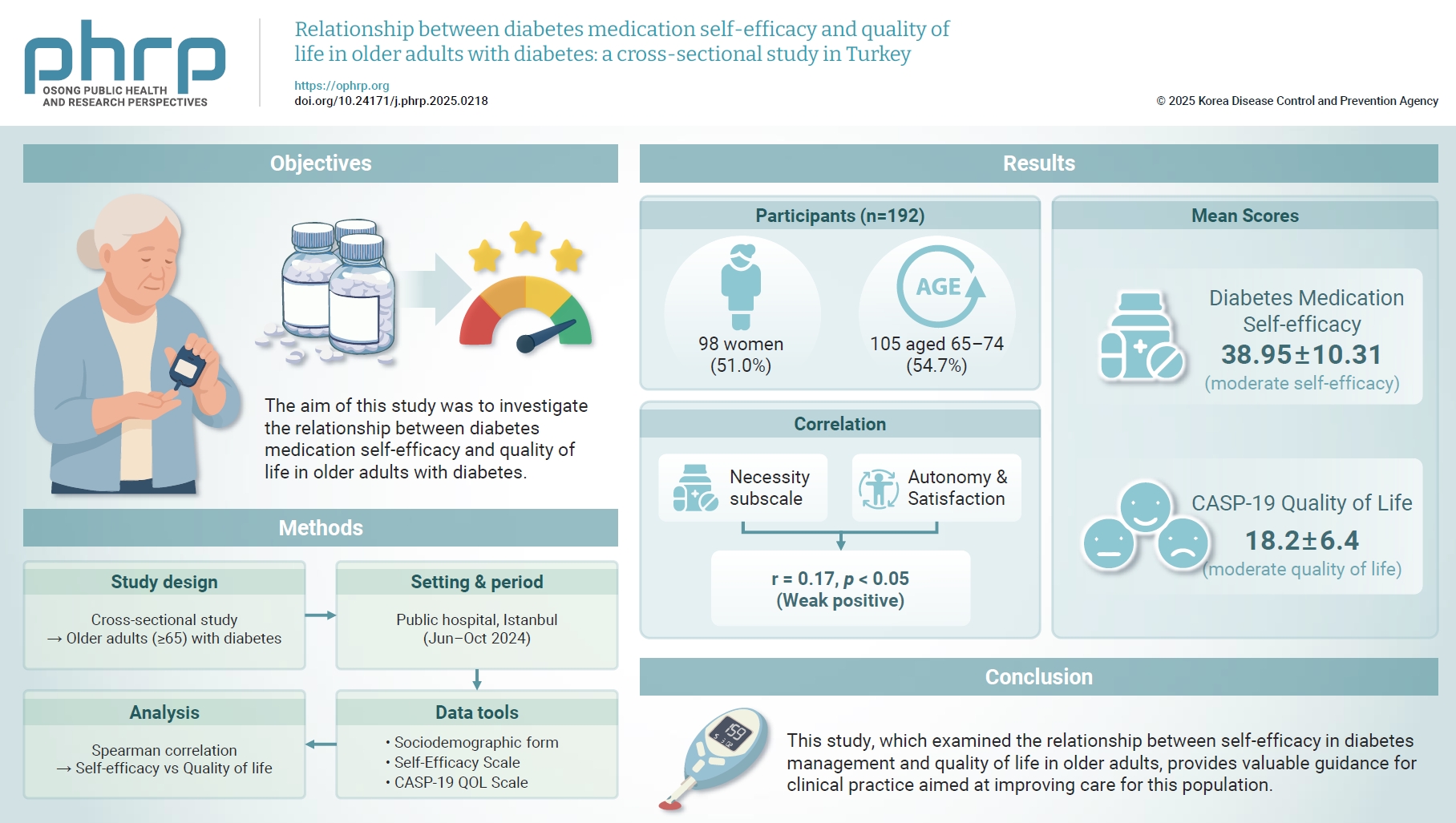
Table 3 presents descriptive statistics for participants’ scores on the administered scales. The mean score on the diabetes medication self-efficacy scale was 38.95±10.31, while the mean score on the CASP-19 quality of life scale was 18.24±6.37.
Relationship between Diabetes Medication Self-Efficacy and Quality of Life in Older Adults
Table 4 presents a comparison of diabetes medication self-efficacy and quality of life among older adults with diabetes, based on their demographic and clinical characteristics.
For overall CASP-19 scores, significantly higher quality of life levels were observed among male participants, individuals aged 65 to 74, those who were married, workers, individuals with a secondary school education, participants who reported equal income and expenses, those living with a spouse and children, individuals diagnosed with diabetes for less than 1 year, those without comorbid chronic diseases, individuals receiving oral antidiabetic treatment, and those who exercised regularly.
Regarding diabetes medication self-efficacy, significantly higher scores were noted among participants aged 65 to 74, housewives, illiterate individuals, those residing in districts (rather than central urban areas), those living with their children, and those who did not engage in daily exercise (
Table 4).
Comparison of the Relationship Between Diabetes Medication Self-Efficacy and Quality of Life in Older Adults
Very weak but statistically significant positive correlations were identified between the necessity subscale of self-efficacy and both the autonomy and satisfaction subscale and the CASP-19 total score (
p<0.05). As necessity scores increased, autonomy and satisfaction scores, as well as the overall CASP-19 score, tended to increase (
Table 5).
Discussion
Summary of Findings
This study investigated the relationship between medication self-efficacy and quality of life in older adults with diabetes. Our findings indicate that as medication self-efficacy increases in this population, quality of life also improves. The results highlight the importance of strengthening medication self-efficacy within medication management, with the potential to enhance overall well-being and health outcomes in this vulnerable group.
CASP-19 Findings
The average score of participants on the CASP-19 quality of life scale was 18.24±6.37, indicating moderate quality of life. Similar findings were reported by Yildirim et al. [
13] (19.36±7.00) and by Korkmaz [
14] (18.1±6.2). A moderate quality of life suggests that well-being is negatively affected by the difficulties encountered in managing health problems and chronic diseases; this underscores the need for multidisciplinary interventions to improve quality of life.
The study found that men, individuals aged 65 to 74, and married participants had significantly higher CASP-19 scores compared with other groups. These findings are consistent with those of Deger and Ordu [
15], who reported higher quality of life scores among these demographic groups. Associated factors—such as stronger social support structures and maintained functional capacity—may positively influence quality of life. This highlights the importance of considering demographic factors in diabetes care for older adults.
Consistent with our findings, Yildirim et al. [
13] observed that individuals with higher income levels and those living with their spouses or children had significantly higher quality of life scores. Strong social support systems and economic resources can facilitate access to healthcare services and positively influence psychosocial well-being. This underscores the critical role of social environment and economic status in interventions aimed at improving quality of life.
Participants diagnosed with diabetes for less than 1 year or for 1 to 3 years had significantly higher CASP-19 scores compared to those with a disease duration exceeding 5 years. Similar results have been reported by Em et al. [
16]. Shorter disease duration, fewer adjustment difficulties, and higher treatment adherence in the early stages appear to represent key factors in maintaining quality of life.
The CASP-19 scores of individuals without additional chronic conditions were significantly higher than those of individuals with comorbid conditions. Rashidi et al. [
17] similarly noted higher quality of life scores in individuals without chronic conditions, and other studies report comparable findings [
18–
23]. This may be interpreted as the absence of additional disease burden positively impacting physical functioning, treatment adherence, and psychosocial well-being, thereby improving quality of life. Moreover, complications and management difficulties arising from multiple chronic conditions likely contribute to a decline in quality of life.
Participants who engaged in regular exercise had significantly higher CASP-19 scores than those who exercised occasionally. This aligns with the existing literature indicating that exercise supports physiological well-being and confers psychosocial benefits that positively influence quality of life [
15,
24]. These findings suggest that exercise not only supports physiological well-being but also enhances quality of life through its psychosocial effects. In addition, the role of regular physical activity in improving treatment adherence and reducing the risk of complications in chronic disease management likely contributes to this difference.
In summary, while social environment and economic resources enhance quality of life, the burden of chronic disease and lack of physical activity have a negative impact. These findings underscore the need for multifaceted and individualized strategies to improve the quality of life of older adults with diabetes.
Diabetes Medication Self-Efficacy Findings
The average self-efficacy score for diabetes medications among older adults was 38.95±10.31, indicating moderate self-efficacy. Similar scores were reported by Kaleli [
25] in 2024 (35.02±5.44) and by Genc and Uslu [
26] in 2023(38.60±6.00). Moderate medication management self-efficacy suggests that patients may have difficulty adhering to treatment consistently, highlighting the importance of individualized support and education-based interventions to improve treatment adherence and quality of life.
No significant difference was observed in diabetes medication self-efficacy scores between patients with and without additional chronic conditions. This finding is consistent with the existing literature, which suggests that comorbidities may not directly affect perceptions of self-efficacy regarding diabetes medication use [
27,
28]. It indicates that the presence of additional chronic conditions does not directly influence self-efficacy and highlights the importance of individual factors and support mechanisms in treatment management.
Male participants exhibited significantly higher self-efficacy scores for diabetes medication usage than female participants. Our results are consistent with findings indicating better medication adherence among men than women [
14,
29,
30]. Gender differences may influence self-efficacy and treatment attitudes in chronic disease management. Therefore, gender-sensitive interventions that enhance self-efficacy in male patients may be an effective approach to improving treatment adherence and quality of life.
Older adults aged 65 to 74 had significantly higher self-efficacy regarding diabetes medications than other age groups. The data largely align with relevant studies in the literature [
31,
32]. Increasing self-efficacy in middle-aged and older adults positively affects treatment adherence and quality of life; therefore, age-specific interventions are critical for improving health outcomes.
Unmarried older adults had significantly higher diabetes medication self-efficacy scores than married individuals. Similar findings have been reported previously [
33]. This underscores the importance of including married patients in support programs designed to increase self-efficacy in medication use.
Self-efficacy scores among participants who were housewives, workers, or retirees were significantly higher than those of participants in other occupations. Similar trends have been reported [
31,
33]. Occupational status may influence individuals’ confidence and perceived competence in medication management.
Additionally, older adults without formal education demonstrated significantly higher self-efficacy in diabetes medication use than those with higher education levels. This finding aligns with studies reporting lower medication adherence among literate individuals [
33]. Conversely, other research has reported lower medication adherence scores among non-literate participants [
14]. The higher self-efficacy observed among non-literate individuals in our study may be related to personal experiences, social support mechanisms, and the quality of communication with healthcare professionals.
The self-efficacy scores for diabetes medications among participants residing in rural districts were significantly higher than those among participants living in urban areas. This finding is consistent with studies measuring self-efficacy in people with diabetes [
34]. Perceptions of self-efficacy regarding medication management among patients in rural and semi-urban areas are influenced by factors such as access to healthcare services and social support. Therefore, this underscores the importance of developing health policies and education programs tailored to regional needs.
When it comes to exercise, individuals who did not exercise daily had significantly higher diabetes medication self-efficacy scores than those who exercised daily. Similar trends have been reported in the literature [
28]. This counterintuitive finding, which indicates an unexpected relationship between physical activity levels and perceived self-efficacy in medication use, suggests that individuals who do not exercise regularly may exhibit more cautious and controlled attitudes and behaviors regarding medication adherence. Additionally, it points to complex interactions between lifestyle choices and treatment adherence among older adults with diabetes and warrants more comprehensive research.
According to the study results, the overall diabetes medication self-efficacy scores of individuals living with both their spouse and children were significantly higher than those of individuals living only with their children or alone. Other studies have not found a significant difference in diabetes self-efficacy based on living arrangement [
34,
35]. Our finding suggests that social support and family structure may positively affect perceptions of medication self-efficacy in older adults with diabetes.
Overall, these findings emphasize the importance of considering both individual and environmental factors in diabetes management and support the development of multidisciplinary and personalized approaches.
Self-Efficacy and Quality of Life Findings Regarding Diabetes Medications in Geriatric Patients with Diabetes
In this study, the measurements revealed a significant, positive relationship between self-efficacy in medication use and quality of life. This finding suggests that perceived self-efficacy in diabetes management plays a decisive role in the overall health status and quality of life of older individuals. Similarly, the literature reports that diabetes-related complications negatively affect quality of life [
36,
37], that treatment adherence improves quality of life [
38,
39], and that medication adherence is significantly related to quality of life [
8]. Additionally, a study by Rosli et al. [
31] showed that high self-efficacy regarding medication use positively affects an individual’s quality of life. In this context, our findings are consistent with the existing literature and highlight that strengthening one’s perception of self-efficacy in diabetes treatment is an important factor that not only increases treatment adherence but also supports quality of life. Especially in older adults, given that chronic disease management is closely associated with individual psychosocial resources, interventions aimed at increasing medication self-efficacy may provide meaningful benefits for both health outcomes and quality of life.
Conclusion and Recommendations
This study highlights the impact of self-efficacy in diabetes treatment on the quality of life of older individuals and presents findings that could contribute to both clinical practice and health policy in healthcare for older adults. The relationship between self-efficacy in the use of diabetes medications and quality of life in older adults was examined, with individuals with higher self-efficacy in medication use exhibiting significantly higher overall quality of life.
These findings indicate that patients’ knowledge, skills, and confidence regarding the use of diabetes medications are key determinants of both metabolic control and overall health status. In this context, the importance of education and support programs aimed at promoting the regular and informed use of diabetes medications in older adults should be emphasized. Furthermore, this study highlights the value of interventions aimed at understanding the challenges older adults face in medication management and increasing their self-efficacy within nursing practice. Nurses play a critical role in monitoring medication adherence, promoting correct medication use, and developing solution-oriented approaches to address emerging challenges. In particular, raising awareness about medication use through patient education and counselling directly contributes to improving quality of life. Considering these findings, developing comprehensive care plans through multidisciplinary collaboration and providing support mechanisms tailored to individual needs are essential for improving health outcomes in older adults with diabetes.
Limitations
This study had several limitations. Cognitive differences among older participants may have affected their ability to fully understand and accurately answer the survey questions. The cross-sectional design also limited our capacity to establish causal relationships or track changes over time. In addition, factors such as multimorbidity, polypharmacy, and varying levels of social support may have influenced self-efficacy perceptions and quality of life. The voluntary nature of participation and characteristics of the sample may also limit the generalizability of the findings.