Materials and Methods
Study Design and Setting
This cross-sectional study used secondary data from the 2023 Indonesia Health Survey (
Survei Kesehatan Indonesia [SKI]), a national health survey conducted by the Indonesian Ministry of Health. The survey is conducted every 5 years and collects basic health indicators describing community health at the district/city, provincial, and national levels. The survey includes data on demographic and socioeconomic characteristics, communicable and noncommunicable diseases, mental health, disability, child health, and maternal health. Survey data were collected using a probability proportional to size approach. Ten households in each census block were selected using a 2-stage systematic linear sampling procedure. All members of selected households who had lived in the household for at least 1 year and shared the same source of funds for daily needs were invited to participate in the survey [
10].
Setting
The data were derived from the 2023 Indonesia Health Survey (SKI), which was conducted across 38 provinces and 514 districts/cities in Indonesia.
Participants
The analysis included postpartum mothers aged 15 years or older who had given birth within the previous 24 months and whose children were alive at the time of the survey interview. Mothers with insufficient responses for the study variables were excluded to ensure data completeness and analytical validity. Mothers experiencing severe pain at the time of the interview were also excluded because severe physical discomfort may interfere with cognitive functioning and the ability to provide accurate and reliable responses, potentially introducing response bias. After these criteria were applied, 26,656 mothers were included.
Variables and Measurement
PPD was assessed using the Mini International Neuropsychiatric Interview (MINI). The MINI is a structured interview comprising 10 questions developed by psychiatrists and physicians in the United States and Europe to evaluate psychiatric disorders listed in the Diagnostic and Statistical Manual of Mental Disorders, Fourth Edition, and the International Classification of Diseases, 10th Revision [
11]. The instrument assessed depressive symptoms during the 2 weeks preceding survey participation. In Indonesia, the MINI has been reported to have a sensitivity of 60%–80%, a positive predictive value of 30%–60%, and a negative predictive value of approximately 90% for diagnosing depression [
1,
12]. Participants were classified as having PPD if they met the following criteria: at least 2 “yes” responses to questions 1–3 and at least 2 “yes” responses to questions 4–10. The outcome variable was dichotomized as either not depressed or depressed.
Bias
This study may be subject to several sources of bias. Depressive symptoms were assessed using survey-based MINI responses rather than full clinical diagnostic interviews, which may have introduced reporting bias and limited diagnostic precision. In addition, stigma surrounding mental health in low- and middle-income country settings may have contributed to social desirability bias and potential underreporting of depressive symptoms. These potential biases were minimized through the use of standardized survey instruments, systematic enumerator training, and structured data collection procedures implemented in the national survey. Finally, the cross-sectional design precludes causal inference; therefore, the findings should be interpreted as associations rather than causal relationships.
Study Size
The 2023 Indonesia Health Survey (SKI) used a nationally representative sampling design covering 34,500 census blocks and approximately 345,000 households across Indonesia. Households were selected through a multistage sampling procedure designed to represent the population at national and subnational levels. After applying the study eligibility criteria described in the Participants subsection, a total of 26,656 postpartum mothers were included in the final analysis.
Quantitative Variables
The independent variables included maternal social determinants and child health indicators. Maternal social determinants included marital status, education level, occupational status, having a housekeeper, living with the participant’s biological mother, and social support. Child health indicators included child age, child sex, low birth weight (LBW), unplanned pregnancy, and child chronic illness. For all categorical variables, the reference category, coded as 0, was intentionally selected to represent the more favorable or lower-risk condition, whereas higher codes represented less favorable conditions potentially associated with a higher risk of PPD. This coding approach ensured consistent interpretation of the adjusted odds ratios (aORs) across all variables in the regression analysis.
For marital status, a code of 0 indicated married and living with the husband, a code of 1 indicated married but not living with the husband, and a code of 2 indicated divorced. Living with the husband was defined as the husband typically residing and sleeping with his wife. For maternal education level, a code of 0 indicated university or diploma completion, a code of 1 indicated middle school or high school completion, and a code of 2 indicated less than primary school education. Occupational status was classified as formal employment, coded as 0; informal employment, coded as 1; and not working, coded as 2. Having a housekeeper was coded as 0 for yes and 1 for no. Living with the participant’s biological mother was coded as 0 for yes and 1 for no. The participant’s biological mother was defined as the participant’s birth mother. Social support was defined as having someone available to help the participant in an emergency and was coded as 0 for yes and 1 for no.
Children aged 0–12 months were coded as 0, and children aged 13–24 months were coded as 1. Child sex was coded as 0 for male and 1 for female. LBW was coded as 0 for no and 1 for yes; LBW was defined as birth weight less than 2,500 g. The unplanned pregnancy variable was derived from the question, “Did the mother want this child?” The response “Yes, I wanted it” was categorized as planned, coded as 0, whereas the responses “I wanted it but later” and “I did not want it” were categorized as unplanned, coded as 1. Child chronic illness was defined as a physician diagnosis of cancer, diabetes mellitus, coronary heart disease, asthma, or a congenital abnormality present at birth, including clubfoot, hydrocephalus, conjoined twins, imperforate anus, congenital heart disease, and thalassemia. Child chronic illness was coded as 0 for no and 1 for yes. Higher codes for all variables were interpreted as indicating a higher risk of PPD than lower codes. This study investigated the associations of maternal social determinants and child health risk factors with PPD.
Statistical Methods
Before analysis, cases with missing data for any study variable were excluded, resulting in a complete-case dataset. Multiple logistic regression was used to analyze the data. All independent variables were first examined using univariate analysis and were grouped as social determinants (
Table 1) and child health indicators (
Table 2). Associations between the independent variables and PPD were then assessed using bivariate analysis with cross-tabulation and the chi-square test. A chi-square
p-value of less than 0.05 was considered to indicate a statistically significant association between each independent variable and PPD.
To evaluate determinants of PPD, variables with
p<0.25 in the bivariate analysis (
Tables 1, 2) were subsequently included in the multivariate logistic regression model (
Table 3). Backward elimination was then applied to obtain the most parsimonious model by sequentially removing the least significant variable until all remaining variables met the statistical significance threshold of
p<0.05. aORs and 95% confidence intervals (CIs) were calculated to quantify the strength of association between each independent variable and PPD.
The analysis was conducted using IBM SPSS ver. 22.0 (IBM Corp.), accounting for the relevant SKI weights, strata, and primary sampling units in accordance with the SKI survey design. Assumptions underlying logistic regression were assessed before model estimation. Because all independent variables were categorical, the linearity assumption in the logit was not applicable. Multicollinearity diagnostics indicated no substantial correlation among predictors.
Ethics Statement
This study used secondary data from SKI 2023, which are publicly available. Respondent identities were not disclosed or analyzed. Ethical approval for SKI 2023 was obtained from the Ethics Committee of the Indonesian Ministry of Health (No: LB.02.01/I/KE/L/287/2023).
Results
Participants
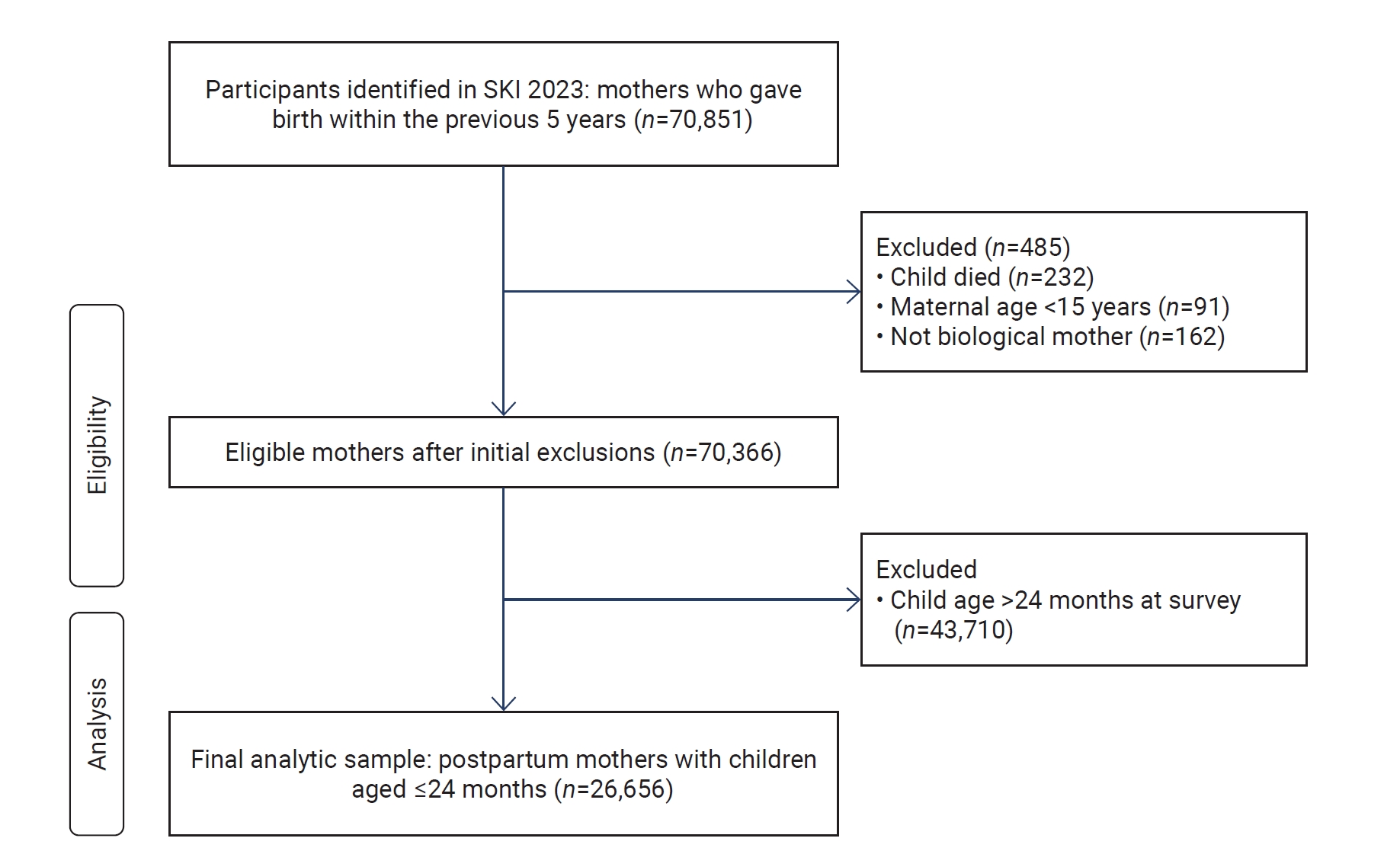
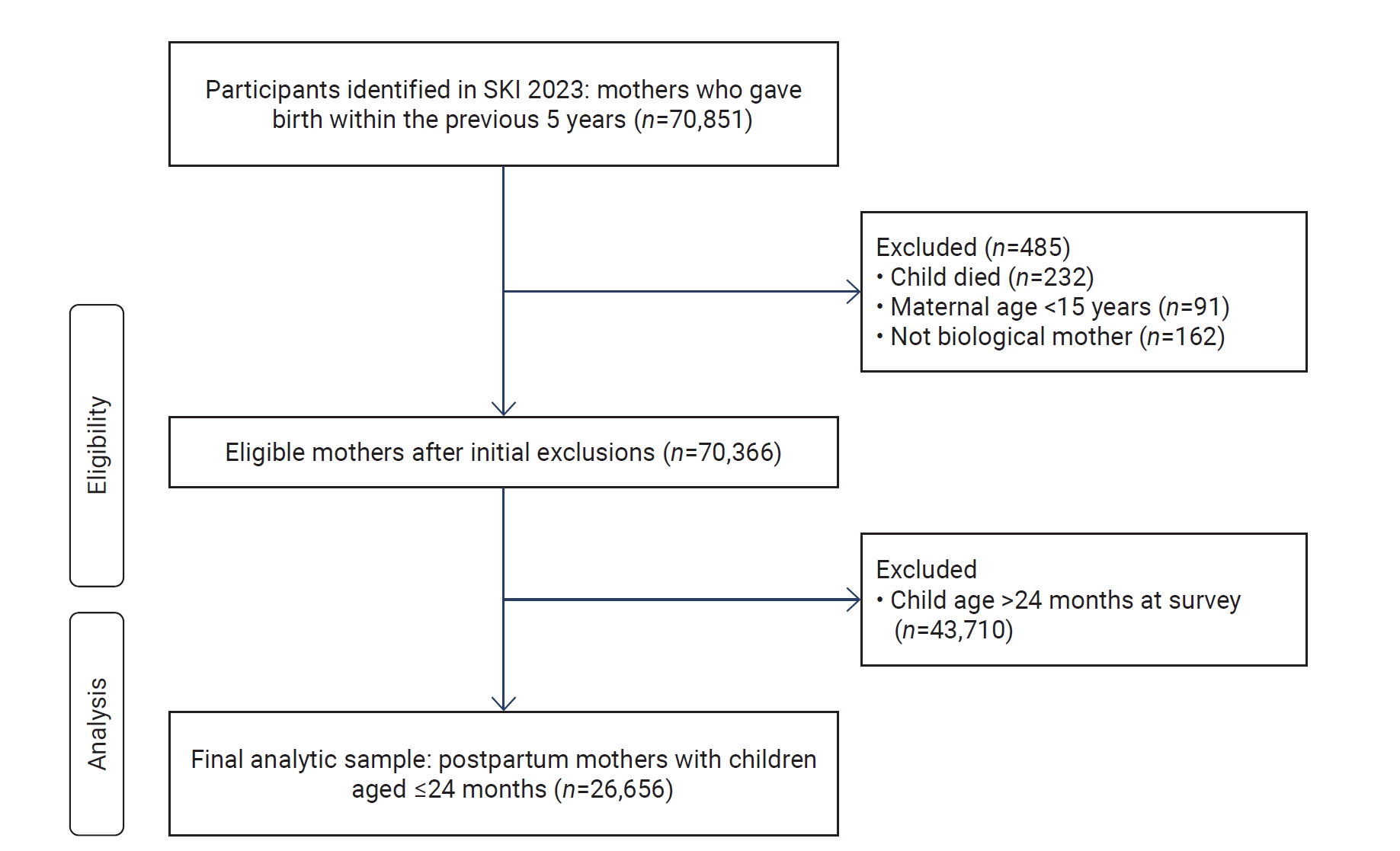
A total of 70,851 mothers who had given birth within the previous 5 years were initially identified from the 2023 Indonesia Health Survey dataset. Participants were excluded if the child had died (
n=232), the mother was younger than 15 years (
n=91), or the respondent was not the biological mother (
n=162). Mothers whose children were older than 24 months at the time of the survey were also excluded (
n=43,710), because PPD in this study was defined within the first 24 months after childbirth. After these criteria were applied, 26,656 postpartum mothers with children aged 24 months or younger were included in the final analysis. The participant selection process is presented in
Figure 1.
Descriptive Data
The frequency distribution of mothers who were 0–24 months postpartum in Indonesia is presented in
Table 1. Among the 26,656 respondents, 18,846 (70.7%) were married and living with their husbands, 15,567 (58.4%) had middle school or high school education, 15,860 (59.5%) were not working, 26,576 (99.7%) did not have a housekeeper, 22,311 (83.7%) did not live with their biological mothers, and 13,435 (50.4%) did not have social support (
Table 1).
Outcome Data
Of the 26,656 mothers included in the analysis, 800 (3.0%) experienced PPD. In the bivariate analysis, the proportion of mothers with PPD was higher among those who were divorced, not working, and lacked social support. Marital status, maternal education level, maternal occupational status, and social support were associated with PPD among Indonesian mothers in the bivariate analysis (
Table 1).
Table 2 presents the frequency distribution of mothers according to child health indicators and PPD depression status. The distribution of mothers was nearly even across child age groups and child sex. Overall, 25,057 mothers (94.0%) had children with normal birth weight, 24,790 (93.0%) had planned pregnancies, and 26,263 (98.5%) had children without chronic illness (
Table 2). The prevalence of PPD was higher among mothers with an unplanned pregnancy than among those with a planned pregnancy (5.7% vs. 2.8%,
p<0.001) and was also higher among mothers whose child had a chronic illness than among those whose child did not (17.9% vs. 2.9%,
p=0.033). No significant differences in PPD prevalence were observed according to child age, child sex, or LBW status (
Table 2).
Main Results
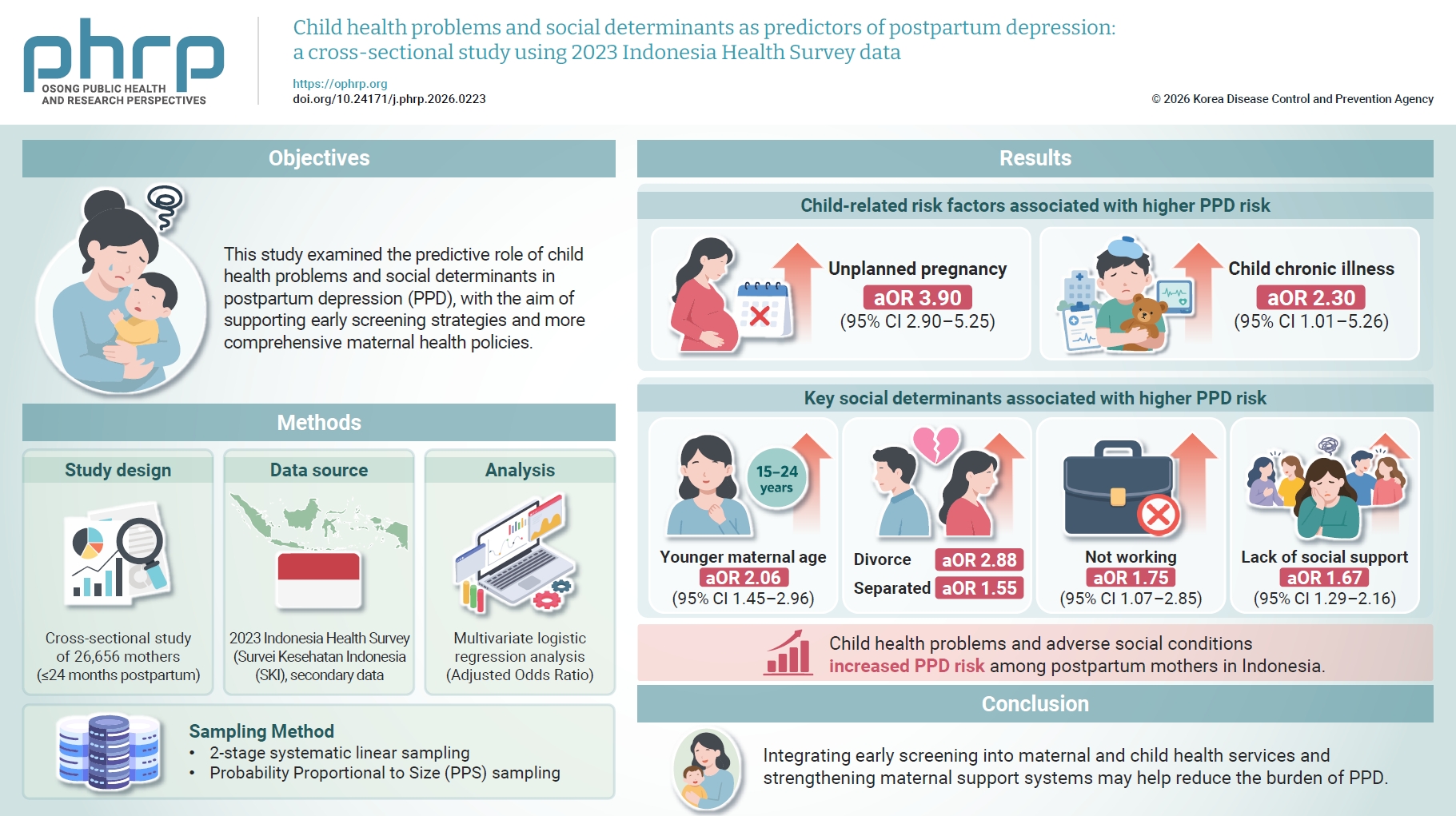
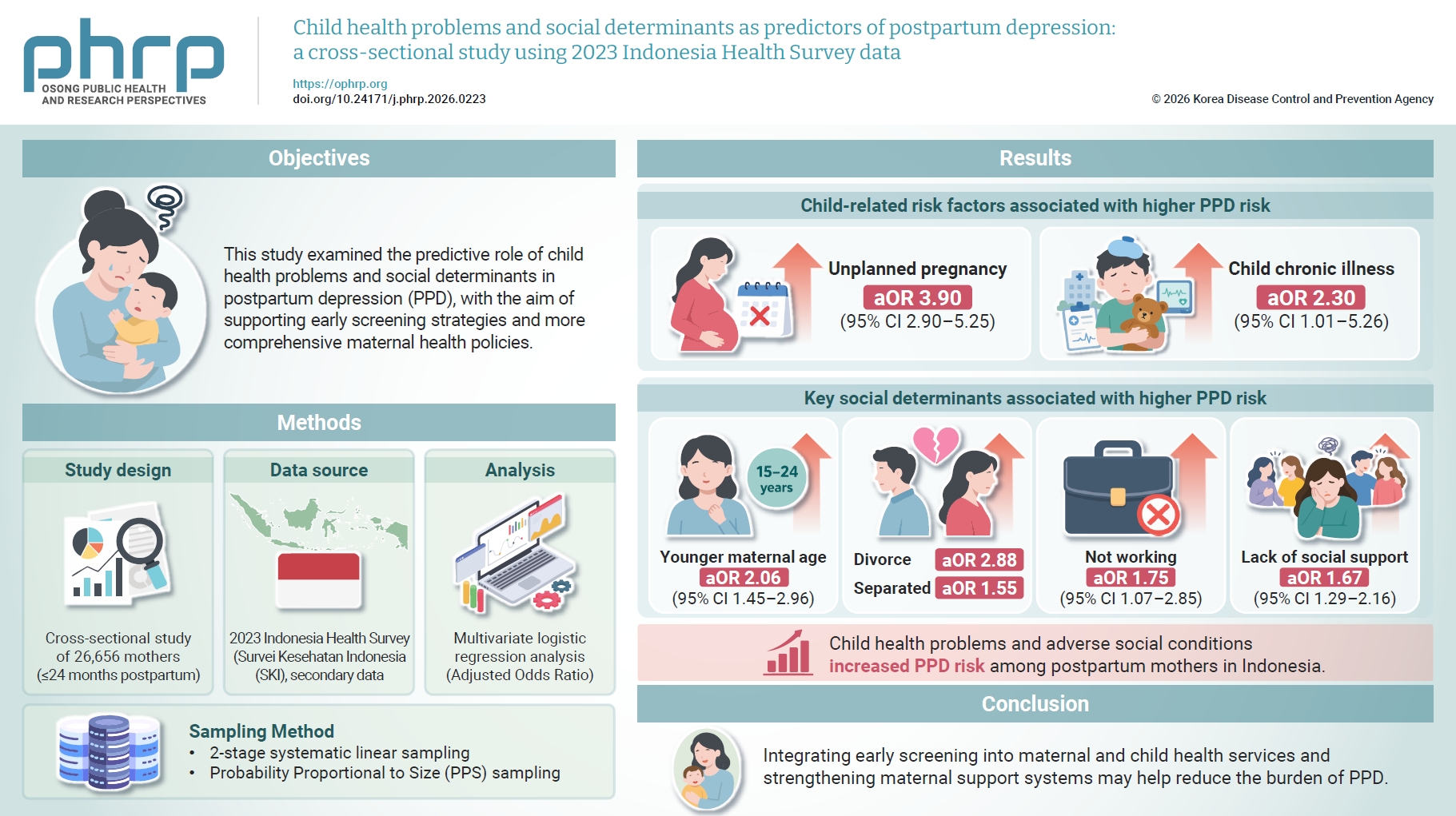
Table 3 presents the results of the multivariate analysis of the associations of child health and social factors with depression among mothers who were 0–24 months postpartum in Indonesia. Maternal age, marital status, maternal occupational status, unplanned pregnancy, child chronic illness, and lack of social support were associated with PPD among mothers in Indonesia. Younger maternal age was associated with higher odds of PPD: mothers aged 15–24 years were approximately 2.1 times more likely to experience PPD (aOR, 2.06; 95% CI, 1.45–2.96;
p<0.001) than mothers aged 35–54 years. Mothers who were married but not living with their husbands had higher odds of PPD (aOR, 1.55; 95% CI, 1.20–2.01;
p<0.001) than mothers who were married and living with their husbands. Divorced mothers also had higher odds of PPD (aOR, 2.88; 95% CI, 1.43–5.80;
p=0.003). Mothers who were not working had higher odds of PPD (aOR, 1.75; 95% CI, 1.07–2.85;
p=0.026), as did mothers who lacked social support (aOR, 1.67; 95% CI, 1.29–2.16;
p<0.001). Child factors associated with higher odds of PPD among postpartum mothers in Indonesia included having had an unplanned pregnancy (aOR, 3.90; 95% CI, 2.90–5.25;
p<0.001) and having a child with chronic illness (aOR, 2.30; 95% CI, 1.01–5.26;
p=0.048).
Discussion
Key Results
This study provides nationally representative evidence that PPD among mothers in Indonesia is strongly associated with social variables and child health problems. The main findings indicate that PPD was significantly associated with younger maternal age, living separately from a partner while still married or being divorced, not working, having had an unplanned pregnancy, having a child with chronic illness, and lack of social support.
The association between younger maternal age (15–24 years) and higher odds of PPD (aOR, 2.08) warrants particular attention in the Indonesian context. Mothers in this age group may still be undergoing psychological and emotional development, making the transition to motherhood especially challenging. Younger mothers are often less prepared to manage the emotional and psychological changes associated with motherhood, which may increase their vulnerability to parenting-related psychosocial problems [
13]. This vulnerability is compounded by the Indonesian social context, where child marriage remains prevalent. Nationally representative longitudinal data from Indonesia have shown that early marriage, particularly by age 18, has adverse effects on women’s mental health; women who marry early are significantly more likely to experience depression, and each 1-year delay in marriage is associated with an approximately 4% reduction in the likelihood of depression [
14]. Furthermore, young mothers who marry early are often separated from their families and friends and may be required to live with their husband’s family, increasing their risk of social isolation. At the same time, childbearing and child-rearing impose substantial physical and emotional demands on adolescents and young adults who are still undergoing developmental transitions [
9]. These findings underscore the urgent need for targeted mental health screening and psychosocial support programs for young postpartum mothers in Indonesia, particularly those who married at an early age.
Mothers who lived apart from their husbands or were divorced had higher odds of PPD symptoms. Research conducted in Indonesian cities has shown that women who live apart from their husbands are 3.82 times more likely to develop PPD than women who live with their husbands [
9]. The presence of a partner during the postpartum period may support financial stability, provide practical assistance with childcare, and offer emotional support, all of which may reduce psychological stress [
15,
16]. In contrast, divorce was significantly associated with higher odds of PPD. In Indonesia, divorced women often experience social stigma, which may intensify the psychological pressure experienced by single mothers who face marginalization and negative stereotypes [
17]. Single mothers may also experience a complex cycle of emotional strain related to the dual burden of single parenthood and financial responsibility as the head of the household [
18].
Mothers who were not working had higher odds of PPD. Employment after childbirth may benefit postpartum mothers by increasing self-esteem, social engagement, life satisfaction, and financial independence [
19,
20]. The mechanism underlying this association is likely multifaceted. Socioeconomic status may affect PPD through multiple mediating pathways, including satisfaction with material needs, access to health care, and postpartum social support; lower socioeconomic status has consistently been associated with higher levels of depression among postpartum mothers [
21]. This economic vulnerability may be further compounded by prevailing social norms in Indonesia that position women primarily as caregivers and homemakers, thereby limiting their economic participation and autonomy. When unemployed mothers internalize these norms, they may experience heightened role entrapment, feeling obligated to fulfill domestic responsibilities without adequate emotional or financial support, which may increase psychological distress. Reinforcing this pattern, Indonesian women are expected to care for their families and often bear a disproportionate burden of unpaid domestic work, which exacerbates gender inequality and may further marginalize their mental health needs [
22,
23].
However, the relationship between employment and PPD is not straightforward, and the literature includes contradictory findings. Women who continue working after childbirth may experience tension between family and work demands. Despite changes in traditional role models, a gendered imbalance in household responsibilities persists, with employed women continuing to shoulder many childcare and domestic tasks [
24]. Furthermore, work–privacy conflict, low reward at work, and precarious working conditions have been shown to significantly predict symptoms of PPD among employed mothers, even after adjustment for depression history, anxiety, education, parity, and age [
25]. These findings suggest that the protective effect of employment on PPD may depend on work quality and working conditions rather than employment status alone. Future studies in Indonesia should therefore examine not only whether mothers are employed but also the nature of their employment, working conditions, and the availability of workplace support systems to better clarify the complex interplay among work, social norms, and maternal mental health.
This study indicates that the lack of social support was significantly associated with higher odds of PPD among postpartum mothers. In many Asian societies, including among Bengali women in India, women often live temporarily with their birth mothers during the postpartum period, a practice that provides encouragement, care, and protection [
26]. Support from husbands, such as accompanying wives to prenatal care and listening to their concerns, has also been shown to reduce emotional stress during the postpartum period [
27]. Assistance from neighbors or close family members with childcare and domestic tasks, whether paid or unpaid, may help mothers adjust to the postpartum period and has been shown to reduce depressive symptoms [
28].
With respect to child-related factors, mothers with an unplanned pregnancy had substantially higher odds of PPD; this was the strongest risk factor identified in the present study. Unplanned pregnancy is associated with a higher risk of depression and lower social support, reflecting emotional instability and reduced control over life circumstances [
29]. Unplanned pregnancy has also been associated with poorer mother–infant bonding after birth [
30]. In addition, caring for a child with chronic illness was significantly associated with higher odds of PPD in mothers. Mothers of children with chronic illness are significantly more likely to experience despair, anxiety, and serious mental disorders [
31,
32]. Children with chronic illness often require long-term care, frequent medical appointments, high expenses, and ongoing psychological concern about their prognosis [
33]. Together, these factors may increase maternal stress and impair coping capacity.
The burden of caring for a child with chronic illness is unlikely to operate in isolation; rather, it may interact with other social risk factors identified in this study and produce compounding effects on maternal mental health. Health spillovers from child illness to maternal mental health have been found to be strongly related to illness severity, with larger associations observed for more severe child conditions, suggesting that the psychological burden on mothers escalates as caregiving demands intensify [
25]. For example, a mother who is both unemployed and caring for a child with chronic illness may face the dual burden of financial strain and intensive caregiving demands, with limited resources for professional help or respite care. Among caregivers of children with chronic illness, those who are unemployed are more likely to depend on family support networks, highlighting the critical role of social support in buffering the psychological burden of caregiving, particularly among those without financial independence [
14]. Similarly, mothers who lack social support while caring for a child with chronic illness may experience heightened isolation and helplessness as they navigate complex medical needs without adequate assistance. Poor social support, marital dissatisfaction, and low socioeconomic status have been identified as co-occurring risk factors that collectively amplify the likelihood of PPD, underscoring the importance of considering the cumulative burden of multiple risk factors rather than examining each factor in isolation [
34]. Marital instability may further compound this burden, as divorced or separated mothers caring for a child with chronic illness often must manage both the emotional and practical demands of single parenthood alongside the challenges of chronic disease management. These compounding effects suggest that the association between child chronic illness and PPD may be moderated by the social context in which caregiving occurs. Mothers with multiple co-occurring risk factors, such as unemployment, lack of social support, and marital instability, may therefore represent a particularly vulnerable subgroup requiring prioritized screening and targeted psychosocial intervention.
The possibility of a bidirectional relationship between maternal mental health and child health outcomes should also be acknowledged. Although this study examined child health indicators as predictors of PPD, emerging evidence suggests that the relationship may also operate in the reverse direction. Mothers experiencing PPD may have difficulty recognizing and appropriately responding to their infant’s needs, leading to delays or inconsistencies in comfort, feeding, and interaction. These difficulties can contribute to disconnection between the mother and infant and may affect the infant’s emotional and social development [
35]. Maternal depression also impairs infant and young child care practices related to breastfeeding, health care, safety, and development and may contribute to inadequate nutrition during infancy and childhood, resulting in suboptimal brain development and growth [
36]. From a perceptual standpoint, mothers with depression may also overestimate or misattribute their child’s health problems, creating a cycle in which perceived child illness amplifies maternal distress, which in turn, distorts health perceptions. If PPD persists after childbirth, it may affect the quality of parenting and care, as well as the mother’s perception of the newborn; inconsistent caregiving may undermine the relational foundations that support the development of self-regulation and higher-order cognitive skills in the child [
37]. This bidirectional dynamic underscores the importance of early identification and treatment of PPD not only for maternal well-being but also as a strategy to protect child health outcomes. Future longitudinal studies are needed to disentangle the temporal and causal pathways between maternal mental health and child health indicators in the Indonesian context.
The findings of this study have important practical implications for maternal and child health services in Indonesia. Because child health indicators, particularly chronic illness and unplanned pregnancy, were identified as significant predictors of PPD, these factors should be incorporated into existing primary health care platforms. The Maternal and Child Health (Kesehatan Ibu dan Anak, KIA) handbook, which is routinely used during antenatal and postnatal visits, provides an accessible and feasible entry point for integrating a simple PPD risk screening checklist. Specifically, questions regarding pregnancy intendedness and the presence of chronic illness or congenital abnormalities in the child could be added to existing KIA documentation without requiring substantial additional resources. Similarly, the Posyandu (integrated health post) program, which reaches communities at the village level and is staffed by trained community health workers (Kader), represents a strategic platform for early detection of PPD among postpartum mothers. Community health workers could be trained to identify mothers with key risk indicators identified in this study, including younger maternal age, marital instability, unemployment, lack of social support, having had an unplanned pregnancy, and having a child with chronic illness, and to refer them promptly to the nearest primary health care facility (Puskesmas) for further assessment and management. To strengthen early detection, adoption of a validated and standardized screening instrument, such as the Edinburgh Postnatal Depression Scale (EPDS), is strongly recommended at all primary health care levels, including Posyandu and Puskesmas. The EPDS is a brief, widely validated, and culturally adaptable tool that has demonstrated good sensitivity and specificity for identifying mothers at risk of PPD in various low- and middle-income country settings, including Indonesia.
Beyond screening, the findings of this study underscore the importance of family-based support programs as a complementary strategy. Because marital instability, lack of social support, and unemployment were identified as significant risk factors, interventions that actively engage husbands, extended family members, and community networks in supporting postpartum mothers are particularly warranted. Existing programs such as Kelas Ibu Hamil (Pregnant Mothers’ Class) could be expanded to include sessions on paternal involvement, recognition of PPD symptoms, and provision of emotional and instrumental support during the postpartum period. Home visit programs conducted by midwives or community health workers could also be strengthened to provide psychosocial support to mothers identified as high risk.
At the broader policy level, the findings of this study support the formal integration of perinatal mental health into Indonesia’s national maternal and child health policy framework. PPD screening and management are not yet systematically embedded in national guidelines for maternal health services. Policymakers should consider mandating routine PPD screening as part of the standard postnatal care package, allocating dedicated resources for training frontline health workers in perinatal mental health, and establishing clear referral pathways from community-level services to higher-level mental health facilities. Strengthening the integration of perinatal mental health screening into existing programs would be a cost-effective and culturally appropriate strategy to improve early detection and management of PPD across Indonesia.
Limitations
A major strength of this study is its use of nationally representative SKI 2023 data, which provide generalizable insights into postpartum mental health in Indonesia. However, several limitations should be acknowledged. First, the cross-sectional design precludes causal inference because the temporal sequence between the identified risk factors and PPD cannot be established. Future studies should use longitudinal designs to investigate causal pathways and evaluate the long-term effects of changing child health trajectories on maternal mental health. Second, because PPD was assessed using self-reported measures, recall and reporting bias cannot be ruled out. Mothers may underreport depressive symptoms because of social stigma, fear of judgment, or cultural norms that discourage open disclosure of mental health difficulties, particularly in the Indonesian context. This may have led to an underestimation of the true prevalence of PPD in this study. Third, the social support measure used in this study was limited to emergency situations and did not capture support with daily activities. Future studies should use more comprehensive instruments that assess both daily emotional and instrumental support to obtain a more accurate and nuanced understanding of the maternal caregiving burden and its relationship to PPD. However, emergency social support was assessed during the same period as maternal mental health, which may have minimized recall bias. Fourth, as with any observational study, the possibility of unmeasured confounding cannot be excluded. Important variables, such as domestic violence, intimate partner violence, household socioeconomic status, and history of prior mental health disorders, were not captured in this study, and their omission may have influenced the observed associations between the identified risk factors and PPD. Future studies should incorporate these variables to provide a more comprehensive understanding of the determinants of PPD in Indonesia.
Interpretation
Overall, the findings suggest that child health problems and adverse social conditions are important correlates of PPD among mothers in Indonesia. In particular, having had an unplanned pregnancy and caring for a child with chronic illness showed strong associations with maternal depressive symptoms, highlighting the potential psychological burden associated with childcare challenges during the postpartum period. Social vulnerabilities, including divorce or separation, unemployment, and limited social support, were also associated with a higher likelihood of PPD, consistent with previous studies showing that socioeconomic stressors and insufficient support systems contribute to maternal mental health problems. However, these findings should be interpreted cautiously. The cross-sectional design precludes causal inference, and the observed associations may reflect complex bidirectional or contextual relationships. In addition, the use of self-reported measures and the limited scope of the social support variables may have influenced the estimates. Despite these limitations, the large nationally representative dataset provides valuable population-level insights into postpartum mental health in Indonesia and supports the need for integrated maternal and child health services that consider both child health conditions and maternal social environments when identifying mothers at risk of PPD.
Generalizability
The generalizability of these findings is strengthened by the use of data from the 2023 Indonesia Health Survey (SKI), a nationally representative survey covering 38 provinces and 514 districts/cities across Indonesia. The large sample size and probability-based sampling approach increase the likelihood that the study population reflects the broader population of postpartum mothers in Indonesia, thereby supporting the external validity of the findings at the national level. However, caution is warranted when extending these results to other countries or contexts because cultural norms, health system structures, and social support mechanisms may differ across settings. In particular, the experience of PPD and the roles of child health problems and social determinants may vary in countries with different socioeconomic conditions or maternal health services. Therefore, although the findings are broadly applicable to the Indonesian context and potentially to similar low- and middle-income settings, further studies in other populations are needed to confirm these associations.