Introduction
Mental health is foundational to individual well-being and effective functioning, extending beyond the absence of mental disorders to encompass cognitive clarity, learning capacity, emotional awareness, and interpersonal understanding. Mental health also reflects a dynamic balance among physical, psychological, social, cultural, and spiritual dimensions, with mental and physical health inextricably linked [
1].
Mental disorders are characterized by clinically significant disruptions in cognition, emotion regulation, or behavior that result in distress or functional impairment. These disorders encompass diverse conditions, including depression, bipolar affective disorder, schizophrenia, dementia, intellectual disabilities, and autism spectrum disorder [
2]. In 2019, approximately 970 million individuals—1 in 8 people globally—were living with mental disorders, with anxiety and depressive disorders predominating [
3]. The coronavirus disease 2019 (COVID-19) pandemic substantially increased this burden; anxiety disorders and major depressive disorder rose by 26% and 28%, respectively, in 2020 alone [
4].
Mental disorders represent a substantial public health challenge and impede economic development, particularly in low- and middle-income countries (LMICs) [
5]. Accordingly, improving population mental health has emerged as a core pillar of the United Nations 2030 Agenda for Sustainable Development, reflecting a global shift toward recognizing mental well-being as inseparable from physical health and macroeconomic stability. Sustainable Development Goal (SDG) Target 3.4 commits member states to reducing premature mortality from non-communicable diseases by one-third through prevention and treatment, while also promoting mental health and well-being as a necessary component of achieving universal health coverage under SDG Target 3.8 [
6]. Mental health is also increasingly recognized as a cross-cutting catalyst for SDG 8, Decent Work and Economic Growth, because psychological stability and cognitive resilience are essential prerequisites for a productive workforce, human capital development, and long-term economic stability [
6]. However, substantial gaps remain among epidemiological research, public health priorities, and clinical practice, particularly in settings where research capacity and evidence-based information remain limited.
Vietnam exemplifies this evidence gap. According to the World Health Organization (WHO), prevalence data from Vietnam’s National Mental Hospital indicated that, in 2014, 14.2% of the population had at least 1 of 10 common mental disorders, with alcohol-related disorders (5.3%), anxiety disorders (2.6%), and depressive disorders (2.45%) being the most prevalent [
1]. The Vietnam Adolescent Mental Health Survey (V-NAMHS) documented that 1 in 5 adolescents (21.7%) reported a mental health problem in the preceding 12 months; anxiety disorders were the most prevalent at 18.6%, followed by depression at 13.6% [
7]. Despite its substantial impact on population well-being, mental health continues to receive less policy attention and fewer resources than other health sectors. Vietnam also faces concurrent pressures from rapid population aging, a high neurological disability burden, and the sustained mental health effects of the COVID-19 pandemic.
Understanding temporal trends in the burden of mental disorders, the relationship between disease burden and socioeconomic development, and projected future trajectories are essential for informing evidence-based national mental health policy, allocating resources effectively, and building institutional capacity to address population mental health needs. This study characterized the epidemiology of mental disorders in Vietnam from 1990 to 2023 by examining temporal trends and disease burden and by exploring associations with socioeconomic development, aiming to provide evidence to support mental health policy development and service planning.
Materials and Methods
Data Sources
Mental disorders were defined according to the Global Burden of Disease (GBD) Study categorization, which aligns with the International Classification of Diseases and the Diagnostic and Statistical Manual of Mental Disorders. Data on the burden of mental disorders in Vietnam were obtained from the GBD Study 2023 (GBD 2023) results tool (
https://vizhub.healthdata.org/gbd-results/). Data was accessed in November 2025.
GBD 2023 provides comprehensive estimates of disease burden across 204 countries and territories over time. These estimates were generated by the Institute for Health Metrics and Evaluation using Bayesian meta-regression tools, primarily DisMod-MR 2.1 and DisMod-AT for specific mental health causes [
8]. For Vietnam, GBD estimates for mental disorders were informed by 8 primary data sources identified through systematic reviews of national health surveys and local epidemiological studies. To produce a continuous time series and bridge intervals between available primary inputs, the GBD framework uses spatiotemporal Gaussian process regression and hierarchical Bayesian modeling. This estimation strategy incorporates regional epidemiological patterns and country-specific socioeconomic covariates to synthesize internally consistent modeled outcomes.
In this study, incidence, prevalence, and disability-adjusted life-years (DALYs) were extracted to assess the burden of mental disorders in Vietnam from 1990 to 2023. Vietnam’s human development index (HDI) data for the same period were obtained from the United Nations Development Programme.
Data Analysis
Age-standardized incidence, prevalence, and DALY rates were calculated to enable valid temporal comparisons. Temporal trends in disease burden from 1990 to 2023 were quantified using the estimated annual percentage change (EAPC). The EAPC was derived from the following log-linear regression model:
ln(ASR)=α+βx+ε,
where ASR denotes the age-standardized rate and x represents the calendar year. The EAPC summarizes the average annual percentage change and was computed as follows:
EAPC=100×[exp(β)–1].
The 95% confidence interval (CI) was computed similarly, using the upper and lower limits of the regression coefficient β obtained from the model [
9]. To assess the robustness of the trend estimates to uncertainty in the GBD 2023 data, sensitivity analyses were performed by recalculating the EAPCs for Vietnam using the upper and lower bounds of the 95% uncertainty intervals (UIs) for the age-standardized rates. For each indicator—prevalence, incidence, and DALYs—the EAPC was re-estimated from the respective time series of the upper and lower UI bounds using the same log-linear regression model.
Future trends in the age-standardized incidence rate (ASIR), age-standardized prevalence rate (ASPR), and age-standardized disability-adjusted life-year rate (ASDAR) were projected through 2040 using Bayesian structural time series (BSTS) models [
10]. The models used a semi-local linear trend state-space component and included an exogenous regressor to account for the impact of the COVID-19 pandemic during 2019–2023. The COVID-19 effect was specified as a pulse intervention for ASIR and as a step intervention for both ASPR and ASDAR. Posterior estimates were obtained through Markov chain Monte Carlo (MCMC) sampling with 20,000 iterations, including a 2,000-iteration burn-in period, using the default prior distributions in the bsts package in R. Model performance was evaluated using Bayesian R² and mean absolute percentage error (MAPE). The complete R code for BSTS model specification, fitting, and projection is provided in
Supplementary Material 1. In addition to the baseline projection, a policy intervention scenario was modeled that assumed a cumulative 17% relative reduction in ASIR, ASPR, and ASDAR by 2040. This 17% target was established as a pragmatic, resource-adjusted proxy aligned with the spirit of United Nations SDG 3.4 [
6], which calls for reducing the non-communicable disease burden and promoting mental health. Calibration of this target reflects the long-term implementation trajectory and evolving healthcare infrastructure following Vietnam’s recent transition to upper-middle-income country status. This scenario also builds on the foundational service-coverage milestones established by Vietnam’s Prime Ministerial Decision No. 155/QĐ-TTg, the National Plan for the Prevention and Control of Non-Communicable Diseases and Mental Health Disorders, 2022–2025 [
11], and Prime Ministerial Decision No. 1929/QĐ-TTg, the Program for Community-Based Social Assistance and Rehabilitation for People With Mental Disorders, Children With Autism, and People With Mental Health Problems, 2021–2030 [
12]. These policy anchors were used to ensure that the projection remained ambitious in its public health goals while remaining feasible within Vietnam’s national socioeconomic context through 2040 [
13].
Pearson correlation analysis was conducted to evaluate correlations between mental disorder burden metrics and Vietnam’s HDI. Statistical significance was defined as p<0.05. All analyses were performed using R ver. 4.1.3 (R Foundation for Statistical Computing).
Ethics Approval
This study used publicly available, de-identified data from the GBD 2023 study. Therefore, institutional review board approval and informed consent were not required.
Results
Burden of Mental Disorders in Vietnam in 2023
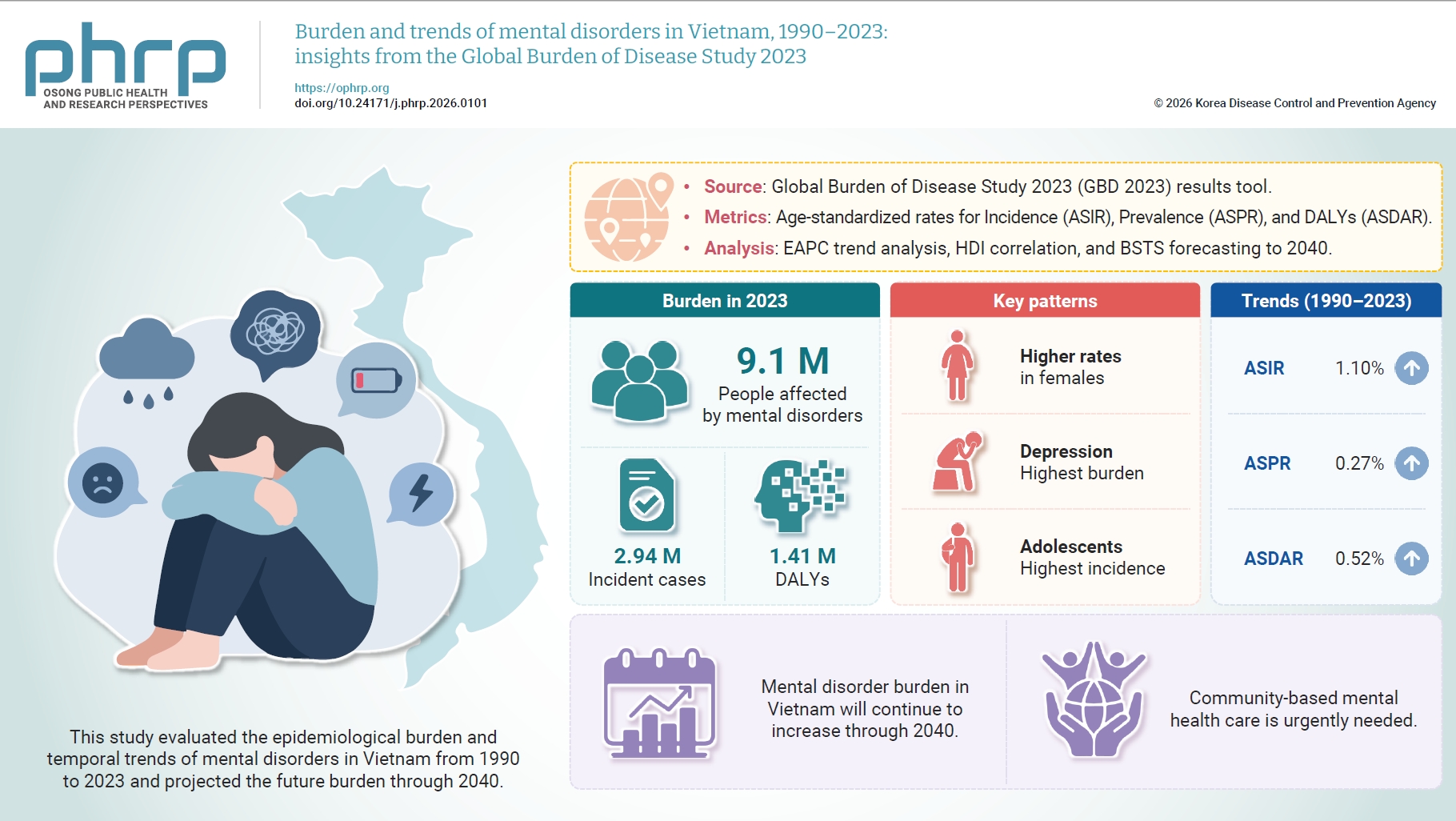
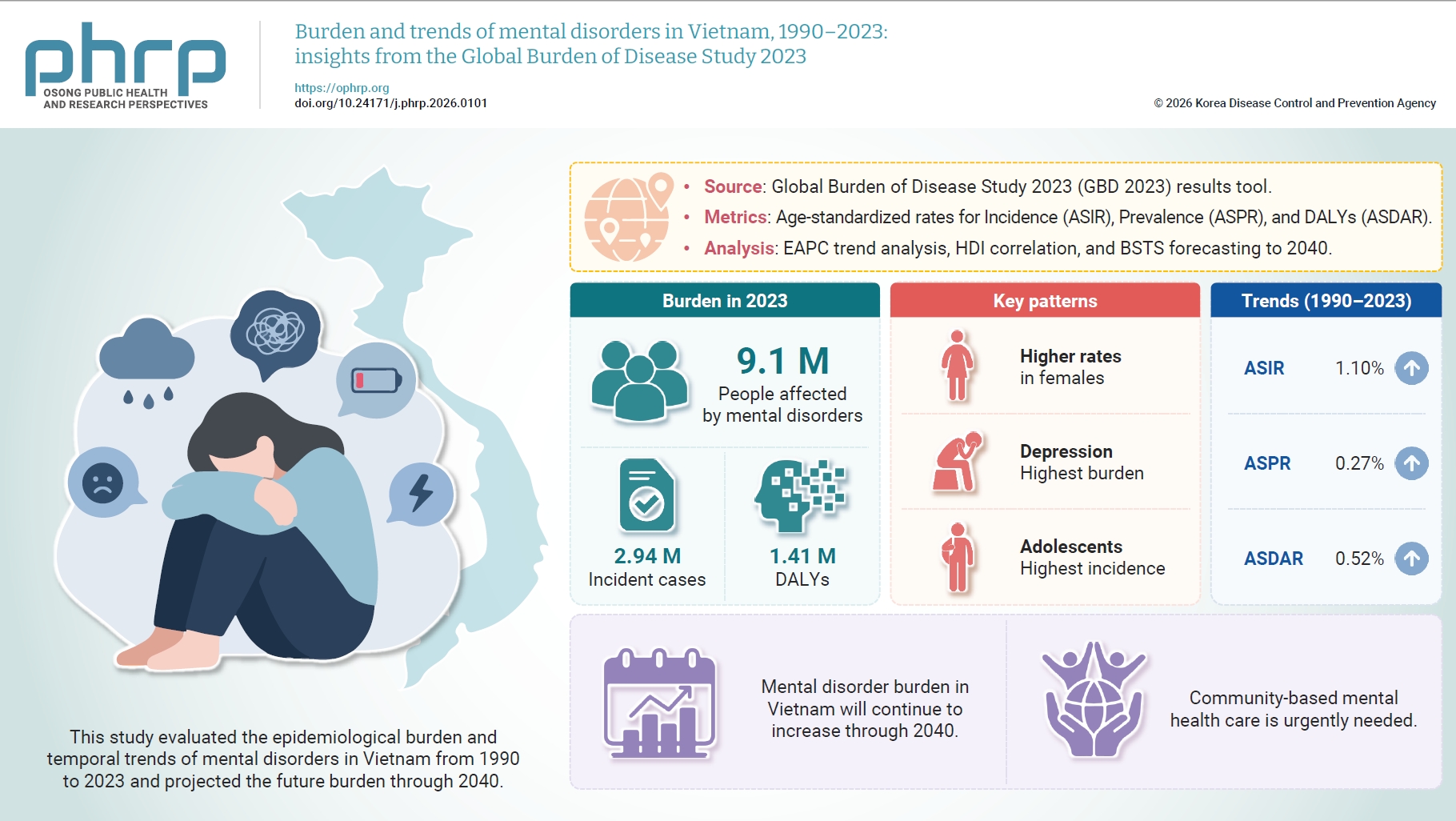
In 2023, mental disorders affected more than 9.1 million individuals in Vietnam (95% UI, 8.24–10.09 million), corresponding to a crude prevalence rate of 8,823.62 per 100,000 population (95% UI, 7,993.82–9,788.06) (
Table 1). Annual incidence exceeded 2.94 million cases (95% UI, 2.65–3.30 million), with a crude incidence rate of 2,858.71 per 100,000 population (95% UI, 2,576.25–3,200.33). Mental disorders accounted for an estimated 1.41 million DALYs (95% UI, 1.03–1.82 million), corresponding to a crude DALY rate of 1,366.15 per 100,000 population (95% UI, 999.36–1,770.19).
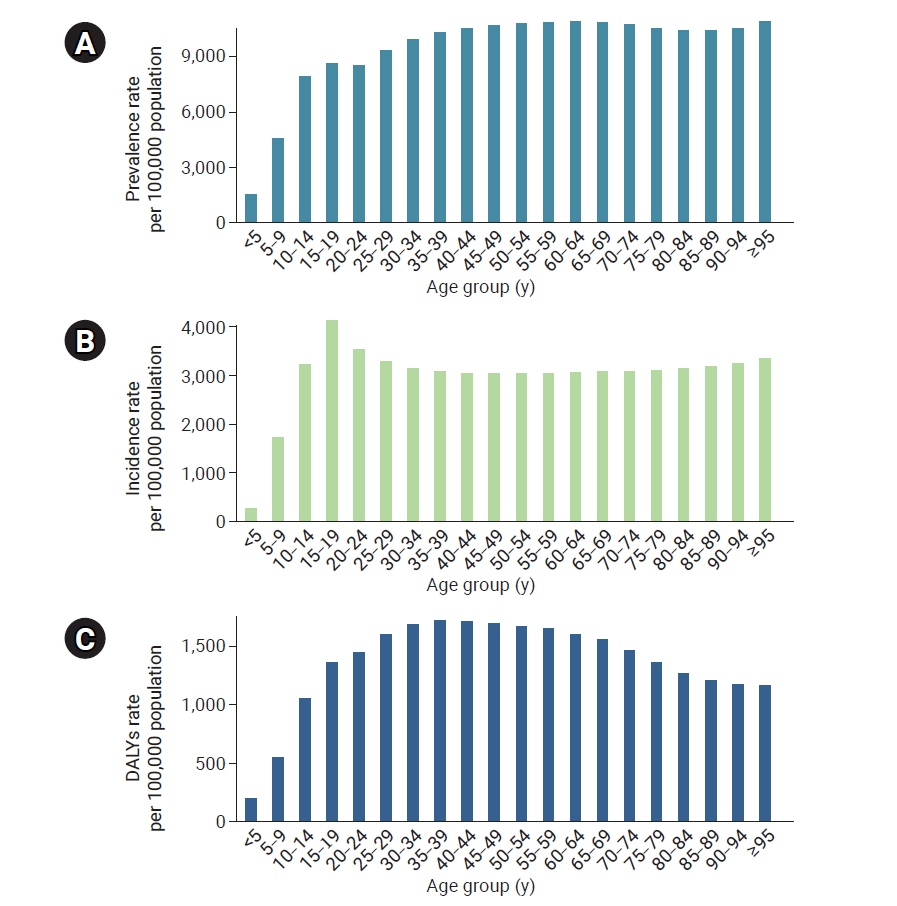
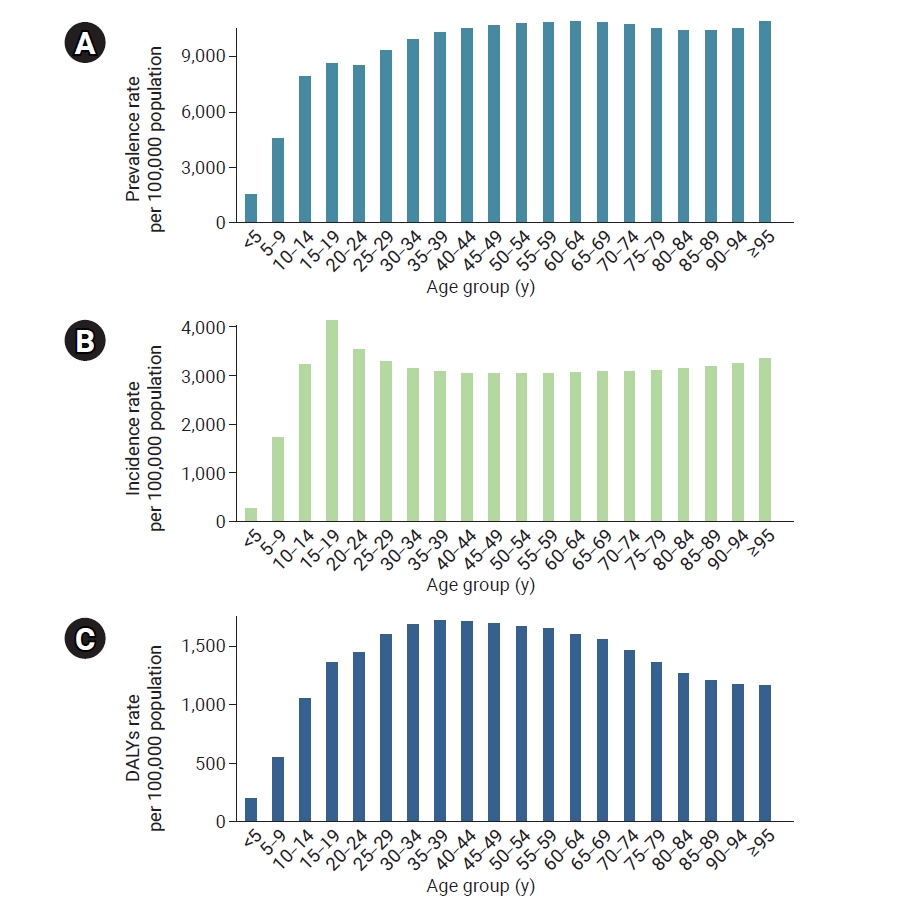
Substantial age-related disparities were observed across all disease burden metrics (
Figure 1). Crude prevalence rates increased from 1,510.7 per 100,000 among children younger than 5 years to 7,941.2 per 100,000 among those aged 10–14 years, rose further to a peak of 10,914.2 per 100,000 in the 60–64-year age group, declined across older age groups, and then increased again to 10,938.3 per 100,000 among those aged 95 years or older. In contrast, crude incidence rates followed a distinct trajectory. Incidence was lowest among young children, at 278.6 per 100,000 among those younger than 5 years, increased sharply through childhood and early adolescence, and peaked at 4,125.3 per 100,000 in the 15–19-year age group. Incidence rates subsequently declined to approximately 3,000–3,400 per 100,000 from age 20 years onward and remained relatively stable across middle and older adulthood. Crude DALY rates increased progressively from childhood, rising from 203.3 per 100,000 among children younger than 5 years to a peak of 1,727.1 per 100,000 in the 35–39-year age group, before gradually declining in older age groups and reaching 1,168.9 per 100,000 among those aged 95 years or older.
The GBD 2023 estimates demonstrated pronounced sex disparities in the burden of mental disorders in Vietnam (
Table 2). Age-standardized rates were consistently higher among female than male individuals across all measures. The ASPR was 9,036.97 versus 7,817.77 per 100,000, respectively, corresponding to a 15.6% higher prevalence among female individuals. A similar pattern was observed for disability burden, with an ASDAR of 1,381.26 versus 1,216.94 per 100,000, corresponding to a 13.6% higher rate among female individuals. ASIR also differed substantially by sex, reaching 3,328.56 per 100,000 annually among female individuals and 2,249.85 per 100,000 among male individuals.
In subtype-specific estimates, depressive disorders were the leading contributor to the burden of mental disorders in Vietnam across all metrics in 2023 (
Table 3). For depressive disorders, the ASPR was 2,489.70 per 100,000 and the ASIR was 2,137.42 per 100,000; this subtype also accounted for the highest disability burden, with an ASDAR of 422.92 per 100,000. Anxiety disorders had the second-highest ASPR, at 2,177.50 per 100,000, with an ASIR of 256.44 per 100,000 and an ASDAR of 259.66 per 100,000. Schizophrenia had a substantially lower ASPR, at 318.70 per 100,000, but still contributed to a considerable disability burden, with an ASDAR of 205.99 per 100,000. Bipolar disorder had an ASPR of 313.83 per 100,000, an ASIR of 23.39 per 100,000, and an ASDAR of 68.38 per 100,000. Autism spectrum disorders had an ASPR of 601.15 per 100,000, an ASIR of 17.70 per 100,000, and an ASDAR of 114.01 per 100,000. Idiopathic developmental intellectual disability had an ASPR of 554.93 per 100,000 and an ASDAR of 27.31 per 100,000. Behavioral conditions, including conduct disorder and attention-deficit/hyperactivity disorder, had lower disability impacts, with ASDARs of 47.18 and 27.31 per 100,000, respectively. Eating disorders had the lowest age-standardized burden, with an ASPR of 148.71 per 100,000 and an ASDAR of 31.95 per 100,000.
Temporal Trends in Mental Disorder Burden in Vietnam, 1990–2023
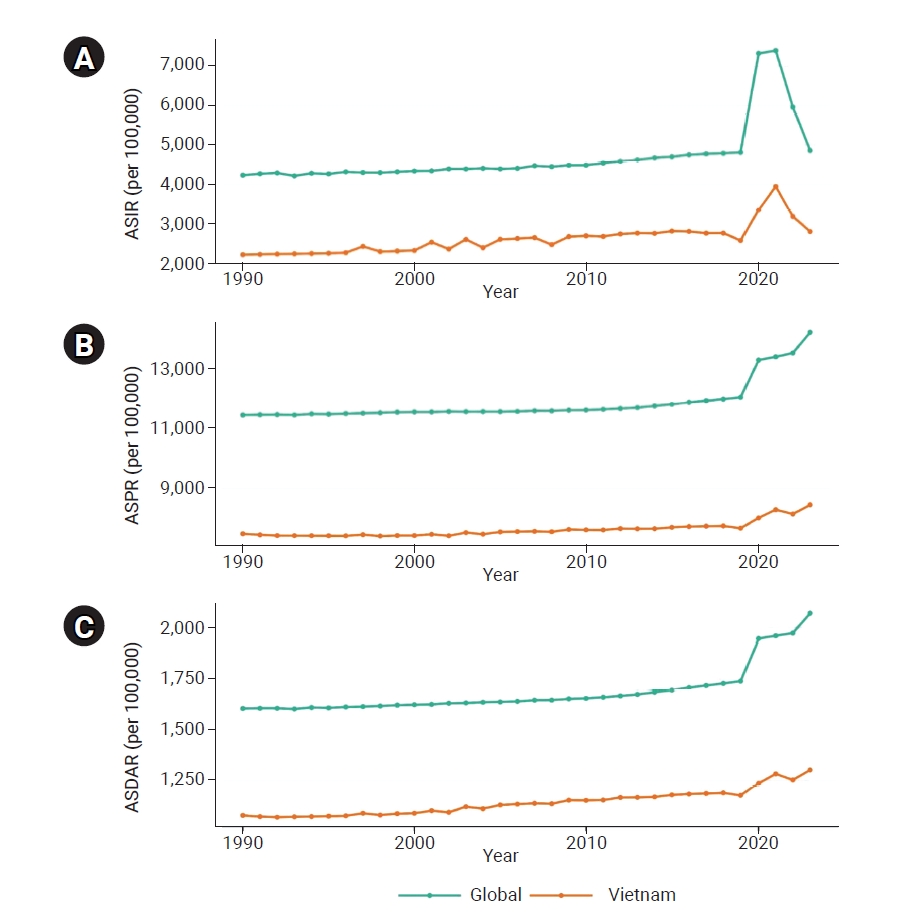
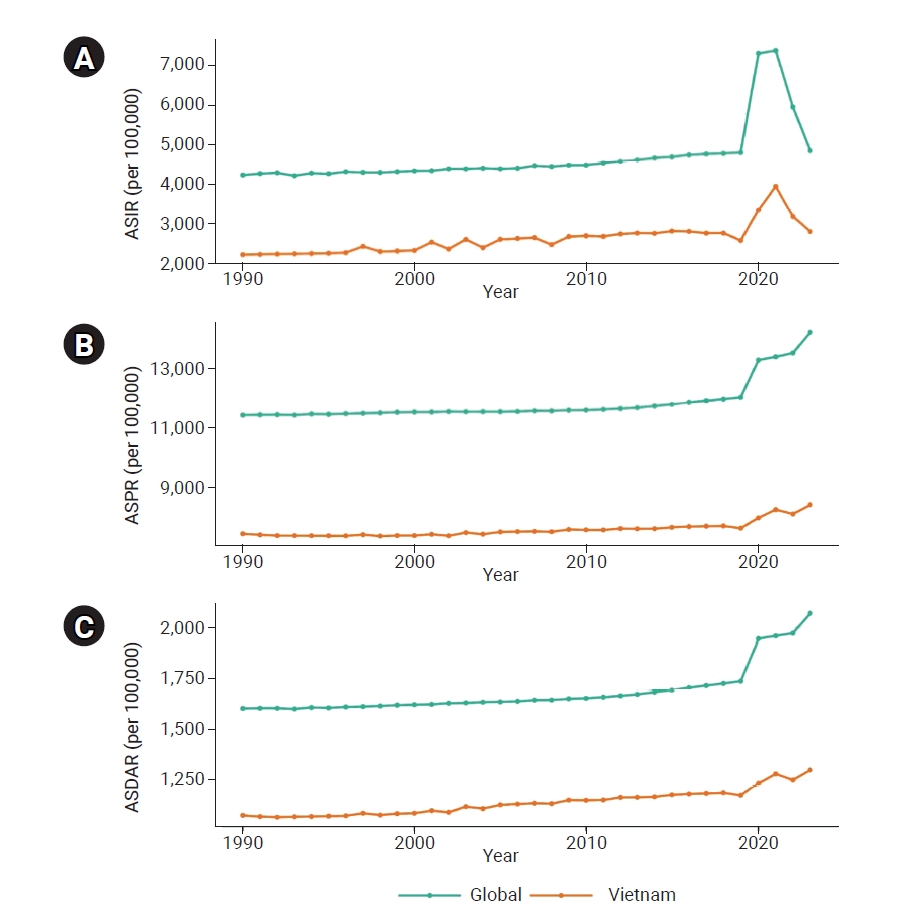
From 1990 to 2019, age-standardized rates increased modestly both in Vietnam and globally (
Figure 2). Vietnam’s ASPR increased from 7,481.7 to 7,669.1 per 100,000, while the global ASPR increased from 11,442.6 to 12,046.2 per 100,000. Vietnam’s ASIR increased from 2,218.1 to 2,575.6 per 100,000, while the global ASIR increased from 4,231.9 to 4,815.4 per 100,000. Similarly, Vietnam’s ASDAR increased from 1,073.9 to 1,173.0 per 100,000, while the global ASDAR increased from 1,605.8 to 1,740.0 per 100,000.
During 2020–2023, incidence rates showed synchronized patterns in Vietnam and globally (
Figure 2). Vietnam’s ASIR increased from 2,575.6 per 100,000 in 2019 to 3,946.3 per 100,000 in 2021, before declining to 2,797.3 per 100,000 by 2023. Global incidence rates increased from 4,815.4 per 100,000 in 2019 to 7,389.3 per 100,000 in 2021, before declining to 4,862.8 per 100,000 in 2023. Prevalence and DALY rates followed different post-2020 trajectories. Globally, both ASPR and ASDAR increased continuously during 2020–2023: ASPR rose from 12,046.2 per 100,000 in 2019 to 14,210.7 per 100,000 in 2023, and ASDAR increased from 1,740.0 to 2,070.5 per 100,000 over the same period. In Vietnam, ASPR increased from 7,669.1 per 100,000 in 2019 to 8,287.6 per 100,000 in 2021, declined to 8,142.4 per 100,000 in 2022, and then recovered to 8,447.8 per 100,000 in 2023. ASDAR followed a similar pattern, increasing from 1,173.0 per 100,000 in 2019 to 1,282.6 per 100,000 in 2021, declining to 1,252.8 per 100,000 in 2022, and then increasing to 1,302.4 per 100,000 in 2023.
From 1990 to 2023, age-standardized rates for all 3 metrics increased both in Vietnam and globally (
Table 4). Vietnam’s ASIR had an EAPC of 1.10% (95% CI, 0.87%–1.33%), compared with a global EAPC of 0.92% (95% CI, 0.58%–1.26%). Vietnam’s ASPR EAPC was 0.27% (95% CI, 0.21%–0.33%), compared with the global EAPC of 0.39% (95% CI, 0.26%–0.52%). For ASDAR, Vietnam’s EAPC was 0.52% (95% CI, 0.46%–0.58%), closely paralleling the global EAPC of 0.52% (95% CI, 0.38%–0.66%). Sensitivity analyses using the upper and lower bounds of the 95% UIs for Vietnam produced similar estimates: EAPC values ranged from 0.27% to 0.28% for prevalence, 1.06% to 1.13% for incidence, and 0.57% to 0.62% for DALYs (
Table 5). These findings support a consistently increasing trend in age-standardized mental disorder burden.
Correlation Between Mental Disorders and HDI in Vietnam
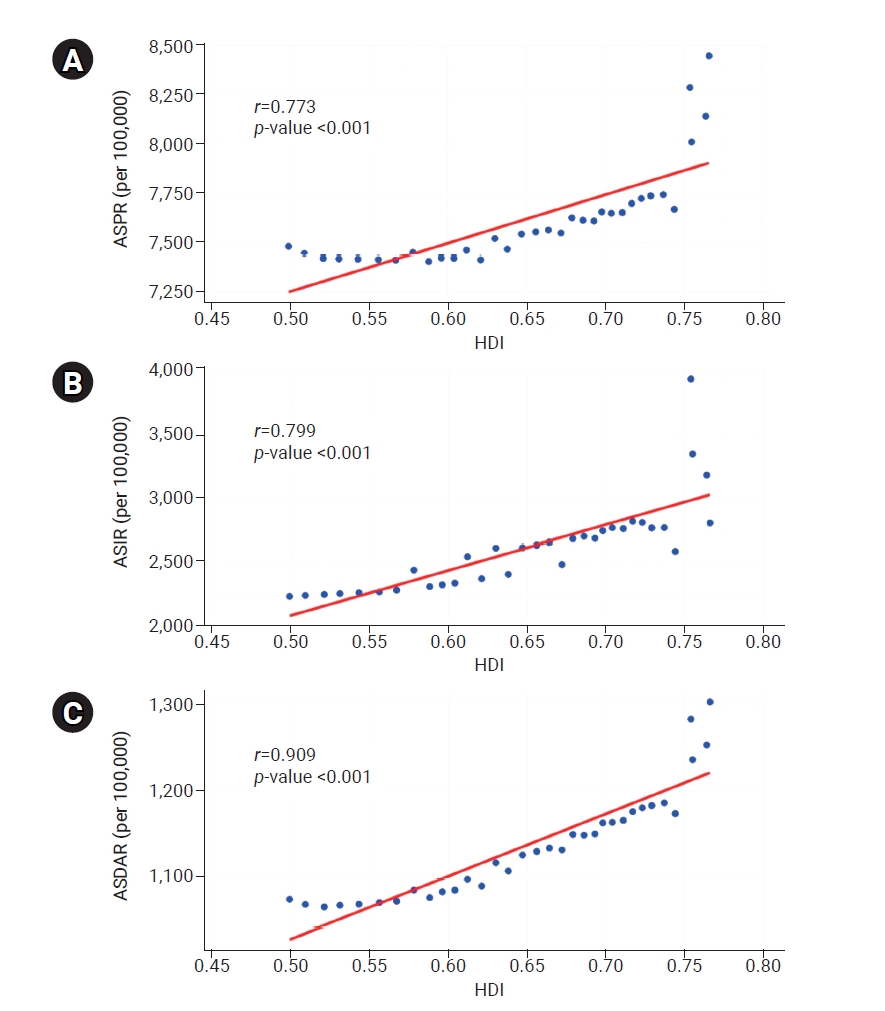
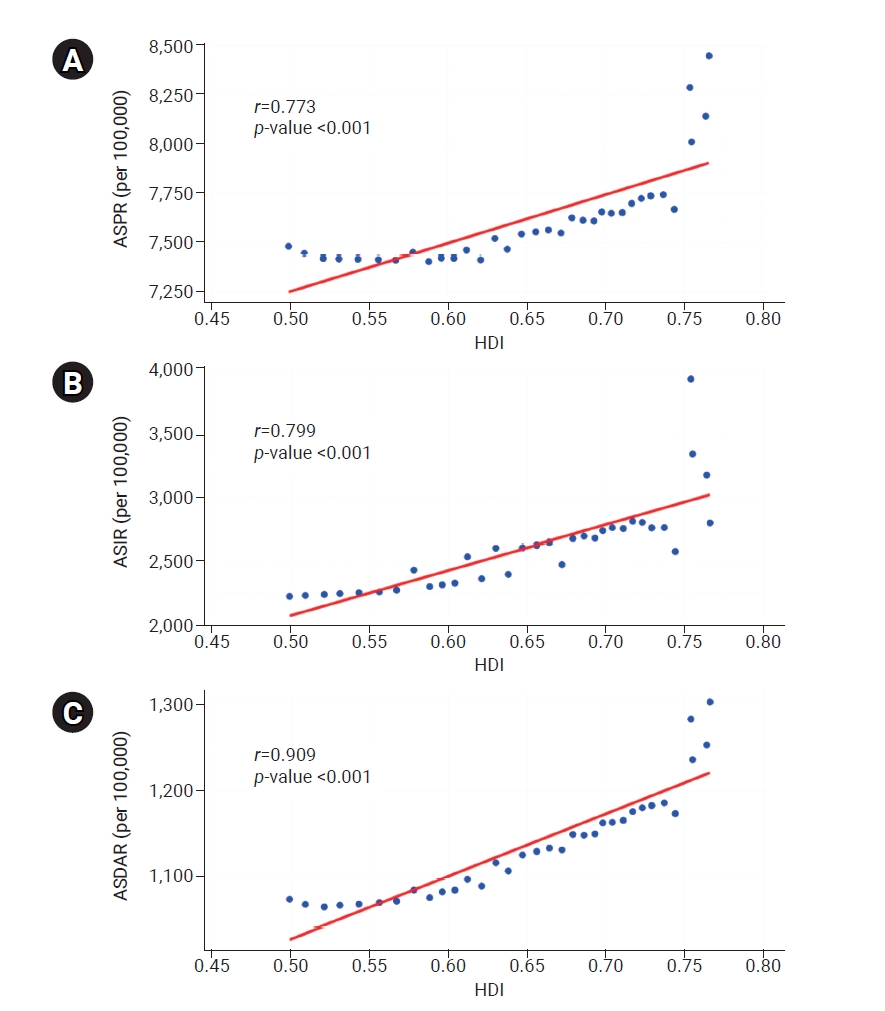
Mental disorder burden in Vietnam was strongly positively correlated with HDI. ASDAR showed the strongest correlation (
r=0.909,
p<0.001), while ASPR (
r=0.773,
p<0.001) and ASIR (
r=0.799,
p<0.001) also showed strong positive correlations, although these correlations were slightly lower than that observed for ASDAR (
Figure 3).
Forecasted Epidemiological Burden of Mental Disorders through 2040
The BSTS models demonstrated strong predictive accuracy and goodness of fit, with Bayesian R² values of 0.9918 for ASPR, 0.9653 for ASIR, and 0.9952 for ASDAR, supported by low MAPE values of 0.17%, 1.48%, and 0.23%, respectively (
Table S1). Effective sample size values ranged from 71.9 to 207.3 across indicators, indicating adequate MCMC chain convergence. Diagnostic plots further supported satisfactory convergence and model fit (
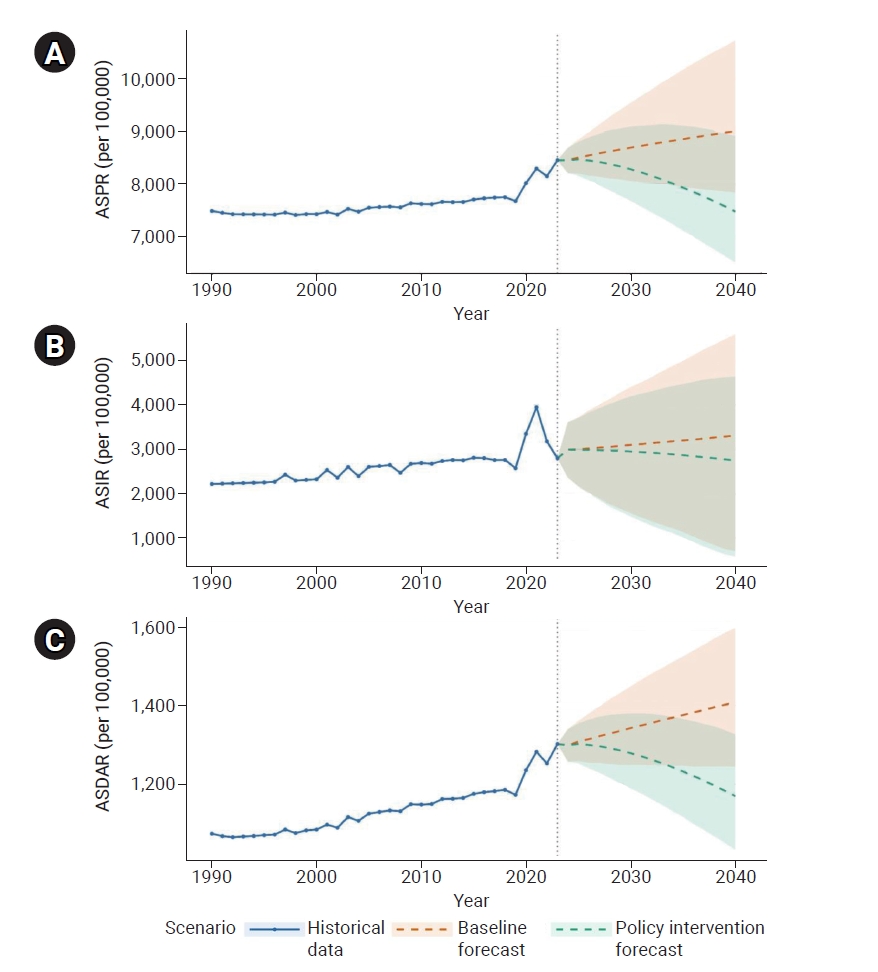
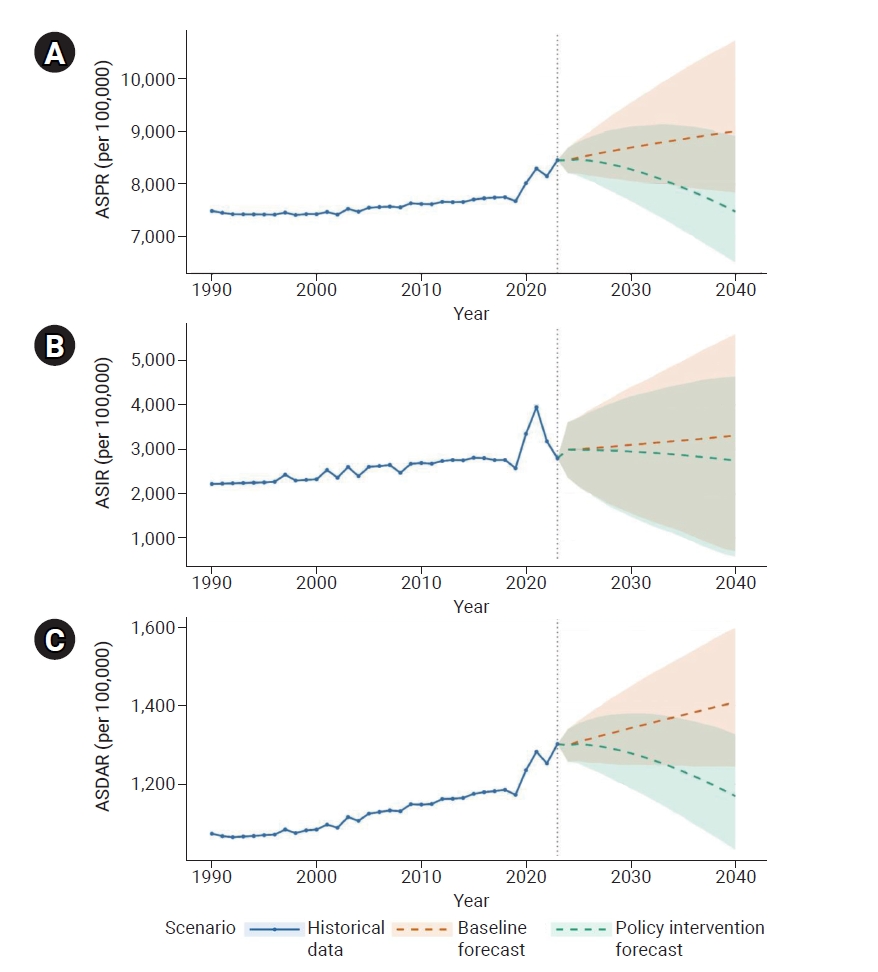
Figure S1). Under the baseline scenario, the burden of mental disorders in Vietnam was projected to continue increasing through 2040 (
Figure 4). ASPR was projected to reach 9,003.75 per 100,000 (95% credible interval [CrI], 7,846.42–10,737.80), ASIR was projected to reach 3,307.11 per 100,000 (95% CrI, 705.16–5,591.76), and ASDAR was projected to reach 1,408.05 per 100,000 (95% CrI, 1,242.67–1,593.63). In contrast, the policy intervention scenario suggested substantial potential for mitigation, lowering the projected 2040 ASPR to 7,473.12 per 100,000 (95% CrI, 6,512.53–8,912.37), ASIR to 2,744.90 per 100,000 (95% CrI, 585.28–4,641.16), and ASDAR to 1,168.68 per 100,000 (95% CrI, 1,031.41–1,322.71) (
Figure 4). Compared with the baseline forecasts, these intervention outcomes corresponded to absolute reductions of 1,530.63 in ASPR, 562.21 in ASIR, and 239.37 in ASDAR per 100,000 population.
Discussion
Mental disorders impose a substantial burden on the Vietnamese population. In 2023, an estimated 9.1 million individuals were living with a mental disorder in Vietnam, corresponding to a crude prevalence of approximately 8.8%. Annual incidence exceeded 2.94 million cases, contributing to 1.41 million DALYs. Both crude prevalence and DALY rates increased steadily from 1990 to 2023, reflecting Vietnam’s demographic transition and evolving epidemiological profile. Notably, Vietnam’s ASIR increased by 1.10% annually during this period, exceeding the global average increase of 0.92%. To address uncertainty arising from the limited number of Vietnam-specific primary data sources informing GBD estimates, sensitivity analyses recalculated EAPCs using the lower and upper bounds of the 95% UIs (
Table 5). These analyses showed that temporal trends were highly robust to parameter uncertainty: the EAPC for prevalence varied only from 0.27% to 0.28%, the EAPC for incidence remained consistently positive at 1.06% to 1.13%, and the EAPC for DALYs ranged from 0.57% to 0.62%. Although the absolute levels of GBD estimates for mental disorders may be affected by differences in diagnostic thresholds and cross-walk adjustments in the GBD framework, these findings suggest that the upward trend in Vietnam’s mental disorder burden likely reflects an epidemiological pattern rather than a modeling artifact.
The 2020–2023 period, which coincided with the COVID-19 pandemic, revealed a marked divergence in epidemiological patterns. Specifically, ASIR increased from 2,575.6 to 3,946.3 per 100,000 between 2019 and 2021, indicating an acute shock to national mental health. This sharp increase in 2021 coincided temporally with the implementation of Directive 16 and stringent social-distancing measures across major southern provinces [
14]. This pattern also coincided with a convergence of potential stressors, including fear of infection, sudden income loss, and psychological strain from prolonged confinement [
15–
17]. Meanwhile, ASPR and ASDAR showed a stepwise pattern, rising sharply and remaining elevated through 2023. This divergence may suggest that cases identified during the pandemic were associated with a higher chronic prevalence burden, potentially reflecting sustained population-level effects beyond transient psychological distress [
16].
In Vietnam, the age distribution of mental disorder burden reveals distinct life-stage patterns. Crude incidence peaked sharply at 4,125.3 per 100,000 in the 15–19-year age group, aligning with global evidence that approximately 48% of mental disorders begin by age 18 years and 62.5% begin by age 25 years [
18]. In contrast, crude disability burden, measured as DALYs, peaked at 1,727.1 per 100,000 in the 35–39-year age group, corresponding to the working-age population, while crude prevalence accumulated across the life course and peaked at 10,914.2 per 100,000 in the 60–64-year age group. This stratification across the life course indicates that new disorder onset is concentrated in adolescence, cumulative disability is most pronounced during working ages, and long-term prevalence increases with age. These distinct patterns have important implications for prevention and intervention strategies.
Adolescence, defined as ages 10–19 years, represents a critical developmental window of mental health vulnerability in Vietnam, with crude incidence peaking in the 15–19-year age group at 4,125.3 per 100,000. This elevated burden is likely associated with a combination of traditional and modern psychosocial stressors. Previous research suggests that academic pressures contribute substantially to psychological distress during this period, particularly among female students [
19–
21]. In addition, pervasive internet and social media use introduced new vulnerabilities; more than 30% of urban adolescents in Vietnam show signs of problematic internet use, which has been closely associated with anxiety symptoms [
22,
23]. These findings underscore the need for adolescent-focused prevention and early intervention strategies that address both traditional academic stressors and emerging challenges of the digital era.
However, the perceived magnitude of the adolescent burden is highly contingent on the diagnostic thresholds and modeling assumptions used. Based on GBD 2023 estimates, the prevalence of mental disorders was 7,941.2 per 100,000 (7.94%) among adolescents aged 10–14 years and 8,696.2 per 100,000 (8.70%) among those aged 15–19 years. In contrast, V-NAMHS reported a strict clinical prevalence of only 3.3% among adolescents aged 10–17 years using the Diagnostic Interview Schedule for Children, Version 5, case definition [
7]. This discrepancy indicates that GBD estimates are approximately 2.4- to 2.6-fold higher than estimates based on this narrow clinical threshold. V-NAMHS also found that 21.7% of adolescents experienced broader mental health problems [
7], indicating that the choice of case definition can shift burden estimates by a factor of approximately 6.6. In this context, GBD-modeled prevalence for early adolescence (7.94%) and late adolescence (8.70%) occupies a middle range: it exceeds strict clinical pathology estimates by 2.4- to 2.6-fold but remains 2.5- to 2.7-fold lower than the community-level symptom burden estimate of 21.7%. This positioning likely reflects methodological differences between the two approaches. The GBD framework synthesizes diverse and sparse primary data through cross-walking and spatiotemporal smoothing to produce harmonized estimates, whereas the V-NAMHS provides a nationally representative snapshot using a single, uniform diagnostic instrument.
These methodological differences may be further compounded by substantial gaps in service utilization. The V-NAMHS identified a 91.6% treatment gap among adolescents reporting mental health problems, with only 8.4% of the 1,301 affected adolescents accessing supportive or counseling services in the preceding 12 months [
7]. This low level of service use likely contributes to downward bias in some surveys and clinical data inputs used in GBD modeling. Although the upward temporal trajectory, as reflected by the EAPC, remained statistically robust in sensitivity analyses (
Table 5), these comparisons confirm that absolute values are highly sensitive to diagnostic thresholds and data availability. Future mental health policy should therefore triangulate standardized GBD trends with domestic empirical data to guide resource allocation more effectively.
Although incidence peaks in adolescence, the burden of disability is concentrated in the 35–39-year age group, during prime working years. This concentration suggests that mental disorders exert their greatest functional impact when economic activity and family responsibilities are highest. Contextual evidence from Vietnam indicates that mental health problems are prevalent among working-age adults, particularly in urban and industrial settings. Studies of industrial workers in Vietnam have reported depressive symptom prevalence ranging from 18.8% to 38.6%, depending on occupational sector and location [
24–
26]. This accumulation of disability during working ages may generate substantial productivity losses and household dysfunction, thereby magnifying societal costs beyond direct healthcare expenditures.
The prevalence peak among older adults highlights the intersection of mental health burden with Vietnam’s rapid demographic aging. The prevalence peak in the 60–64-year age group and the secondary rise among the oldest-old, those aged 95 years or older, likely reflect the cumulative effects of long-term mental disorders alongside increasing physical comorbidity rather than elevated incidence at older ages. Rapid urbanization and labor migration have altered traditional family structures, which may reduce social support for some older adults, particularly in rural areas [
27–
29]. The rising burden among the oldest-old also aligns with evidence of increasing neurocognitive disorders, including dementia, which contribute substantially to mental health-related disability and caregiving demands in aging populations [
30].
GBD 2023 estimates revealed sex disparities in Vietnam’s mental disorder burden, with females experiencing 15.6% higher ASPR and 13.6% higher ASDAR than males. This pattern aligns with global GBD findings showing that females bear a disproportionately higher mental health burden across LMICs, driven by biological factors, such as hormonal fluctuations, and psychosocial stressors, such as gender-based violence and caregiving roles [
31,
32]. In Vietnam, rapid urbanization and economic transitions may exacerbate these vulnerabilities, mirroring Southeast Asian trends in which shifts in social roles amplify sex disparities in mental health burden [
33].
Depressive disorders emerged as the leading contributor to Vietnam’s mental disorder burden in GBD 2023 estimates, outpacing anxiety disorders and underscoring the need for enhanced detection amid rising psychosocial stressors, including economic pressures and post-pandemic effects. This pattern is consistent with global evidence showing that these internalizing conditions dominate DALYs in LMICs [
8]. Schizophrenia had a disproportionate disability impact despite lower prevalence and incidence, highlighting its chronic and resource-intensive nature and the need for specialized long-term care investments. Neurodevelopmental disorders, including autism spectrum disorders and idiopathic developmental intellectual disability, also highlight persistent early-life gaps in mental health identification in Vietnam. Limited pediatric screening capacity, weak early detection systems, and low adolescent service utilization contribute to under-recognition and substantial unmet need [
34,
35].
Beyond these demographic patterns, our analysis revealed a strong positive association between Vietnam’s HDI and the burden of mental disorders, with correlations of
r=0.909 for ASDAR,
r=0.773 for ASPR, and
r=0.799 for ASIR, all
p<0.001. These findings are consistent with global epidemiological evidence showing that, as countries undergo rapid socioeconomic development, the documented burden of mental health conditions often increases in parallel [
3]. This association may partly reflect improved healthcare system capacity, which enables better case detection and documentation, as well as potential increases in mental health risk in the context of rapid urbanization, intensifying occupational stress, labor migration, and weakening traditional family support networks [
27,
29,
36]. Demographic aging may also contribute: longer life expectancy associated with development is linked to a higher proportion of older adults at elevated risk for chronic mental conditions, which can further increase the observed population burden of mental disorders [
37].
Projections through 2040 using BSTS models—characterized by high predictive accuracy, with R² values greater than 0.96 and low MAPE values across all indicators—indicate a steadily increasing age-standardized burden of mental disorders in Vietnam. Under the baseline scenario, age-standardized prevalence is projected to reach 9,003.75 per 100,000 population by 2040, alongside rising incidence and DALY rates. The more pronounced upward trajectories of prevalence and DALYs suggest that the future burden is not explained solely by demographic shifts but may also reflect a stepwise upward shift in baseline burden after the COVID-19 pandemic. This pattern may indicate that, although the spike in new cases coincided with a transient pulse effect, the dominant long-term pattern is sustained disability, placing chronic pressure on an already constrained national healthcare infrastructure. The projected baseline highlights a critical disparity between escalating epidemiological needs and Vietnam’s current systemic capacity. According to the latest World Bank reports from 2024, Vietnam’s specialized workforce remains substantially constrained, with approximately 0.62 psychiatrists per 100,000 population [
38]. Although this ratio is slightly higher than the average for lower-middle-income countries (0.40), it remains below the upper-middle-income country average (1.60) and the global average (1.70) [
39], potentially contributing to the reported 90% treatment gap for common mental disorders such as depression and anxiety.
However, the policy intervention scenario demonstrates that this trajectory is not inevitable. A cumulative 17% relative reduction, aligned with United Nations SDG 3.4 and the WHO Comprehensive Mental Health Action Plan 2013–2030, could lower the projected 2040 ASPR to 7,473.12 per 100,000 and the projected ASDAR to 1,168.68 per 100,000. Achieving such targets may require structural reforms focused on decentralizing care from the current hospital-centric model. Although Vietnam’s national average of 10.3 psychiatric beds per 100,000 population is comparable to the global average of 10.8, only 7% of these beds are integrated into general hospitals, with the substantial majority concentrated in specialized psychiatric facilities [
38]. This concentration within specialized facilities, coupled with marked regional disparities ranging from 1.14 psychiatrists per 100,000 population in the Red River Delta to 0.12 per 100,000 population in the Central Highlands [
38], likely hinders equitable access to care and underscores the need to transition toward an integrated, community-based framework. A feasible pathway to bridge this gap involves task-sharing within Vietnam’s network of more than 11,000 commune health stations through scaled collaborative care models [
38]. In these models, specialized psychiatrists provide remote supervision and technical support to trained grassroots staff, integrating WHO Mental Health Gap Action Programme pathways and evidence-based psychosocial protocols [
7,
40]. This approach aligns with Vietnam’s National Plan for Prevention and Control of Noncommunicable Diseases and Mental Disorders for 2022–2025 (Decision 155/QĐ-TTg) [
11], which mandates the integration of mental health into existing non-communicable disease management. Furthermore, implementation of the Community-Based Social Assistance and Functional Rehabilitation Program for People With Mental Illness, Children With Autism, and People With Intellectual Disabilities for 2021–2030 (Decision 1929/QĐ-TTg) [
12] may further mitigate social stigma and facilitate patient reintegration. Ultimately, the divergence between the baseline and intervention scenarios emphasizes the cost of inaction: without specific structural reforms to integrate mental healthcare into the primary care framework, Vietnam may face an increasingly unsustainable escalation of its mental health disability burden through 2040.
To our knowledge, this study provides the first comprehensive assessment of mental disorder burden in Vietnam from 1990 to 2023 using GBD 2023 estimates. By examining temporal trends alongside socioeconomic correlates, this analysis highlights how mental health patterns have evolved in parallel with Vietnam’s development. In addition, the use of BSTS modeling allowed quantification of COVID-19-related shock effects in future projections, while detailed stratification by age, sex, and diagnostic subtype provided a granular view of burden across population groups. Several limitations warrant consideration. First, the findings rely on GBD 2023 modeled estimates rather than primary data from a national disease registry or comprehensive population-based surveys in Vietnam. Although the GBD framework uses sophisticated Bayesian meta-regression through DisMod-MR 2.1 to synthesize global evidence, the estimates for Vietnam were informed by a relatively limited base of 8 primary data sources. This low data density may result in wider UIs and potential underestimation or overestimation of the true burden. Consequently, caution is needed when interpreting trends for specific diagnostic subtypes, because estimates for less common disorders may be influenced by regional patterns rather than solely reflecting the epidemiological profile of the Vietnamese population. Second, upstream risk factors—including academic stress, socioeconomic disadvantage, trauma exposure, and substance use—were not examined, which limits causal interpretation. Third, GBD disability weights are largely derived from high-income settings and may not fully capture functional impairment within Vietnam’s sociocultural and economic context. Finally, the analysis was restricted to national-level estimates and did not examine subnational heterogeneity; given regional disparities in economic development and health system capacity, mental disorder burden and access to care are likely to vary substantially across regions.