Abstract
-
Objectives
This study investigated associations between building structure and managers’ knowledge, attitudes, and practices (KAP) regarding indoor air quality in welfare facilities for persons with disabilities, comparing facilities with and without coronavirus disease 2019 (COVID-19) cluster outbreaks.
-
Methods
A web-based survey was conducted among managers of 242 welfare facilities for persons with disabilities in the Republic of Korea. Facilities were recruited from a national sampling frame of approximately 3,000 facilities, yielding a response rate of 8.1%. The 80-item questionnaire assessed building characteristics and air quality-related KAP scores. Logistic regression was used to identify factors associated with cluster outbreaks.
-
Results
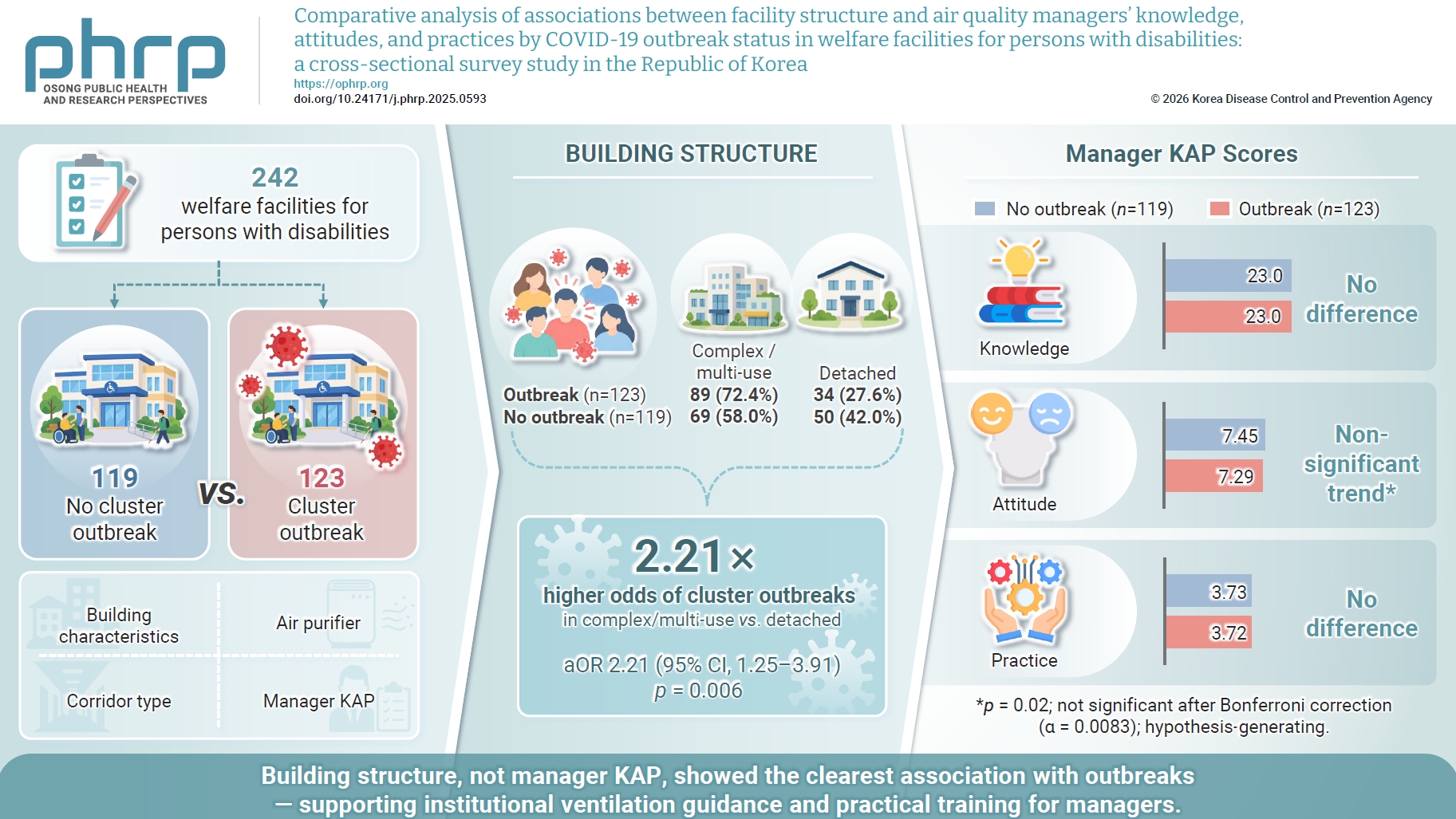
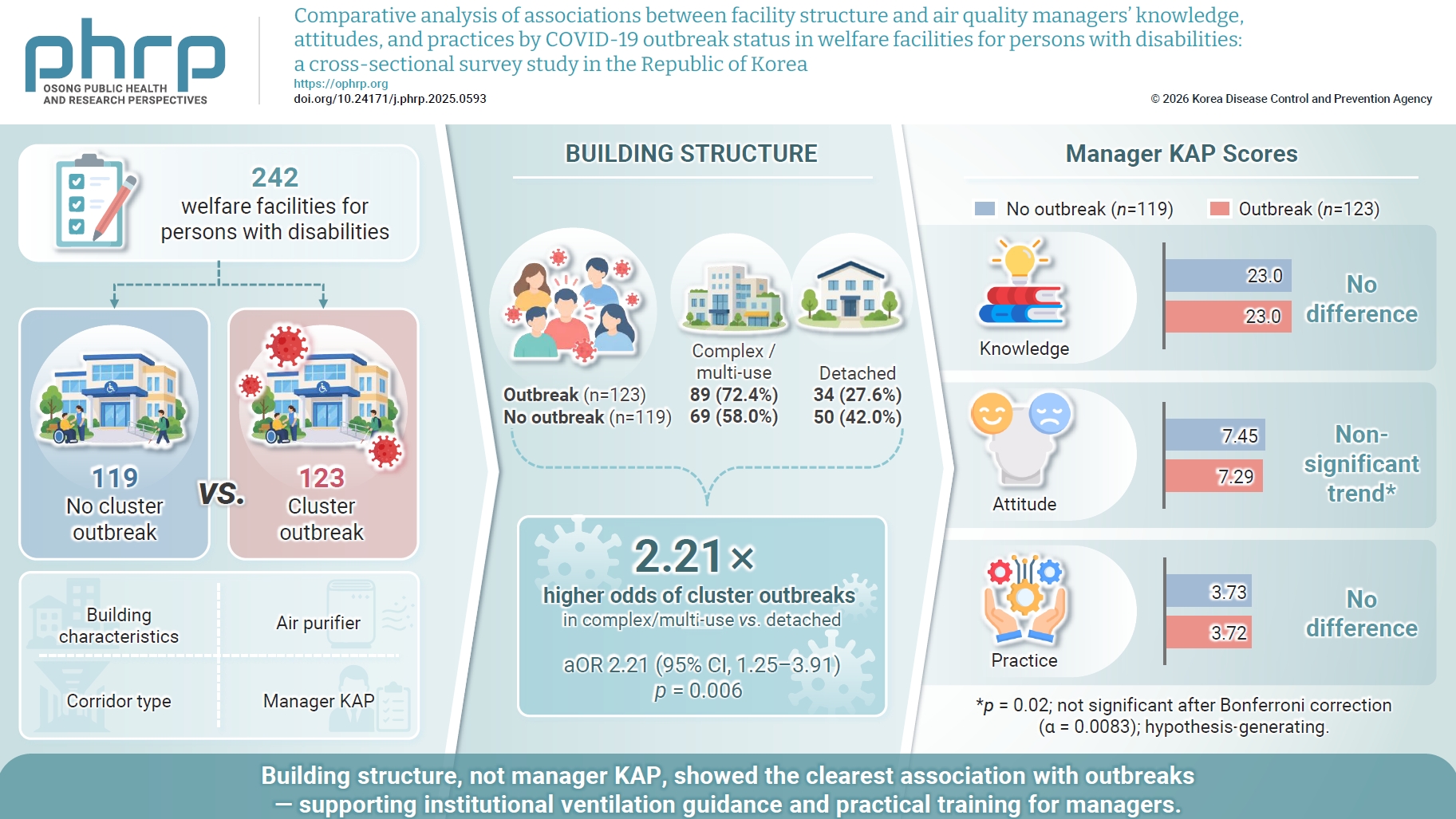
Of the 242 facilities, 50.8% had experienced cluster outbreaks. Facilities in complex/multi-use buildings had higher odds of outbreaks than those in detached buildings did (adjusted odds ratio, 2.21; 95% confidence interval, 1.25–3.91; p=0.006). For managerial factors, facilities with outbreaks tended to have lower attitude scores (p=0.02); however, this association did not remain statistically significant after Bonferroni correction (adjusted α=0.0083). No significant differences were observed in knowledge or practice scores.
-
Conclusion
Building structure, particularly complex/multi-use configuration, was associated with COVID-19 cluster outbreaks. Managerial KAP scores were not definitively associated with outbreaks under the conservative significance threshold, but the observed trends suggest that institutional support, ventilation guidance, and practical training for facility managers may help strengthen future infection-prevention efforts.
-
Keywords: Air pollution, indoor; COVID-19; Health knowledge, attitudes, practice; Logistic models
Introduction
Early in the coronavirus disease 2019 (COVID-19) pandemic, transmission was primarily attributed to respiratory droplets and direct contact [
1]. As the pandemic progressed, however, frequent cluster outbreaks in enclosed, crowded, and close-contact settings indicated that additional transmission routes were involved [
2,
3]. Substantial evidence, including the comprehensive analysis by Greenhalgh et al. [
4], has since identified airborne transmission as an important pathway, and this route is now recognized by the World Health Organization (WHO) and the U.S. Centers for Disease Control and Prevention [
5]. Although the physical dynamics of airflow are well documented, recent studies indicate that the effectiveness of mitigation measures also depends on managerial and institutional factors, including leadership commitment, resource allocation, and facility safety culture [
6].
In the Republic of Korea, suspected inter-room and intra-room airborne transmission has been reported in settings including call centers, fitness centers, and residential complexes, underscoring the importance of structural and mechanical factors in indoor ventilation [
7–
10].
Beyond physical infrastructure, facility managers’ knowledge, attitudes, and practices (KAP) may influence outbreak prevention. Previous studies suggest that knowledge is often high when standardized manuals are available, whereas practices may be limited by staffing shortages, budget constraints, and insufficient specialized training in environmental engineering [
11].
Research conducted in April 2022 on long-term care facilities in the Republic of Korea found that systematic ventilation management remained inadequate and that professional guidance on ventilation equipment operation was needed [
12].
Welfare facilities for persons with disabilities are infection-vulnerable environments with operational characteristics that differ from those of medical settings. These facilities often involve active physical engagement and social interaction, which may increase respiratory emission rates. Effective indoor ventilation is therefore a practical intervention for reducing infection risk in these settings [
13]. The rationale for focusing on disability welfare facilities stems from their distinction from other high-risk settings, such as long-term care hospitals. Whereas long-term care hospitals are clinical environments that often serve passive or bedbound populations, disability welfare facilities are more home-like settings characterized by active physical engagement, communal dining, and social rehabilitation activities [
14]. These behavioral factors may increase respiratory emissions and make consistent mask wearing more difficult. Unlike hospitals, which operate under more strictly regulated medical protocols, environmental management in disability welfare facilities often depends on the discretion of nonclinical managers.
As part of the 2022 national initiative “Analysis of Indoor Ventilation Risk Factors in High-Risk Multi-Use Facilities,” the Korea Disease Control and Prevention Agency (KDCA) conducted a nationwide survey of ventilation managers. The present study analyzed data from managers of welfare facilities for persons with disabilities to compare air quality-related KAP according to COVID-19 cluster outbreak history. By identifying these associations, this study provides evidence to support targeted indoor air quality management programs and future infection-response planning.
Materials and Methods
Study Population and Selection
The study focused on welfare facilities for persons with disabilities, including residential facilities, community rehabilitation facilities such as daycare centers, vocational rehabilitation facilities, and shelters for victims. These facilities were designated as high-risk settings requiring intensive surveillance because of the potential for severe outcomes and frequent cluster outbreaks [
15,
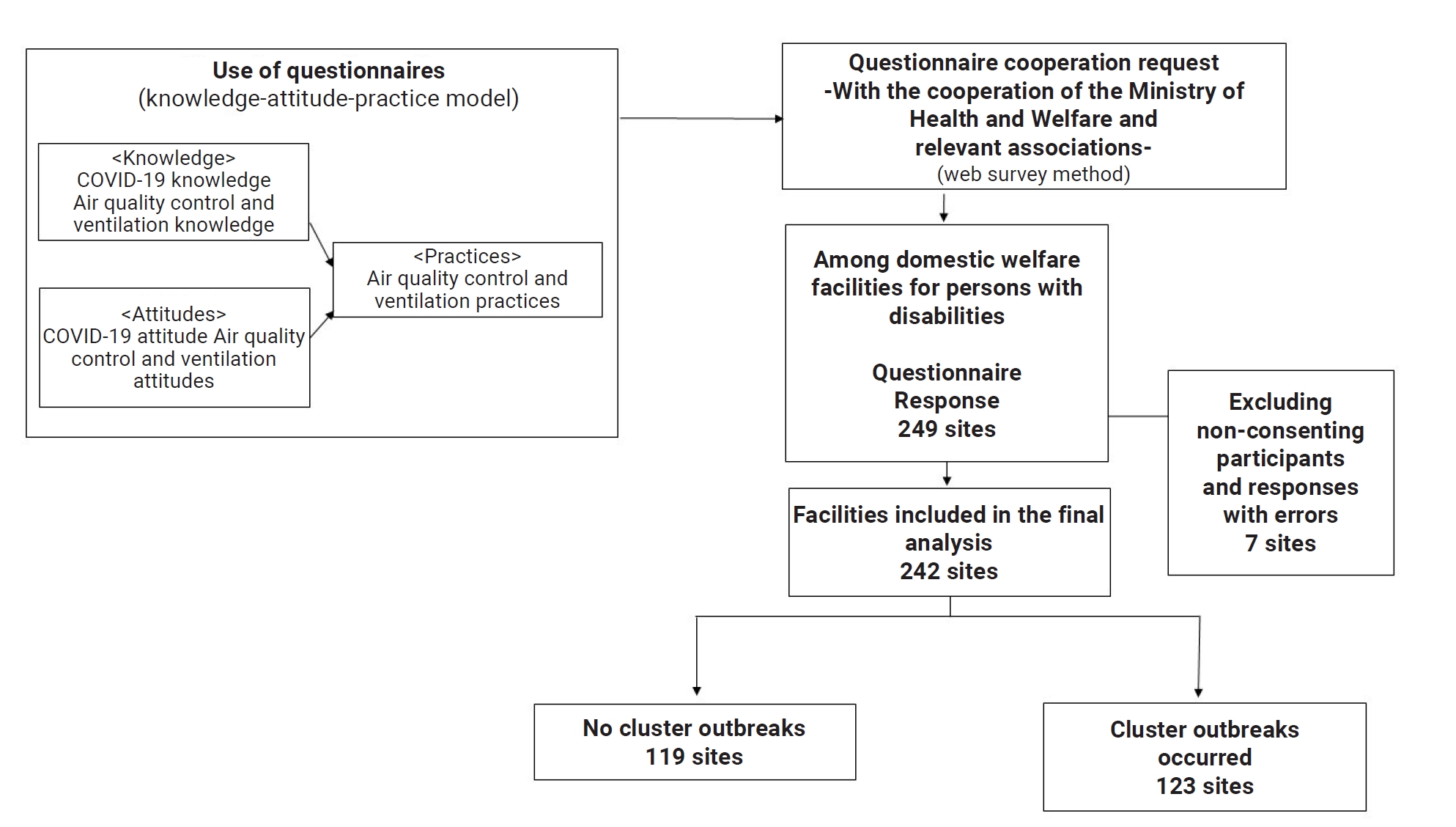
16]. Of the 249 facilities initially identified, 242 were included in the final analysis after 7 were excluded because of refusal to participate or incomplete responses (
Figure 1).
The sample size was determined using a pragmatic recruitment strategy during the COVID-19 pandemic. The study aimed to maximize participation within a 3-week period through official KDCA communication channels. Of approximately 3,000 facilities nationwide, 242 responded, yielding a response rate of approximately 8.1% and representing both complex/multi-use and detached structures across the Republic of Korea.
Data Collection
A web-based survey was conducted in collaboration with 3 major organizations: the Korea Association of Disability Welfare Facilities, the Korea Association of Daycare Facilities for the Disabled, and the Korea Association of Vocational Rehabilitation Facilities for the Disabled. Formal cooperation requests were sent to each facility to encourage participation.
Survey Instrument: The KAP Model
The survey instrument was developed specifically for this study by the research team at the Seoul National University Institute of Health and Environment and was based on the KAP model [
17]. Because no validated tools were available for assessing ventilation-related KAP among Korean welfare facility managers, a structured item-generation process was used. The item pool was drawn from current WHO and KDCA guidelines on COVID-19 and indoor ventilation, scientific literature on airborne transmission, and expert consensus review by the research team before survey deployment. The framework was used to assess managers’ understanding of ventilation, attitudes toward air quality management, and implementation of ventilation practices.
Measurement and Variables
The 80-item survey instrument was structured into 4 domains.
Knowledge (31 items)
Items assessed factual understanding of COVID-19 transmission and clinical features (10 items) and indoor ventilation principles (21 items). Each item was presented as a true/false/“don’t know” statement and scored dichotomously: correct answers were assigned 1 point, and incorrect or “don’t know” responses were assigned 0 points. Example items included “The main clinical symptoms of COVID-19 are fever, fatigue, dry cough, and muscle aches” for the COVID-19 knowledge subscale and “Ventilation volume is unrelated to infection risk,” which was reverse-scored, for the ventilation knowledge subscale. Internal consistency, mathematically equivalent to Kuder–Richardson Formula 20 for binary items, was α=0.308 for COVID-19 knowledge and α=0.550 for ventilation knowledge.
Attitudes (38 items)
Items evaluated perceptions of COVID-19 severity and personal susceptibility, perceived effectiveness of prevention measures, barriers to guideline compliance, and attitudes toward indoor ventilation management. All items used a 5-point Likert scale ranging from 1 (“strongly disagree”) to 5 (“strongly agree”). For analysis, attitude scores were converted to a 10-point scale. Negatively worded items, such as “Even if infected, the impact on my workplace would be small,” were reverse-coded before summing so that higher scores consistently reflected more favorable attitudes toward prevention and ventilation management. Example items included “I am well aware of the government’s indoor ventilation guidelines and manage accordingly” and “I follow COVID-19 prevention guidelines faithfully.” Internal consistency was good for the COVID-19 attitude subscale (α=0.814, n=242) and acceptable for the ventilation attitude subscale (α=0.713, n=242).
Practices (6 items)
Items assessed implementation of ventilation management behaviors using binary yes/no responses (yes=1, no=0). Example items included “Is regular performance inspection and maintenance of ventilation equipment and air purifiers conducted?” and “Is periodic ventilation of 30 minutes or more per session being practiced?” Higher scores indicated greater adherence to recommended practices. Internal consistency was α=0.544 (n=117); this modest value may reflect the limited number of items and right-skewed item distributions, because most facilities reported adherence to most practices.
Facility characteristics and outbreak history (5 items)
Items captured key building characteristics, including facility type, corridor configuration, and the presence of air purification systems. The occurrence and frequency of COVID-19 cluster outbreaks at each facility were also assessed. In accordance with the COVID-19 response guidelines in effect at the time, a cluster outbreak was defined as an occurrence involving 10 or more confirmed COVID-19 cases. The reference period for outbreak history extended from the beginning of the COVID-19 pandemic to the time of the survey. Information on cluster outbreak history was obtained solely through self-reported responses from facility managers and was not independently verified against official public health surveillance records.
Reliability statistics, including Cronbach’s alpha values for all domains, are summarized in
Table 1. Missing responses were addressed using domain-specific listwise deletion. Complete-case sample sizes were 242 for the knowledge and attitude domains, whereas the analysis for the Practice domain was restricted to 117 respondents who completed all six items, resulting in a total of 702 valid item-level responses. This reduction in the analytical sample size for the Practice domain was primarily driven by non-responses on specific items, most notably the facility performance inspection question. Data were analyzed to identify associations between facility characteristics and KAP scores, with a focus on comparing facilities with and without a history of cluster outbreaks.
Definitions
The following are the definitions of several terms used in this study: (1) Detached building: A structure utilized exclusively by the welfare facility, with no shared space or ventilation systems with other commercial or residential entities. (2) Complex/multi-use building: A structure shared with other businesses or residential units, often involving shared common areas or integrated building systems. (3) Single‑corridor layout: A design where rooms are situated on only 1 side of the corridor, typically allowing for better natural light and potential cross-ventilation. (4) Double‑corridor layout: A design featuring a central corridor with rooms arranged on both sides, which may limit natural airflow compared to single-corridor designs. (5) Infection‑vulnerable facilities (healthcare facilities): Healthcare and social welfare settings—including long-term care institutions, mental health facilities, and disability welfare facilities—characterized by a high risk of severe clinical outcomes and frequent cluster outbreaks, thus requiring intensive surveillance and rapid response protocols. (6) Air purification device (air purifier): Equipment designed to improve indoor air quality by removing pollutants through filtration or neutralizing airborne microbes via sterilization units. This category encompasses both mechanical air cleaners and specialized air sterilizers.
Survey Period
The survey was conducted from November 24, 2022, to January 16, 2023.
Statistical Analysis
Because 6 primary independent variables were compared, this study was exploratory. To control the overall type I error rate, a Bonferroni correction was applied, setting the significance threshold at α=0.0083. Results with p-values between 0.0083 and 0.05 were interpreted cautiously as suggestive trends rather than definitive associations.
Institutional Review Board Approval
This study received final approval from the Institutional Review Board (IRB) of Seoul National University Institute of Health and Environment (IRB No: 2301/002-011). Before participation, all respondents were informed of the study objectives and the voluntary nature of participation. Informed consent was obtained electronically from all facility managers before they proceeded to the survey questions. All data were anonymized to protect the privacy and confidentiality of participants and their facilities.
Results
Internal consistency reliability for the KAP subscales was evaluated using complete cases for each domain (
Table 1). For binary knowledge items, Cronbach's alpha (KR-20) was 0.308 for COVID-19 knowledge (k=10,
n=242, total 2,420 data points) and 0.550 for ventilation knowledge (k=21,
n=242, total 5,082 data points). For Likert-scale attitude domains, internal consistency was good for COVID-19 attitude (α=0.814, k=20,
n=242) and acceptable for ventilation attitude (α=0.713, k=18, n=242). Practice behaviors demonstrated relatively low internal consistency (α=0.544, k=6, n=117).
Building Structure, Air Purification, and COVID-19 Outbreaks
Analysis of 242 welfare facilities showed associations between building structural characteristics and COVID-19 cluster outbreaks. Among the 119 facilities without outbreaks, 50 (42.0%) were detached buildings and 69 (58.0%) were complex/multi-use buildings. In contrast, among the 123 facilities with cluster outbreaks, 89 (72.4%) were complex/multi-use buildings. After adjustment for corridor type, presence of air purifiers, and manager KAP scores, facilities in complex/multi-use buildings had higher odds of cluster outbreaks than detached buildings did (adjusted odds ratio, 2.21; 95% confidence interval [CI], 1.25–3.91; p=0.006).
While facilities with double-corridor layouts showed a slightly higher outbreak rate (54.7%) compared to those with single-corridor layouts (48.3%), this difference was not statistically significant. Similarly, facilities without air purifiers had an outbreak rate 9.5 percentage points higher (56.3%) than those with air purifiers (46.8%), but this difference also did not reach statistical significance.
Managerial KAP Scores and Outbreak Experience
Knowledge and practice scores did not differ significantly between managers of facilities with and without cluster outbreaks; mean scores were approximately 23 points for knowledge and 3.7 points for practices in both groups. After adjustment for knowledge and practice levels, however, higher manager attitude scores were associated with lower odds of cluster outbreaks (
p=0.02) (
Table 2). Although this finding did not meet the Bonferroni-corrected significance threshold.
KAP Scores by Frequency of Outbreaks
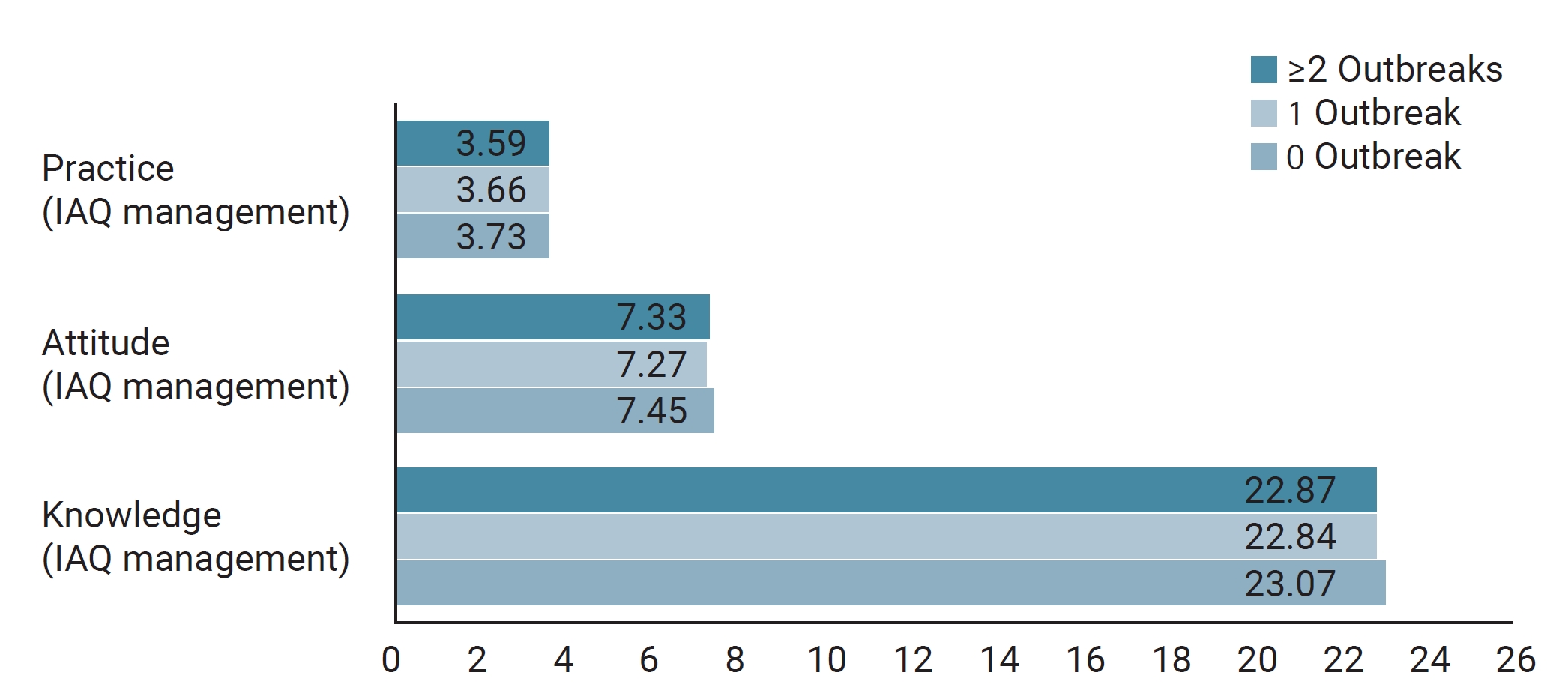
When facilities were categorized according to the frequency of COVID-19 cluster outbreaks (0, 1, or ≥2), knowledge, attitude, and practice scores showed no statistically significant differences across the groups. Although small numerical variations were observed, these differences were not considered meaningful (
Figure 2).
Discussion
Infection-vulnerable settings, including disability welfare facilities, face elevated risks of rapid pathogen transmission because of congregate living and behavioral factors such as frequent social interaction and difficulty maintaining consistent mask wearing [
18–
22]. Indoor air quality management, including adequate ventilation as emphasized in the WHO roadmap, is therefore an important component of infection prevention in these populations [
23].
This study provides evidence that facility infrastructure is associated with COVID-19 cluster outbreaks. After adjustment for potential confounders, facilities in complex/multi-use buildings had 2.21 times higher odds of outbreaks than detached buildings did (95% CI, 1.25–3.91). This increased vulnerability may be related to the absence of dedicated heating, ventilation, and air conditioning systems, shared common areas with commercial occupants, and limited centralized environmental management. These findings are consistent with previous research suggesting that detached structures may allow more controlled ventilation environments and may reduce inter-building transmission of infectious particles [
24,
25].
Regarding managerial factors, the uncorrected analysis showed lower attitude scores in facilities with outbreaks (
p=0.02), but this association did not remain statistically significant after Bonferroni correction (adjusted α=0.0083). The results therefore suggest a possible directional pattern but should be interpreted cautiously. The lack of significant differences in knowledge and practice scores may reflect knowledge saturation after prolonged pandemic-related education, whereas implementation of practices may have been constrained by structural, staffing, and budget limitations rather than by lack of intent. The observed attitude pattern may also reflect the emotional and physical burden accumulated during outbreak responses. Consistent with previous research indicating that attitudes may more directly influence COVID-19 preventive behaviors than knowledge alone, these findings support policies that combine technical training with psychological and organizational support for facility managers [
26,
27].
No meaningful differences in KAP scores were observed across groups categorized by outbreak frequency. These findings do not support a clear association between repeated outbreak experience and managerial KAP levels. Nevertheless, previous studies suggest that continuous decision support and repeated education can support more effective environmental management [
28,
29]. Future policies should move beyond manual distribution alone and include regular indoor ventilation training across infection-vulnerable sectors. However, because this study was cross-sectional, the direction of the observed associations cannot be determined. Although lower attitude scores were associated with higher outbreak frequency, reverse causation remains possible. The emotional and physical burden of managing a cluster outbreak, including emergency response stress and responsibility for resident safety, may have reduced managers’ perceived efficacy and attitudes toward practice. These scores may therefore reflect the psychological aftermath of an outbreak rather than a purely predictive baseline factor.
This study has several limitations. First, the cross-sectional design precludes determination of temporal precedence. Second, the study may be subject to selection bias because only 242 of approximately 3,000 facilities participated, and reporting bias is possible because the survey was web-based.
Nonresponse bias is also possible because facilities that voluntarily participated may have differed from nonparticipating facilities in infection-control capacity, interest in indoor air quality, or available administrative resources. In addition, because this study focused on the welfare system of the Republic of Korea, the findings may have limited generalizability to other countries or to other types of high-risk institutions. Furthermore, detailed information on the characteristics of nonresponding facilities, including facility type, geographic location, and facility size, was not available for direct comparison with the participating facilities. Therefore, potential differences between responding and nonresponding facilities could not be assessed, and the representativeness of the study sample may be limited. These factors should be considered when interpreting and generalizing the study findings.
Third, this study did not account for individual demographic characteristics of facility managers, such as age, professional experience, or educational background, because these data were not available from the primary survey. The absence of these individual-level covariates may have resulted in residual confounding. To address the risk of false-positive findings associated with multiple testing, a Bonferroni correction was applied to support a more conservative statistical interpretation.
Fourth, type I error cannot be entirely ruled out despite use of the Bonferroni correction. Because this was an exploratory analysis of a specific subset of facilities, findings with marginal p-values, including the attitude-score result, should be viewed as hypothesis generating. Confirmatory studies with larger sample sizes are needed to validate these associations. Fifth, there is potential for residual confounding by facility size and regional COVID-19 incidence. Larger facilities may have had a higher probability of experiencing cluster outbreaks because of greater numbers of residents or users at risk. In addition, complex/multi-use buildings may be more frequently located in urban or high-density areas with different levels of community transmission. Because these variables were not available for adjustment in the present analysis, the observed association between building structure and cluster outbreaks (adjusted OR, 2.21) should be interpreted cautiously and should not be considered evidence of a causal relationship.
A final limitation concerns the psychometric properties of the survey instrument, which was developed specifically for this study and has not been validated against an external criterion. Internal consistency was robust for the COVID-19 attitude domain (α=0.814) and acceptable for the ventilation attitude domain (α=0.713), but reliability was more modest for the knowledge domains (α=0.308–0.550) and the practice scale (α=0.544). The relatively low Cronbach's alpha coefficients for the knowledge domains may reflect heterogeneity in item content, weak inter-item correlations, or measurement limitations of the study-specific questionnaire. Although ceiling effects may reduce internal consistency under certain conditions, the available data do not provide sufficient evidence to establish knowledge saturation as the primary explanation. Therefore, the knowledge-related findings should be interpreted cautiously. This pattern is consistent with the knowledge saturation interpretation discussed above and does not necessarily indicate poor construct validity. Nevertheless, modest reliability in the knowledge and practice domains may have introduced measurement error that biased regression coefficients toward zero. The modest internal consistency of the knowledge and practice domains may have introduced measurement error, potentially affecting the precision and magnitude of the estimated associations. Consequently, the absence of statistically significant associations for these domains should be interpreted cautiously. The extent and direction of any measurement-error bias cannot be determined from the available data. Future research should prioritize the development and validation of psychometrically robust instruments for this population and may incorporate objective measures, such as behavioral observation or administrative records, to supplement self-reported data.
Nonetheless, this study examined associations among facility structure, managerial attitudes, and documented COVID-19 cluster outbreaks in welfare facilities for persons with disabilities in the Republic of Korea. The findings can inform systematic monitoring approaches and future quantitative research on whether ventilation compliance reduces respiratory infection outbreaks over time.
HIGHLIGHTS
• Facility structure was associated with coronavirus disease 2019 cluster outbreaks: facilities in complex/multi-use buildings had 2.21 times higher odds of outbreaks than those in detached buildings.
• Managers of facilities with prior cluster outbreaks had lower attitude scores for indoor air quality management than managers of facilities without outbreaks, although this association did not remain statistically significant after Bonferroni correction.
• Future infection-response planning for welfare facilities for persons with disabilities should consider facility layout, building type, and institutional support for ventilation and indoor air quality management.
Article information
Ethics Approval
This study received final approval from the Institutional Review Board of Seoul National University Institute of Health and Environment (IRB No. 2301/002-011).
Conflicts of Interest
The authors have no conflicts of interest to declare.
Availability of Data
All data generated or analyzed during this study are not publicly available due to privacy and institutional policy constraints but are available from the corresponding author upon reasonable request.
Authors’ Contributions
Writing–original draft: MY, BIK, SEL; Conceptualization: MY, SL, SEL; Formal analysis: MY, SL; Software: MY, JY, SB, SK, SJK, SEL; Supervision: BIK, SL, SEL; Validation: MY, SEL; Methodology: MY, BIK, SL, SEL; Writing–review & editing: all authors. All authors read and approved the final manuscript.
Figure 1.Survey procedure and number of participating facilities.
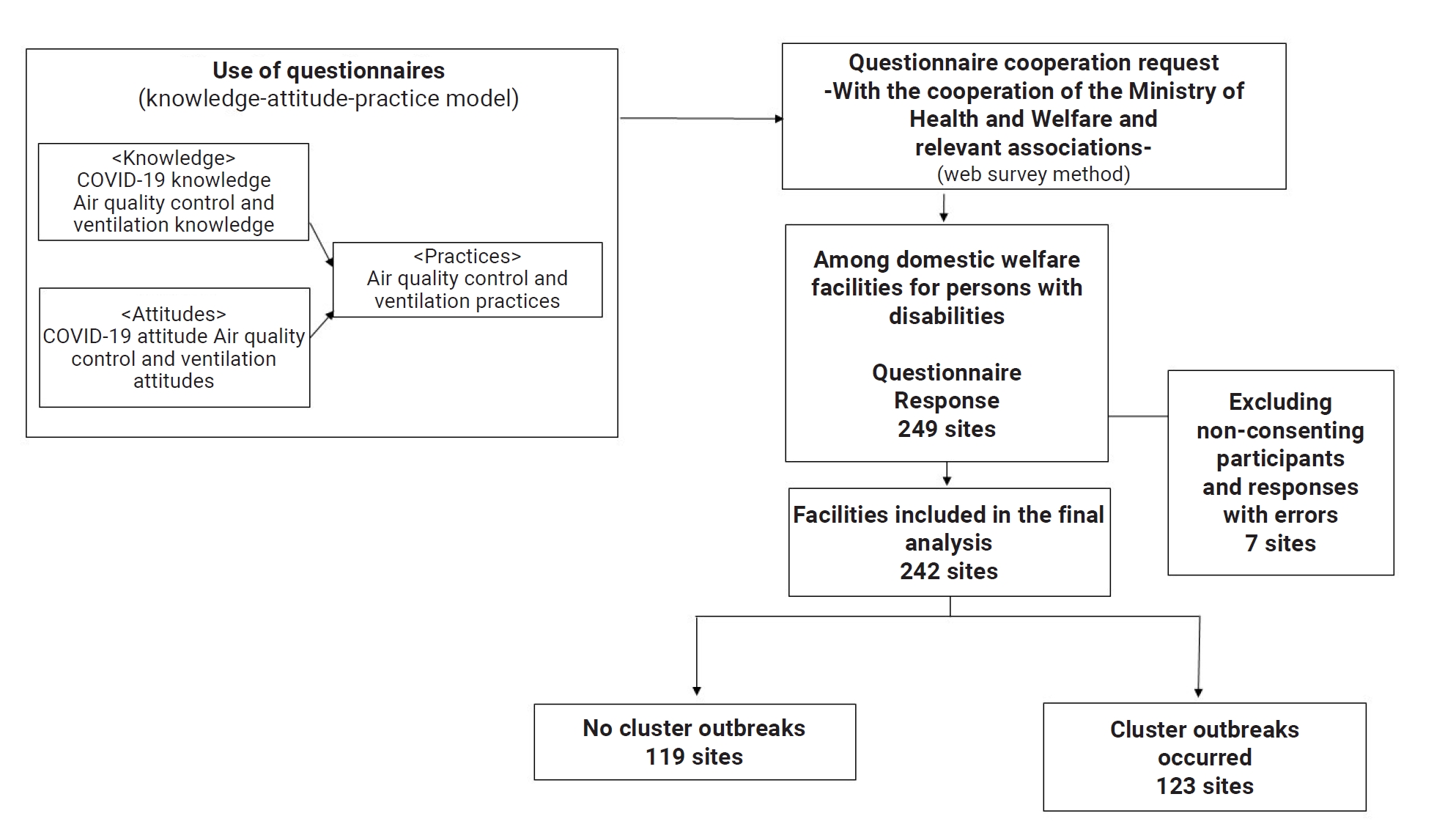
Figure 2.Knowledge, attitudes, and practices of facility managers, grouped by number of COVID-19 cluster outbreaks. IAQ, indoor air quality.
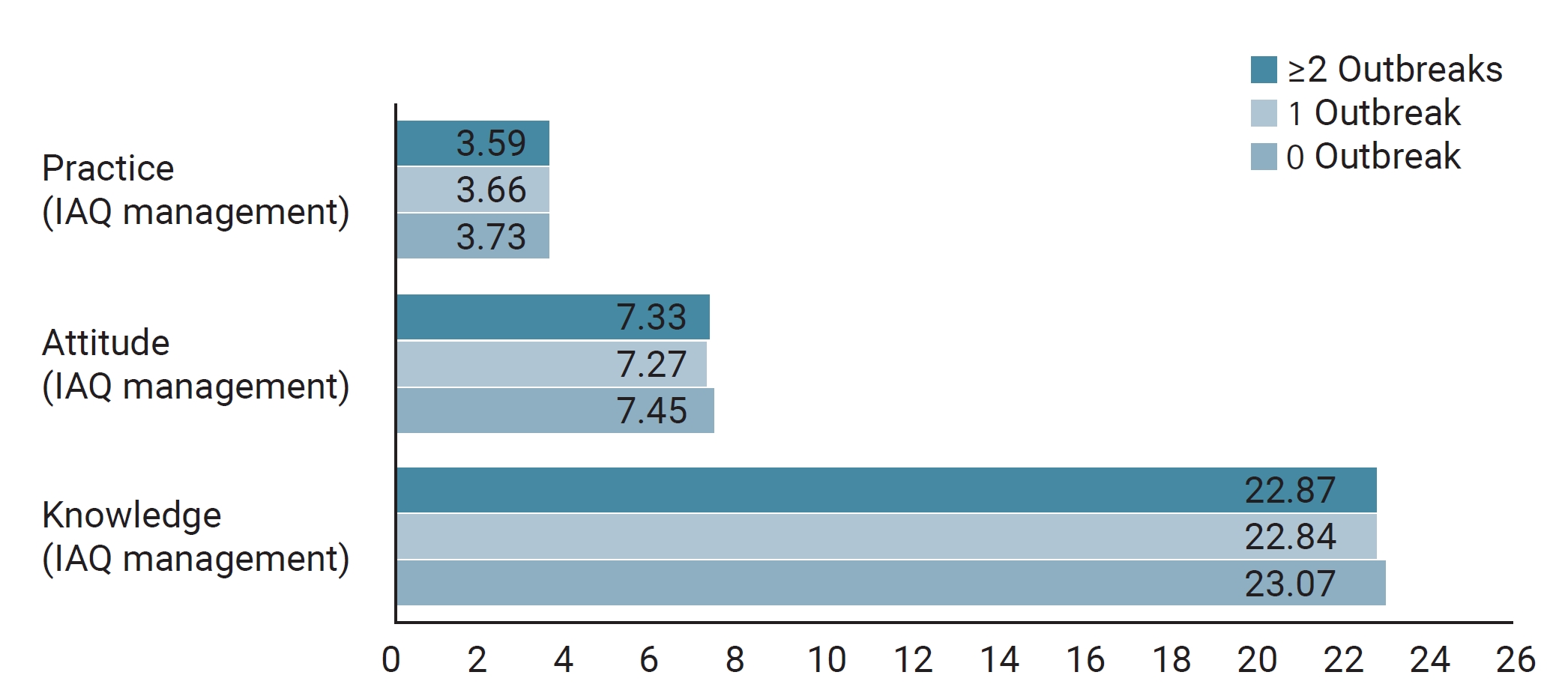
Table 1.Internal consistency reliability (Cronbach’s alpha) by knowledge, attitudes, and practices domain
Table 1.
| Domain |
Item type |
Items (k) |
Analyzed respondents (n) |
Total observed data points (n×k) |
Cronbach’s α |
| COVID-19 knowledge |
Binary (0/1) |
10 |
242 |
2,420 |
0.308 |
| Ventilation knowledge |
Binary (0/1) |
21 |
242 |
5,082 |
0.550 |
| COVID-19 attitude |
5-Point Likert |
20 |
242 |
4,840 |
0.814 |
| Ventilation attitude |
5-Point Likert |
18 |
242 |
4,356 |
0.713 |
| Practice |
Binary (0/1) |
6 |
117 |
702 |
0.544 |
Table 2.COVID-19 cluster outbreaks in welfare facilities for persons with disabilities, grouped by structural features of the facilities and knowledge, attitudes, and practices of the managers
Table 2.
| Feature |
Facilities with outbreaks |
Facilities without outbreaks |
Adjusted OR (95% CI)a)
|
p |
| Total |
123 (100.0) |
119 (100.0) |
|
|
| Building structure |
|
|
|
|
| Complex/multi-use building |
89 (72.4) |
69 (58.0) |
2.21 (1.25–3.91) |
0.006 |
| Detached building |
34 (27.6) |
50 (42.0) |
Ref. |
|
| Corridor type |
|
|
|
|
| Double-corridor |
52 (42.3) |
43 (36.1) |
1.57 (0.90–2.75) |
0.11 |
| Single-corridor |
71 (57.7) |
76 (63.9) |
Ref. |
|
| Presence of air purifier |
|
|
|
|
| Absent |
58 (47.2) |
45 (37.8) |
1.49 (0.85–2.61) |
0.17 |
| Present |
65 (52.8) |
74 (62.2) |
Ref. |
|
| Knowledge |
23±3.61 |
23±3.77 |
1.02 (0.95–1.11) |
0.57 |
| Attitude |
7.29±0.65 |
7.45±0.60 |
0.58 (0.37–0.92) |
0.02 |
| Practice |
3.72±1.51 |
3.73±1.54 |
1.04 (0.86–1.26) |
0.67 |
References
- 1. World Health Organization (WHO) (CH). Coronavirus disease (COVID-19): how is it transmitted?. WHO; 2021.
- 2. Bae SH. A study on the risk assessment and aerodynamic characteristics analysis of COVID-19 outbreak cases, final report of a policy research project. Korea Disease Control and Prevention Agency; 2021. Korean.
- 3. Jang J, Kim Y, Kim YY, et al. Coronavirus disease-19 (COVID-19) one-year outbreak major cluster infection report as of January 19, 2021, in the Republic of Korea. Public Health Wkly Rep 2021;14:482−95. Korean.
- 4. Greenhalgh T, Jimenez JL, Prather KA, et al. Ten scientific reasons in support of airborne transmission of SARS-CoV-2. Lancet 2021;397:1603−5.
- 5. World Health Organization (WHO) (CH). Cleaning and disinfection of environmental surfaces in the context of COVID-19. WHO; 2020.
- 6. Gorges RJ, Konetzka RT. Staffing levels and COVID-19 cases and outbreaks in U.S. nursing homes. J Am Geriatr Soc 2020;68:2462−6.
- 7. Park SY, Kim YM, Yi S, et al. Coronavirus disease outbreak in call center, South Korea. Emerg Infect Dis 2020;26:1666−70.
- 8. Kwon KS, Park JI, Park YJ, et al. Evidence of long-distance droplet transmission of SARS-CoV-2 by direct air flow in a restaurant in Korea. J Korean Med Sci 2020;35:e415.
- 9. Hwang SE, Chang JH, Oh B, et al. Possible aerosol transmission of COVID-19 associated with an outbreak in an apartment in Seoul, South Korea, 2020. Int J Infect Dis 2021;104:73−6.
- 10. Kim EY, Park SY, Lee SY, et al. Results of epidemiological investigation of the coronavirus disease-19 epidemic that occurred in fitness centers. Public Health Wkly Rep 2021;14:1215−24. Korean.
- 11. Houghton C, Meskell P, Delaney H, et al. Barriers and facilitators to healthcare workers' adherence with infection prevention and control (IPC) guidelines for respiratory infectious diseases: a rapid qualitative evidence synthesis. Cochrane Database Syst Rev 2020;4:CD013582.
- 12. Song YJ, Yu M, Park HW, et al. A national survey of COVID-19 management practices in long-term care hospitals and facilities in South Korea. Public Health Wkly Rep 2022;15:1435−40. Korean.
- 13. Kim MO, Kim GE. A study on daily lives of the disabled in residential facilities: focusing on daily life activities and interactions by the daily time use method. Korean J Soc Welf 2010;62:317−42. Korean.
- 14. Courtenay K, Perera B. COVID-19 and people with intellectual disability: impacts of a pandemic. Ir J Psychol Med 2020;37:231−6.
- 15. Korea Disease Control and Prevention Agency (KDCA) (KR). COVID-19 response guidelines. 11th ed. KDCA; 2022. Korean.
- 16. Korea Disease Control and Prevention Agency (KDCA) (KR). Standard manual for prevention•surveillance• investigation of COVID-19 in high-risk facilities. 2nd ed. KDCA; 2022. Korean.
- 17. Song SW. Knowledge, attitude and practice study. Korean J Fam Med 2009;30:464−5. Korean.
- 18. World Health Organization (WHO) (CH). Coronavirus disease (COVID-19): risks and safety for older people. WHO; 2020.
- 19. Liu K, Chen Y, Lin R, et al. Clinical features of COVID-19 in elderly patients: a comparison with young and middle-aged patients. J Infect 2020;80:e14−8.
- 20. Kinne S, Patrick DL, Doyle DL. Prevalence of secondary conditions among people with disabilities. Am J Public Health 2004;94:443−5.
- 21. Kim JH, Lee SW, Kang DW, et al. Disability white paper 2017. Korea Disabled People’s Development Institute; 2017. Korean.
- 22. World Health Organization (WHO) (CH). Infection prevention and control in the context of COVID-19: a guideline, 21 December 2023. WHO; 2023.
- 23. World Health Organization (WHO) (CH). Roadmap to improve and ensure good indoor ventilation in the context of COVID-19. WHO; 2021.
- 24. Kek HY, Saupi SB, Tan H, et al. Ventilation strategies for mitigating airborne infection in healthcare facilities: a review and bibliometric analysis (1993-2022). Energy Build 2023;295:113323.
- 25. Fisk WJ. Health benefits of particle filtration. Indoor Air 2013;23:357−68.
- 26. Zhong BL, Luo W, Li HM, et al. Knowledge, attitudes, and practices towards COVID-19 among Chinese residents during the rapid rise period of the COVID-19 outbreak: a quick online cross-sectional survey. Int J Biol Sci 2020;16:1745−52.
- 27. Kim HJ, Lee SE, Yu M, et al. Measuring ventilation and contamination in long-term care hospitals to study improvements. Public Health Wkly Rep 2024;17:717−38. Korean.
- 28. Levasseur ME, Poulin P, Campagna C, et al. Integrated management of residential indoor air quality: a call for stakeholders in a changing climate. Int J Environ Res Public Health 2017;14:1455.
- 29. Zhang Y, Hui FK, Duffield C, et al. A review of facilities management interventions to mitigate respiratory infections in existing buildings. Build Environ 2022;221:109347.
Citations
Citations to this article as recorded by



 , Bryan Inho Kim2